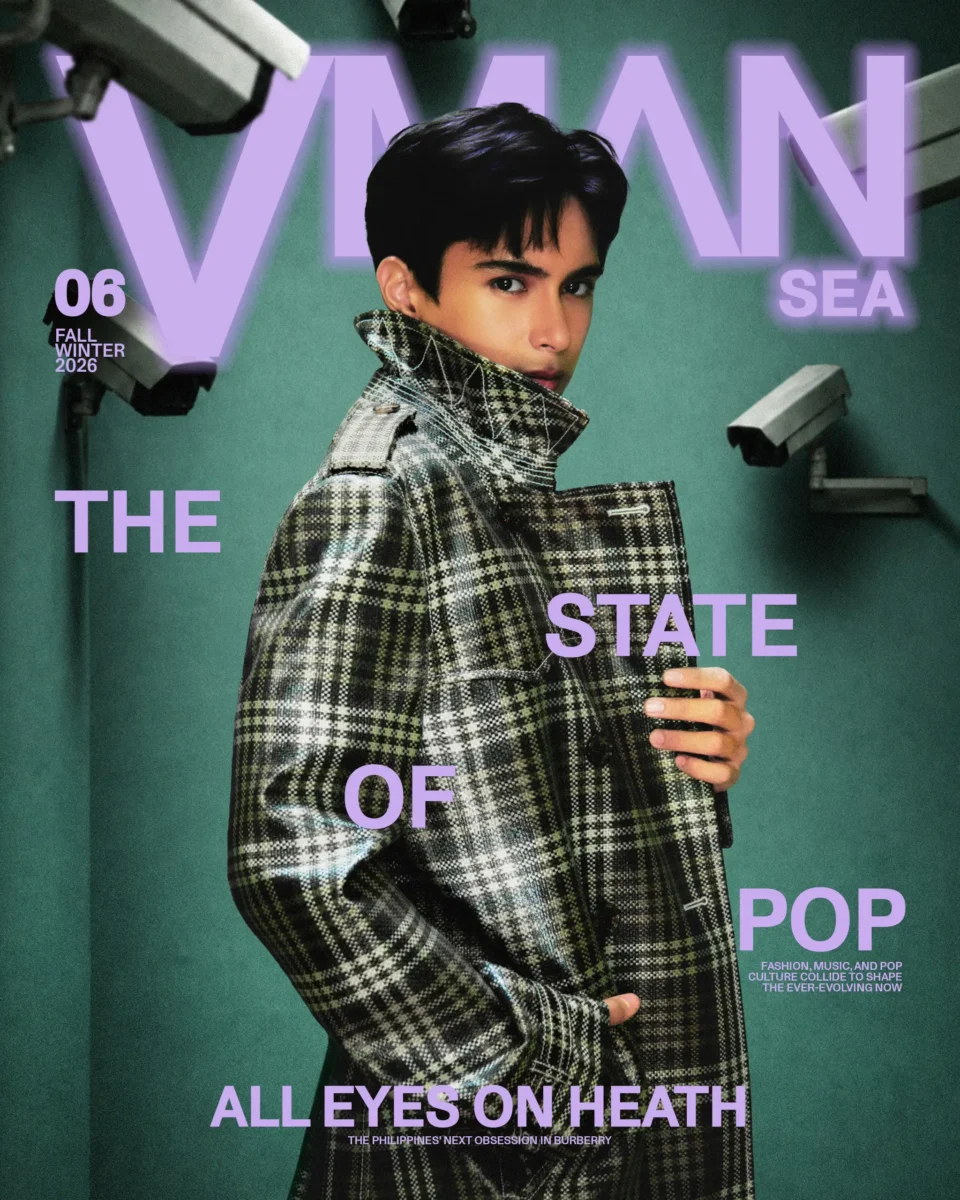
Angga Yunanda Is Indonesia’s Cinematic Wunderkind
With more than 11 million followers and his face towering across Jakarta’s malls, Angga is transforming from Indonesian superstar into one of Southeast Asia’s most compelling actors
By Dayne Aduna
- Angga Yunanda is an Indonesian actor who transitioned from teen soap opera fame into a leading figure in Southeast Asian cinema.
- His breakout film role was in Dua Garis Biru (2019), which sparked national discussion and earned major award recognition.
- Para Perasuk (Levitating) is a Sundance-selected film where he plays Bayu, a spirit channeler navigating trance rituals and emotional instability.
- For the role, he underwent months of physical training, including crawling exercises and movement-based performance workshops.
- His acting style is defined by subtle performances that emphasize internal emotion over overt dramatic expression.
Inside the rise of Indonesia’s global film star
Walk through Jakarta’s supersized malls long enough and Angga Yunanda eventually appears everywhere.
His face hangs above cosmetic counters and giant LED screens as the face of Garnier Men. His dramas dominate streaming charts. His films routinely trend online within hours of release.
In Indonesia, where celebrity culture moves at impossible speed, and attention spans evaporate overnight, Angga has managed something far more difficult than virality: permanence.
At 25, he occupies a rare space in Indonesian entertainment. He is simultaneously a mainstream heartthrob, a box office draw, a fashionFashionThe art and industry of designing, producing, and styling clothing, footwear, accessories, and beauty trends. It reflects cultural influences, personal expression, and evolving styles across seasons and markets. and grooming fixture, and increasingly, one of the country’s most respected young actors.
What began with teen soap operas like Malu-Malu Kucing and Mermaid in Love has evolved into a career that now stretches from commercial hits to psychologically layered arthouse cinema. He has become the kind of actor directors trust with emotionally difficult material and the kind of celebrity brands trust to sell aspiration itself.
That duality matters. In another timeline, Angga could have remained safely inside the polished machinery of teen stardom. Instead, he kept choosing stranger, riskier, and more emotionally demanding projects.


Films like Dua Garis Biru established him as a serious dramatic actor capable of carrying one of Indonesia’s most culturally significant coming-of-age films.
Then came Para Perasuk (Levitating), director Wregas Bhanuteja’s supernatural fever dream that premiered at Sundance earlier this year, where Angga transformed himself physically and emotionally into something feral and almost unrecognizable.
How Para Perasuk changed Angga’s approach to acting
For the film, Angga underwent months of physical workshops focused on movement and body expression. Unlike his earlier projects, where emotional dialogue often carried the performance, this role demanded physical instinct.
“In my previous films, the focus was usually more on scenario and emotion,” he explains. “But this time it was combined with very intense physical training. I also had to practice musical instruments, so there were many layers to prepare for.”
The role of Bayu, a young spirit channeler navigating emotional instability, required him to embody trance-like movement through crawling exercises inspired by roh lintah. Over time, he began experiencing the character less intellectually and more physically.
“We had workshops for more than three months, and after a while I felt like my body could move freely without needing to think too much first,” he says. “Usually we think before we act, but during this process my body began understanding the character naturally.”


The production itself was physically punishing. Filming often took place across rough terrain, from asphalt roads to gravel and mud, leaving Angga with bruises and injuries during the shoot.
“But for me, everything felt worth it because of the experience I shared with the team,” he says.
Why Angga believes simple characters are the hardest to play
Although Para Perasuk demanded an extreme physical transformation, the actor says emotionally restrained characters remain the most difficult roles he has encountered.
“I always feel that characters who look ordinary are actually the hardest to achieve because they contain so many subtle layers,” he says.
“Sometimes when we have bigger or more dramatic scenes, it becomes easier to express ourselves. “But believably portraying something simple and sincere is much more challenging for me.”
This has shaped much of his filmography. Across projects like Dua Garis Biru, Cinta Pertama, Kedua & Ketiga, and Para Perasuk, Angga frequently portrays characters carrying emotional loneliness beneath outward composure.
“I often end up playing people who seem strong on the outside but are actually vulnerable inside,” he says. “Maybe it’s fate.”


From Lombok to Jakarta
Long before becoming one of Indonesia’s most recognizable actors, Angga was simply a teenager growing up in Lombok with little connection to the film industry.
“When I was 15, I was invited to join a sinetron project, and before that I never had ambitions to become an actor,” he says.
At the time, Jakarta felt distant both geographically and professionally. Most opportunities in Indonesian entertainment were concentrated in the capital, making the industry seem inaccessible from Lombok.
Still, his parents encouraged him to take the opportunity seriously. “They told me that opportunity won’t come twice.”
After entering the industry through television dramas, Angga gradually built a reputation for emotional versatility and willingness to experiment creatively. Over time, he says, he fell in love not only with acting itself but with Indonesian cinema more broadly.
“I’m very grateful because I ended up surrounded by amazing friends who truly love film, especially Indonesian cinema,” he says. “Their passion became part of the fire that keeps me connected to this industry.”
Indonesia’s new generation of cinema
Angga’s breakout film role arrived through Dua Garis Biru, Gina S. Noer’s acclaimed 2019 drama centered around teenage pregnancy and family pressure.
The film became one of Indonesia’s most talked-about releases that year, sparking national conversations around sex education while earning critical and commercial success. His performance also earned him a nomination for Best Lead Actor at the Indonesian Film Festival.
He still speaks about Noer with admiration. “She’s a perfectionist,” he says, laughing while recalling the audition process. “I had to go through multiple castings for that role.”
What stayed with him most was the realization that acting required endless curiosity. “As soon as you think you know it all, you’re done,” he says.
That mindset continues to define the way he approaches his career today. Even after years of success, he still frames himself as an actor learning through collaboration and lived experience.
Can Indonesian films connect with global audiences?
For Angga, the Sundance premiere of Para Perasuk became proof that Indonesian storytelling could resonate internationally without compromising its cultural specificity.
“I was very happy and surprised by the response from global audiences,” he says. “Even though many people there weren’t familiar with Indonesian culture, they still connected emotionally with the film.”
What surprised him most was how curiosity followed emotional connection. “They became interested in Indonesia afterward,” he says. “That uniqueness was exactly what drew people in.”
The actor believes many international viewers still have not fully seen the range and emotional complexity of Indonesian cinema.
“I think global audiences still haven’t fully seen how rich and emotionally powerful Indonesian storytelling can be,” he says.


How fame, grooming, and public image fit into Angga’s life
Despite the increasingly global trajectory of his career, Angga still moves through fame with surprising practicality. In Jakarta, he may be the face staring down from giant beauty campaigns and fashionFashionThe art and industry of designing, producing, and styling clothing, footwear, accessories, and beauty trends. It reflects cultural influences, personal expression, and evolving styles across seasons and markets. retail screens, but off-camera, his relationship to grooming and celebrity image remains relatively understated.
That contrast is part of what makes him so compelling as a public figure. The actor capable of throwing himself into psychologically intense performances and physically punishing productions still talks about skincare with the simplicity of someone describing an everyday household routine.
“I’m actually a very simple person when it comes to skincare and grooming,” he says. “Usually I clean my face several times with micellar water, then wash it again with face wash, and sometimes I use moisturizer too.”
His overall routine, he explains, remains minimal and personal despite his growing visibility as a celebrity ambassador and public figure.
What’s next for Angga Yunanda?
The actor says he remains interested in exploring darker and more psychologically complex genres, particularly thrillers and mystery-driven stories that allow him to push further emotionally and physically as an actor.
“I feel there are still many characters I really want to play,” he says. “Characters that are full of mystery or psychological tension really interest me.”
His ambition feels fitting for an actor whose career has increasingly moved toward emotional complexity rather than comfort.
Even as his celebrity status continues to expand across Indonesia through blockbuster films, streaming hits, and major brand campaigns, Angga appears less interested in maintaining a fixed image than in dismantling it project by project.
For now, his trajectory points toward something larger happening within Southeast Asian cinema itself. Indonesian actors are no longer confined to domestic recognition alone.
Through projects like Para Perasuk, Angga is helping introduce Indonesian storytelling to wider international audiences while still remaining deeply connected to local culture.
At 25, he has become one of Indonesia’s defining young actors, balancing blockbuster visibility with artistic ambition in ways few performers successfully manage.
And in Jakarta, where his face still glows across giant mall screens above passing crowds, that transformation is already impossible to miss.
Frequently Asked Questions
An Indonesian actor who rose from teen soap operas to becoming one of Southeast Asia’s most versatile film stars.
Dua Garis Biru, a 2019 drama that sparked national conversation in Indonesia and earned him major award recognition.
A Sundance-selected film where he plays a spirit channeler in a ritual-based community exploring trance, possession, and psychology.
Through months of physical training, including crawling, movement workshops, and learning performance through the body.
Subtle and emotionally restrained performances that focus on internal vulnerability rather than dramatic expression.
Chief of Editorial Content Patrick Ty
Photography Zaky Akbar
Art direction Mike Miguel
Editor Dayne Aduna
Grooming Ryan Ogilvy
Hair Iwan Taufik
Photography assistant Ahmad Taufik Lubis
Special thanks Veronica Dieoni

Dayne Aduna
Dayne Aduna is an Associate Editor at VMAN Southeast Asia, specializing in fashion, grooming, film, television, and contemporary pop culture. With a strong editorial focus on menswear, his work explores how style intersects with shifting cultural movements across Southeast Asia and beyond.
His expertise spans fashion journalism, celebrity profiling, grooming and skincare trends, fragrance, runway reporting, and cultural commentary, with a particular eye for emerging creatives and youth-driven style.
Dayne has written extensively on fashion houses, seasonal trends, designer collections, and the evolving image of the modern Southeast Asian man, bringing both editorial depth and cultural relevance to his coverage.