Santino Sets His Course
Athlete and model Santino Rosales pauses between seasons of ambition to reflect on who he’s been and who he’s becoming




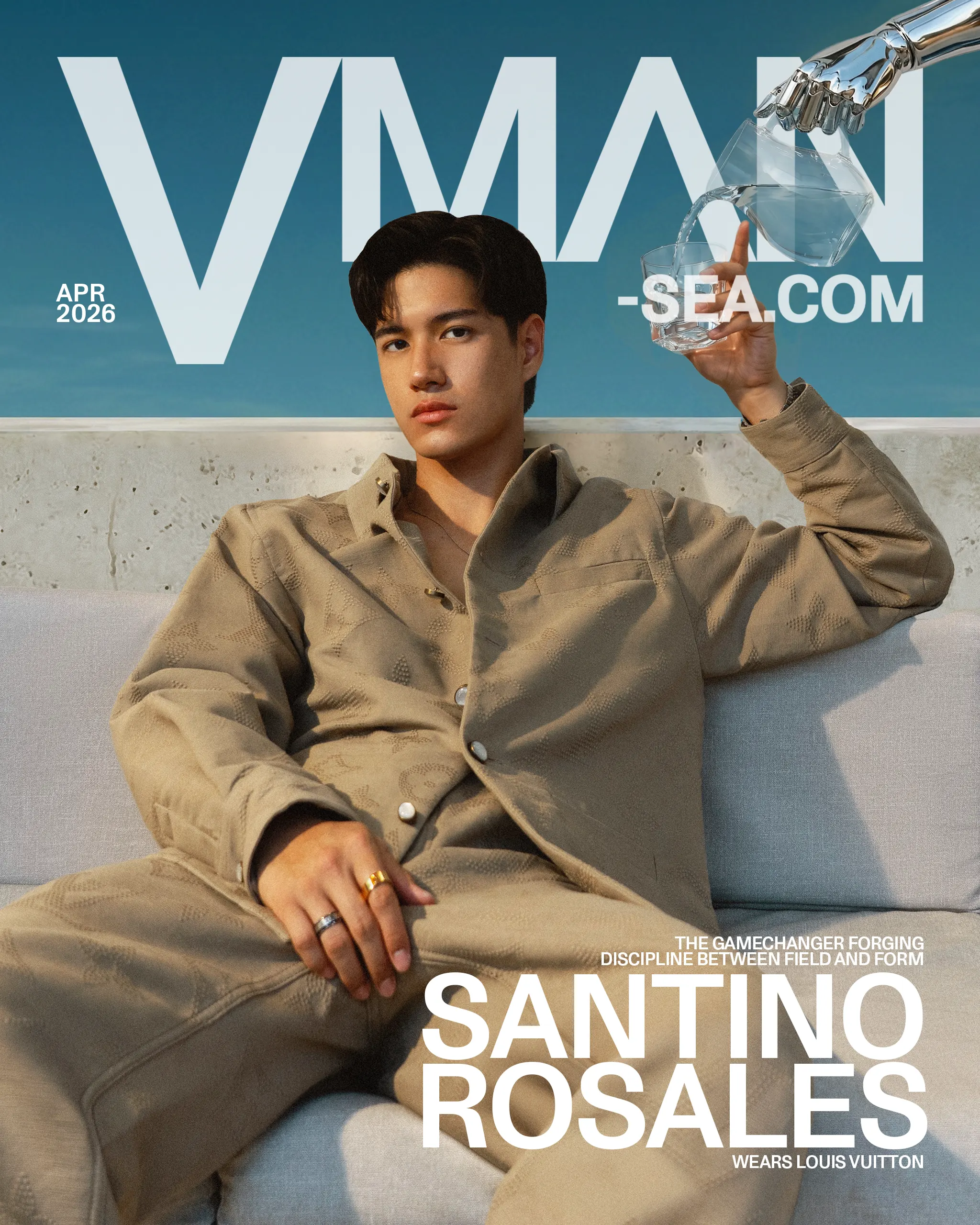
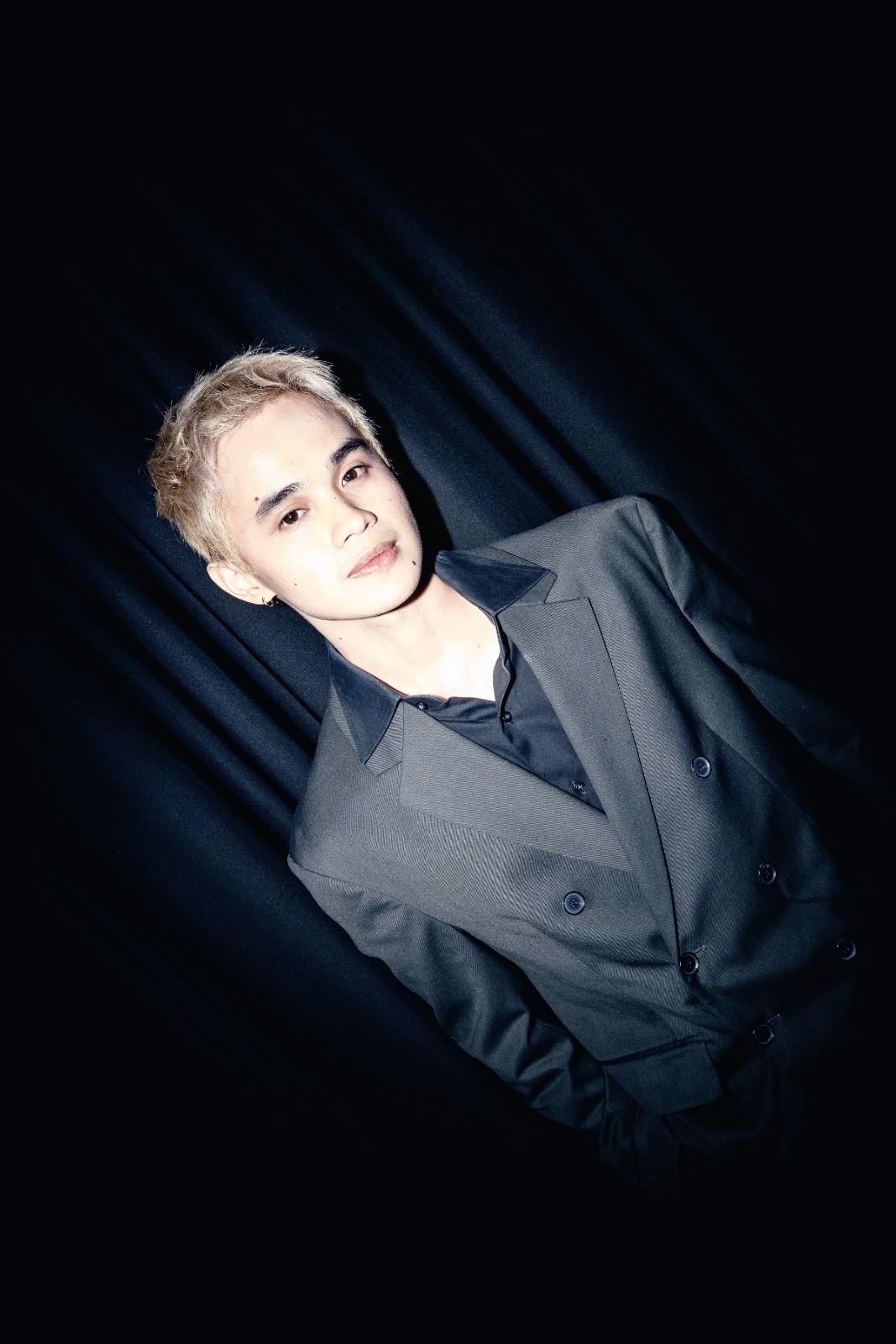
Santino Rosales does not rush to fill a room.
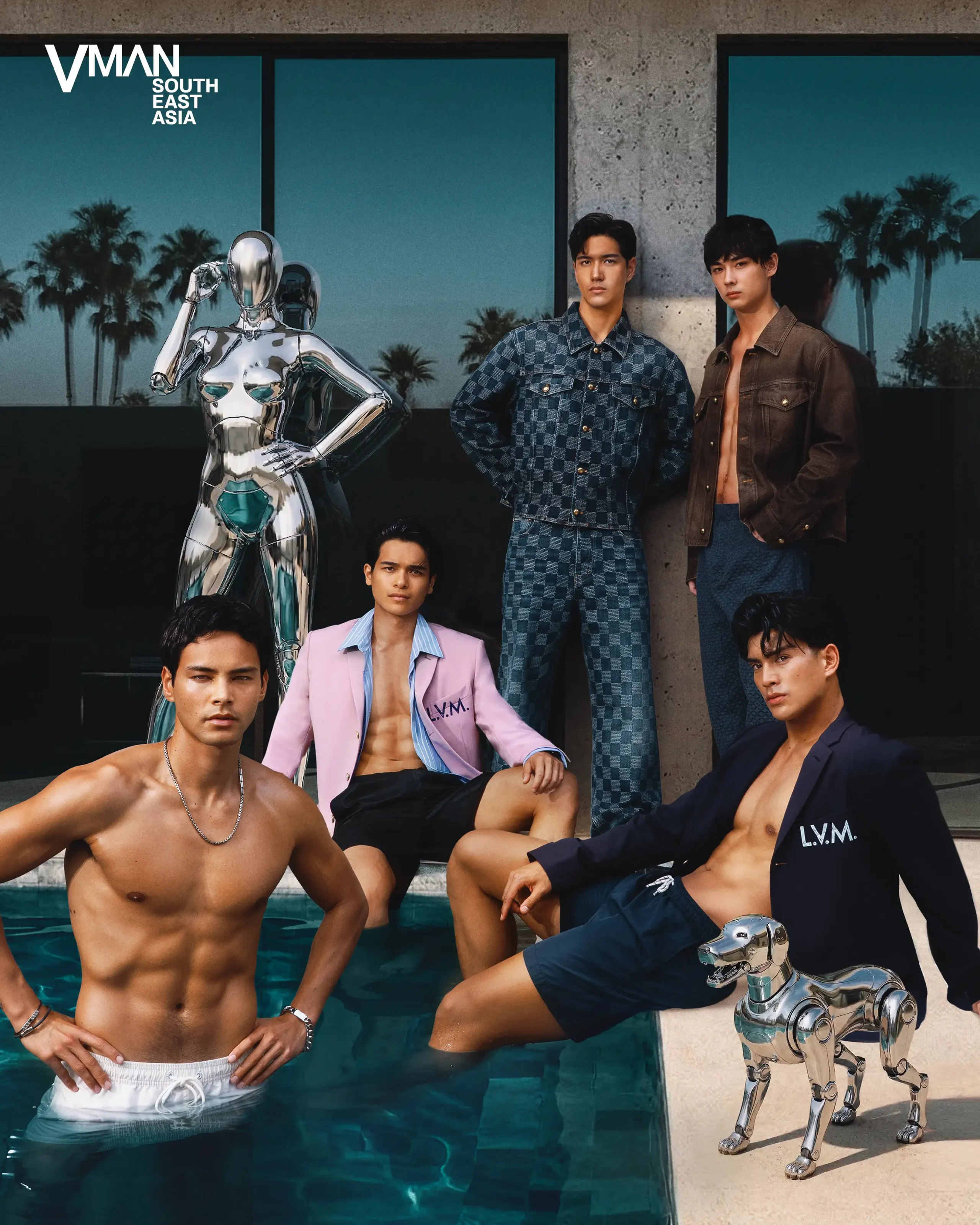
During the shoot, as stylists move briskly, fellow cover stars take turns before the camera, and editors map out the next layouts, he remains steady. Neither withdrawn nor aloof, just present, without the need to announce himself. He observes and steps forward only when it is time.
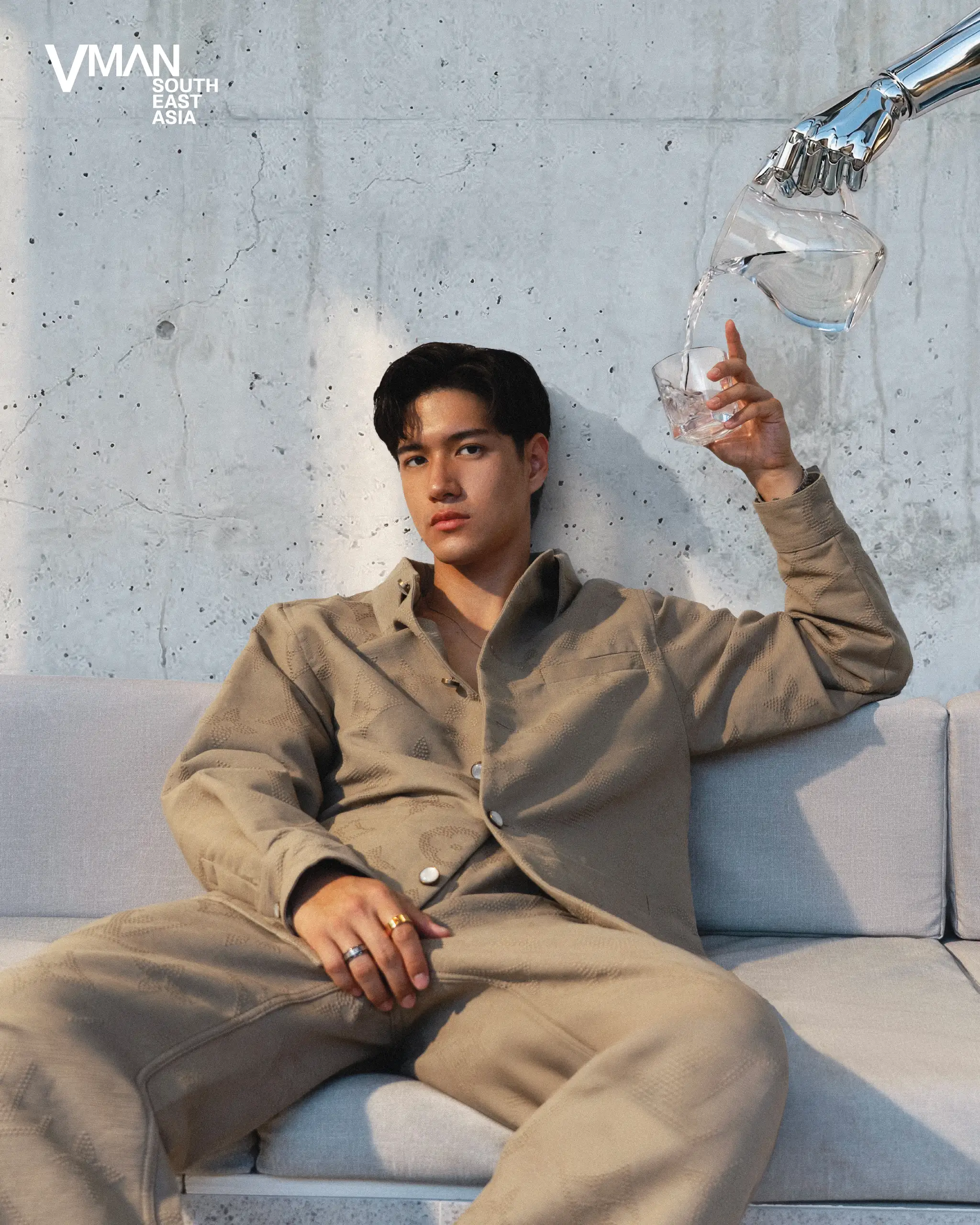
It would be easy to misread that demeanor as distance, but it isn’t. It is composure. Santino is comfortable in his own space and in his own silence. That self-containment, more than volume ever could, draws attention.
READ ALSO: The New Wave of Gamechangers Across Style, Sports, and Culture
Between two arenas
He moves between football and fashionFashionThe art and industry of designing, producing, and styling clothing, footwear, accessories, and beauty trends. It reflects cultural influences, personal expression, and evolving styles across seasons and markets.Go to Fashion Glossary, two arenas that stage masculinity differently. On the pitch, it is physical, kinetic, and demanding. In front of the camera, it is aesthetic and controlled. Asked where he feels most himself, he answers immediately: “In football, 100 percent.” Football, he explains, is the way he unwinds from the rest of the world.
“When I have a ball at my feet, I forget about all my worries.”
Modeling may magnify him, but the sport anchors him. Wearing jersey number 4 for Maharlika Official, he carries that commitment into structured competition through training and teamwork. The discipline is lived match after match.
Discipline as a throughline
That same structure carries into his modeling work. Santino is a member of the Professional Models’ Association of the Philippines (PMAP), a collective known for upholding industry standards. In an environment often perceived as unpredictable, that affiliation signals something else: professionalism and discipline. Modeling, for him, is organized and measured work.
Yet he resists the idea that he becomes someone else depending on the setting.
“I don’t really differentiate myself when I’m dealing with both careers. I like to show a bit of myself in everything that I do. I like to stay true to myself.”
Still, modeling tests self-perception. Image is currency, and comparison is constant. “You tend to compare yourself to people. You tend to nitpick at yourself,” he says, acknowledging the pressure. The internet makes that easy. But he counters it with the same mindset he applies on the field.
“You are unique. It’s not only your external beauty that matters. It’s also what’s inside.”
Football, often associated with aggression and dominance, has taught him something more relational. “Through football, I value the sense of community,” he says. It is about caring for teammates and even strangers encountered along the way.
“Sometimes you come across a person you may never meet again, and that’s your chance to really make an impact.”
His understanding of masculinity retains structure, discipline, provision, responsibility, but it does not reject feeling. When asked how he handles loss or setbacks, he speaks plainly. “The first reaction is to deal with it emotionally. But I’ve been taught not to push aside the emotion, but rather accept it.” Acceptance, he says, makes it easier to find a logical solution and improve the next time.
Choosing his own path
There is no drama in the way he frames his decisions. In a country where basketball is practically the national sport, choosing football could have been read as rebellion. He does not see it that way. “We all have our own paths and our own interests,” he says with the ease of someone who has answered the question before. There is no urge to follow the herd, only the certainty of choosing his own direction.
The same steadiness appeared when he entered modeling, a pursuit often viewed as uncertain in households where job stability is emphasized from childhood. He never felt the need to justify it. “I have two very supportive parents,” he says. Passion, instilled early, was encouraged rather than questioned.
“When you have enough passion to do something really well, it then becomes practical.”
Ambition, for Santino, is clear but measured. He wants to take his sport beyond borders. “I would love to have a season abroad, if God permits,” he says without hesitation. He had already taken concrete steps before a knee injury intervened. A minor setback, he calls it, though it requires a few months of rest.
A room that narrows
Outside the shoot location, the sun has long set. Inside, the room settles into wrap-up mode. The crowd and the energy have both thinned. Other cover stars change back into their own clothes. Assistants move equipment out. Conversations drift in fragments. Yet for a brief stretch, as he is interviewed last, the space narrows to him. For now, this is his arena.
The injury pauses his plans, but it also creates an opportunity for reflection. A footballer used to motion sits still and speaks about the man he hopes to become.
“I want to be the kind of man who is able to provide for my loved ones. And I want to be a source of inspiration to those around me.”
There is nothing ornamental about the aspiration. No grand declarations, just direction.
The larger arena he has in mind will have to wait. For now, he heals and prepares. When it does come, it will not feel like reinvention, only continuation.
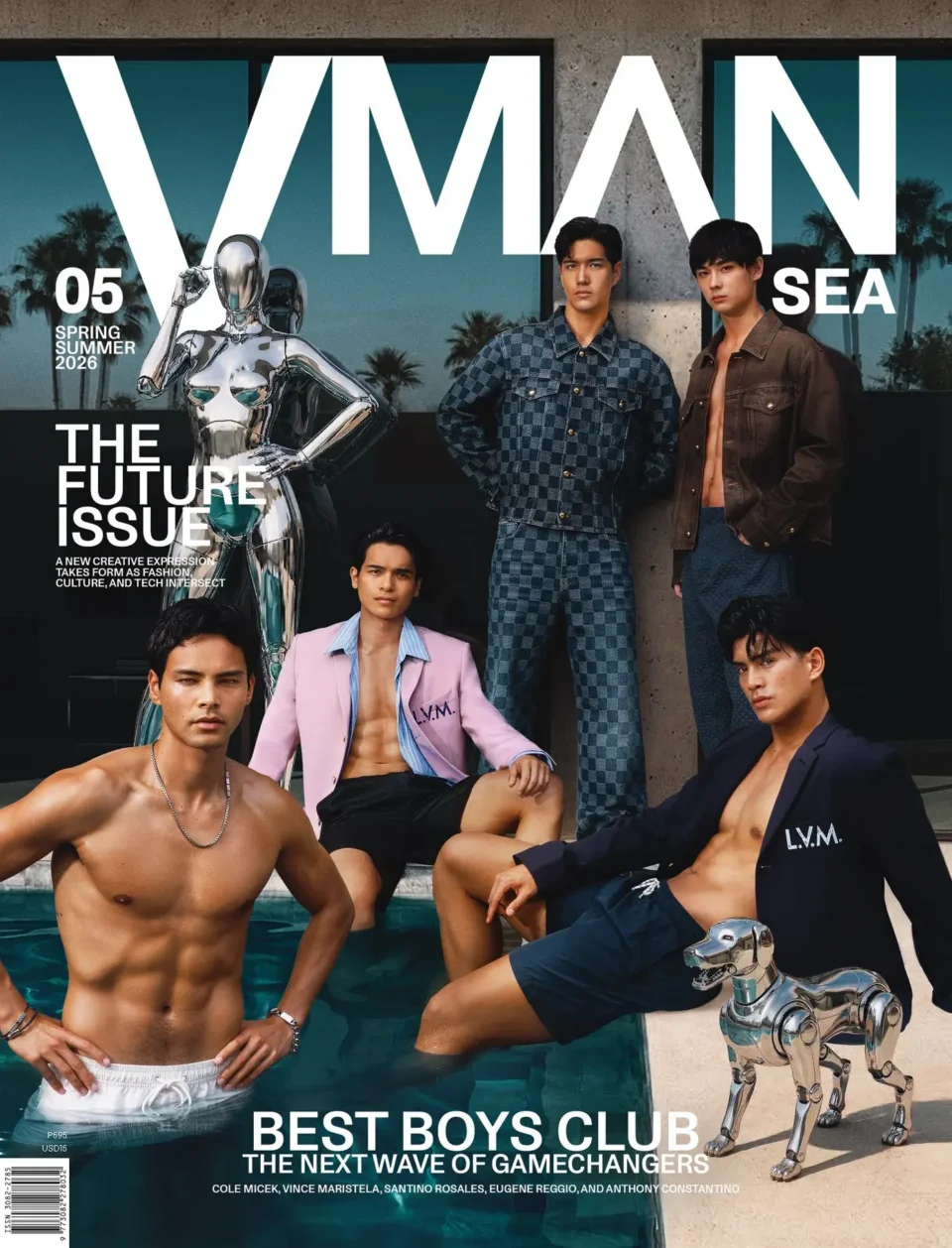
As seen in the pages of VMAN SEA 05: now available for purchase!
Chief of Editorial Content Patrick Ty
Photography Ronnie Salvacion
Creative direction Vince Uy
FashionFashionThe art and industry of designing, producing, and styling clothing, footwear, accessories, and beauty trends. It reflects cultural influences, personal expression, and evolving styles across seasons and markets.Go to Fashion Glossary Rex Atienza
Art direction Mike Miguel
Editor Dayne Aduna
Grooming Myckee Arcano, assisted by Jam Jacobe and George Flores
FashionFashionThe art and industry of designing, producing, and styling clothing, footwear, accessories, and beauty trends. It reflects cultural influences, personal expression, and evolving styles across seasons and markets.Go to Fashion Glossary associate Corven Uy
Digital imaging PJ Calingasan
Production Francis Vicente
Photography assistant Joey Alborelas
Special thanks Jeanger Navarro, Lorraine Santos, Lucerne Luxe, and PMAP
Frequently Asked Questions
Santino Rosales is a professional Filipino model and athlete who balances a career on the pitch with high-profile fashion campaigns across Southeast Asian media landscapes.
Santino Rosales plays football for Maharlika Official, wearing jersey number 4, where he applies rigorous athletic discipline and builds a strong sense of community teamwork.
Yes, Santino Rosales is a professional model and an official member of the Professional Models’ Association of the Philippines, an organization dedicated to upholding industry standards.
Santino Rosales handles setbacks by emotionally accepting the situation first, which allows him to process the reality logically, find actionable solutions, and improve for his next performance.
Santino Rosales plans to take his athletic career international by playing a football season abroad, an ambition he remains committed to achieving once his knee injury heals.
Recommended Video