The Standout Trends From the 2026 Met Gala
From sophisticated tailoring to the rise of maximalist adornment, menswear at the Met Gala is undergoing a radical evolution in texture and structure




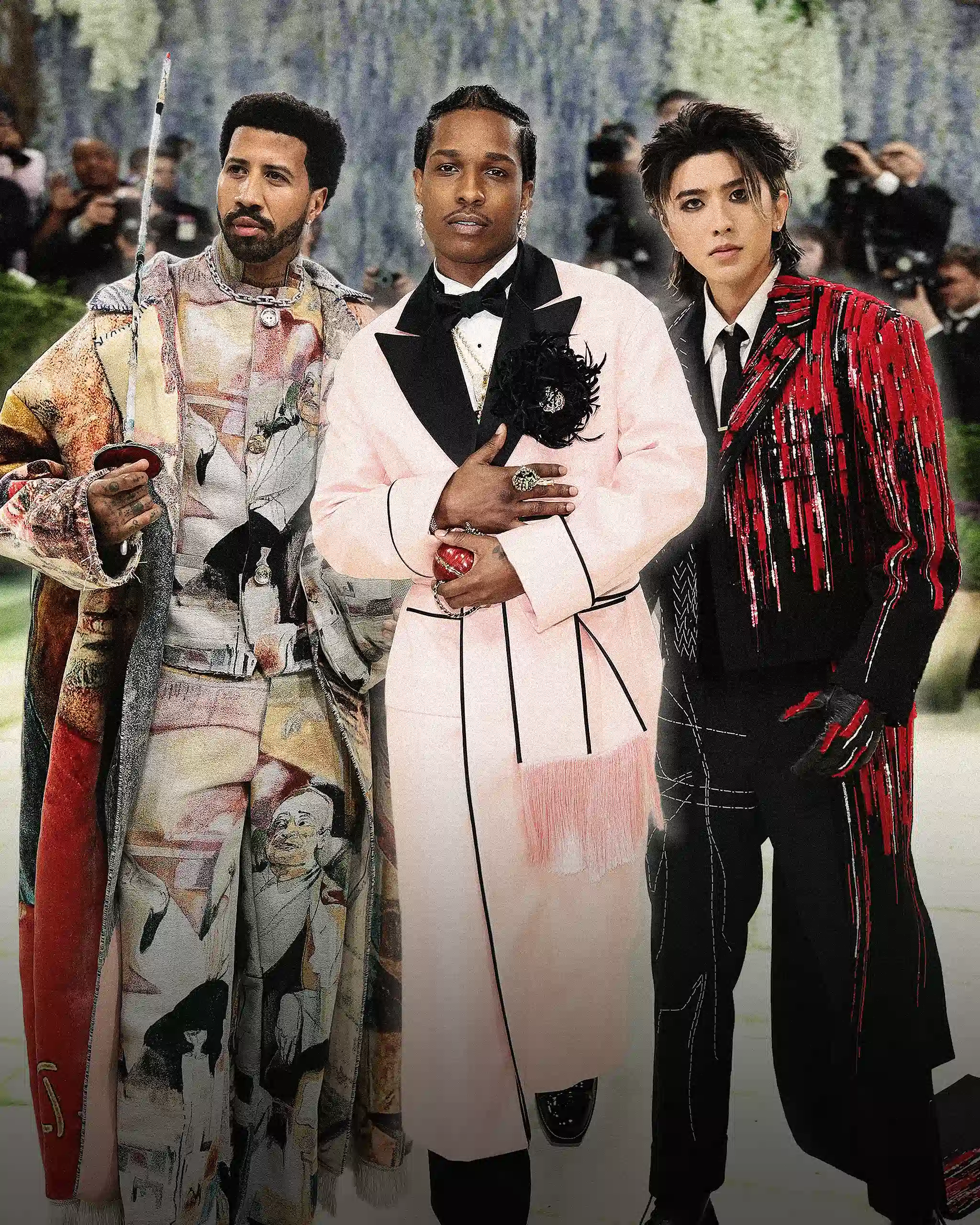
The Met Gala has long been revered as a laboratory for sartorialSartorialRelating to tailoring, clothes, and the way a man dresses, often implying careful attention to quality, fit, and style. A sartorial approach to menswear values craftsmanship and details, and theGo to Sartorial Glossary experimentation, an arena where the boundary between costume and couture is perpetually blurred.
In recent years, men at the event have boldly abandoned the standard black-tie tuxedoTuxedoA formal evening suit, usually black or midnight blue, featuring satin-faced lapels and a matching stripe along the trouser leg, worn with a bow tie. Reserved for black-tie, the tuxedoGo to Tuxedo Glossary. In this era of “New Formalism,” the traditional suit has evolved from the final look into a starting point for creative expression.
Modern red carpet fashionFashionThe art and industry of designing, producing, and styling clothing, footwear, accessories, and beauty trends. It reflects cultural influences, personal expression, and evolving styles across seasons and markets.Go to Fashion Glossary focuses on tactile richness, historical depth, and bold decadence. Through antique jewelry and innovative designs, this year’s event established these elements as the new standard in influential menswear.
The brooch renaissance
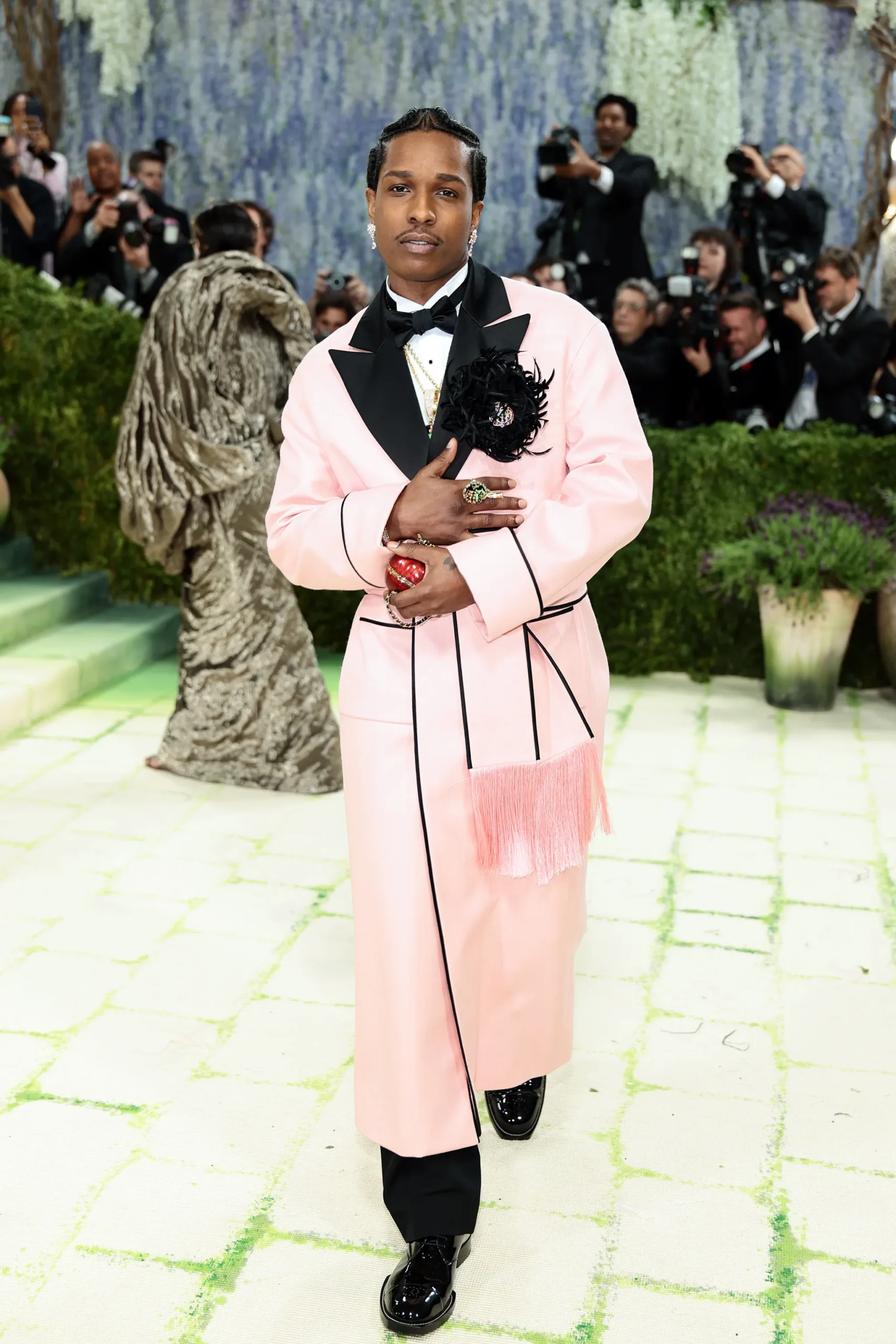
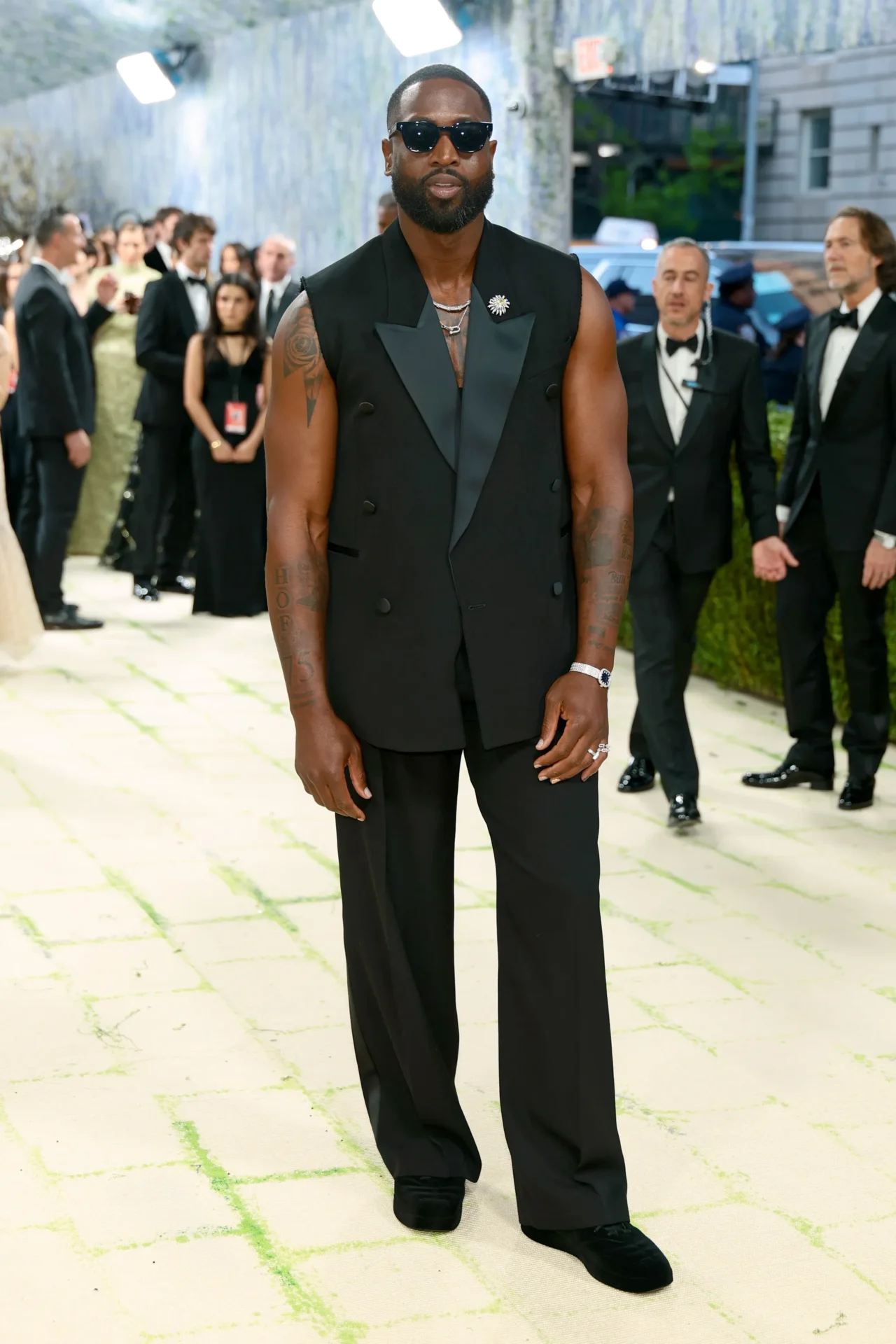
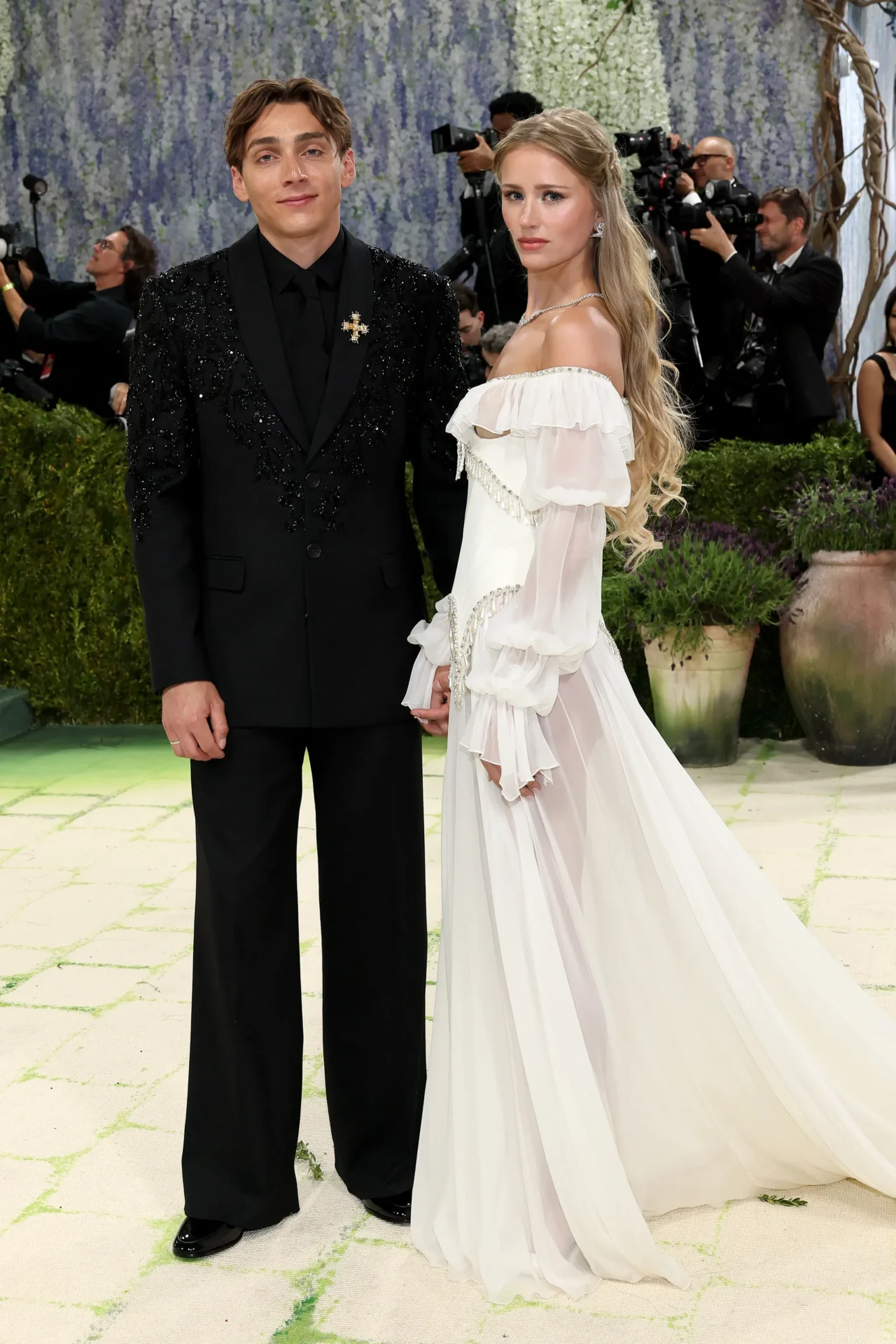
Perhaps the most significant shift in men’s jewelry is its migration from the wrist to the lapelLapelThe folded flap on the front of a jacket or coat, below the collar, available in notch, peak, and shawl styles. Lapel width and shape strongly influence a suit's characterGo to Lapel Glossary. No longer considered a vintage relic, the brooch has become the season’s definitive statement.
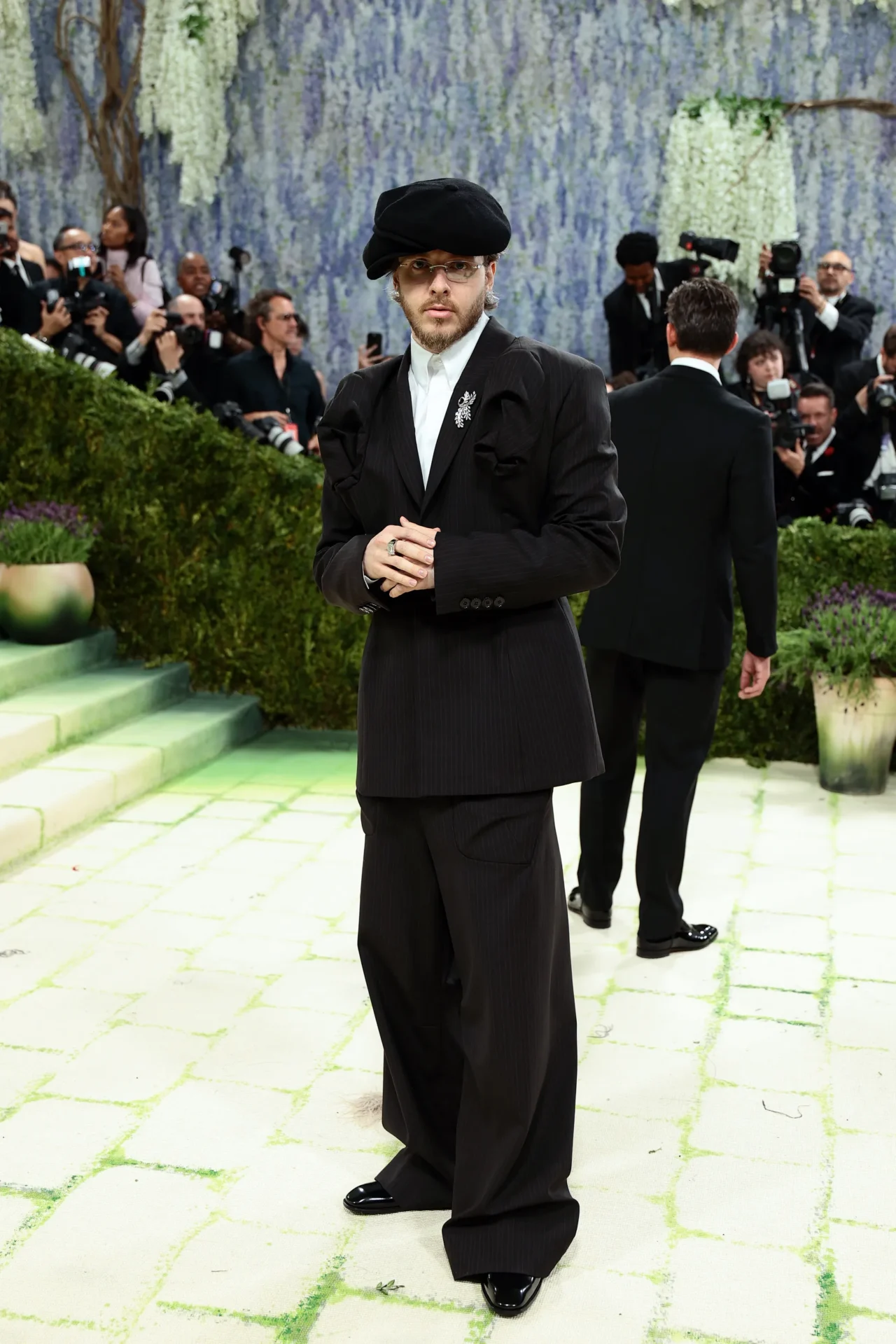
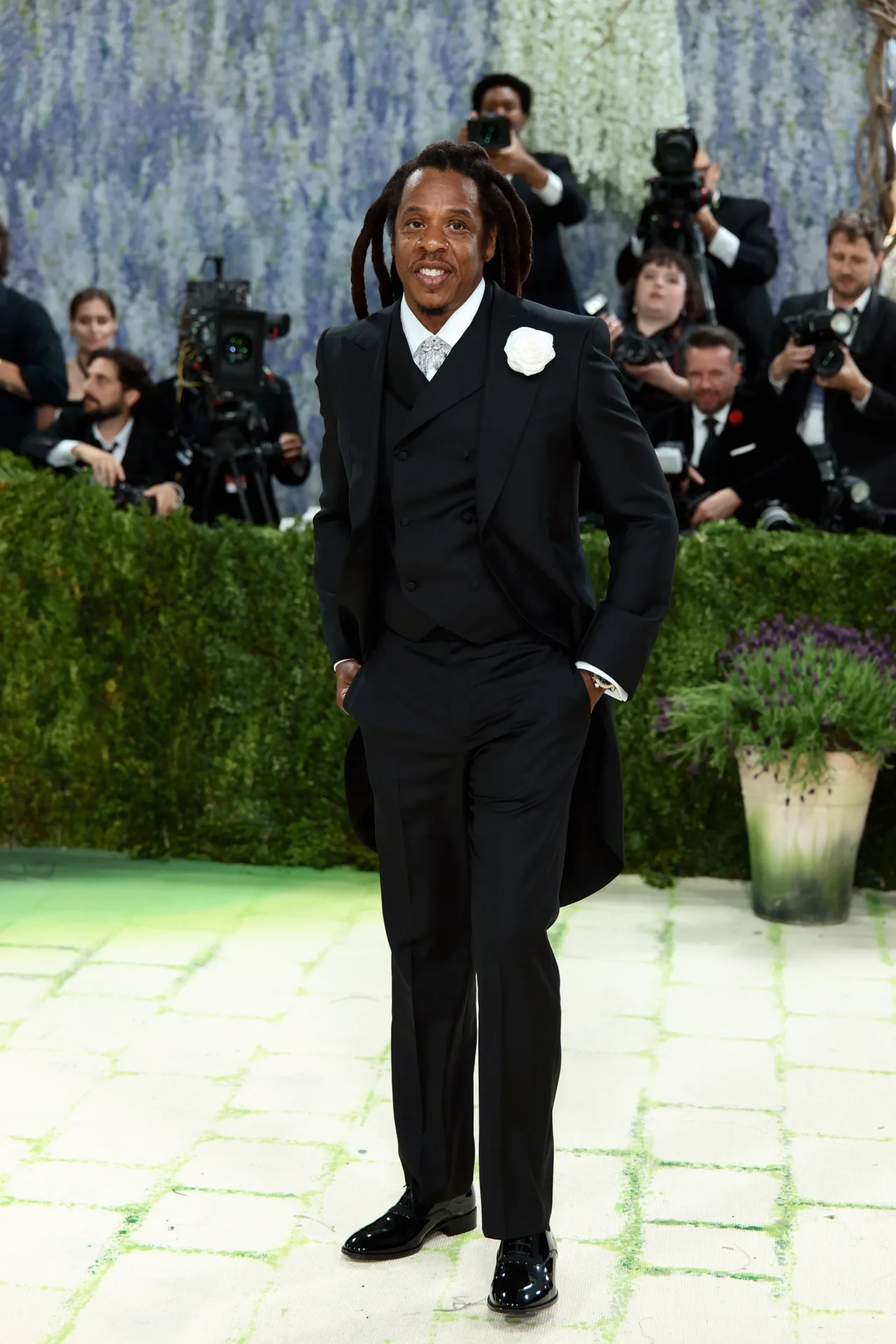
Regulars like Jay-Z and A$AP Rocky used high-jewelry clips as markers of prestige, while athletes Dwyane Wade and Mondo Duplantis blended classic tailoring with modern flair. Even Jack Harlow opted for a pinned accent, proving a single piece can outweigh a traditional tie.
Sculptural silhouettes
The architecture of the suit is being rewritten. The era of the garment as sculpture is here. Jeremy Pope walked the red carpet with a sculptural male torso embedded in his clothing.
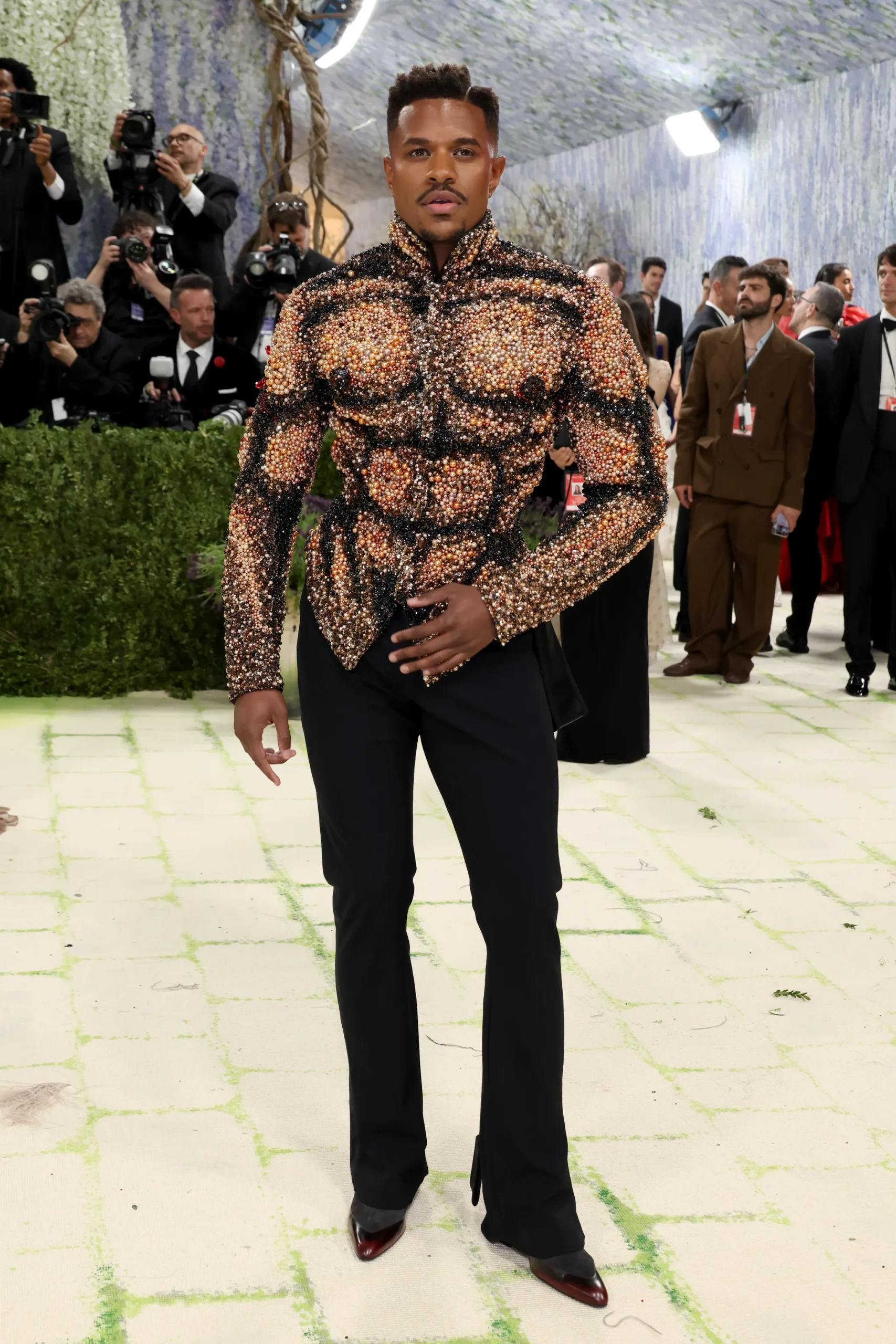
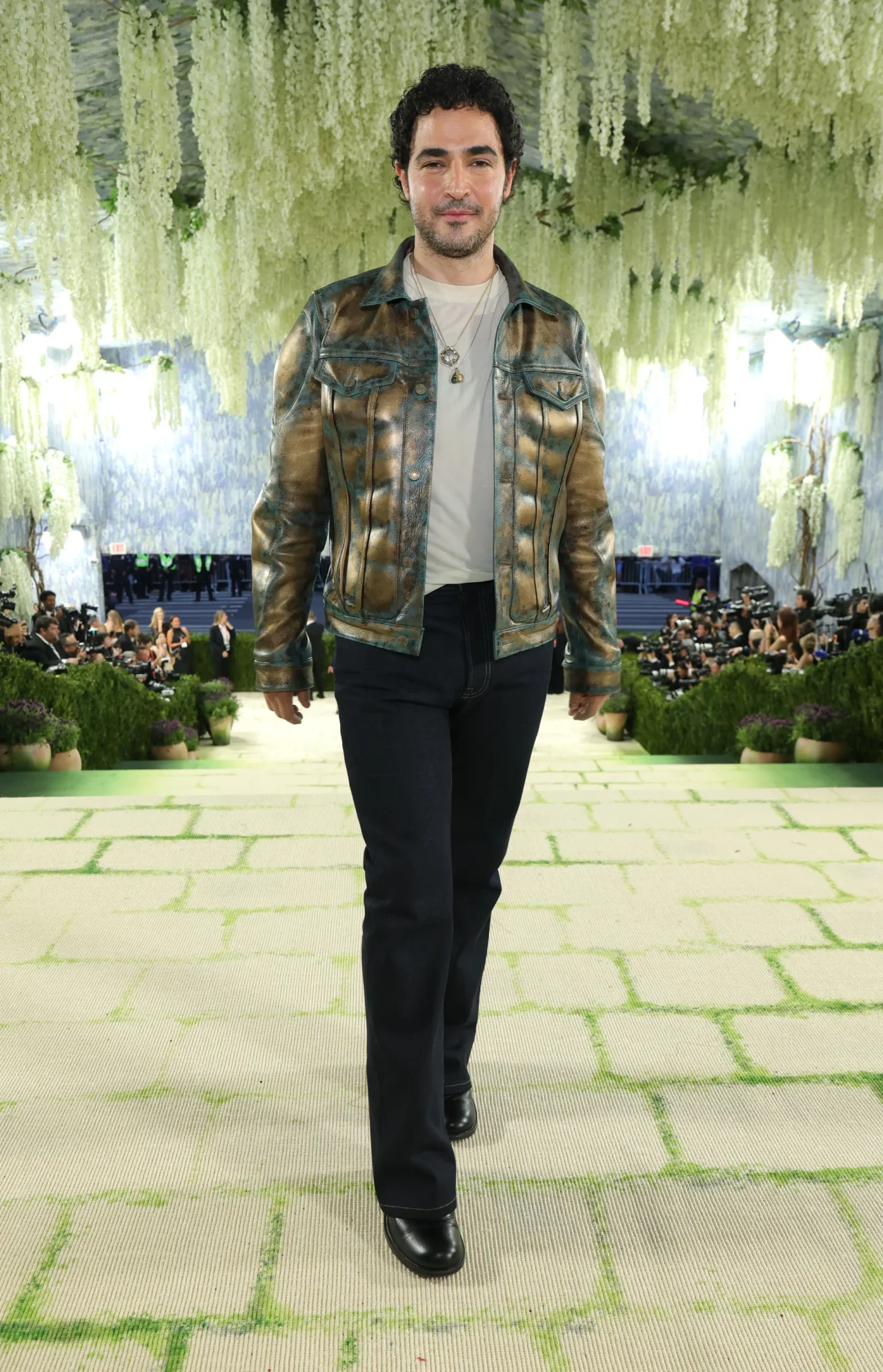
Other attendees like Zac Posen and Michael Braun also explored the male form as a structural foundation, creating garments that function as engineered works of art and challenge perceptions of the male frame.
The rise of blingmaxxing
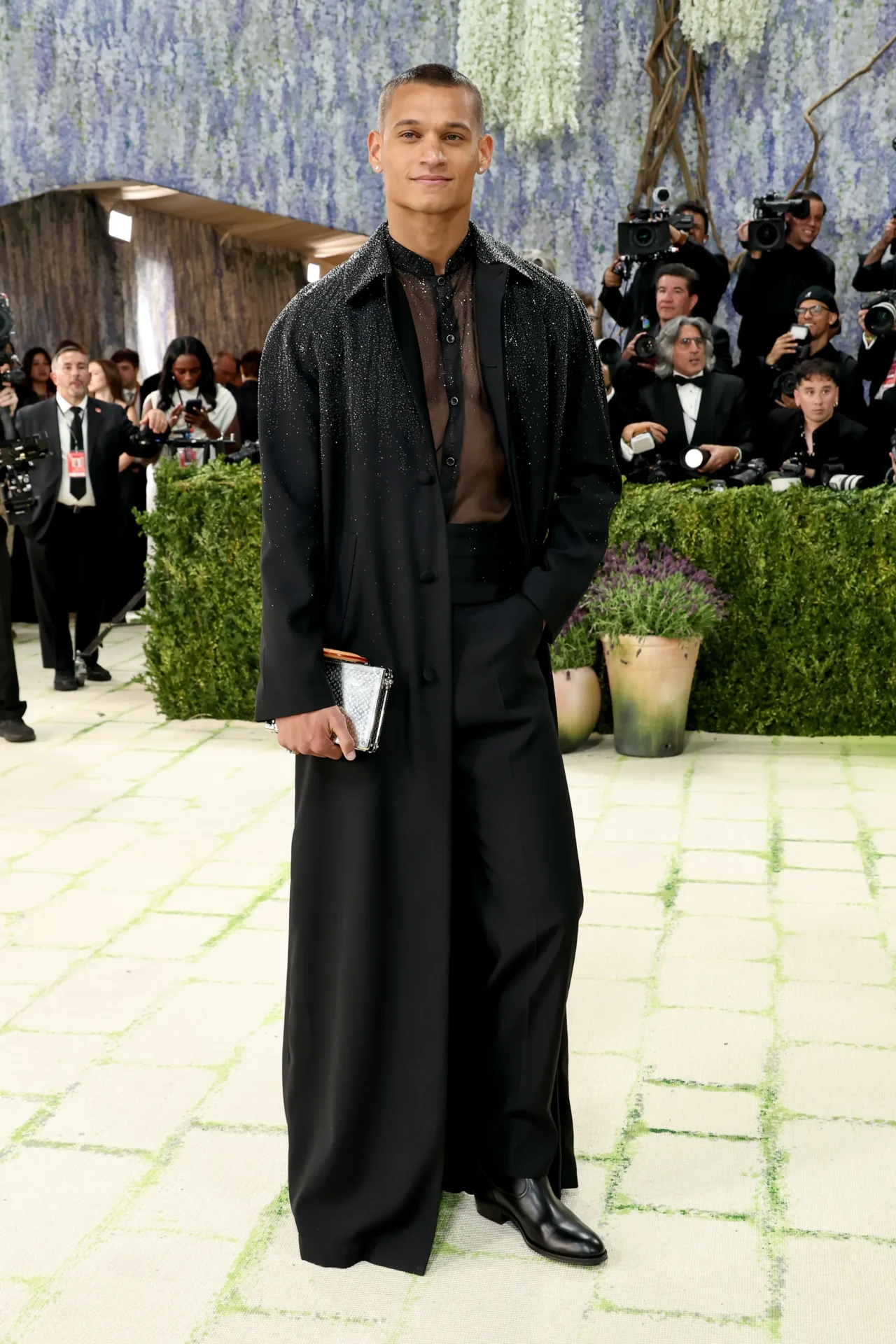
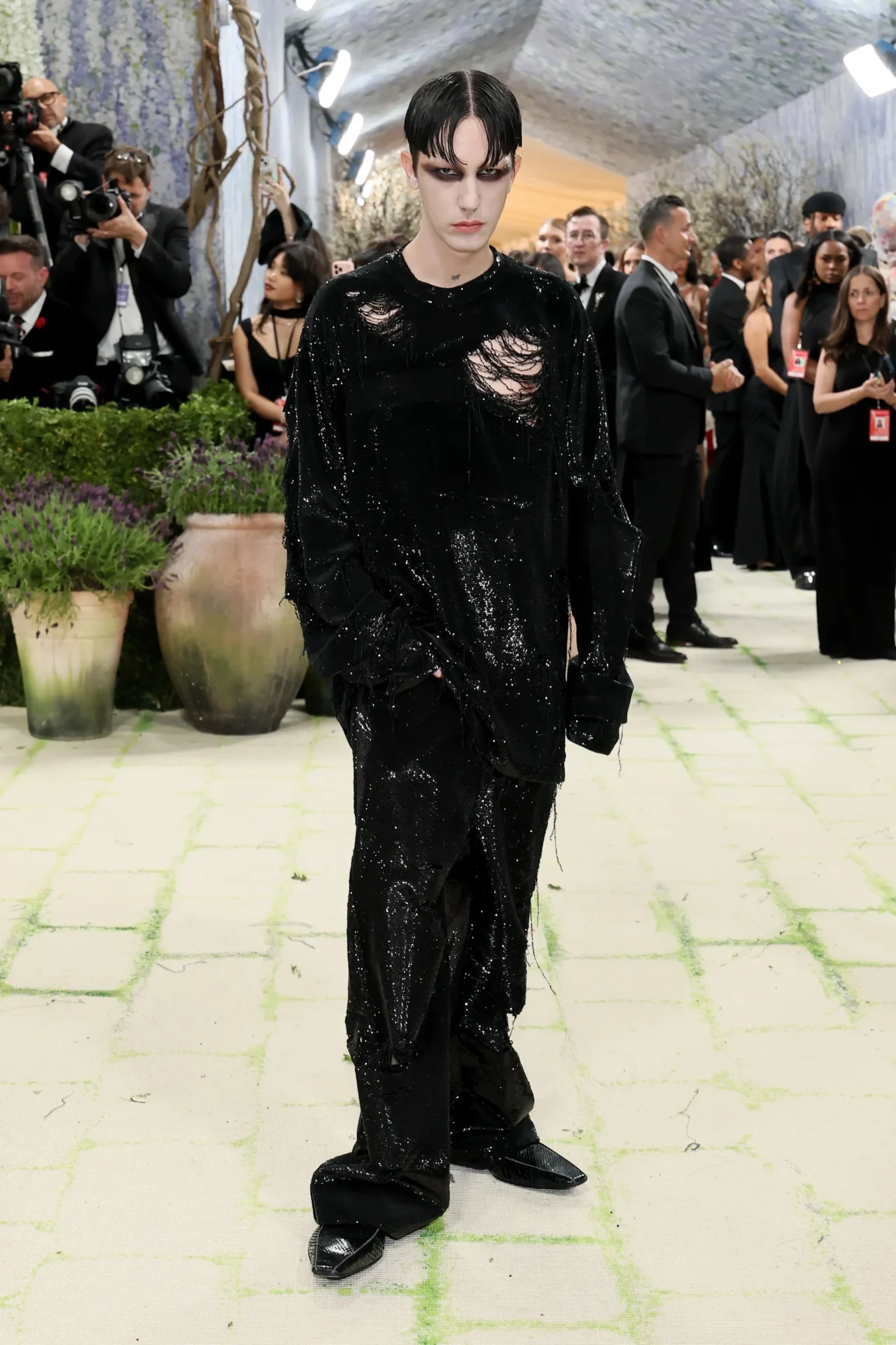
Blingmaxxing shifts focus from accessories to total-body adornment. Embracing an “all-is-more” philosophy, the trend features garments heavily embellished with crystals, sequins, and precious metals.
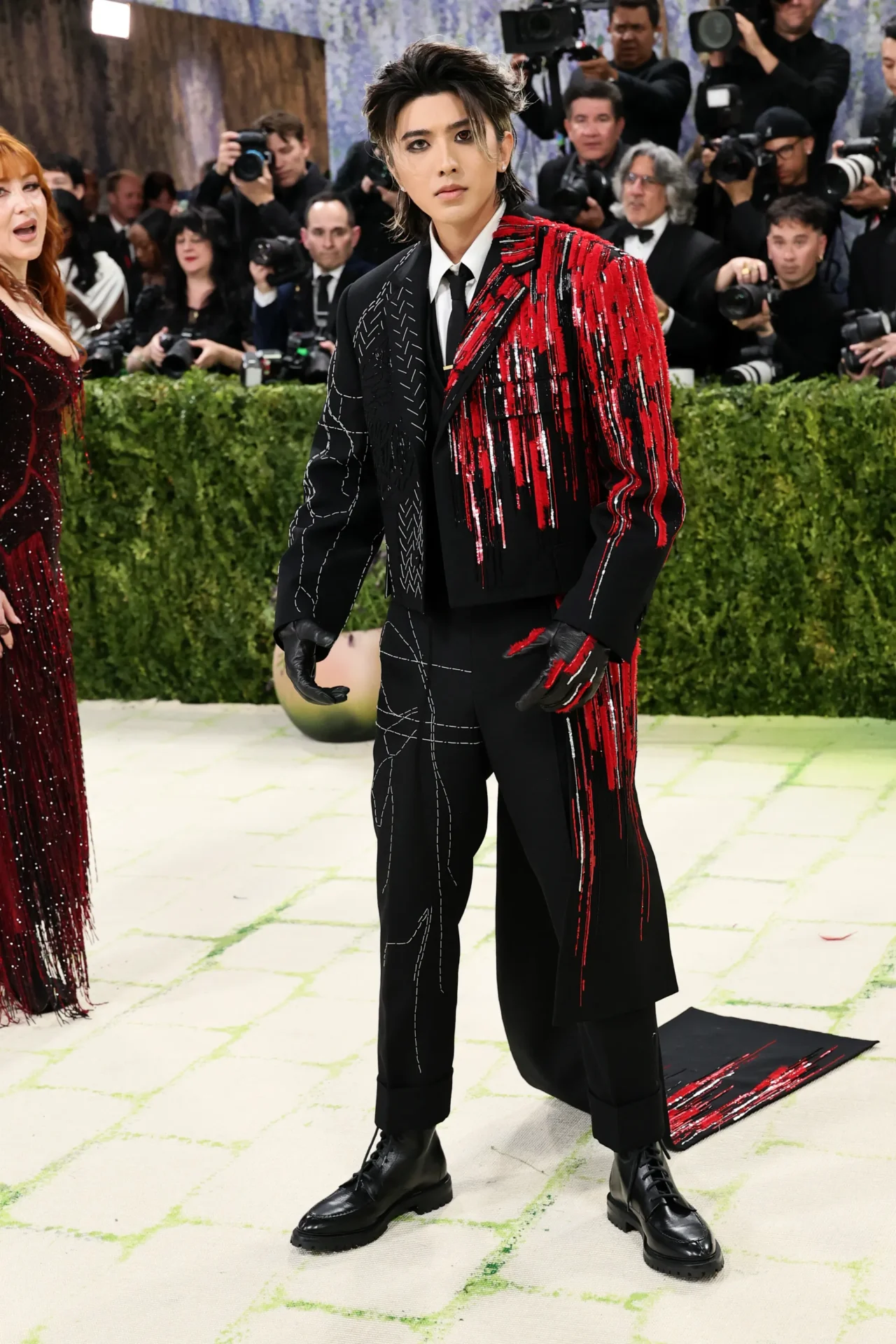
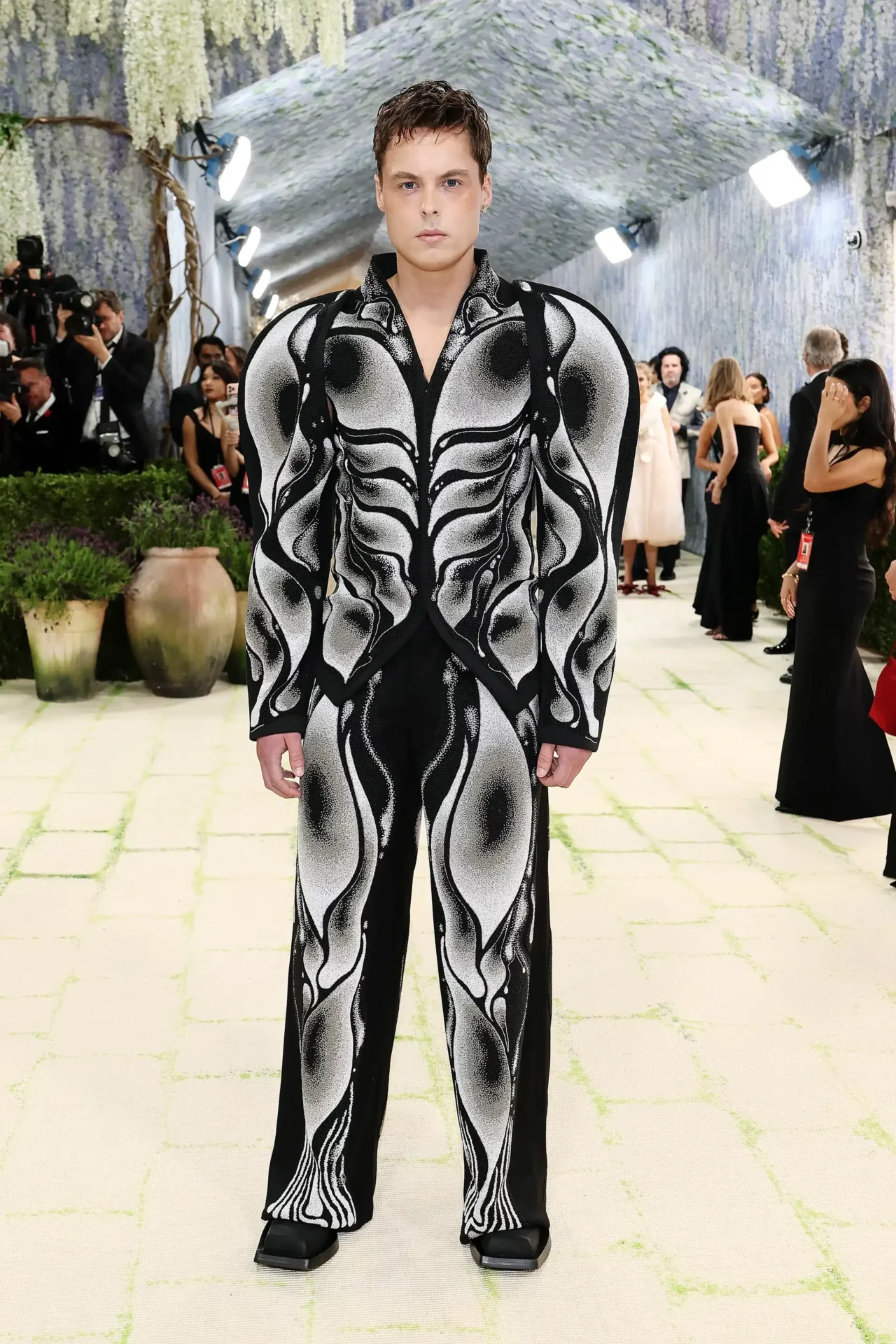
Cai Xukun and Gustav Magnar Witzoë epitomized this high-octane glamour, shimmering under the flashbulbs in pieces that felt like wearable armor. Tyriq Withers and Loïk Gomez similarly embraced this maximalist energy, proving that high-visibility sparkle remains a powerful currency
Leather staples
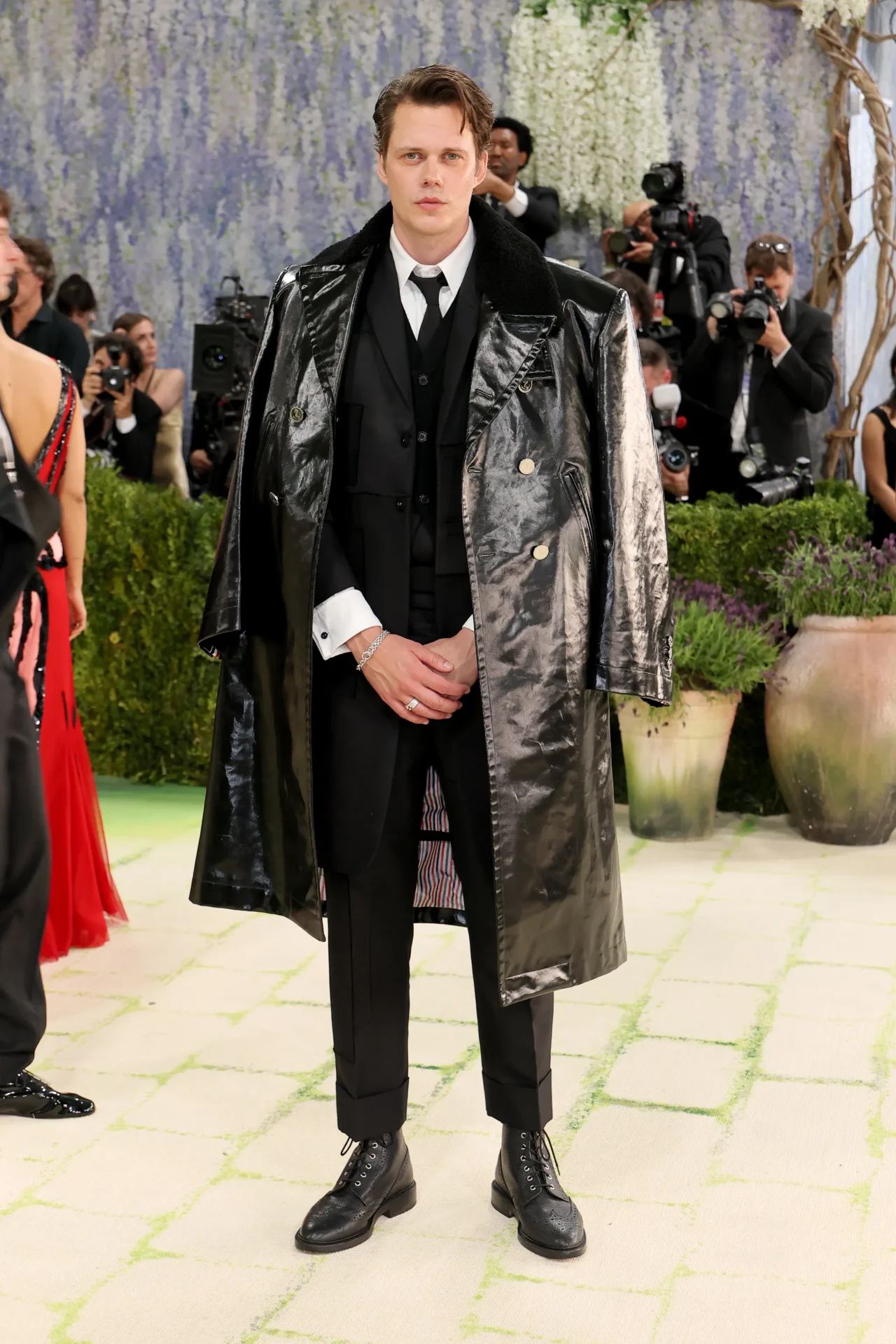
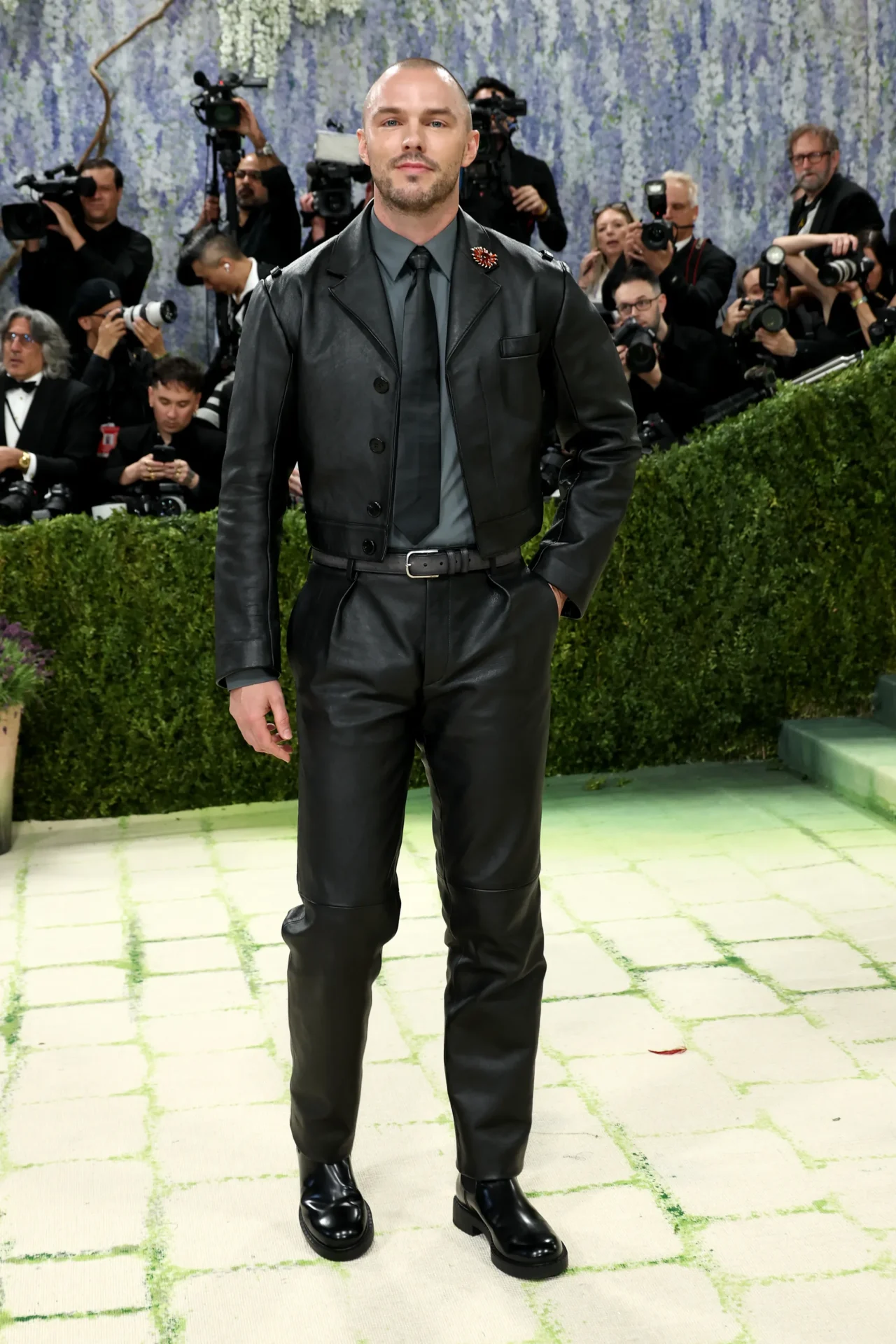
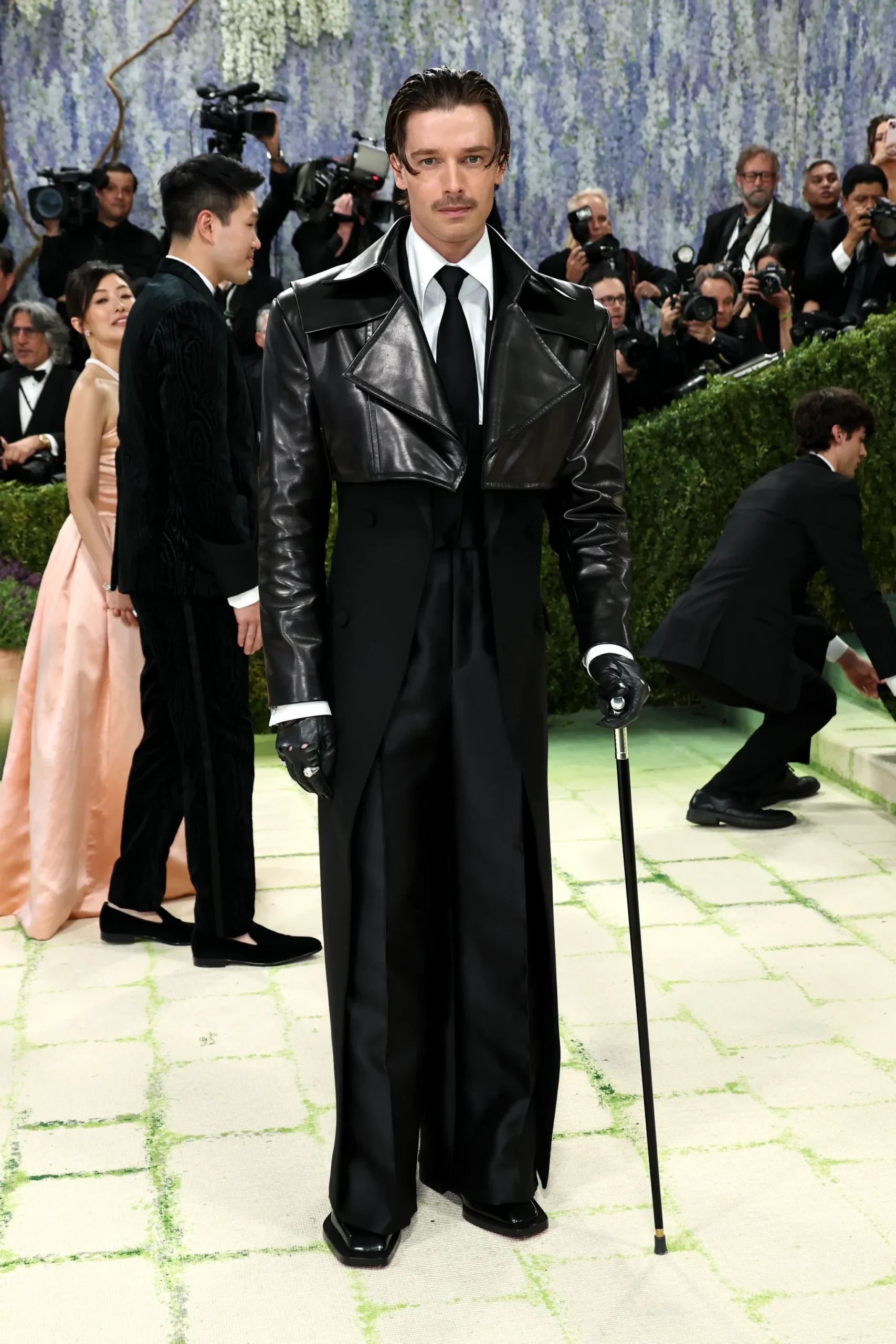
Once reserved for subcultures and rock aesthetics, leather has been fully absorbed into the highest tiers of formalwear. Bill Skarsgård and Nicholas Hoult demonstrated how leather can appear as sleek and sophisticated as silk when cut into precise lines.
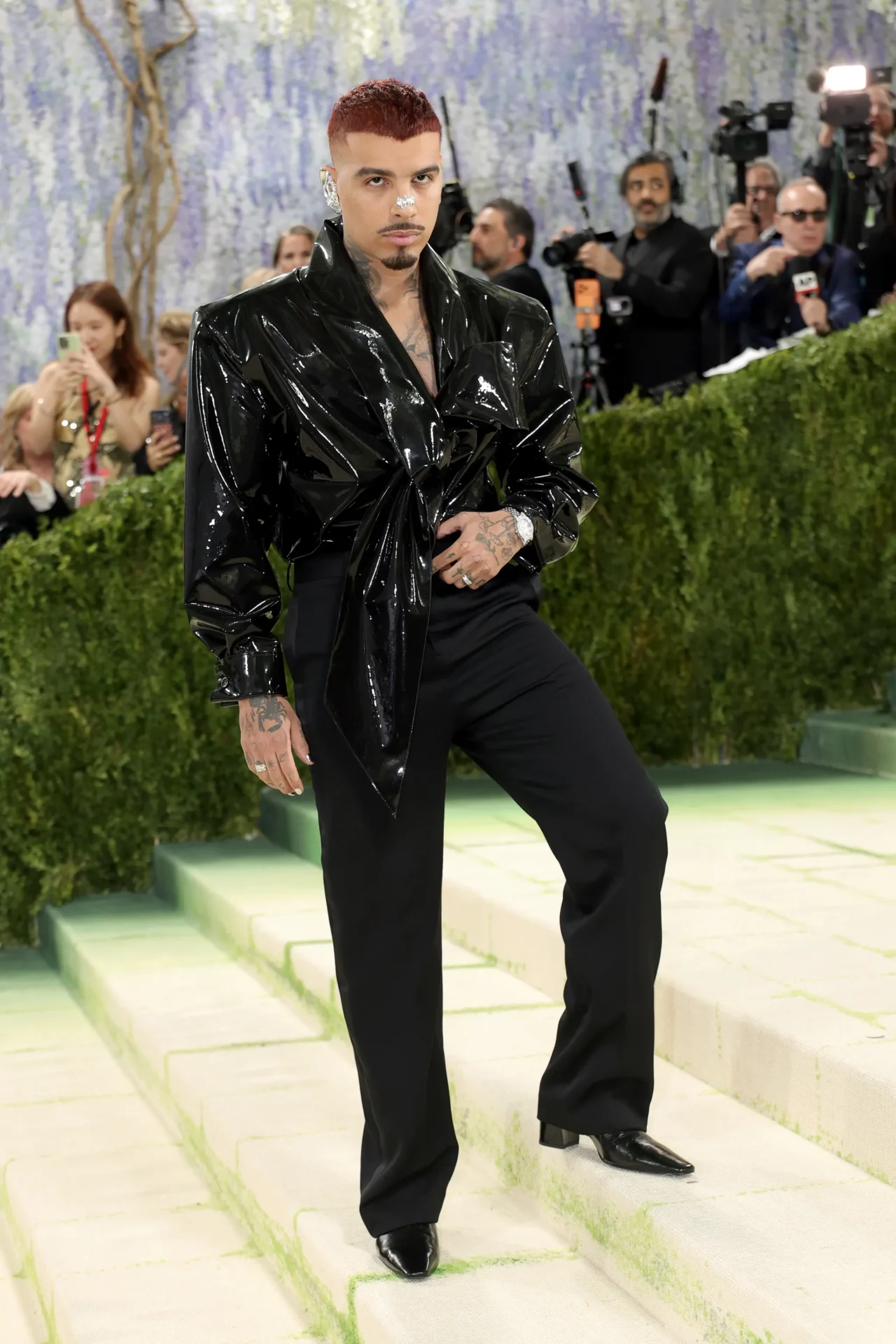
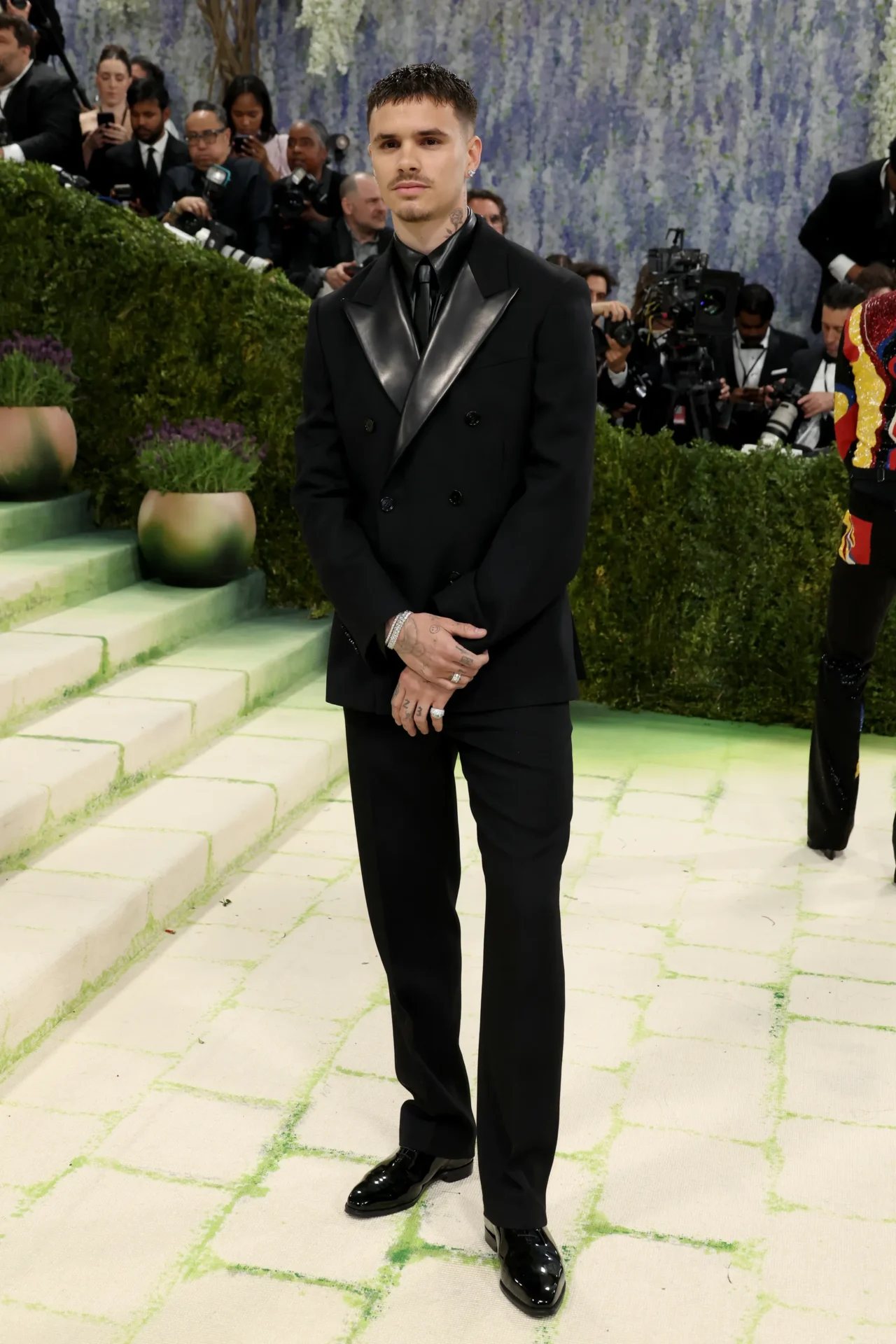
Meanwhile, Rauw Alejandro, Romeo Beckham, and Patrick Schwarzenegger leaned into the material’s inherent edge, using finishes from matte to patent to bring a controlled sense of rebellion to the gala’s atmosphere.
Graphic prints
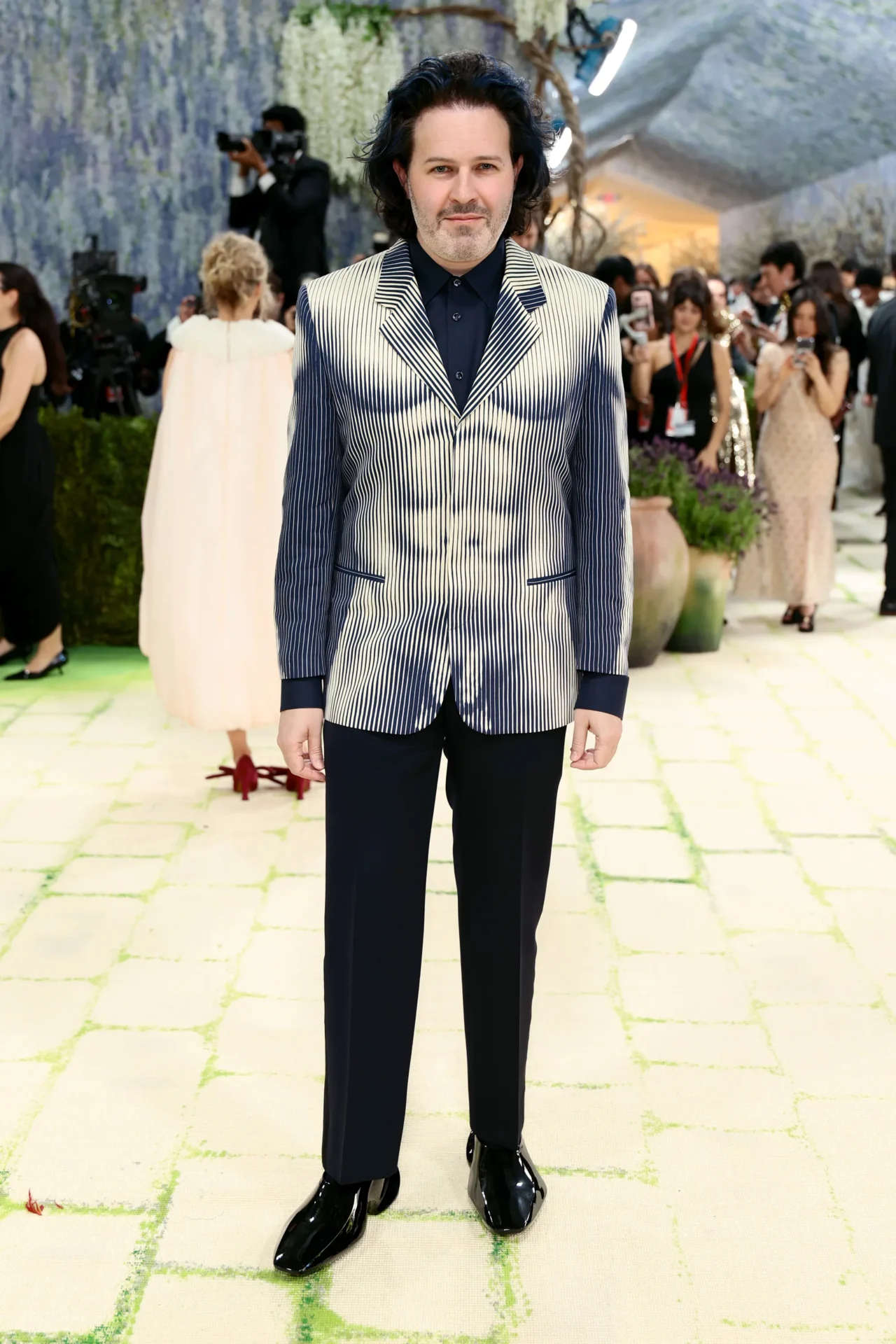
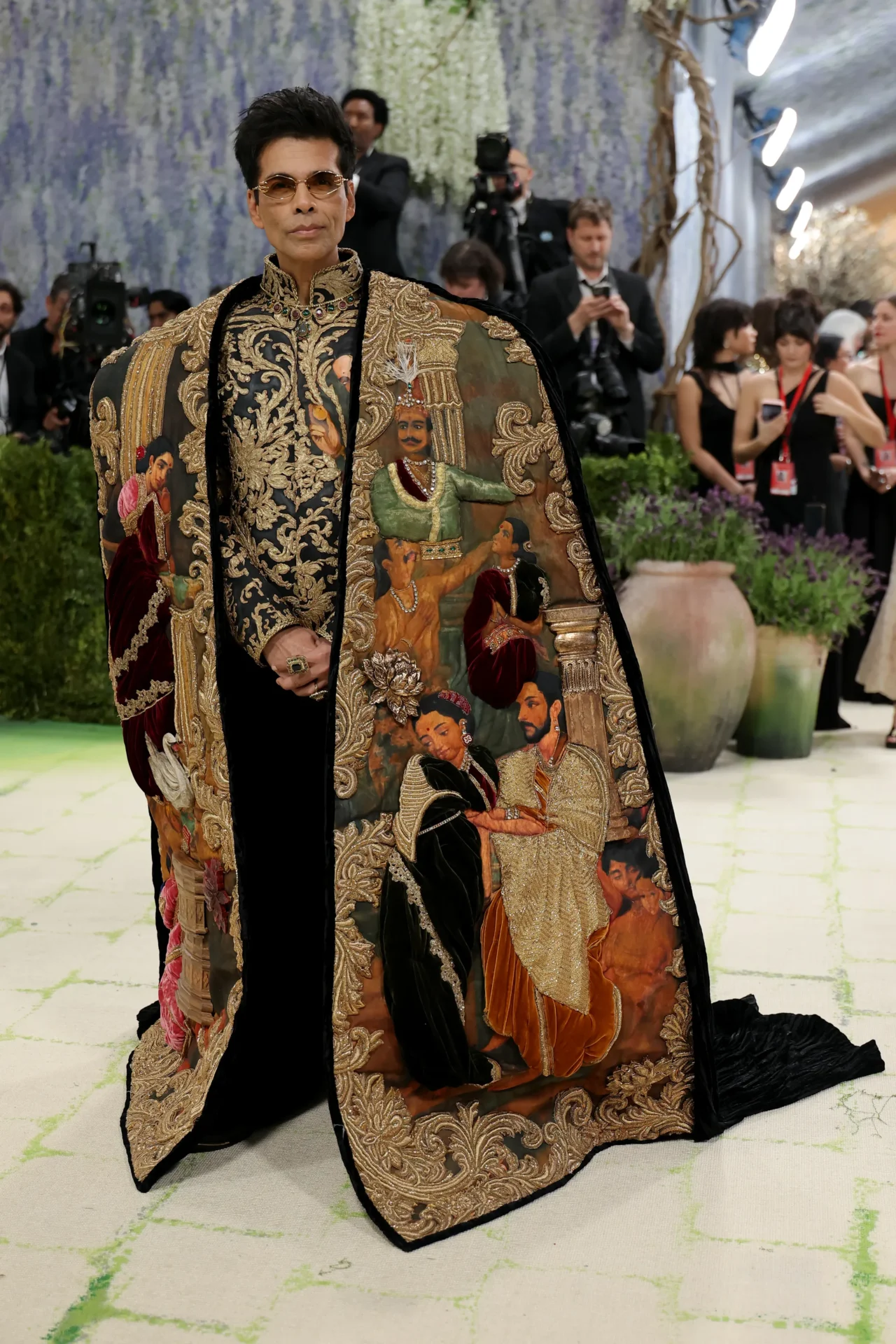
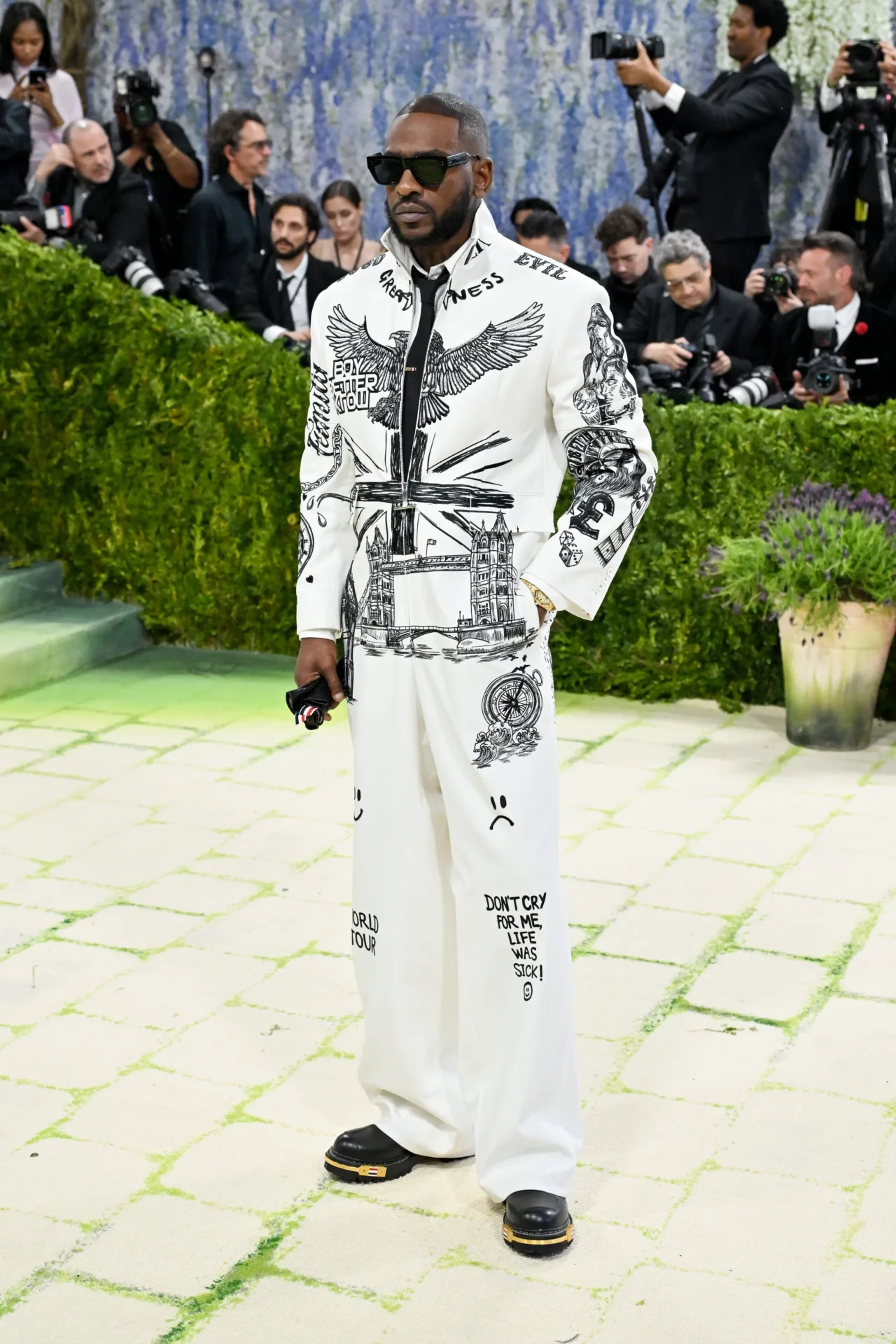
At this year’s Met Gala, graphic prints provided a necessary visual jolt. Karan Johar and Skepta utilized bold and large-scale patterns to tell a visual story, while Miles Chamley-Watson used graphic elements to emphasize his athletic stature.
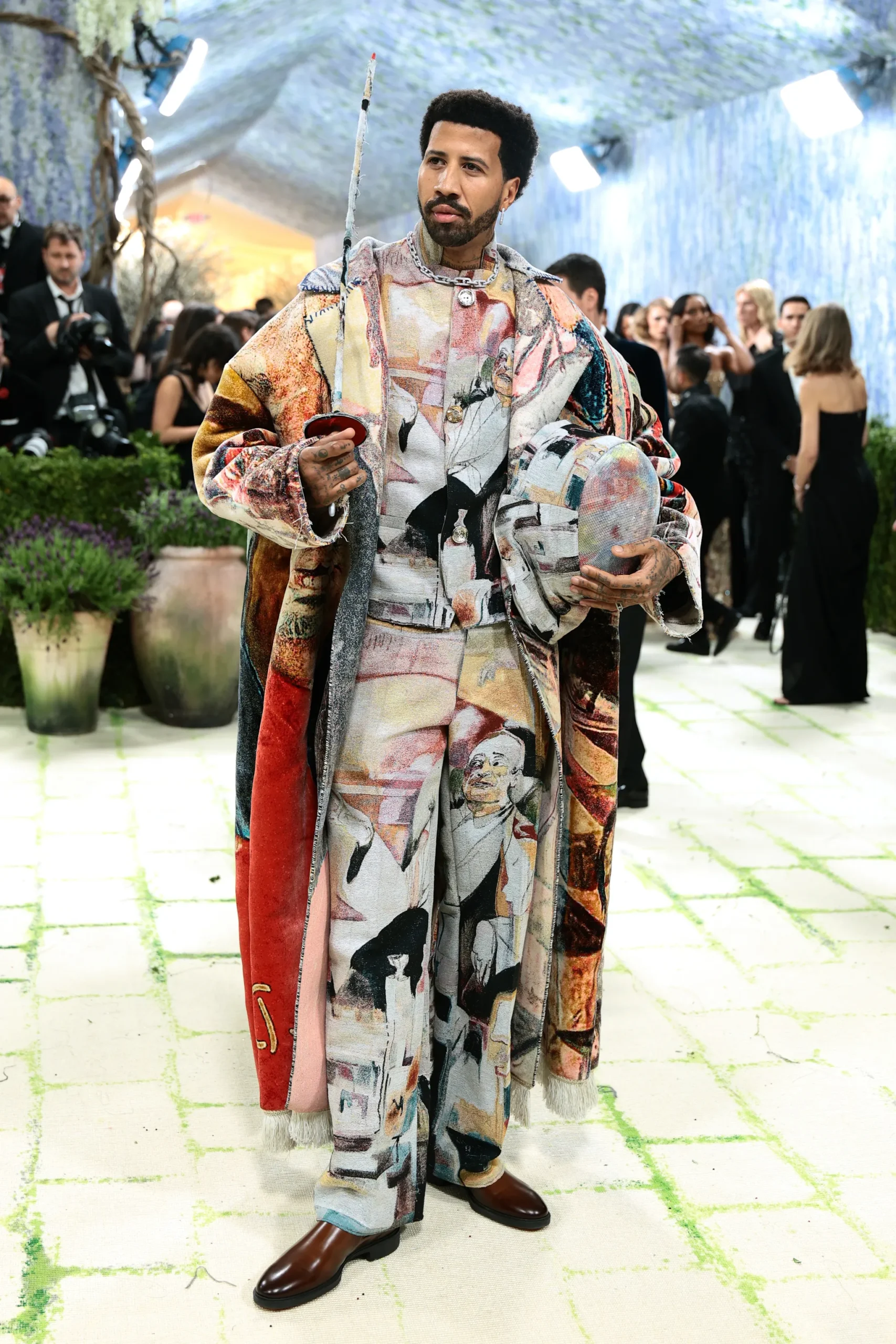
These prints transform the male form into a gallery of wearable art, merging high-concept motifs of the theme while paying homage to their roots, as seen in Karan and Skepta’s outfits
Gold accents and scarves
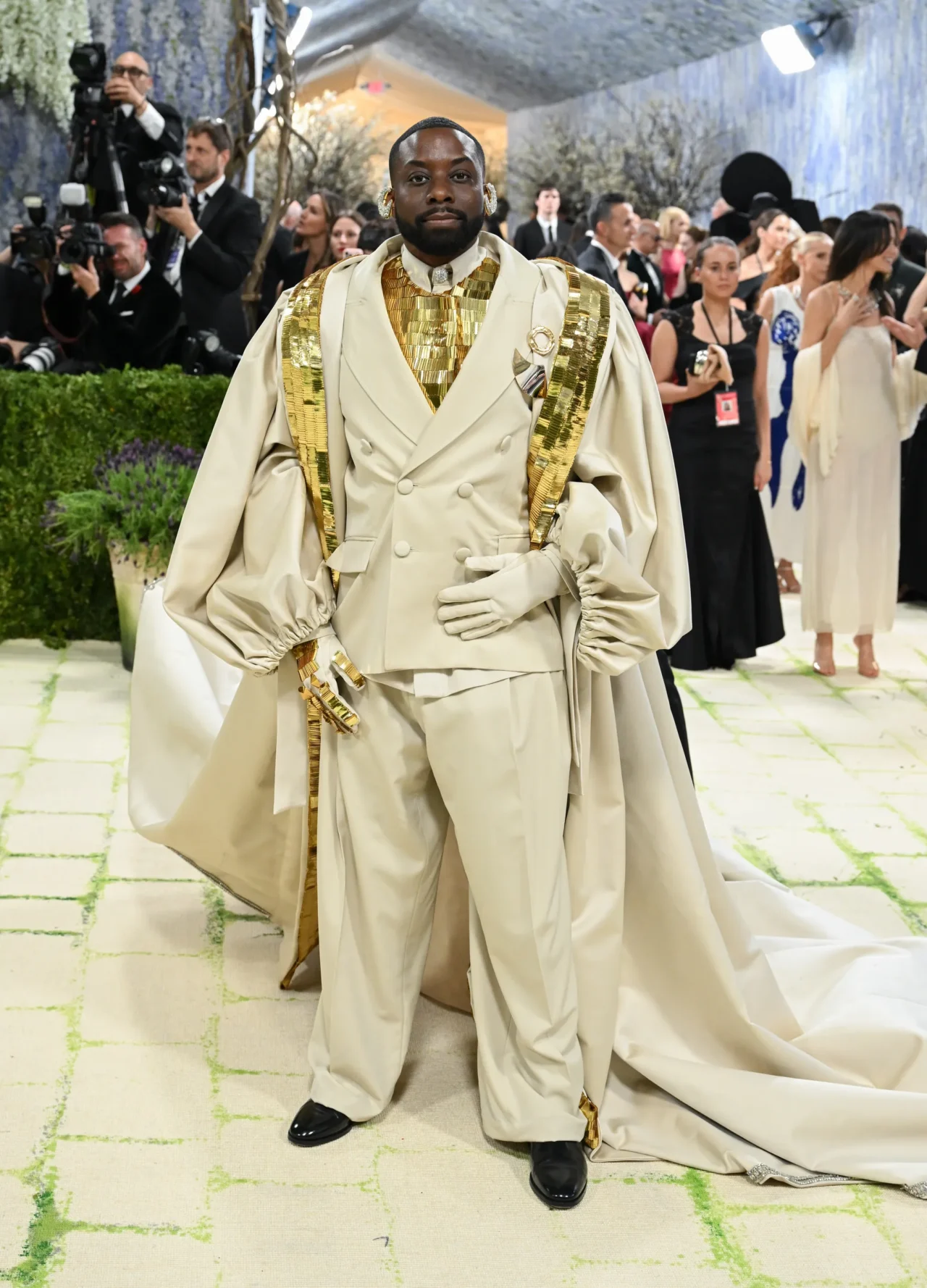
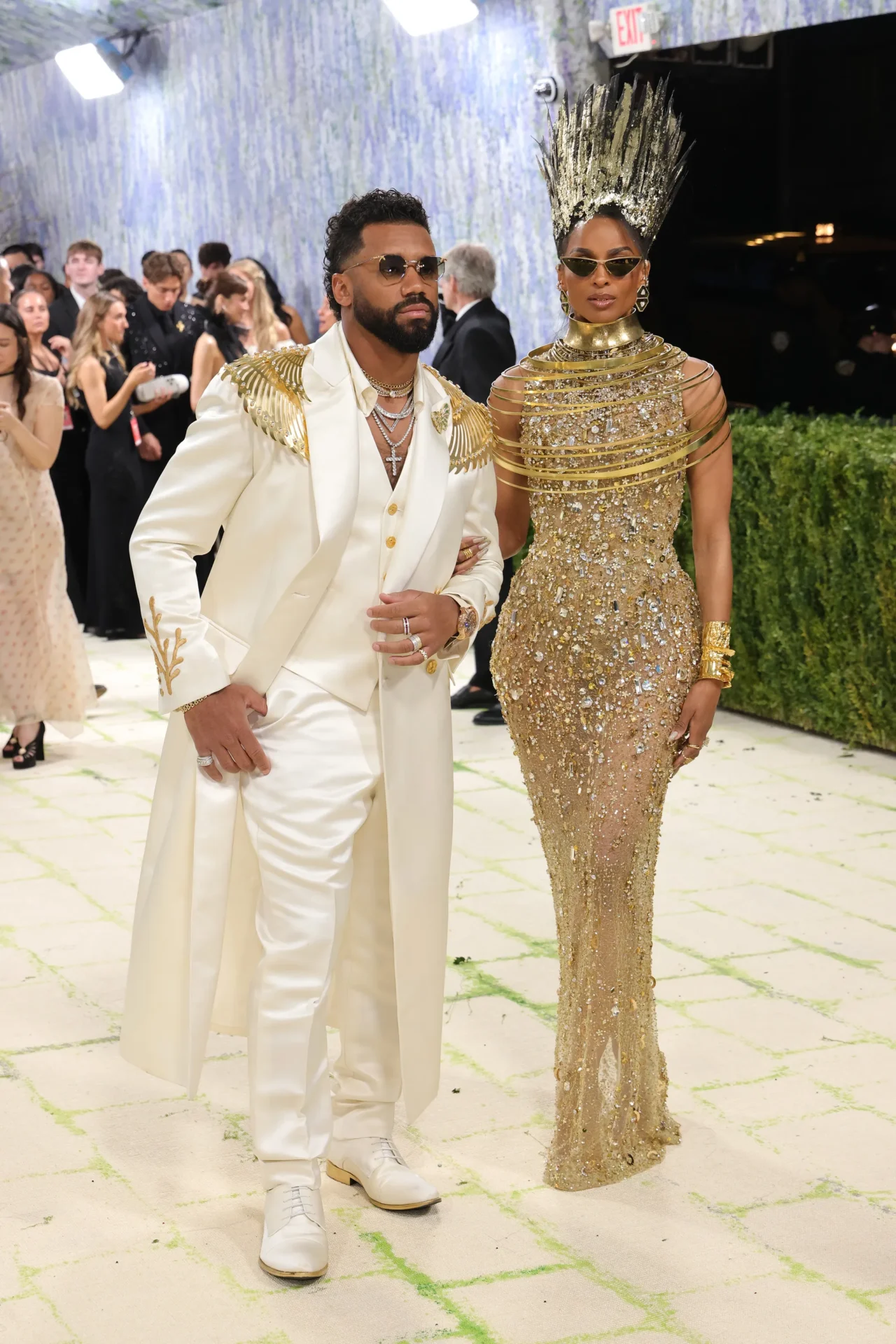
Gold remained a symbol of opulence, but its 2026 application was more considered. John Iman and Russell Wilson integrated gold accents directly into their garments through metallic embroidery and hardware, rather than relying solely on jewelry.
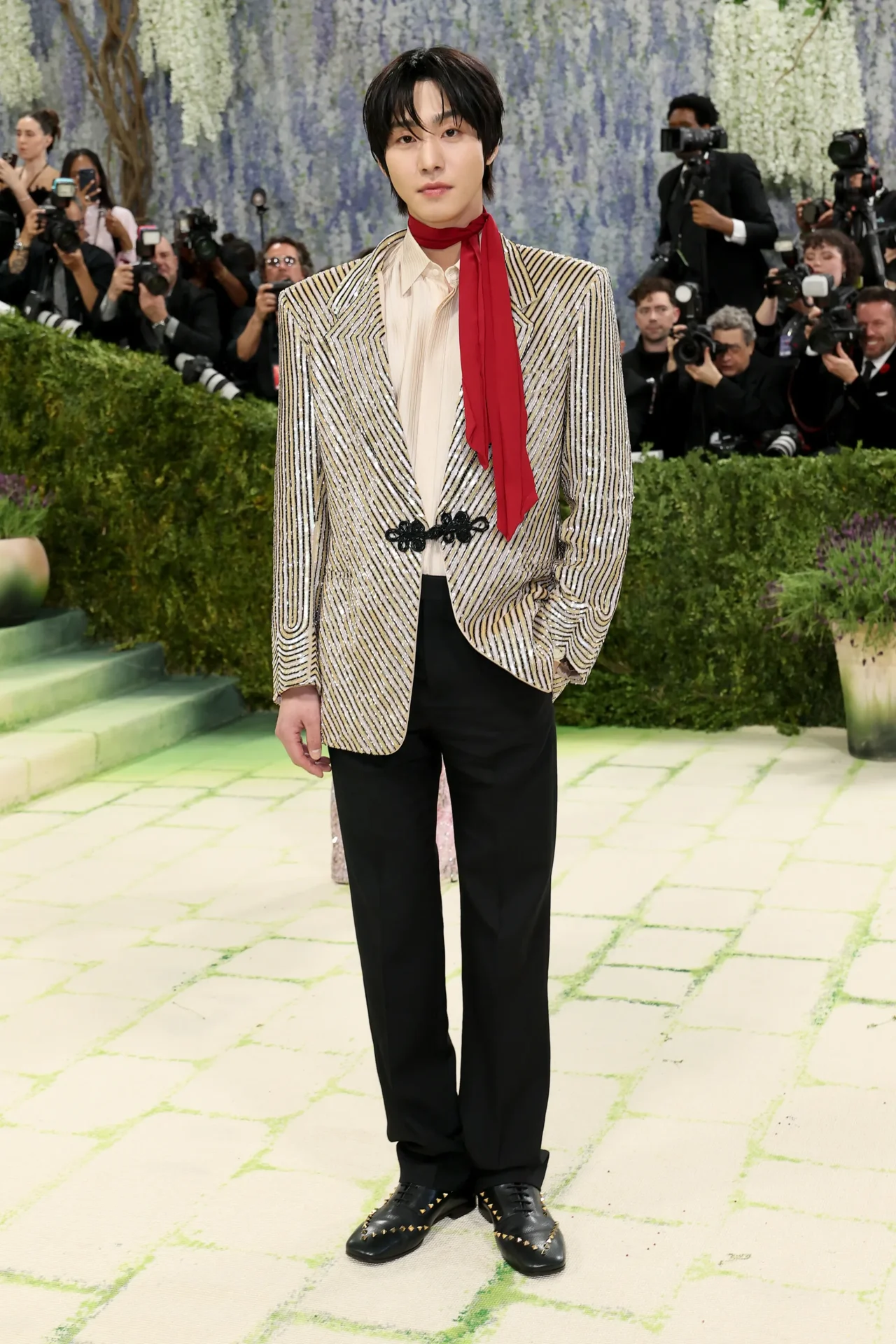
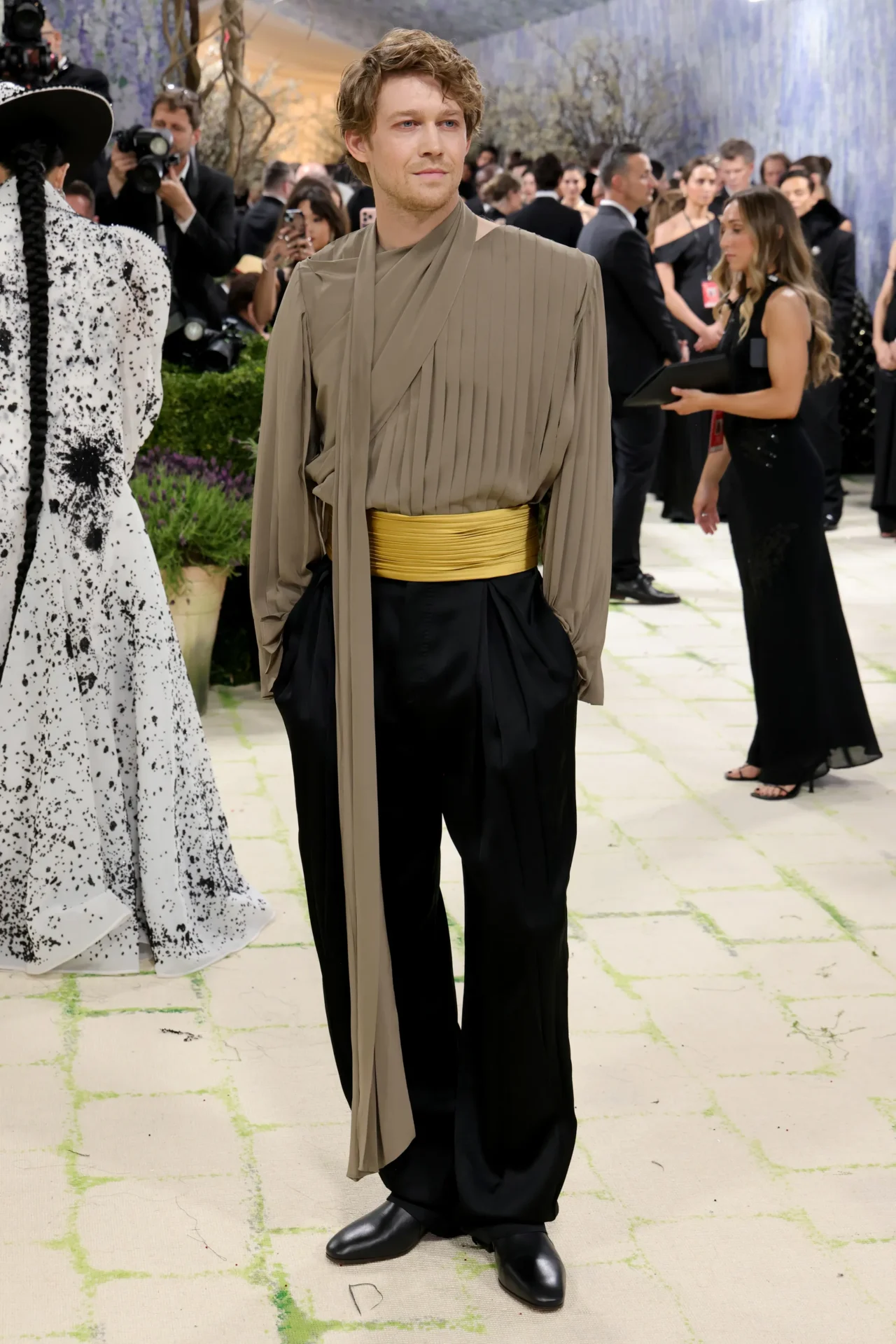
Complementing this richness was the unexpected resurgence of the scarf. Ahn Hyo-Seop and Joe Alwyn traded the restrictive tie for flowing scarves, adding a poetic and European sensibility to their ensembles.
Frequently Asked Questions
It refers to the trend of maximizing one’s visual impact through heavy, head-to-toe embellishments like crystals, sequins, and metallic beadwork.
Brooches offer more room for personal storytelling and artistic expression than a tie, allowing men to showcase high-jewelry heritage and unique craftsmanship.
Through high-end tailoring, when leather is treated like a fine fabric and cut into blazers or trousers, it retains its edge while meeting the standards of formal luxury.
It is a garment designed with a focus on three-dimensional form and volume, often using stiffened fabrics or internal boning to create shapes that don’t naturally follow the body’s lines.
The key is in the material: opting for silk, chiffon, or ultra-fine wool, tucked into a blazer or draped precisely, ensures the look remains elegant rather than bohemian.
Recommended Video