These 5 Southeast Asian Street Artists Should Be On Your Radar
Meet the bold and creative artists who are enlivening Southeast Asia’s urban spaces, one artwork at a time




Who are the names to know within the Southeast Asian street art scene?
The street art scene in Southeast Asia is a dynamic combination of culture, creativity, and commentary. From Manila to Bangkok, from Kuala Lumpur to Jakarta, these urban spaces host a variety of artists who use the city as their canvas, telling stories rooted in tradition while incorporating global art influences.
Their works are multifaceted and multifunctional: sites of artistry, means for increased tourism, and even conduits for political expression and critical inquiry.
Below, check out a few of the region’s standout names in street art.
Alex Face – Thailand
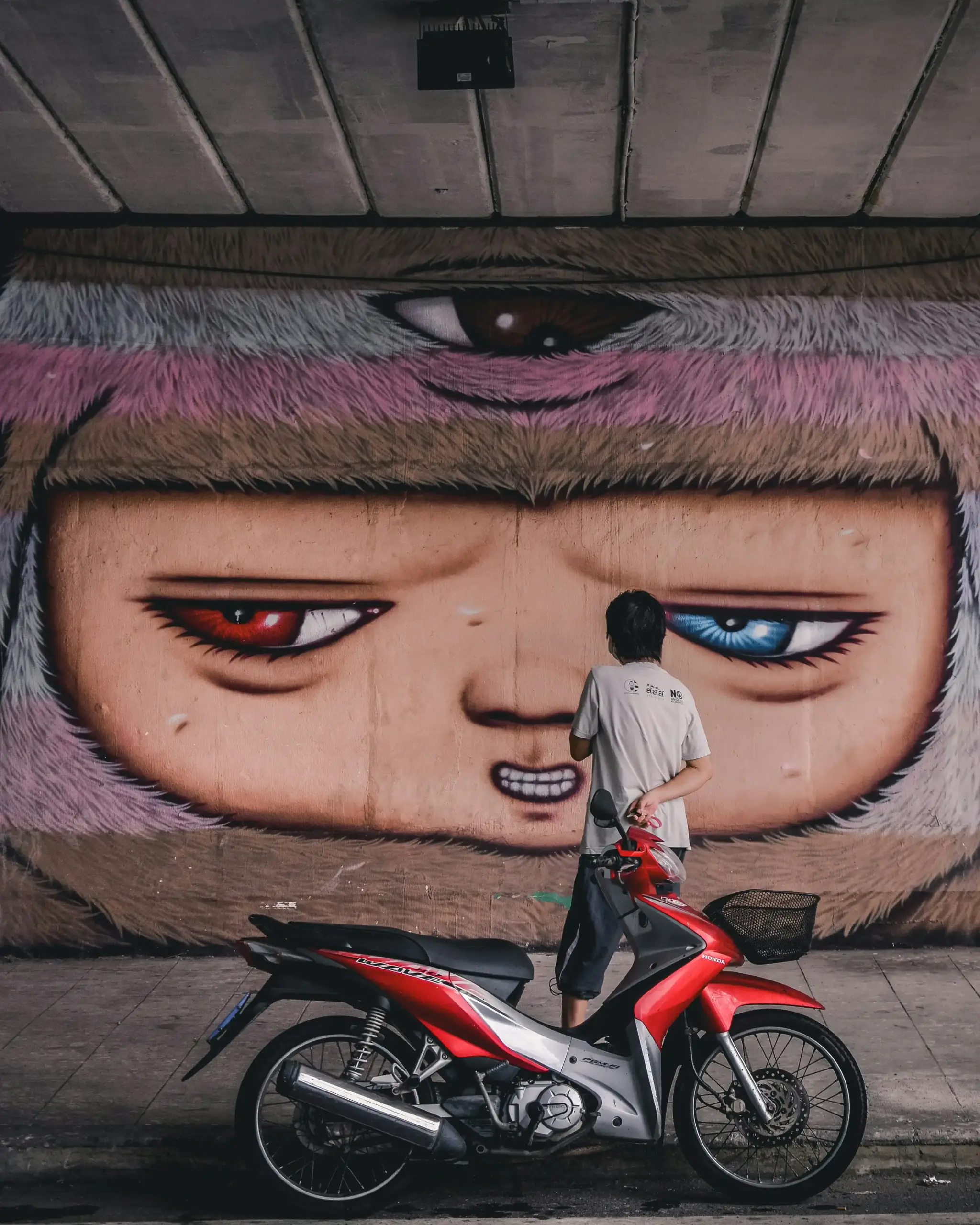
Alex Face (Patcharapon Tangruen) is a Thai street artist known for his work that prominently features a three-eyed bunny-like toddle character, inspired by his daughter. He uses these uncanny childlike figures to tackle social themes, such as environmental conservation or the future of today’s children in an ever-changing and chaotic world.
TRIP63 – Philippines
A self-taught multidisciplinary artist influenced by movies and hip-hop, TRIP63 began using the urban landscape of Manila as his canvas in 2008. “63” refers to the Philippines’ country code for mobile numbers.
TRIP63 spearheads the Philippine leg of Meeting of Styles, a global network and festival series dedicated to graffiti, street art, murals, and urban culture. He also owns Carrot Bombing, a graffiti supply store frequented by Manila’s prominent street artists.
Tuyuloveme – Indonesia
Tuyuloveme began his artistic practice on the streets of Yogyakarta, though he isn’t a native of the city. In 2009, he developed his own character, the TUYUL—an alter-ego and creative self-portrait. It often appears as an assortment of eyes peeking through or masked within, reflecting ideas of anonymity, observation, and the boundary between public and private lives. His visual style has often been described as organized yet chaotic, but expressive nonetheless.
Kenji Chai – Malaysia
Malaysian street artist Kenji Chai creates vibrant and playful murals that prominently feature Chaigo—a turquoise dog and his signature character. Beginning in graphic design before shifting to street art, Kenji uses his art to encourage positivity and increase awareness toward animal welfare.
Sam Lo – Singapore
Also known as SKL0, and formerly known as the ‘Sticker Lady,’ Sam Lo is a trans non‑binary visual artist from Singapore whose work sits at the intersection of street art, social commentary, and public art.
Their early guerilla work involving stickers and spray-painting Singlish phrases was once the subject of debate in Singapore about what counts as art versus vandalism.
Since then, Sam has evolved their practice, creating large‐scale murals, installations, sculptures, commissioned public art, and commercial collaborations that make use of bold colors, layered imagery, and imposing text, drawing from Singaporean culture and its sociopolitical climate.
Banner photo courtesy Larry James Baylas
Frequently Asked Questions
Alex Face is arguably Thailand’s most prominent street artist, widely recognized for his signature three-eyed character that critiques environmental destruction and modern societal anxiety.
Identity, sociopolitical commentary, and cultural heritage define the region’s urban art, serving as a vehicle for public dialogue, local community expression, and geopolitical critique.
Sam Lo challenged Singapore’s strict vandalism laws by transforming illicit street activations into heavily celebrated public installations, bridging the gap between underground and institutional art.
TRIP63 leads the Philippine leg of the global Meeting of Styles festival and operates a graffiti supply hub that unites and equips Manila’s street art community.
Tuyuloveme created the TUYUL character as a stylized creative self-portrait and alter-ego, using it to explore themes of public anonymity and constant observation across Yogyakarta.
Recommended Video