
These 5 Rules on Wearing a Watch Are Worth Keeping (and Bending, A Little Bit)
Certain codes in watch wearing serve practical functions, while others can be broken for style





A few rules to watch
Just like the tailored suit, the watch comes with a number of conventions that serve both pragmatic and stylistic purposes.
At its core, this mechanical marvel needs to keep you updated with the correct time. To do so, it has to be kept clean, well-maintained, and free from hazards—physical damage, magnetism, temperature changes, and the like. And certain ways of wearing allow you to protect it.
But the watch has also evolved into a means of expressing your personal taste, be it through the strap, the dial, the bezel, or the overall look of the timepiece. And here’s where a few rules often get bent.
Here’s a rundown of some guidelines on watches and how you can work with or around them:
1. Wear the watch on your non-dominant hand

This is all about safety. With your watch on your non-dominant hand, it is kept guarded from potential damage as you go about your daily tasks: note-taking, opening doors, and the like.
The rule has often been expressed as ‘wear your watch on your left hand,’ and for good reason: only 10% of the world’s population is left-handed. This is also the reason why most timepieces have their crowns—the knob used to set time—on their right side. (That’s why other left-handed people continue wearing their watches on their left hand, since it’s awkward to adjust the watch on their right wrist.)
But like we often say with clothing, wherever it feels comfortable for you, wear it there.
A note on snug watches over wrist bones: this is also a function of maintenance. Keeping the right fit this way will reduce tension on the straps and unnecessary shifts that could impair the timepiece.
2. Select event and outfit-appropriate watches

There is a reason why the categories and adjectives exist, after all: dress watches for formal events. Sporty ones for outdoor events. The mismatch can get jarring, throwing off your overall look.
Unless that’s exactly the point.
There is merit, however, in understanding which colors, metals, and materials work best with certain looks so that the intentional contrast still looks visually appealing. For instance, a dive watch already stands out against a tuxedo, so consider more muted hues so that it complements your fit.
3. Gold with gold, silver with silver
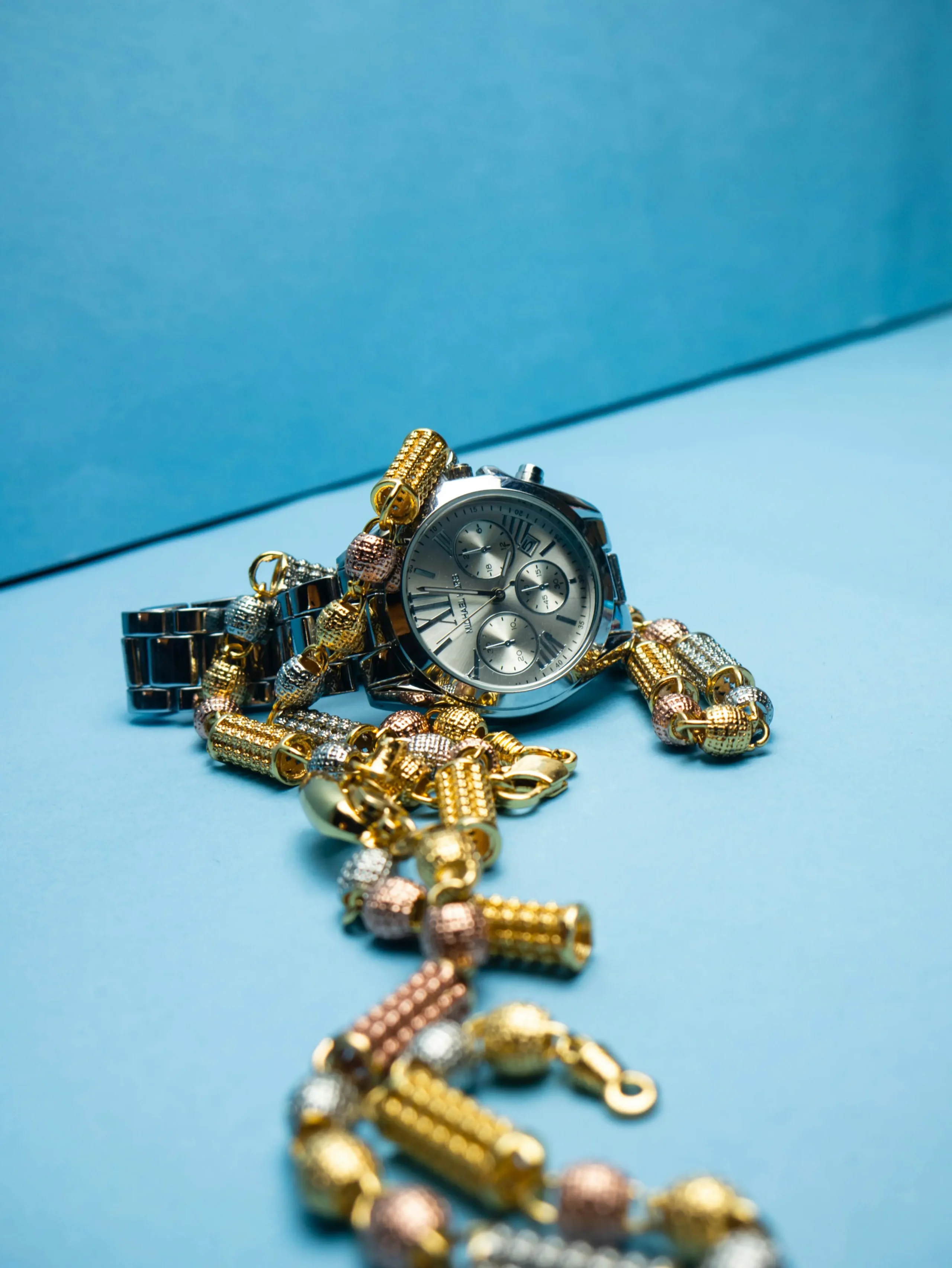
For metal watch lovers, it’s customary to match the strap with belt buckles, rings, cuff links, and other accessories. It does keep a sleek and uniform look, but it’s not a strict rule.
Instead of matching your metals to a T, group them according to similar hues. ‘Warm’ metals like brass and gold can be paired together, or contrasted with ‘cool’ tones like silver and chrome for a refined contrast.
Or, just go for a two-tone metal watch so that you have more options to match.
4. Base your watch size on your wrist, not gender
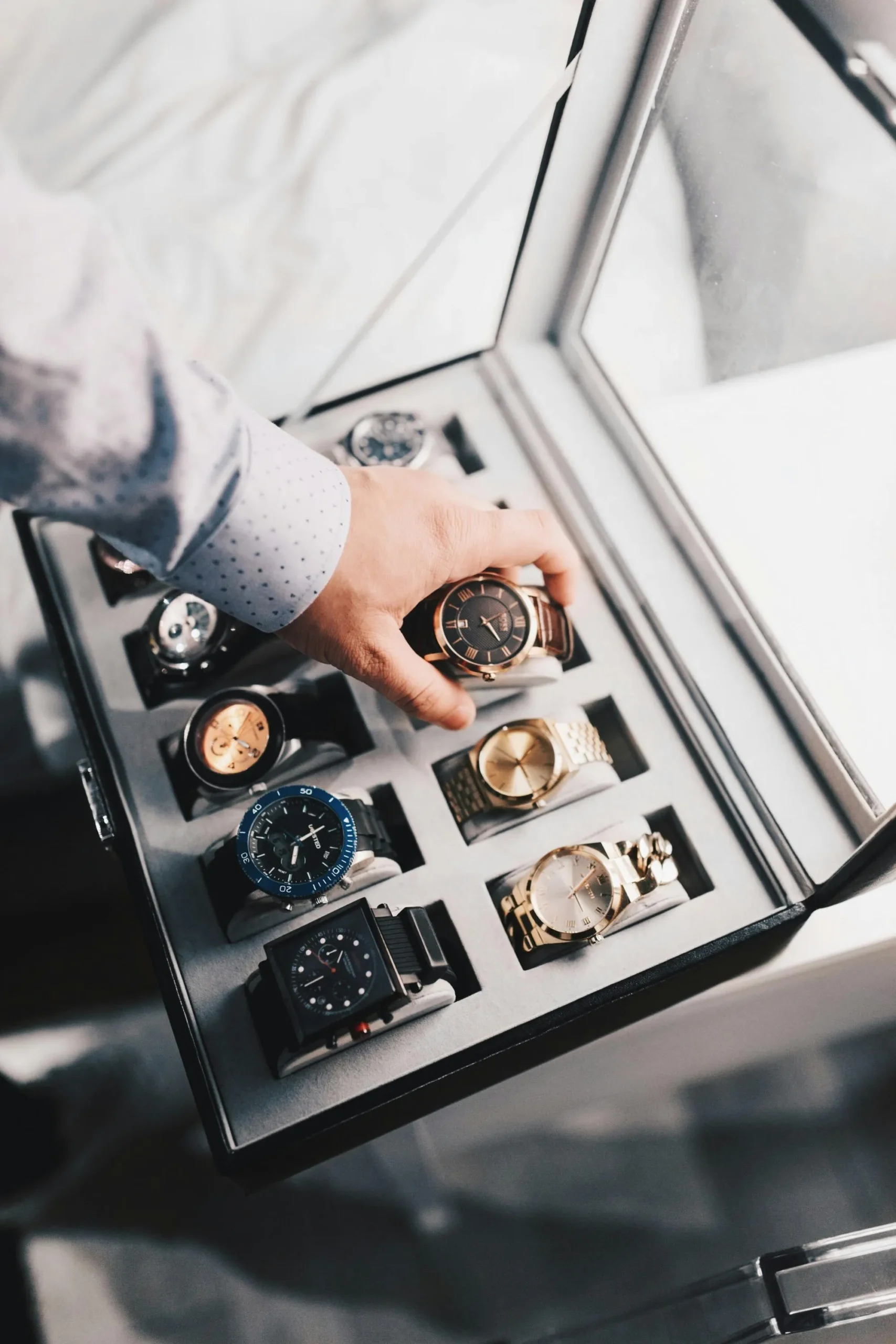
Commonly, men’s watches are on the larger side, while women’s timepieces are smaller and thinner. The rule isn’t strict, but it’s better to select your watch size based on your wrist—if you’re aiming for a proportionate look—than simply on gender. There’s no stopping you from wearing a thin, bracelet-like watch if that’s the look you’re going for, or if it matches your outfit for the day.
That said, oversized watches do tend to look a bit more off-kilter than their smaller counterparts, throwing your whole ensemble out of proportion. If you’re heading somewhere that calls for order and professionalism, consider a sleeker watch.
5. Be mindful of how you mind time

This is less of a style rule than it is about manners. If you’re repeatedly looking at the time or outright checking your watch while you’re in a meeting, a conversation, or a date, you’re potentially sending a rude message.
Be discreet with how you look at your watch. Or, better yet, even before heading to your engagement, keep your schedule organized and plan ahead of time so that you don’t need to be flustered with the minutes.
A tale as old as time
Just like how menswear today is signalling a shift toward ease—all while keeping the rules in mind still to circle around them—there has been a more relaxed attitude when it comes to wearing watches. It boils down to personal preference, appropriateness, and comfort.
Whether you’ll follow conventions or break them altogether, one thing should be for certain: your watch should always keep you in step with time.
Photos courtesy Piaget, Pexels, and Unsplash
Recommended Video