Inside Demna’s First Year at Gucci, From La Famiglia to The Store Show
Demna is raiding Gucci’s greatest hits, turning up the sex appeal, and reminding everyone why the house knows a thing or two about getting dressed




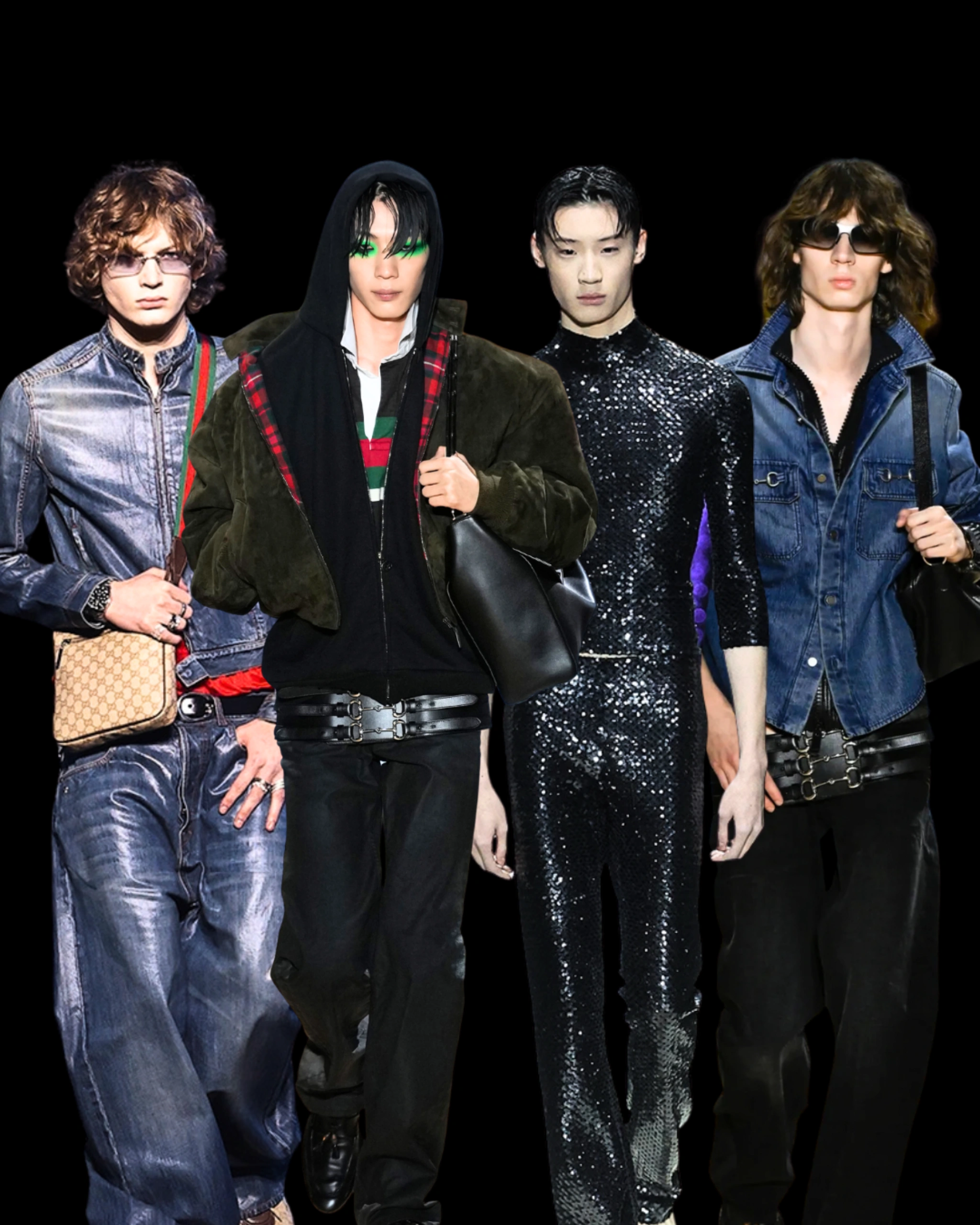
- Demna’s first year at Gucci has taken the house from the character-driven world of La Famiglia to the sensual glamour of Primavera and the street-level attitude of GucciCore.
- Rather than reinventing Gucci from scratch, Demna is reworking its signature codes, from Horsebit loafers and the Flora print, and the house’s most recognizable bags, for a new era.
The many faces of Gucci, according to Demna
FashionFashionThe art and industry of designing, producing, and styling clothing, footwear, accessories, and beauty trends. It reflects cultural influences, personal expression, and evolving styles across seasons and markets.Go to Fashion Glossary has never been good at admitting what it does for a living. It talks about craftsmanship and creative vision, when much of the business comes down to a simple proposition: making someone want a jacket badly enough to spend a small fortune on it.
Demna, Gucci’s creative director, has built a career out of understanding this arrangement. His first year at the Italian house has been devoted to putting that knowledge to work.
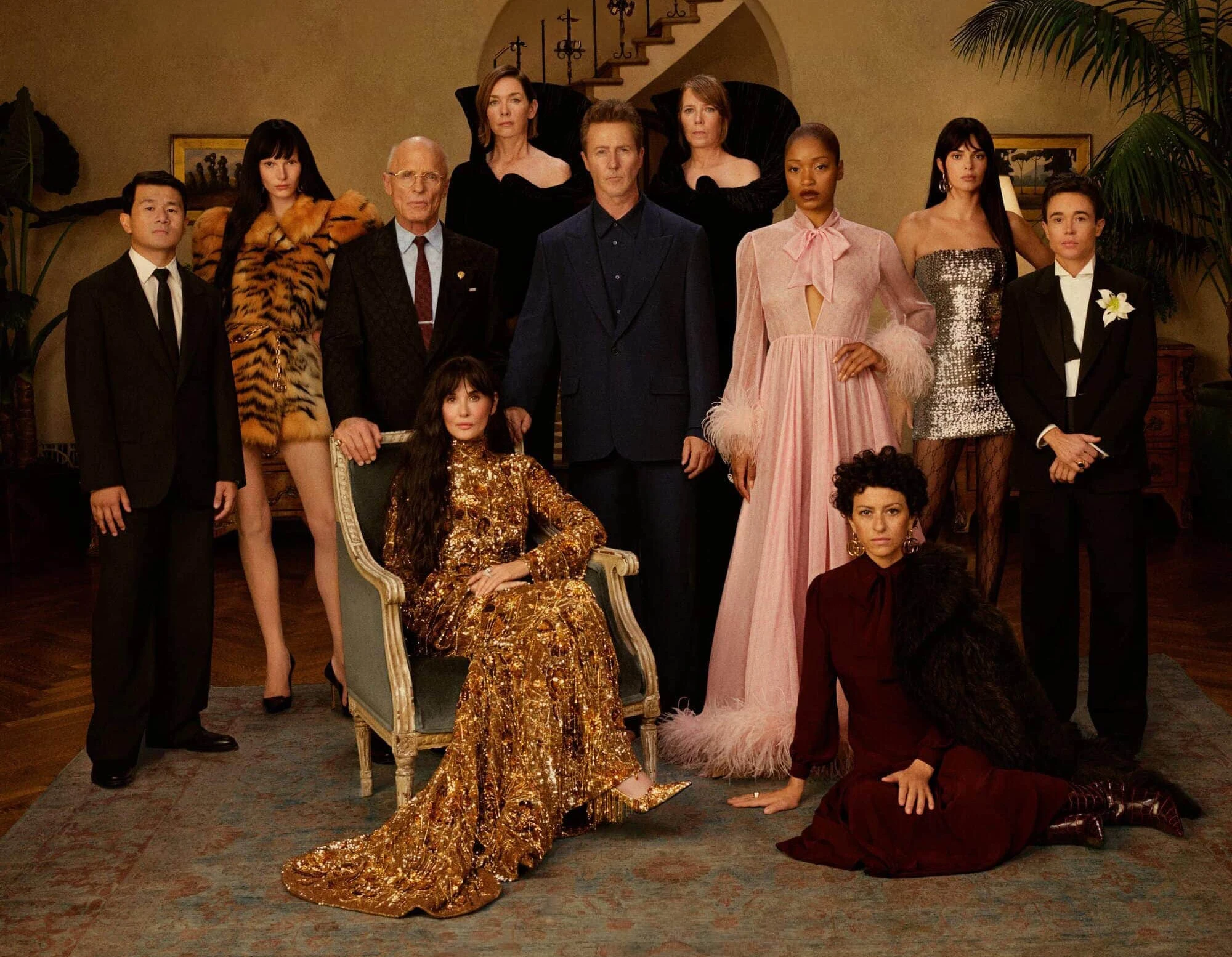
Since arriving in 2025, the Georgian designer has approached Gucci as a world of competing personalities, each with their own ideas about money and glamour.
His vision has emerged in installments, from La Famiglia, a cast of Italian fashionFashionThe art and industry of designing, producing, and styling clothing, footwear, accessories, and beauty trends. It reflects cultural influences, personal expression, and evolving styles across seasons and markets.Go to Fashion Glossary characters introduced through a lookbook, to Generation Gucci, Primavera, and the New York theatricality of GucciCore. With The Store Show, those ideas finally converged in a presentation that put the business of wanting fashion at the very center of the stage.
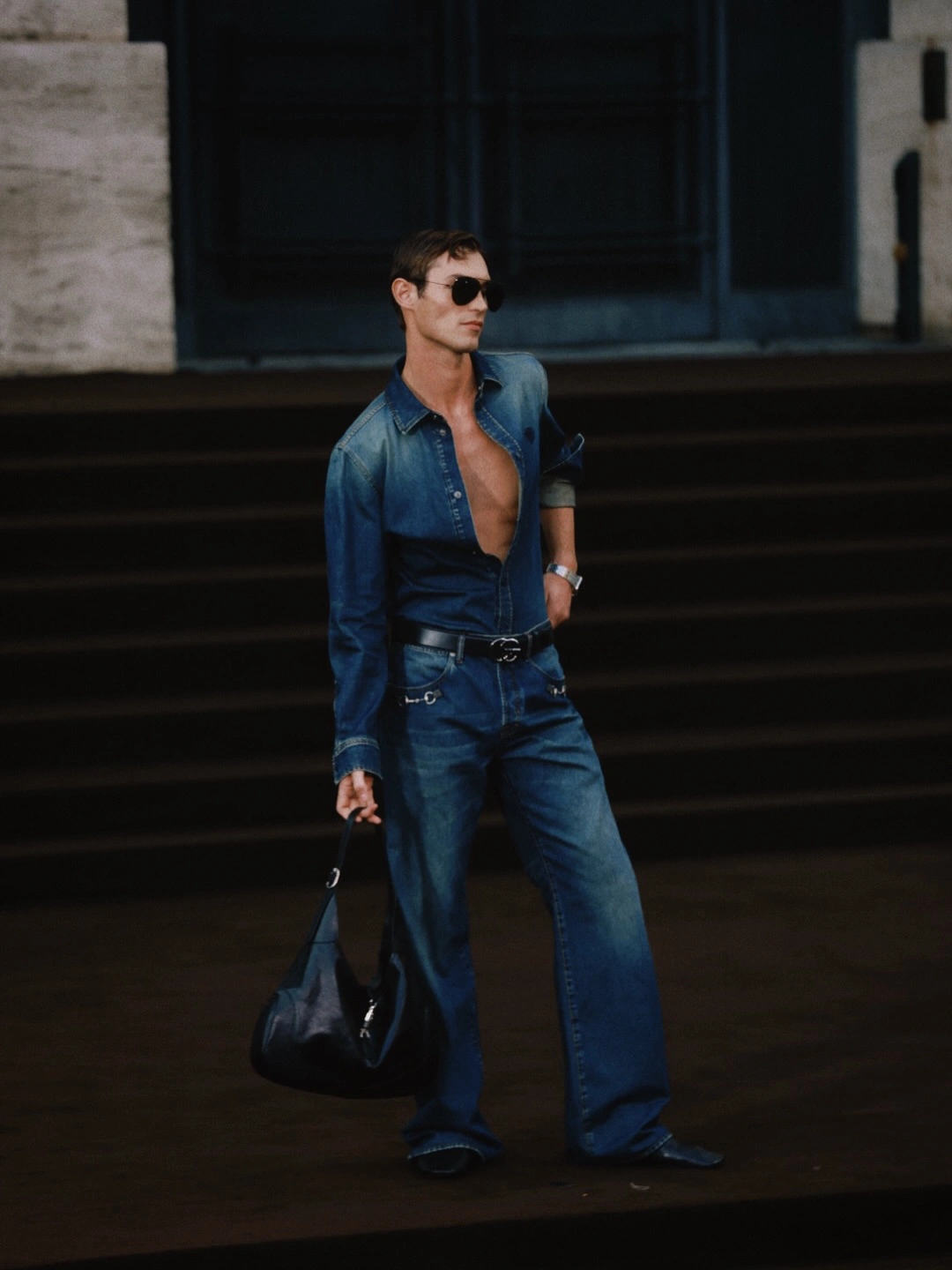
It’s a clever way to introduce a new era. Rather than demand that the audience forget everything it knows about Gucci, Demna has given it more reasons to look again.
The house’s famous codes remain intact, from the Horsebit to the bamboo bag, but the attitude surrounding them has shifted. There’s more skin, tailoring, a little bourgeois snobbery, and enough knowing excess to suggest that everyone involved is in on the joke.
Most importantly, Gucci looks like somewhere people might actually want to shop. A radical thought, perhaps, but a useful one for a fashionFashionThe art and industry of designing, producing, and styling clothing, footwear, accessories, and beauty trends. It reflects cultural influences, personal expression, and evolving styles across seasons and markets.Go to Fashion Glossary house trying to turn cultural attention into commercial momentum.
First, who is Demna?
Born Demna Gvasalia in Georgia, the designer studied at the Royal Academy of Fine Arts in Antwerp before working at fashionFashionThe art and industry of designing, producing, and styling clothing, footwear, accessories, and beauty trends. It reflects cultural influences, personal expression, and evolving styles across seasons and markets.Go to Fashion Glossary houses including Maison Margiela and Louis Vuitton.
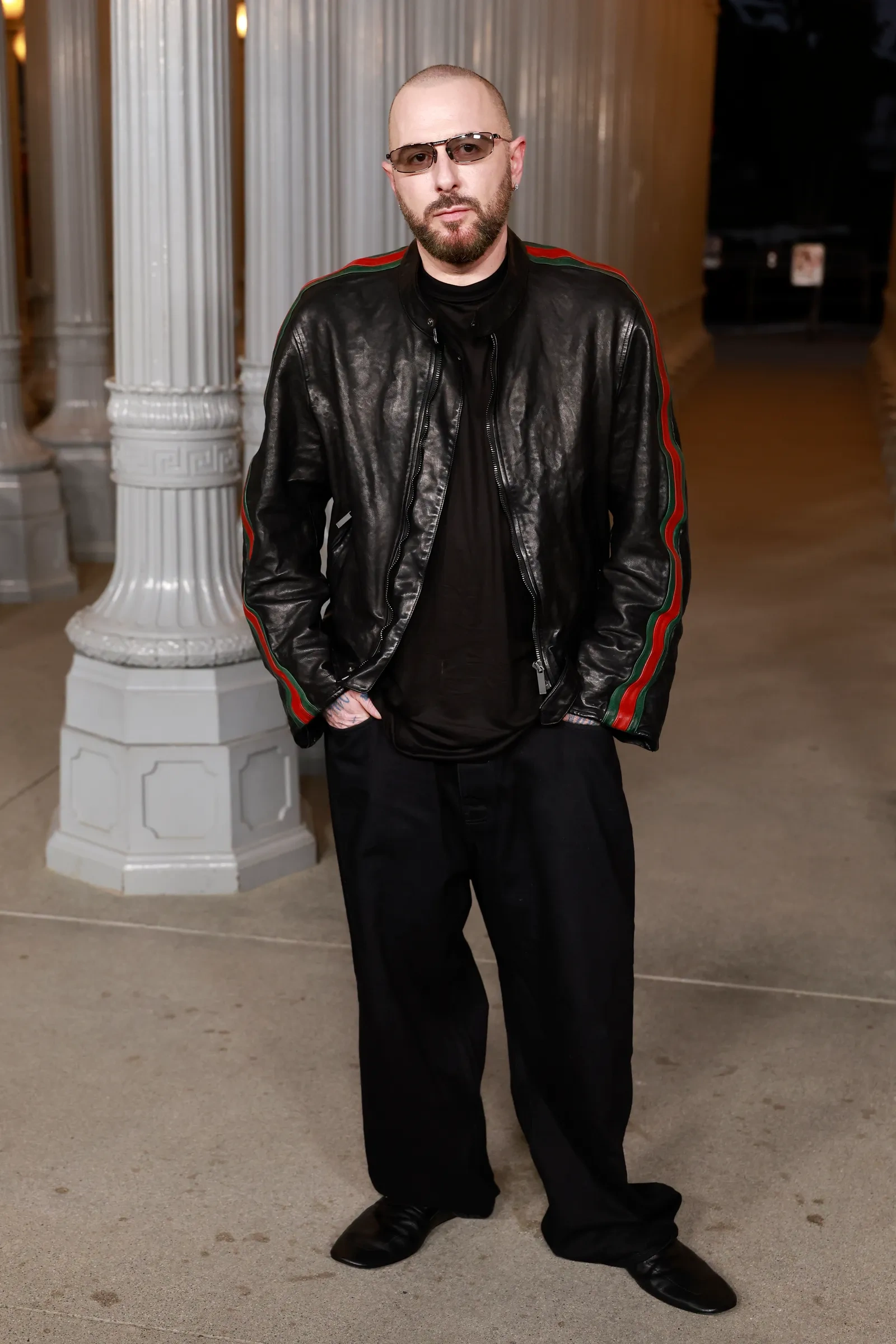
In 2014, he co-founded Vetements with his brother Guram, turning exaggerated proportions and a healthy disregard for fashionFashionThe art and industry of designing, producing, and styling clothing, footwear, accessories, and beauty trends. It reflects cultural influences, personal expression, and evolving styles across seasons and markets.Go to Fashion Glossary’s good manners into a movement of their own. His decade at Balenciaga, from 2015 to 2025, cemented his reputation as one of the industry’s most influential and provocative designers.
Demna’s talent is making the ordinary look extraordinary, often by refusing to make it conventionally beautiful. Distressed jeans acquired the status of design objects, and familiar silhouettes were enlarged or stripped back until they felt entirely new.
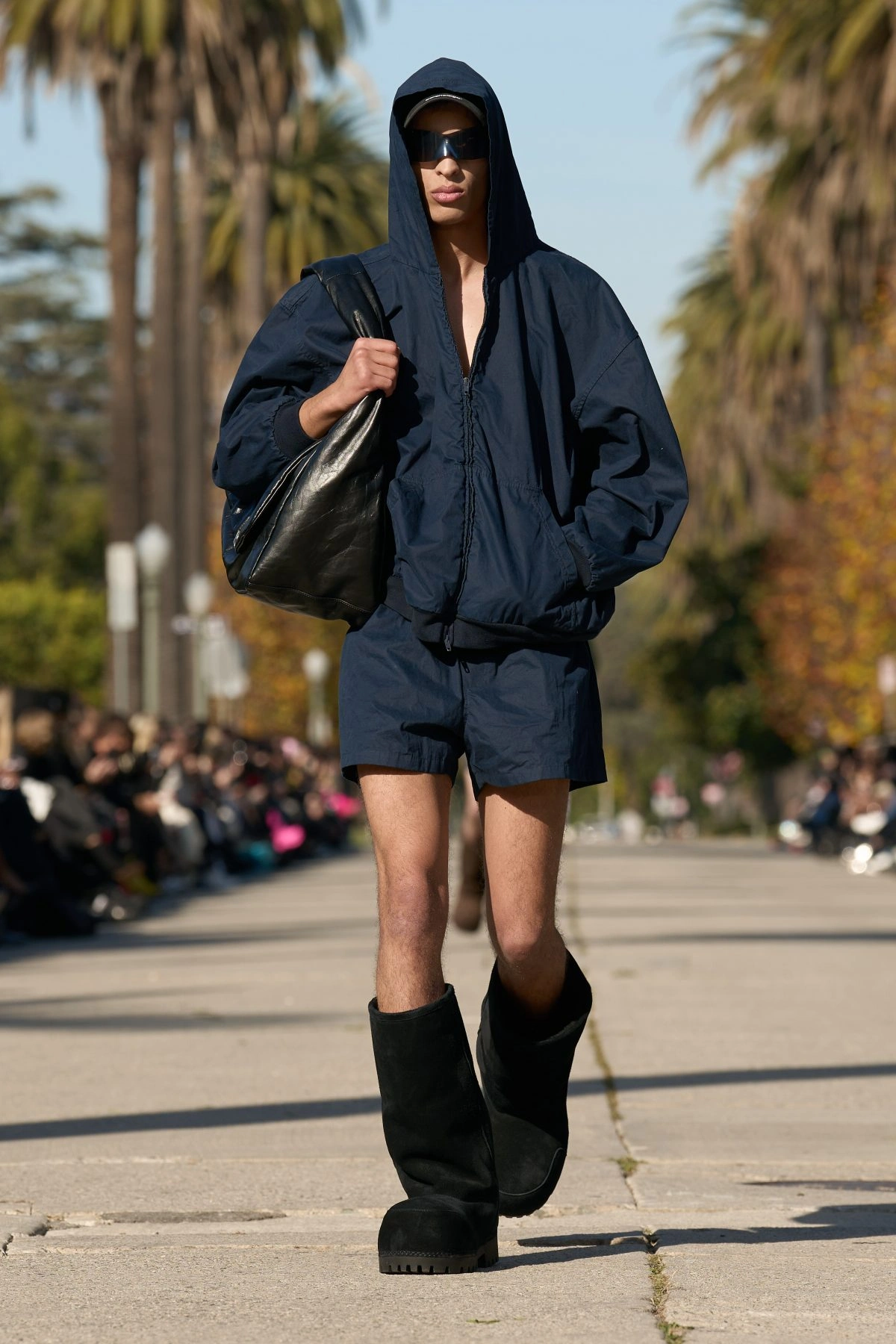
Gucci, however, presents a different proposition. This is a house whose history already contains enough sex appeal and eccentricity to fill several fashion museums. Demna doesn’t need to invent a personality for it. He needs to decide which of its many personalities should get dressed first.
La Famiglia
Meet the Gucci family
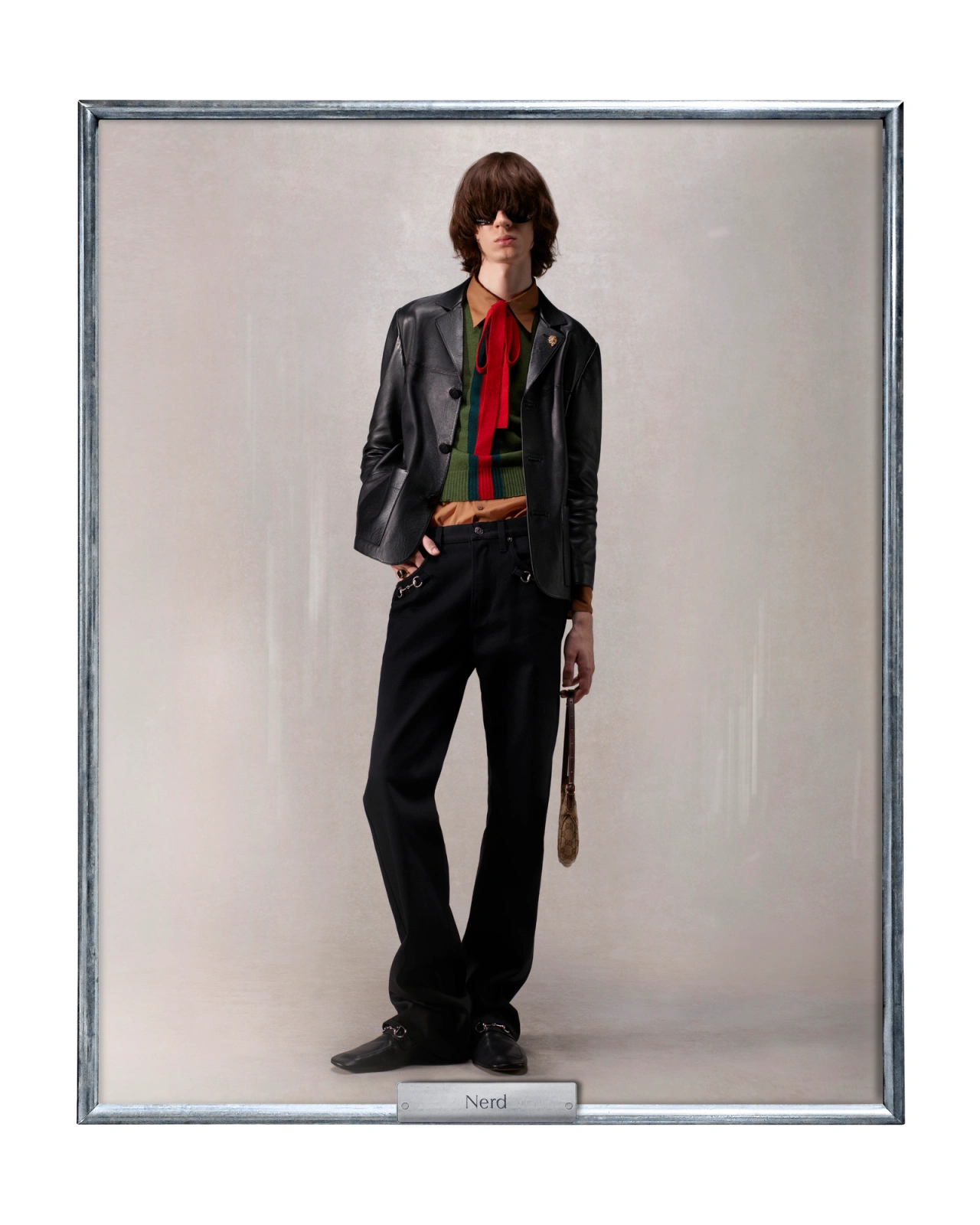
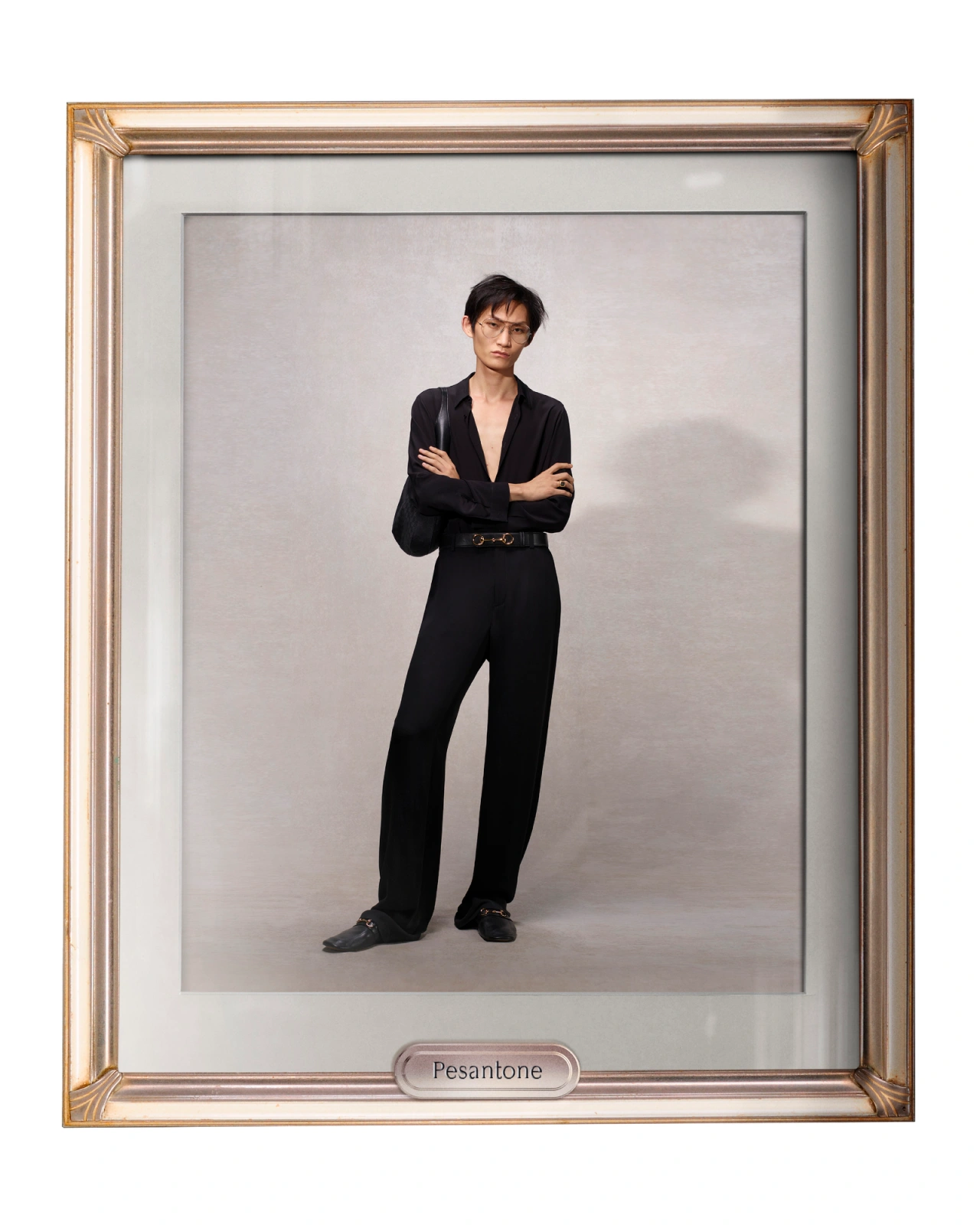
Demna’s Gucci debut arrived in September 2025 with La Famiglia, a 37-look collection photographed by Catherine Opie and accompanied by a film directed by Spike Jonze.
It’s the fashion equivalent of being introduced to an Italian family at dinner. Everyone has an opinion, someone is overdressed, and the chances of a peaceful evening are slim.
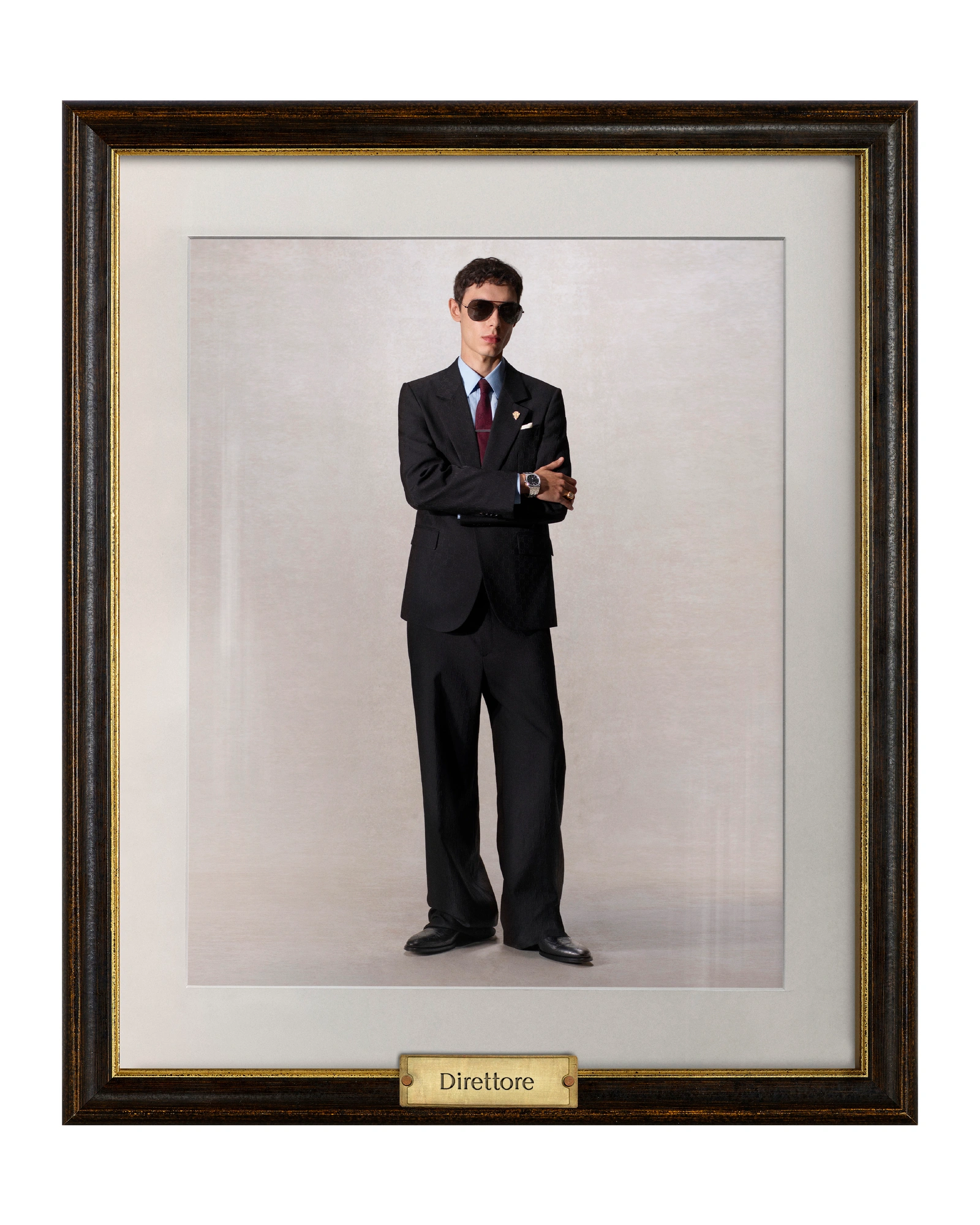
In his show notes, Demna described the process as an attempt to understand what Gucci meant to him, from its archive to the identities it had accumulated over the years. The clothes answered by returning to familiar house signatures with a few well-judged alterations.
La Famiglia made the opening move by establishing that Gucci could be many things at once. It could be polished, louche, aristocratic, or gloriously over the top, depending on the wearer.
Generation Gucci
Creating a very stylish fear of missing out
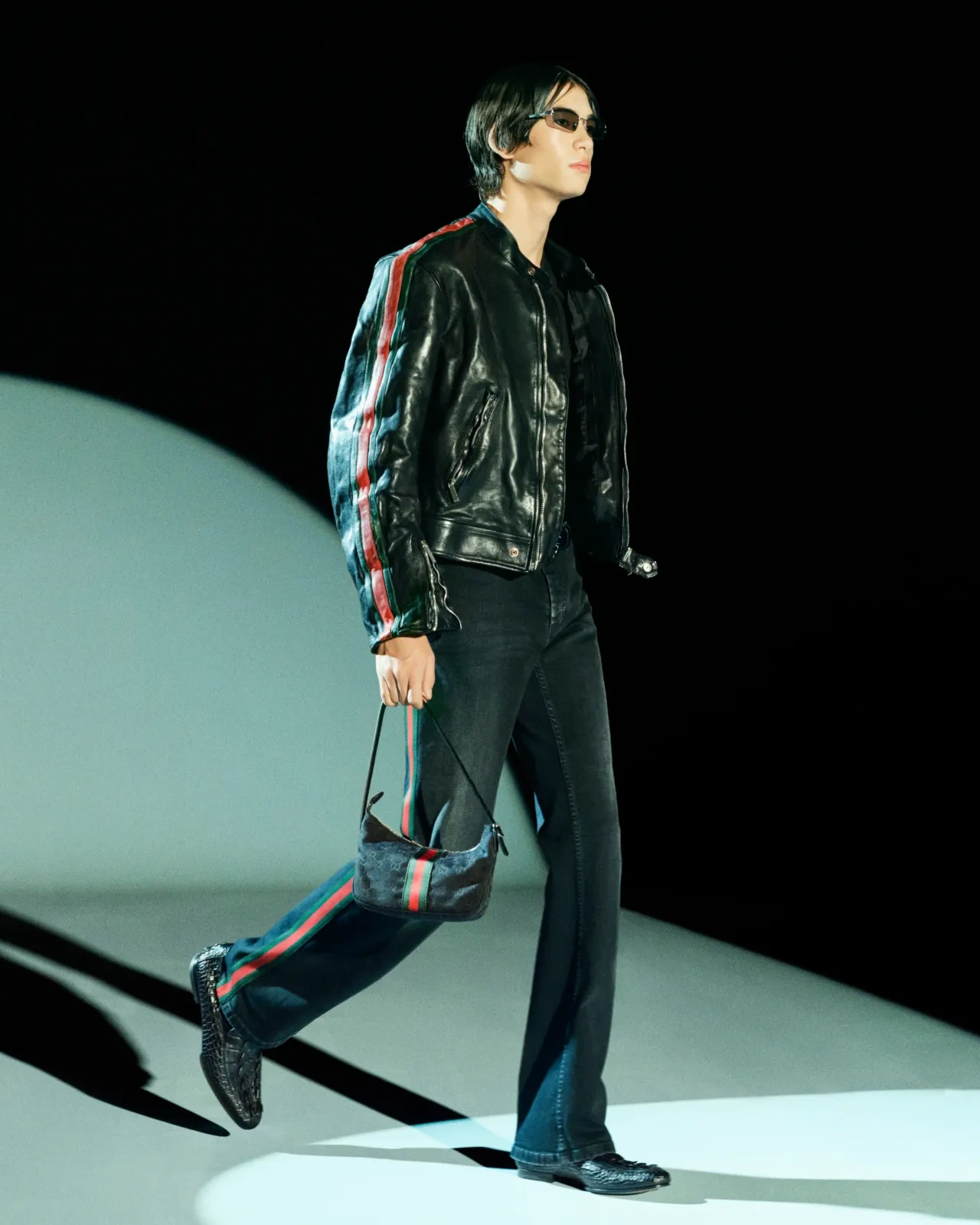
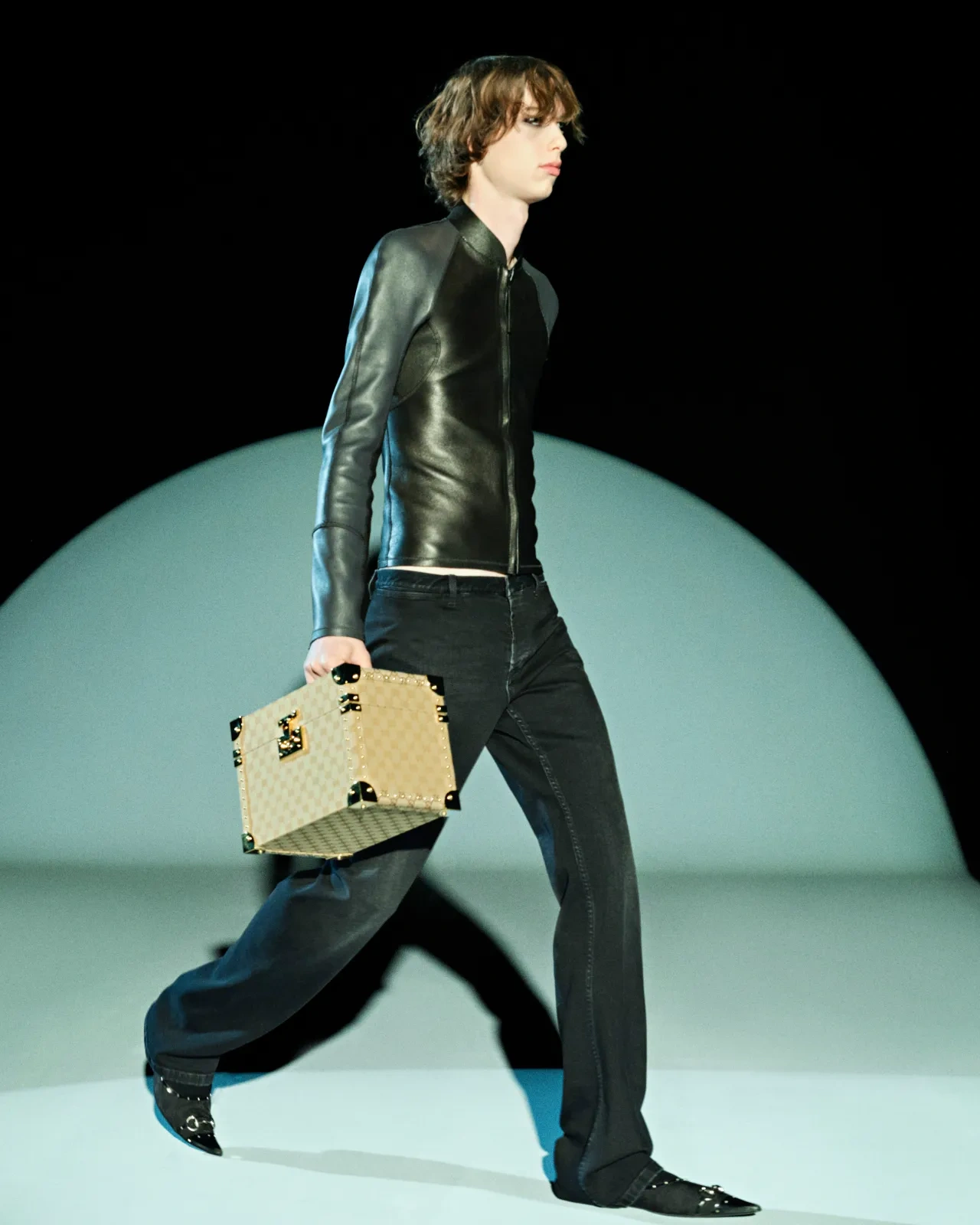
By December 2025, Demna had moved on to the question of why anyone wants fashionFashionThe art and industry of designing, producing, and styling clothing, footwear, accessories, and beauty trends. It reflects cultural influences, personal expression, and evolving styles across seasons and markets.Go to Fashion Glossary in the first place. Generation Gucci, his second collection and first pre-season offering, was conceived as an imaginary runway show that never actually happened.
The clothes were just as pointed. Gone, for the most part, were the enormous volumes associated with Demna’s Balenciaga years. In their place came a leaner silhouette, with a sexier undercurrent.
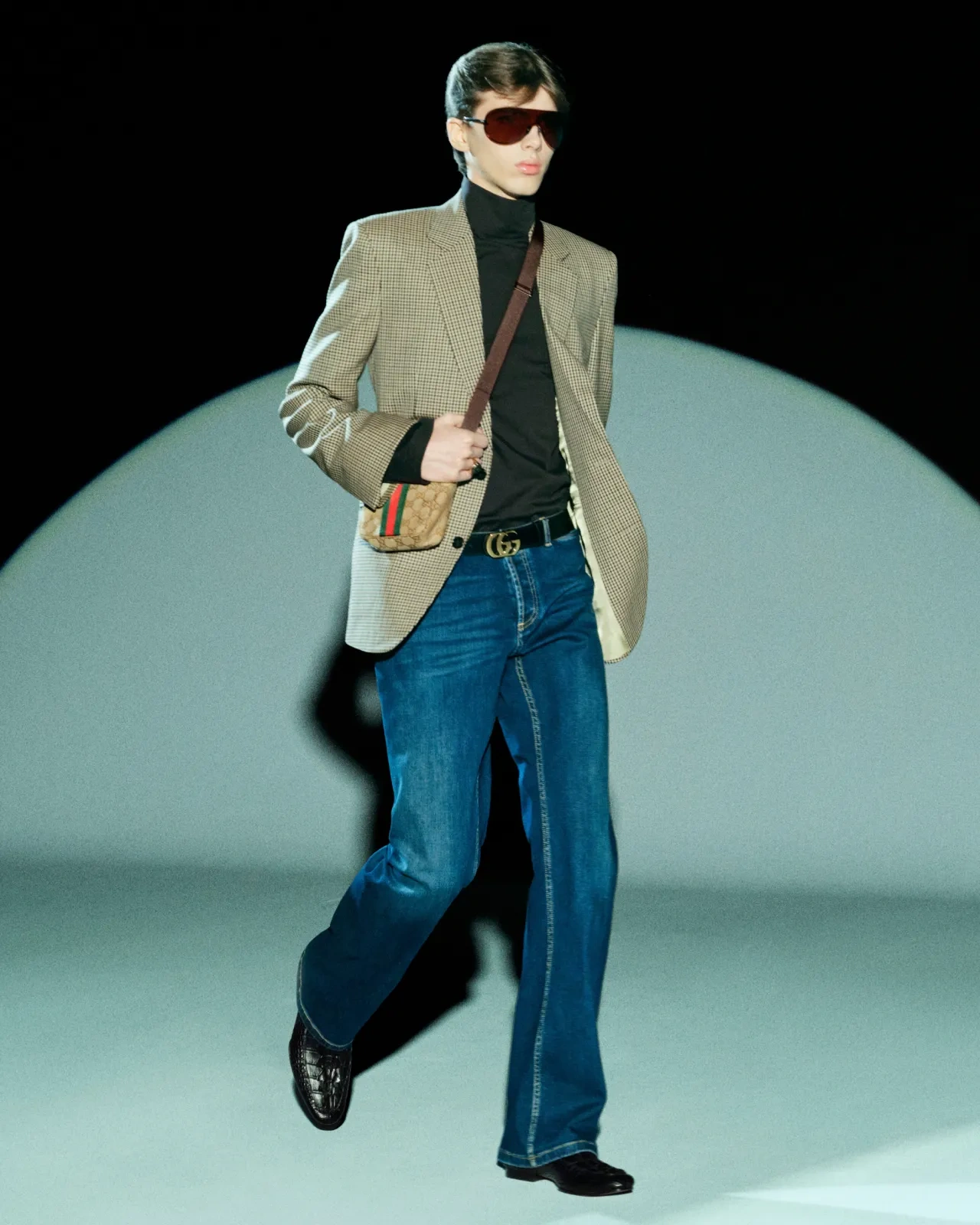
Demna’s explanation was refreshingly blunt. “I think fashion is FOMO. Fashion has to create FOMO,” he said, describing the irrational desire for something unexpected and entirely unnecessary.
It’s difficult to argue with the diagnosis. Nobody urgently needs another pair of sunglasses. Yet the right pair, seen on the right person at the right moment, can suddenly feel essential to one’s continued existence as a fashionable adult.
Primavera
Less theory and more skin
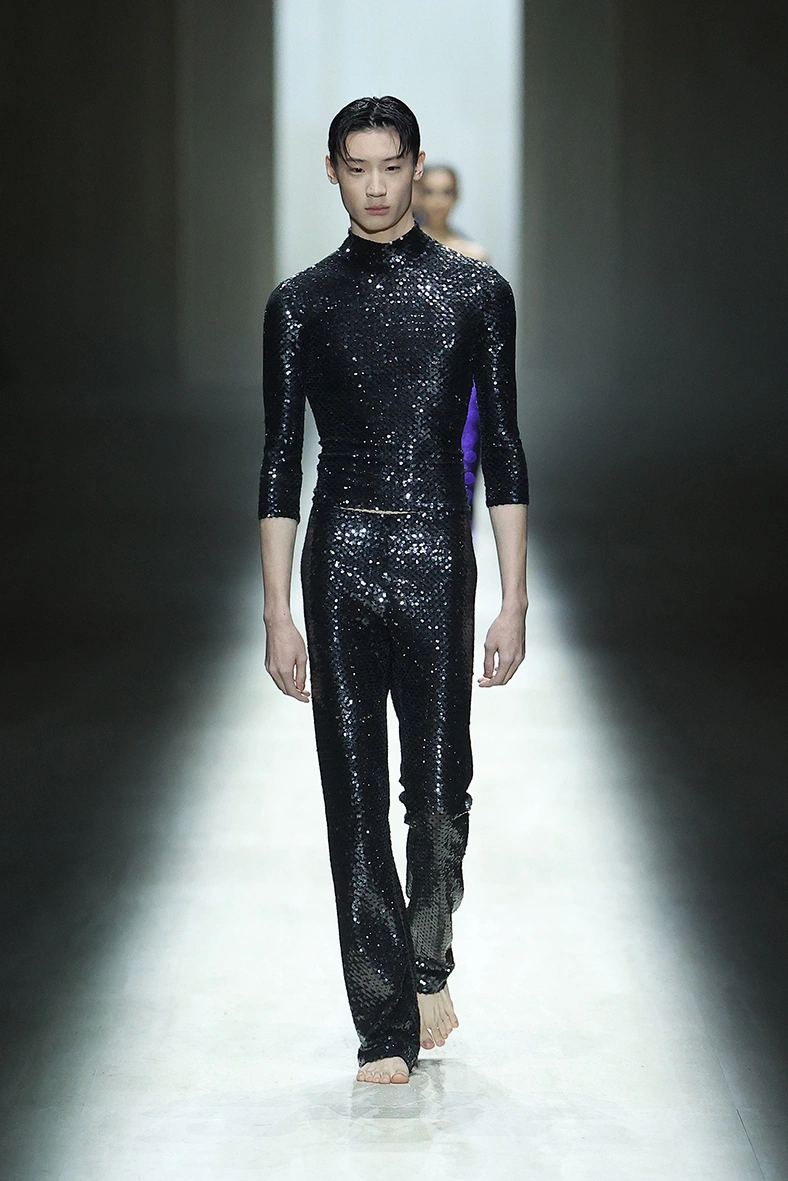
In February 2026, Demna took his vision to the runway with Primavera, staged at Milan’s historic Palazzo delle Scintille. After two collections presented through images, the live show offered a clearer sense of how his new Gucci might move.
“For 10 years I was trying to impress myself, to be smart, and at Gucci I realized I can create an emotional rather than intellectual fashionFashionThe art and industry of designing, producing, and styling clothing, footwear, accessories, and beauty trends. It reflects cultural influences, personal expression, and evolving styles across seasons and markets.Go to Fashion Glossary,” Demna said in his show notes. “Seduction, it’s part of human nature, and I want to put it out there.”
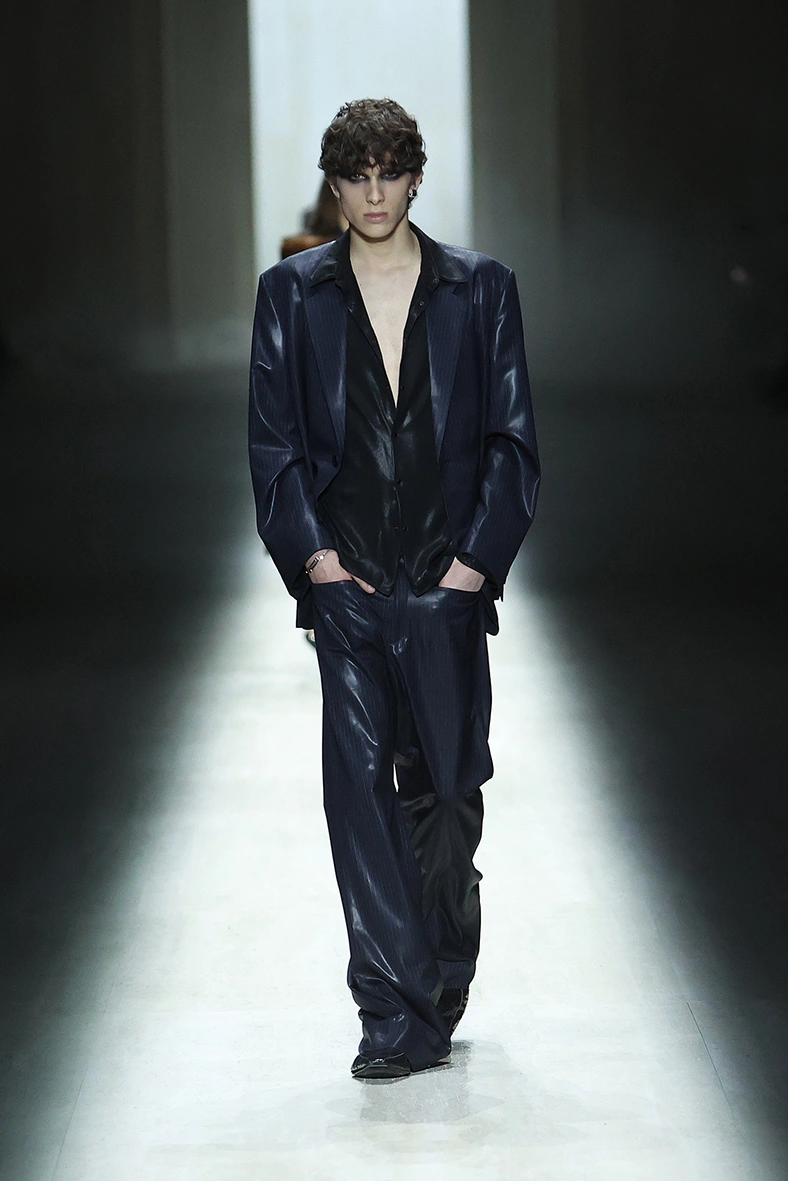
The collection introduced close-fitting, hosiery-like garments engineered to cling to the skin like a second layer. Invisible heat-sealed edges and curved hems eliminated conventional seams. The technical work was elaborate, but the intended effect was straightforward: clothes that looked almost as though they had been painted on.
GucciCore
Wall Street meets the fashion crowd
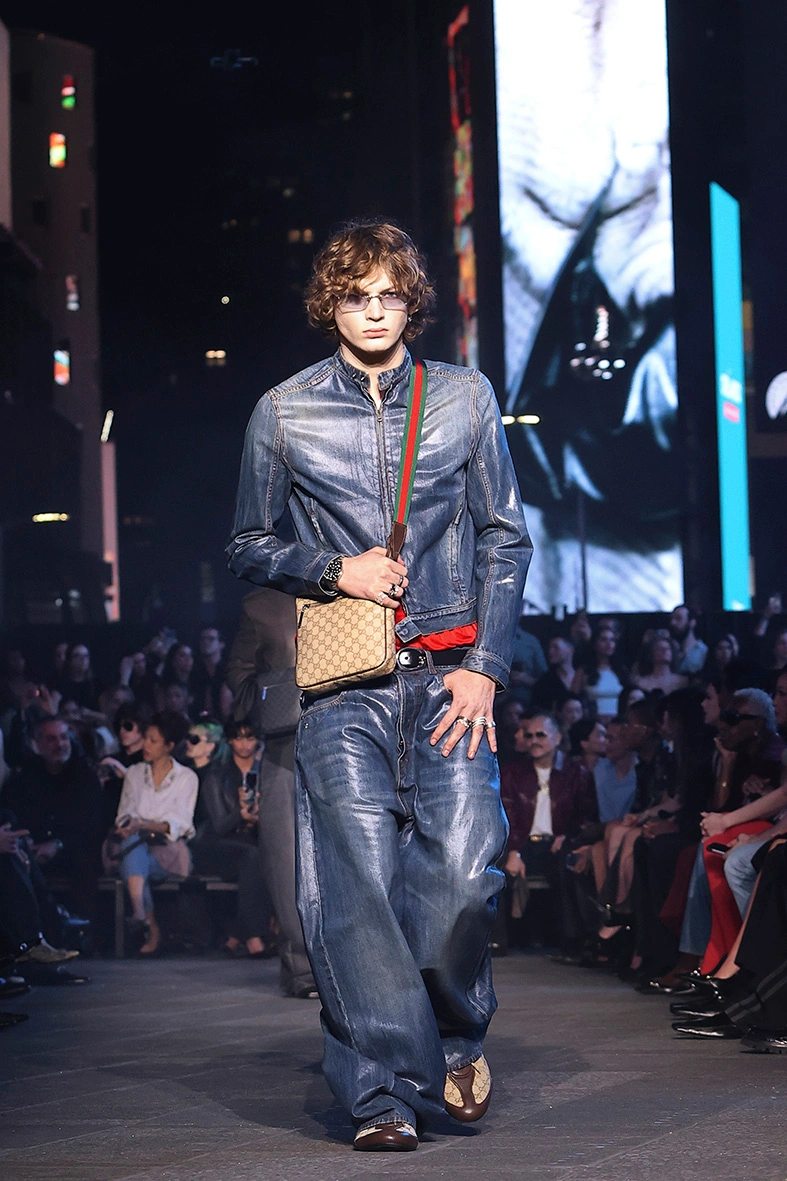
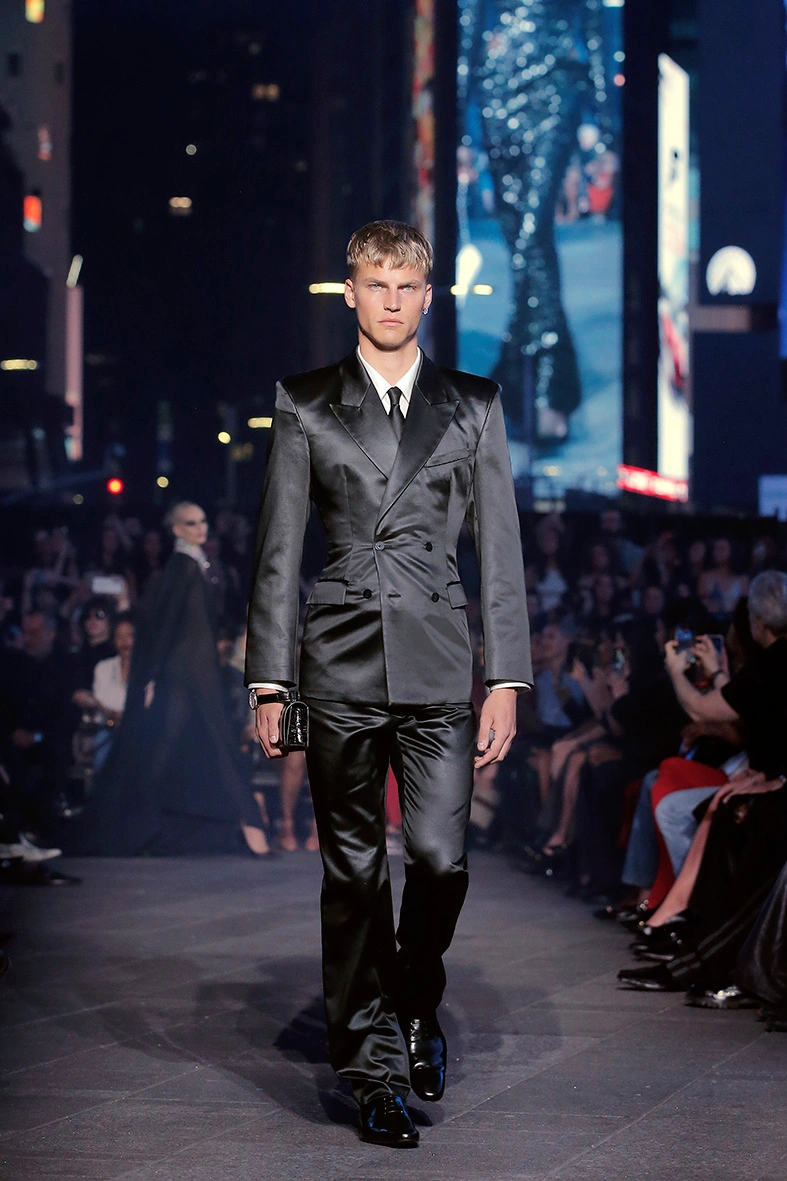
In May, Demna took Gucci to Times Square for GucciCore, his debut Resort/Cruise 2027 collection. The location was no random exercise. Gucci opened its first boutique outside Italy in New York in 1953, and the city has remained an important part of the brand’s story.
Demna treated the city as a wardrobe waiting to be examined. The collection moved between sharp Wall Street tailoring and everyday urban sportswear, pairing pinstripePinstripeA pattern of very thin, closely spaced vertical lines running evenly through a fabric, strongly associated with business suits, bankers, and finance. Pinstripes lend height, sharpness, and authority to tailoring,Go to Pinstripe Glossary suits and jackets with dark-wash denim and double-leather looks.
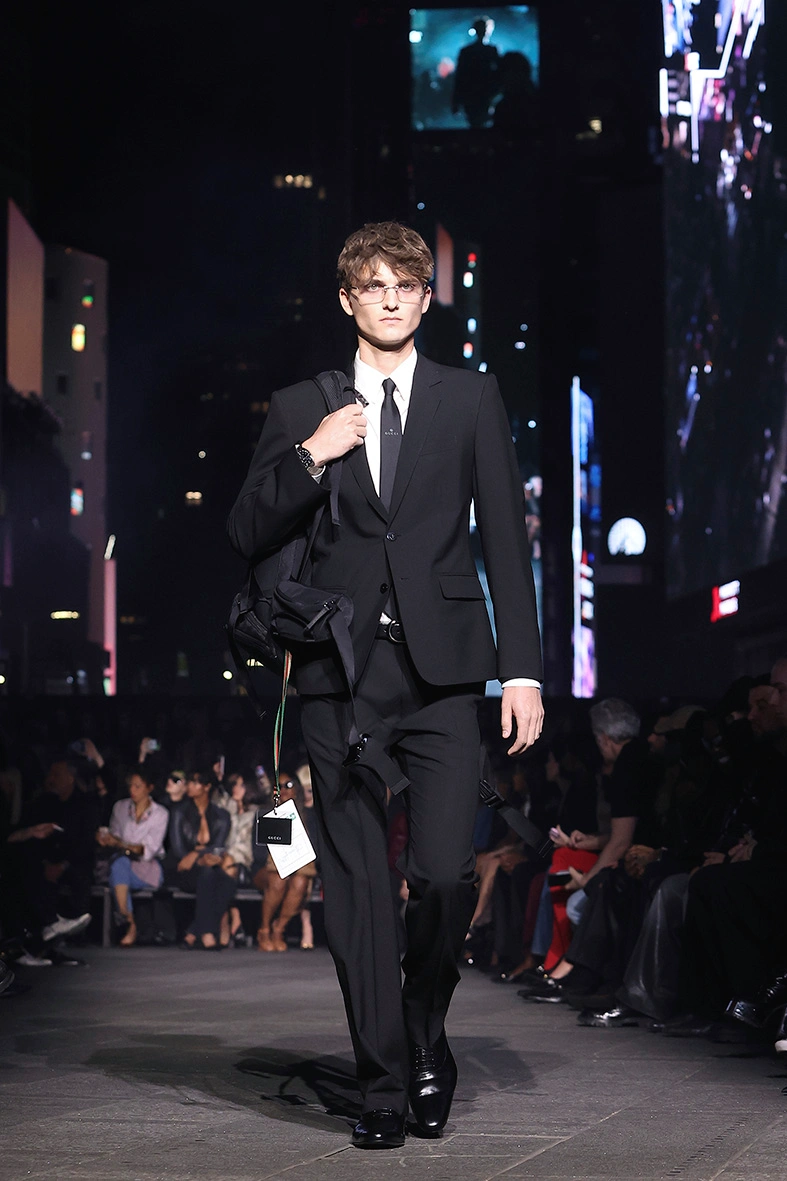
This was Demna’s streetwear instinct in a different register. At Balenciaga, he had helped collapse the distinction between luxury and everyday clothing, demonstrating that a hoodie or bomber could be as carefully engineered as a formal garment.
At Gucci, the same instinct was being directed towards a more recognizable wardrobe, one built around tailoring, outerwear, denim, and accessories that could move between different parts of a person’s life.
The Store Show
Gucci finally shows its hand
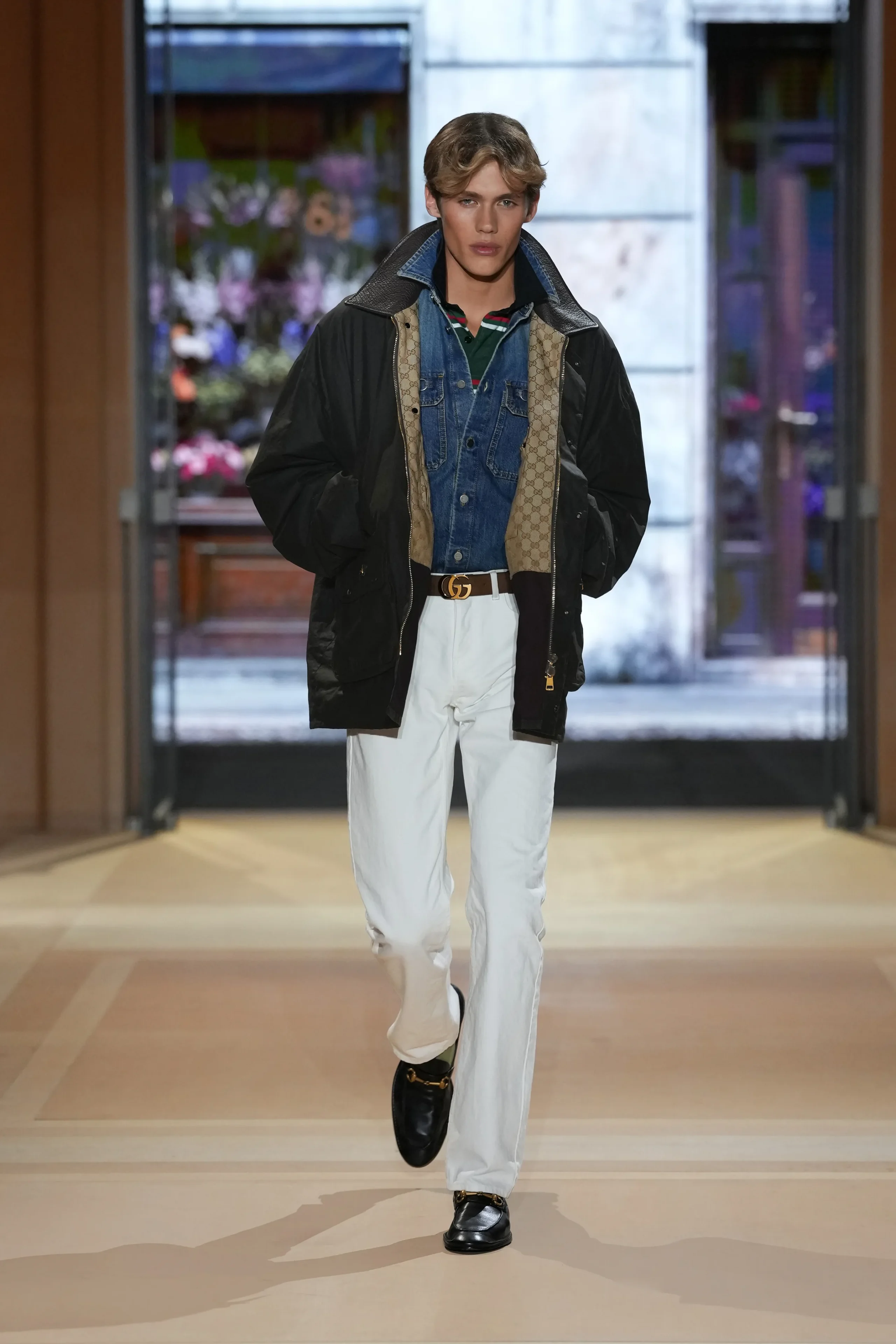
After a year of lookbooks, pre-collections, and elaborate runway statements, The Store Show brought Demna’s Gucci into focus. It was his first fully realized vision for the house, and the central idea was as straightforward as it was revealing: put the clothes in the place where people actually buy them.
Rather than build a conventional runway environment, Demna staged the presentation around product-filled display cases, turning the retail floor into the centerpiece of the show.
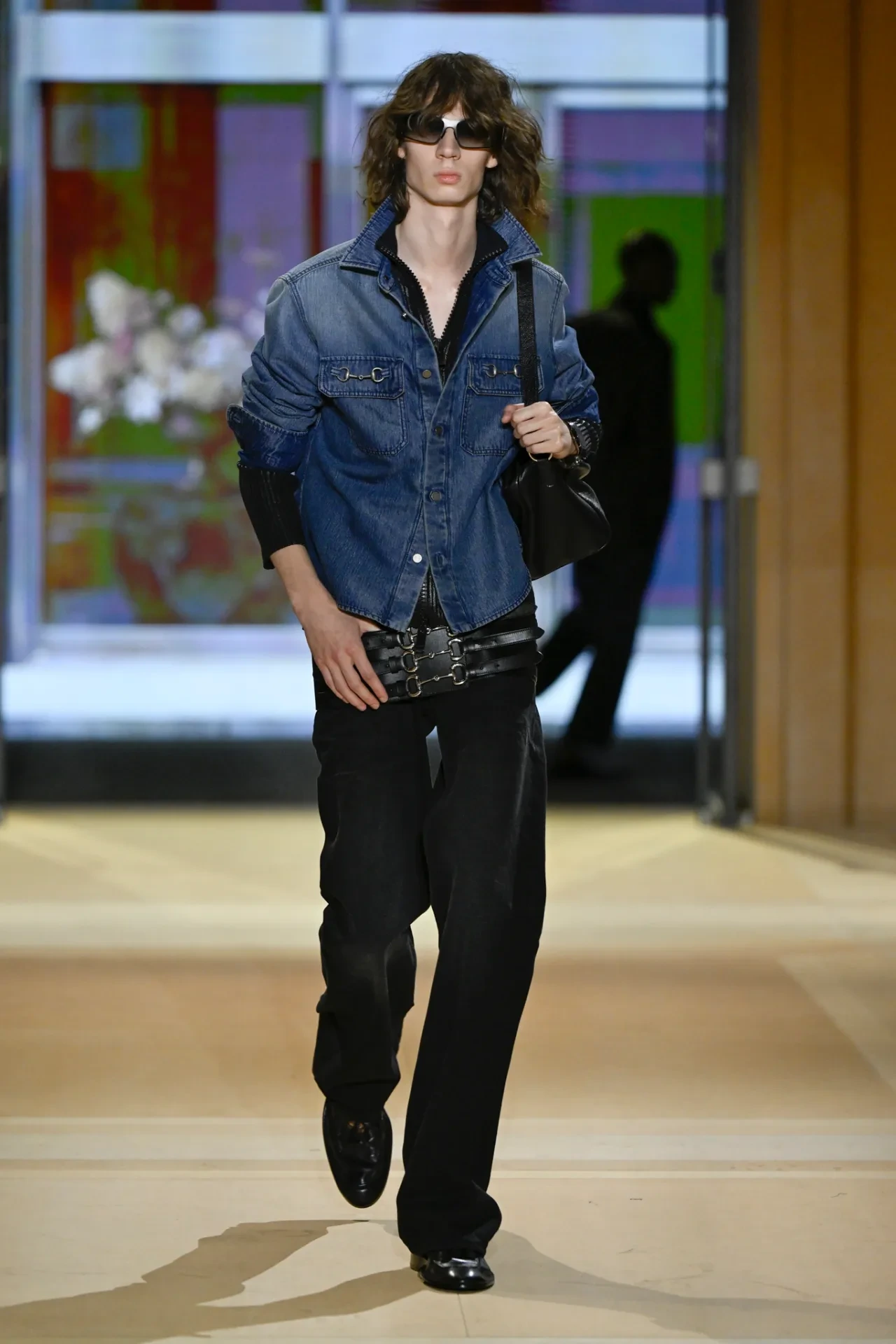
Demna’s notes described Gucci as a house rooted in the desire to belong to a more glamorous world, alongside the audacity to remake that world in one’s own image.
The tension between propriety and sensuality was central to his argument. Gucci, in his reading, is at its best when it allows the wearer to be respectable and a little improper, sometimes within the same outfit.
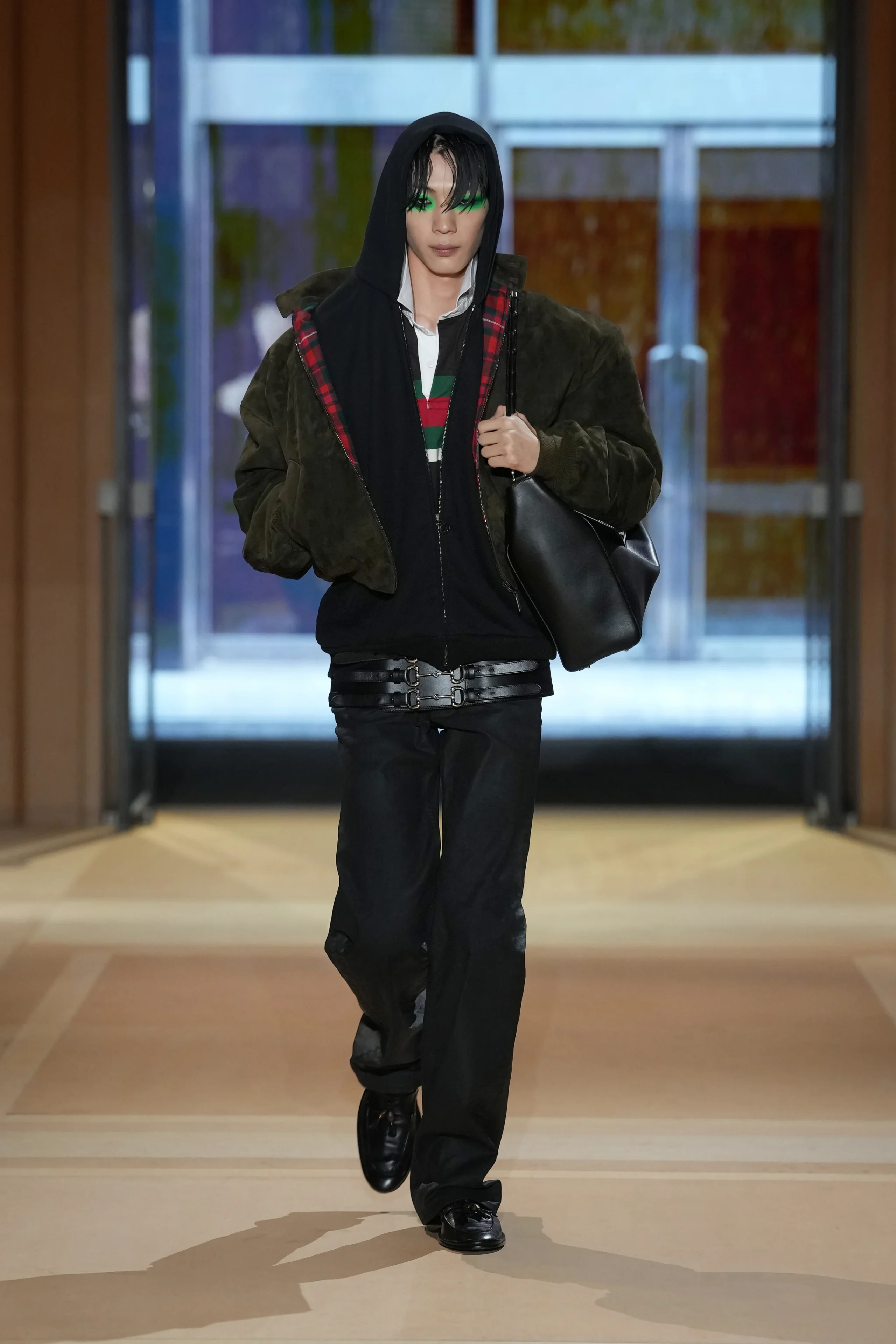
The Store Show made the commercial logic impossible to miss. By placing the clothes alongside display cases and within a retail-inspired environment, Demna forced the audience to confront what a fashion show ultimately asks of its viewers. Admire the garment, imagine yourself wearing it, then decide whether you want it badly enough to buy it.
What does Demna’s Gucci actually stand for?
The progression from La Famiglia to The Store Show reveals a designer working through the different stages of desire. First, establish the characters. Then make the clothes feel urgent.
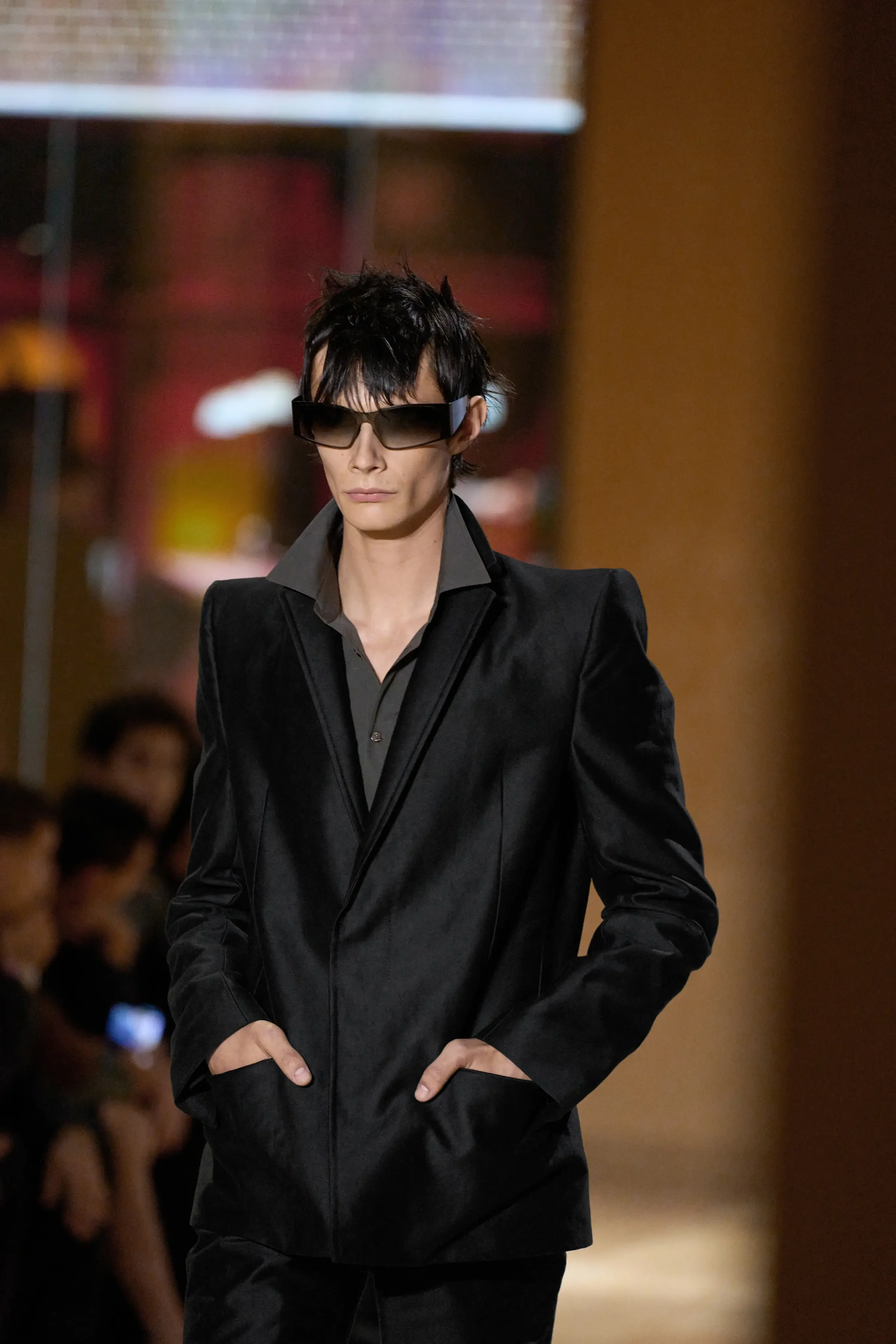
Put them on the body, take them into the street, and finally show how they might live in the retail environment. Each collection has offered another piece of the same argument, with Gucci’s archive serving as both source material and sales pitch.
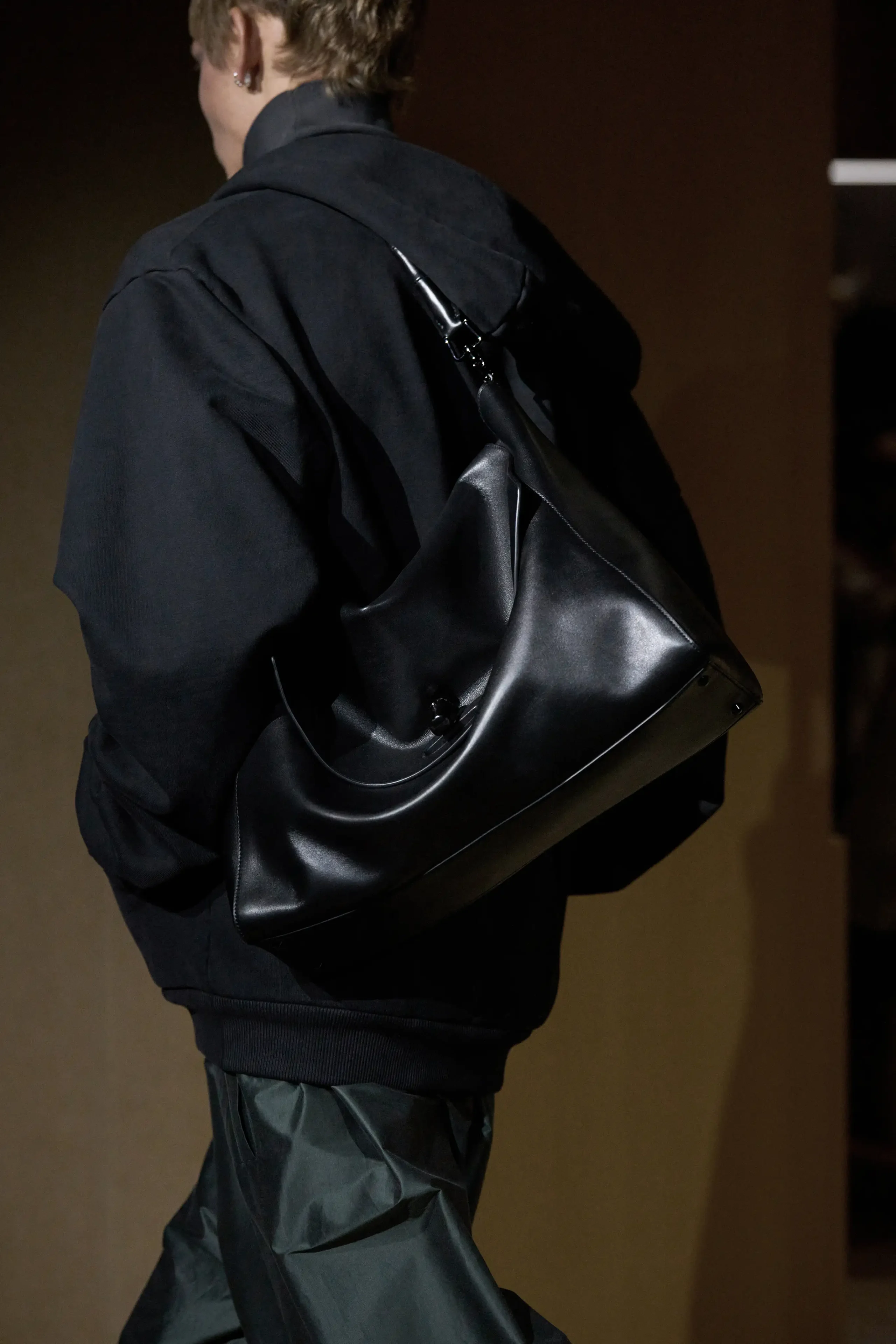
For Demna, this also marks a shift from the more confrontational approach that defined much of his work at Balenciaga. The interest in ordinary clothes and the psychology of consumption remains, but Gucci gives those ideas a more sensual vocabulary. The clothes are allowed to be beautiful. They are allowed to be sexy. They are allowed to sell.
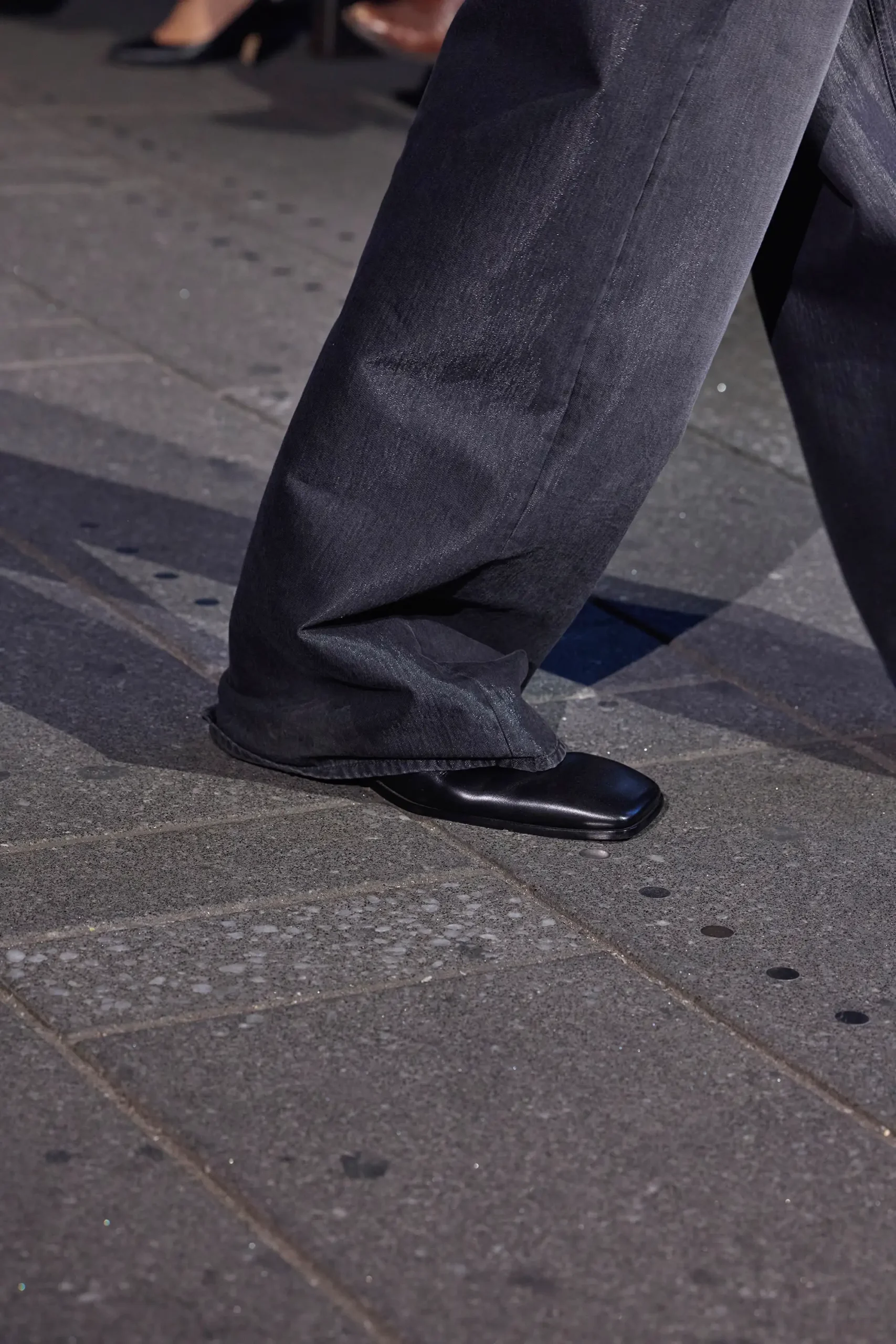
And why shouldn’t they? Fashion can be an intellectual exercise or a cultural argument. It can also be the very simple pleasure of finding a jacket that makes you stand a little differently when you put it on.
Demna seems to understand that fashion works best when it can offer both the fantasy and the product. The Store Show is the clearest expression of that understanding so far, bringing the house’s history, its characters, and its commercial ambitions into the same room.
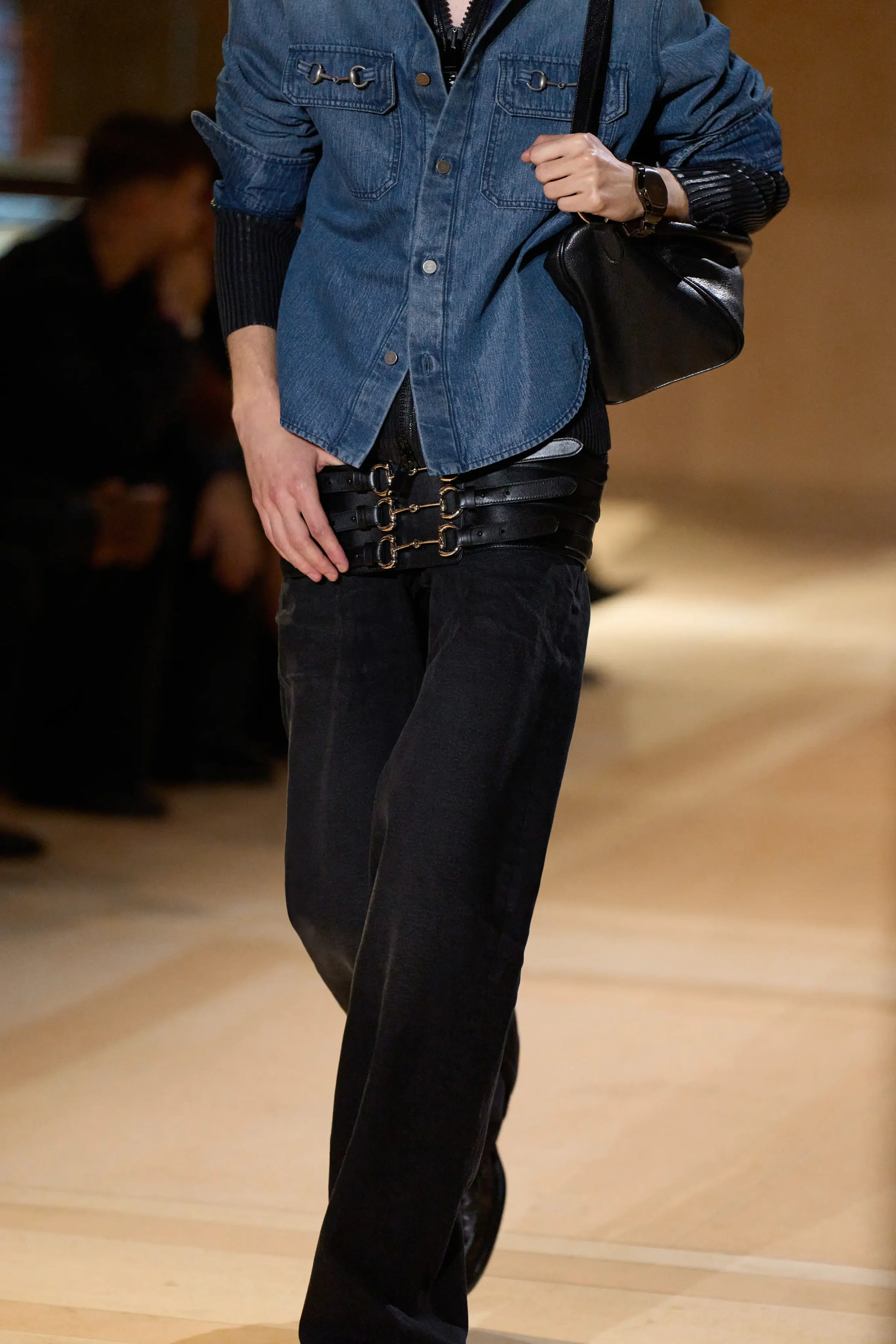
The clever part is that Gucci doesn’t need to convince you that you’re a different person. It only needs to suggest that, in the right clothes, you might be a more interesting version of the one you already are. Naturally, the shop is just over there.
Frequently Asked Questions
Demna is a Georgian fashion designer who previously served as creative director of Balenciaga from 2015 to 2025. He joined Gucci in 2025.
Demna aims to make Gucci’s signature codes feel fresh and desirable without abandoning the house’s heritage. His approach combines sensual glamour and distinctive character-driven styling.
La Famiglia is a lookbook featuring 37 looks that present Gucci through a cast of character archetypes. Photographed by Catherine Opie, it explores the house’s identity through signature elements such as the Flora print, GG monogram, and exaggerated Horsebit loafers.
Demna made his live runway debut for Gucci with Primavera in February 2026 at Palazzo delle Scintille in Milan. The collection explored sensuality through body-conscious silhouettes and late-1990s-inspired glamour.
The Store Show is a Gucci fashion presentation staged on a retail-inspired floor, with product display cases incorporated into the setting. The show brought Demna’s vision into focus through character archetypes such as the Rebellious Aristocrat, Snob, and Eccentric, connecting the runway directly to the Gucci shopping experience.
Recommended Video