Demna Revisits the 1990s to Shape Gucci’s Future Identity
A new lookbook titled “Generation Gucci” revisits the past with nostalgia while revealing the brand’s clearest vision for its future




The 90s, reloaded
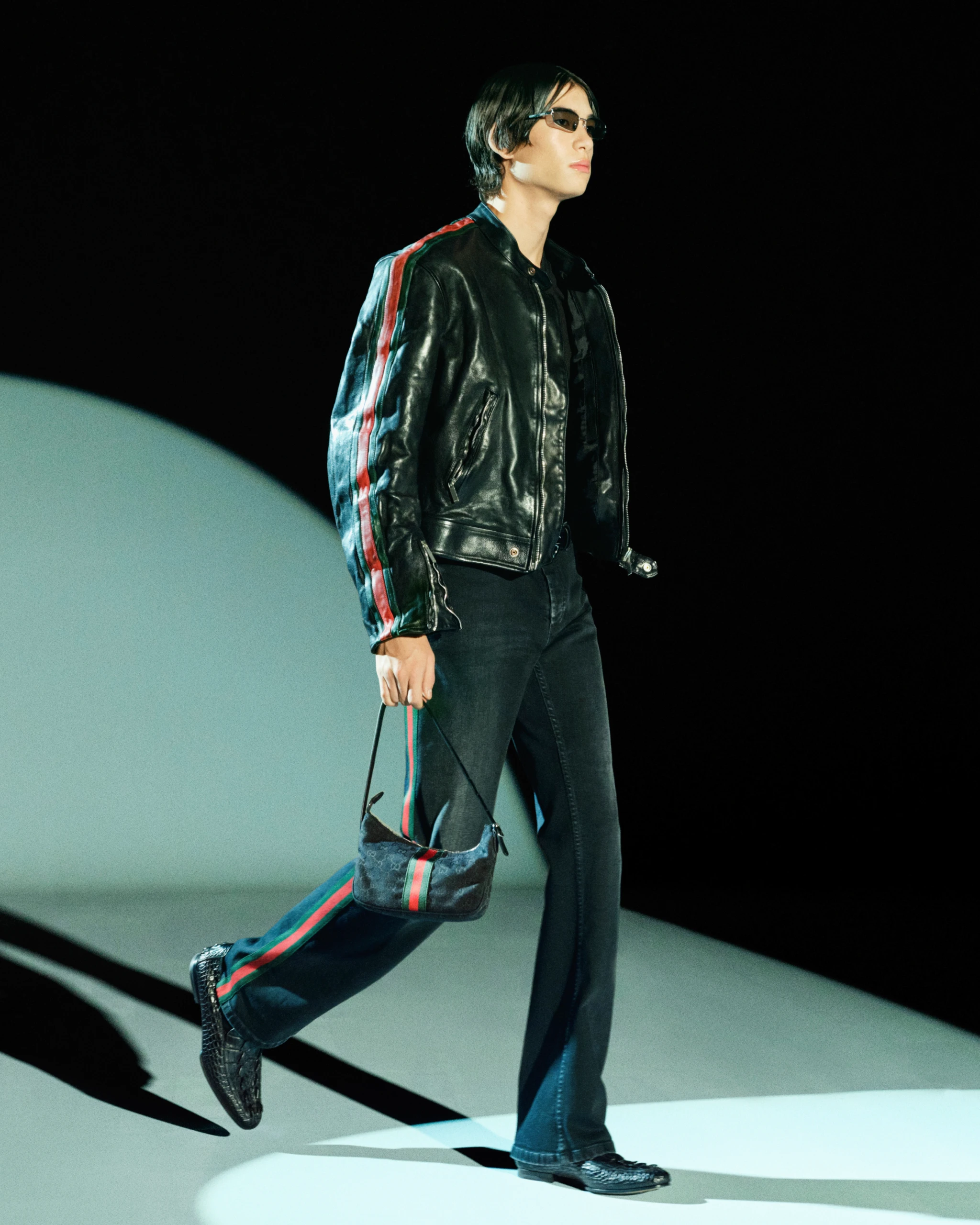
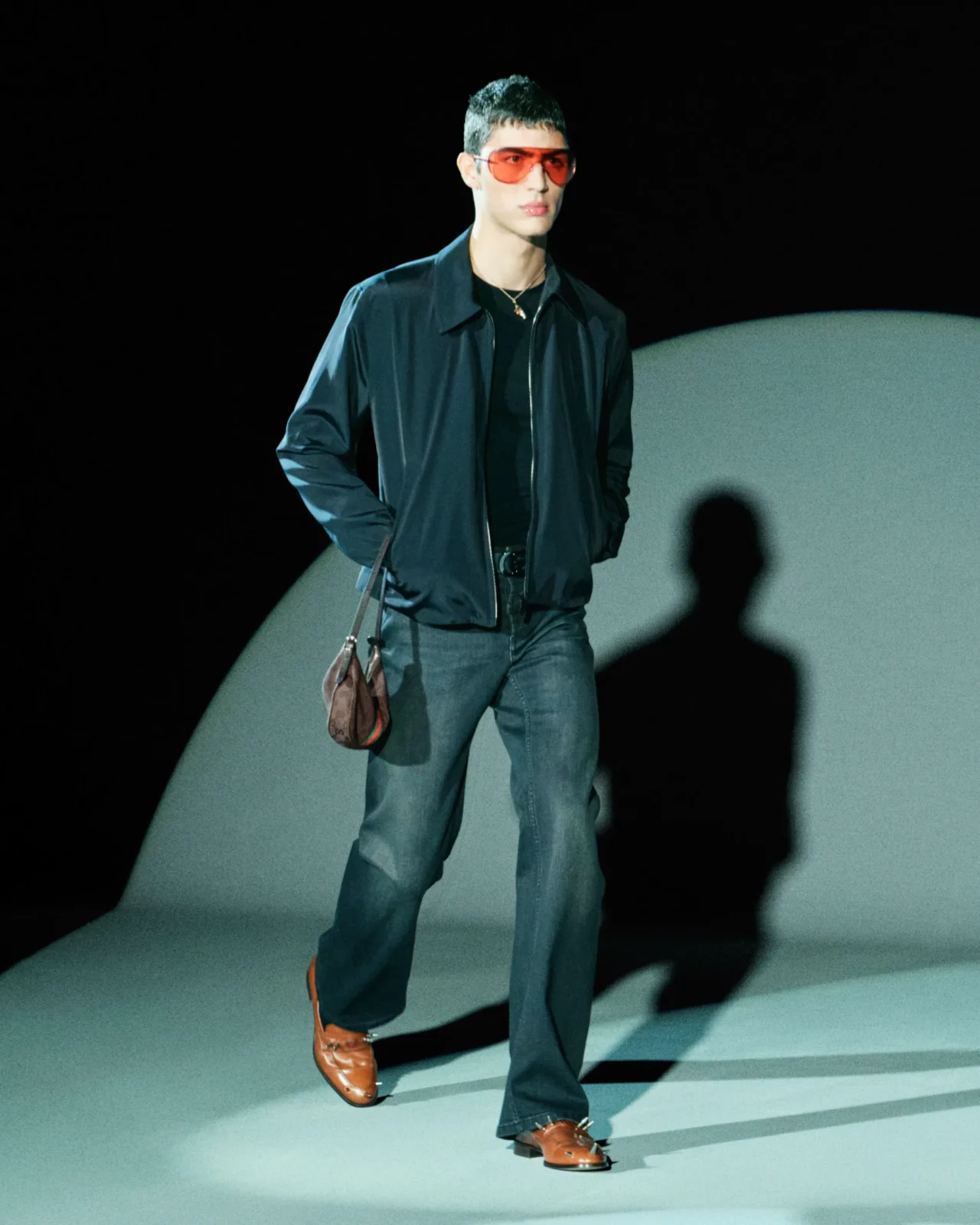
The Pre-Fall 2026 lookbook titled “Generation Gucci” opens with the unmistakable influence of the 1990s. Shot by Demna, the images mimic the grainy textures, warm shadows, and low angles of Tom Ford’s early runway years. The effect is intentionally disorienting. It pulls the viewer into a version of history that feels familiar but not entirely real.
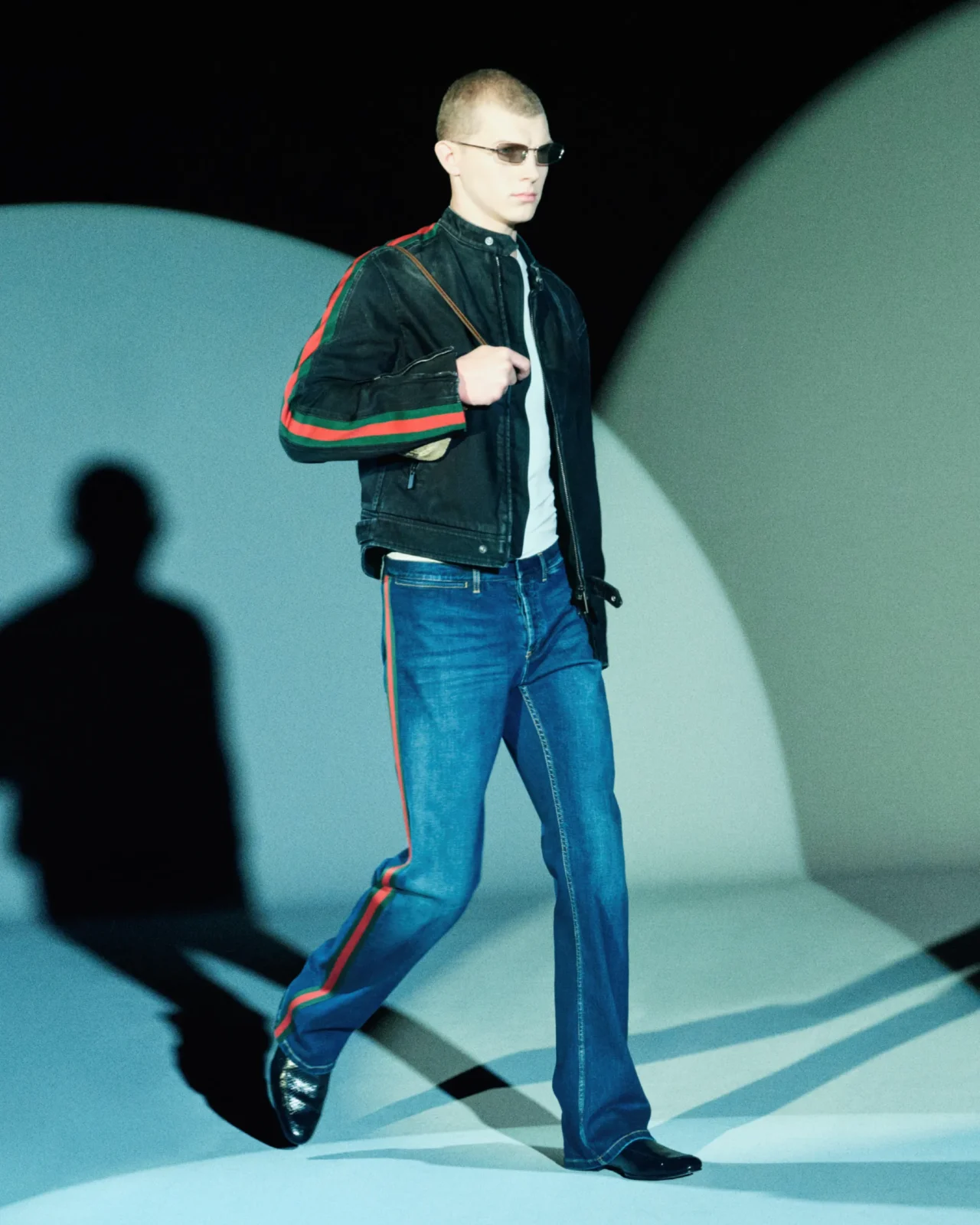
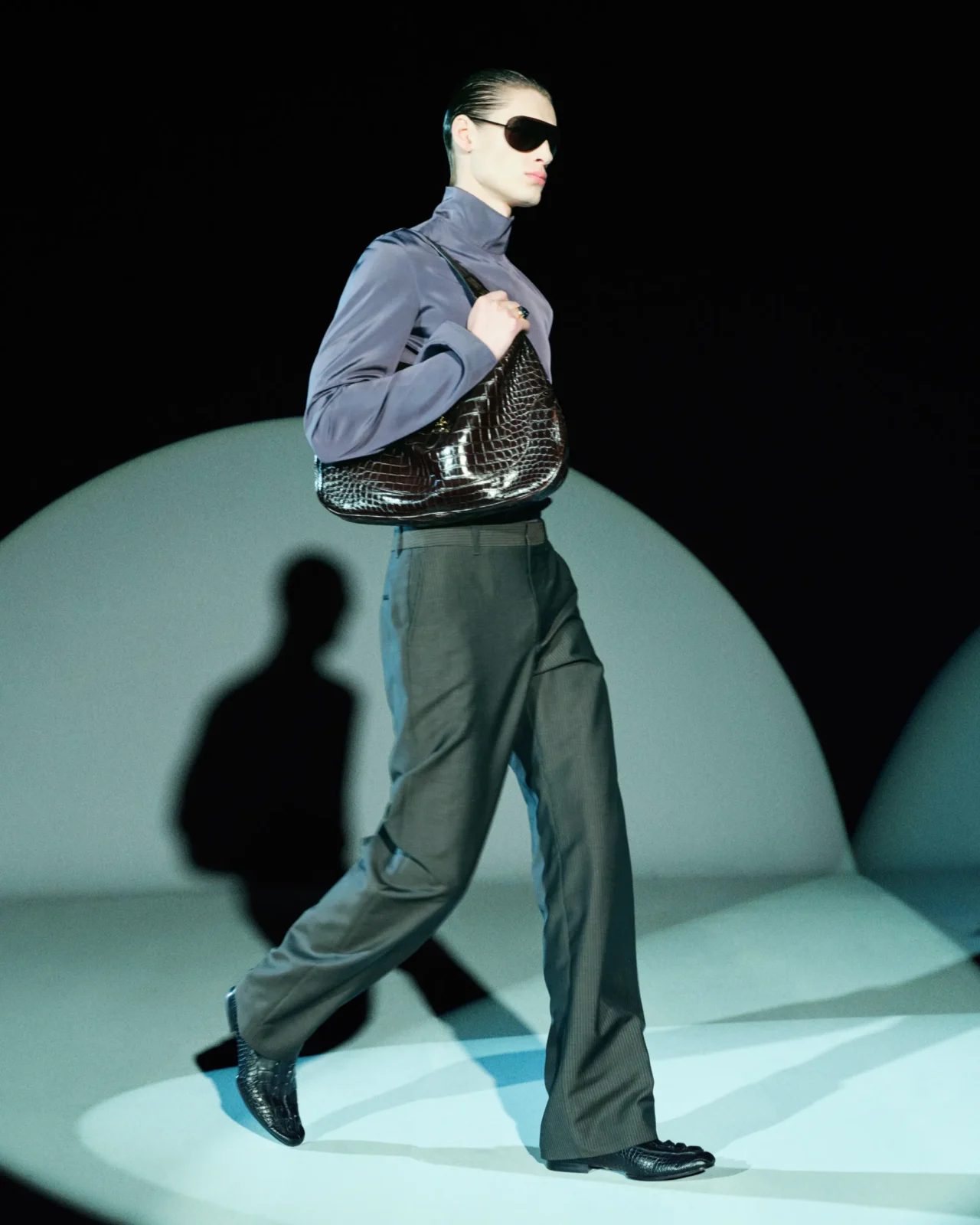
Once the initial nostalgia wears off, the clothes reveal a different story. Despite the retro aesthetic, the collection is grounded in Demna’s ongoing interest in deconstruction. The designer reworks traditional wardrobe items by stripping them down internally.
Jackets that recall classic shapes are built from lightweight faille silk that feels worn in. Trousers appear seamless. Shoes hide their stitching. Nearly every piece has been lightened to create a sense of controlled fluidity.
The art of subtraction
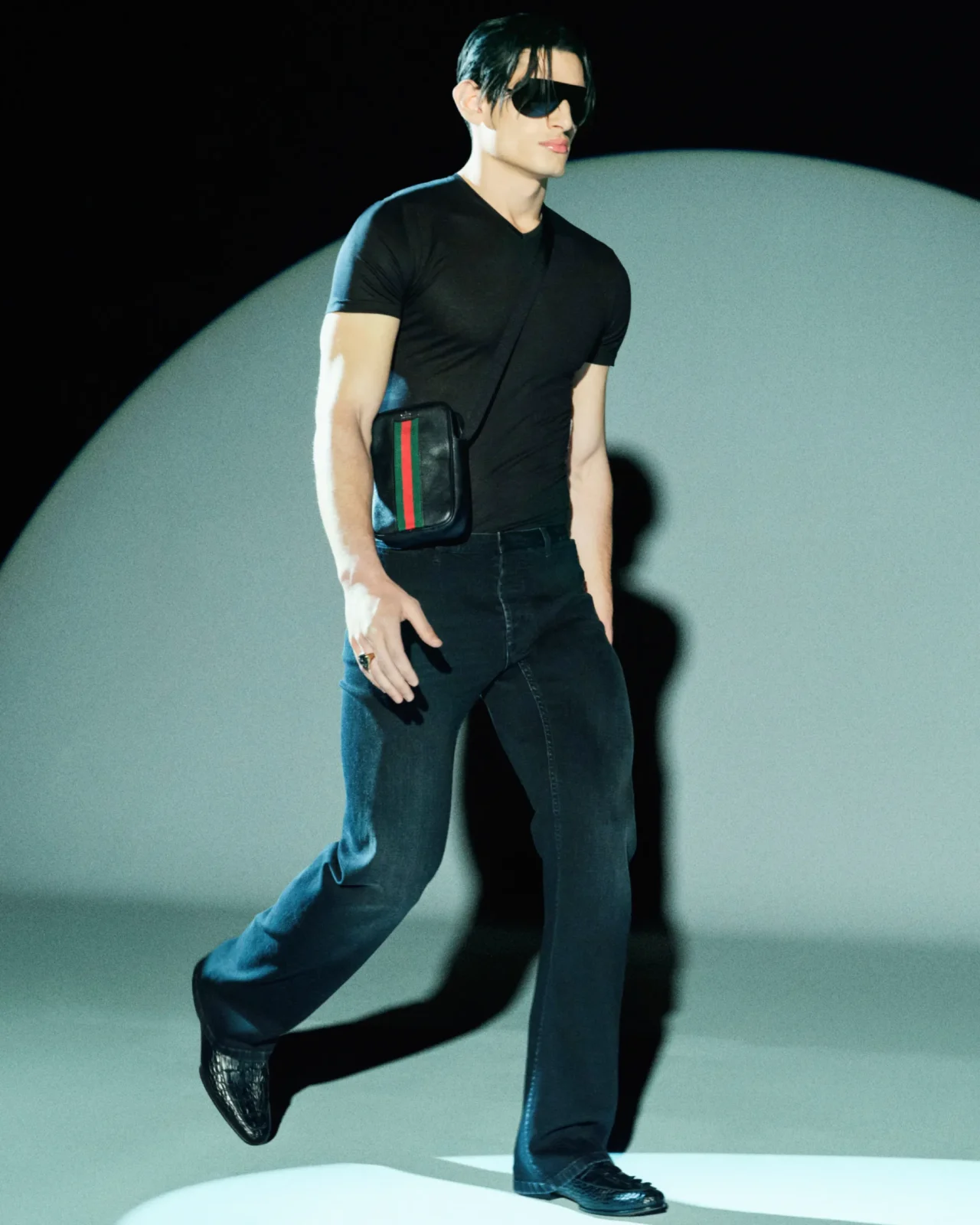
Throughout the collection, Demna continues to experiment with removal and reduction. Loafers are pared down. Coats fall around the body like bathrobes. Travel suits perform like sleepwear. The emphasis is not on simplicity for its own sake but on a study of how far a garment can be reduced while maintaining its presence.
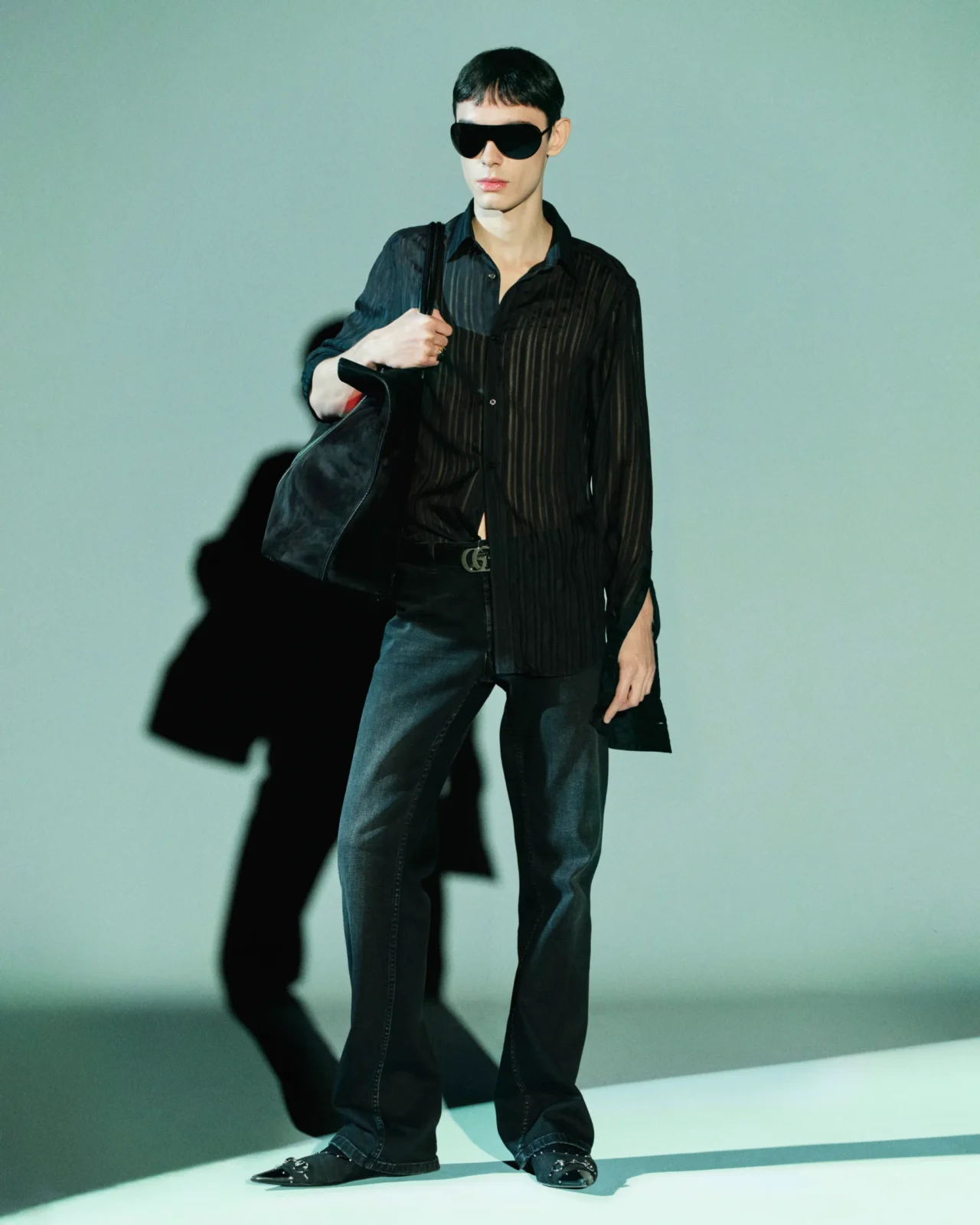
The tailoring nods to Tom Ford’s language, but the contrast between the two designers becomes clear. Ford favored strong shoulders, defined waists, and high-impact materials. Demna takes the opposite route. His tailoring holds almost no structure, adopting an aged texture and a lighter composition that shifts the focus from power to ease.
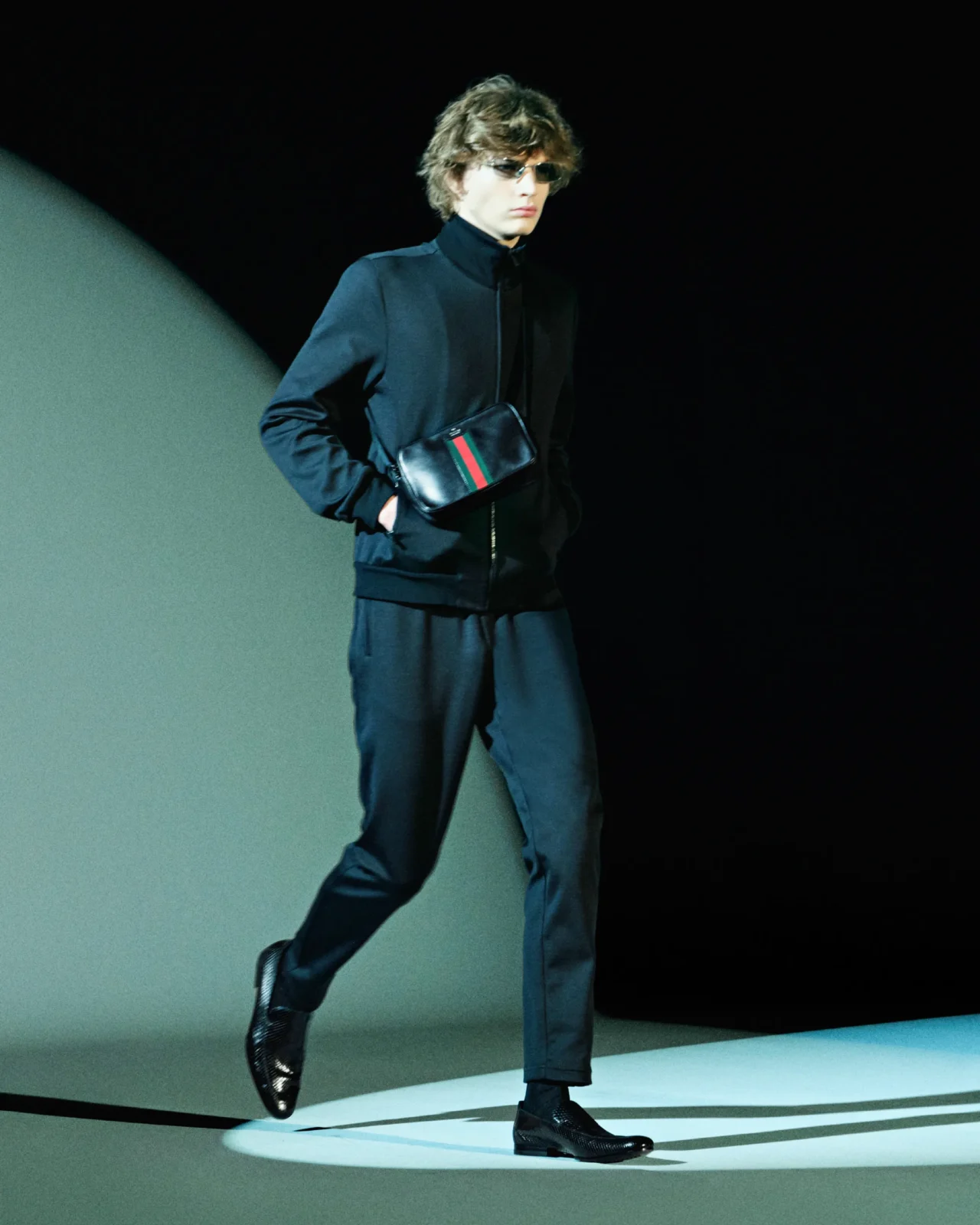
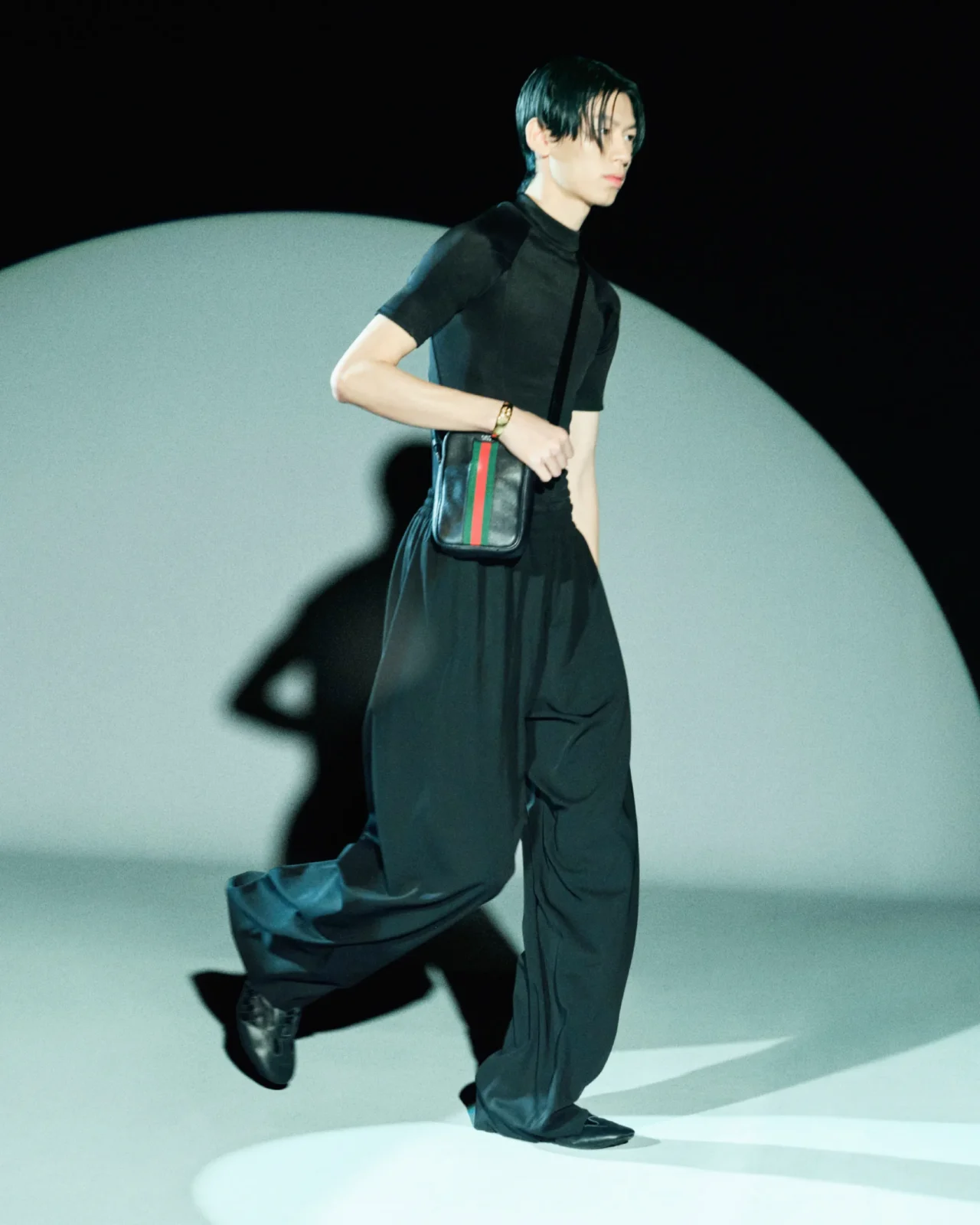
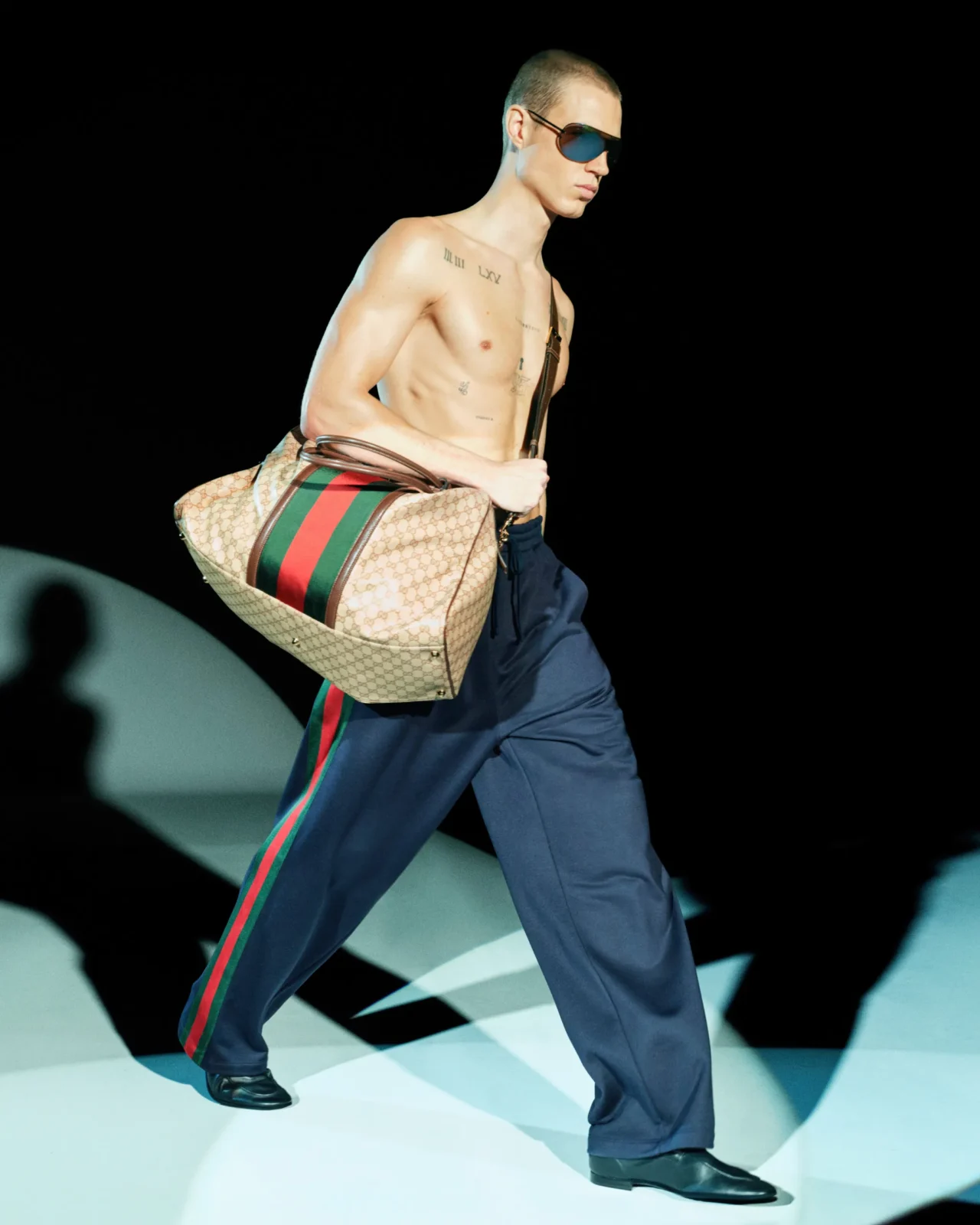
The collection also introduces a tension between draped silhouettes and skin-tight elements. Wetsuit-inspired leather jackets and turtlenecks fit closely to the body, while trousers flare and fall heavily at the hem. Moto jackets, fitted tees, and the return of the red-green Web stripe add early 2000s references mixed with touches of the 1980s.
The ghost in the room
The Ford era remains present through specific motifs. Fur on bare skin. Fully unbuttoned silk shirts tucked into pencil skirts. Micro Python jackets. Lace trousers. Silk robes. However, the collection frequently shifts toward a more athletic, Beckham-era aesthetic, visible in the tight T-shirts, full tracksuits, wide sporty trousers, and mask-like sunglasses.
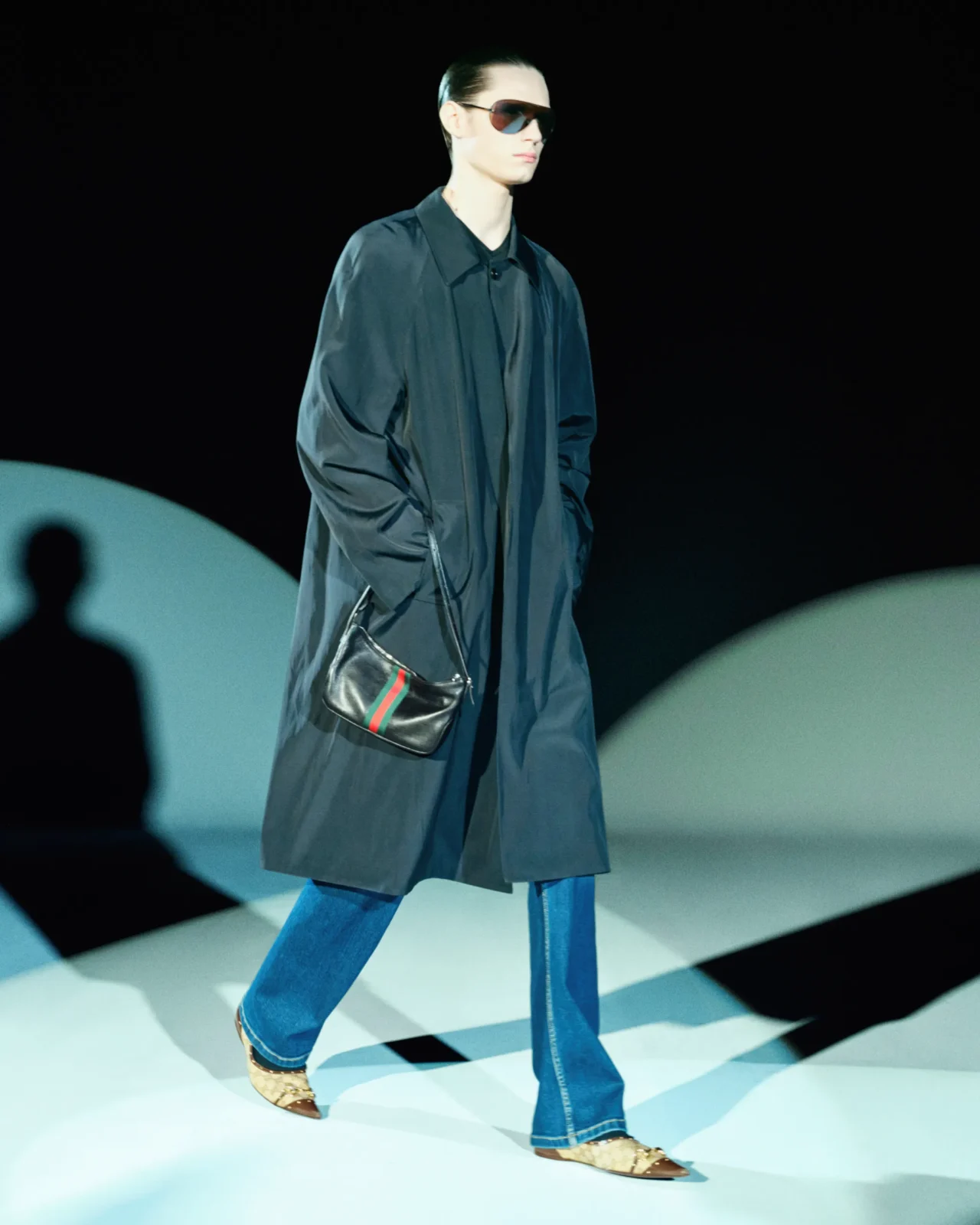
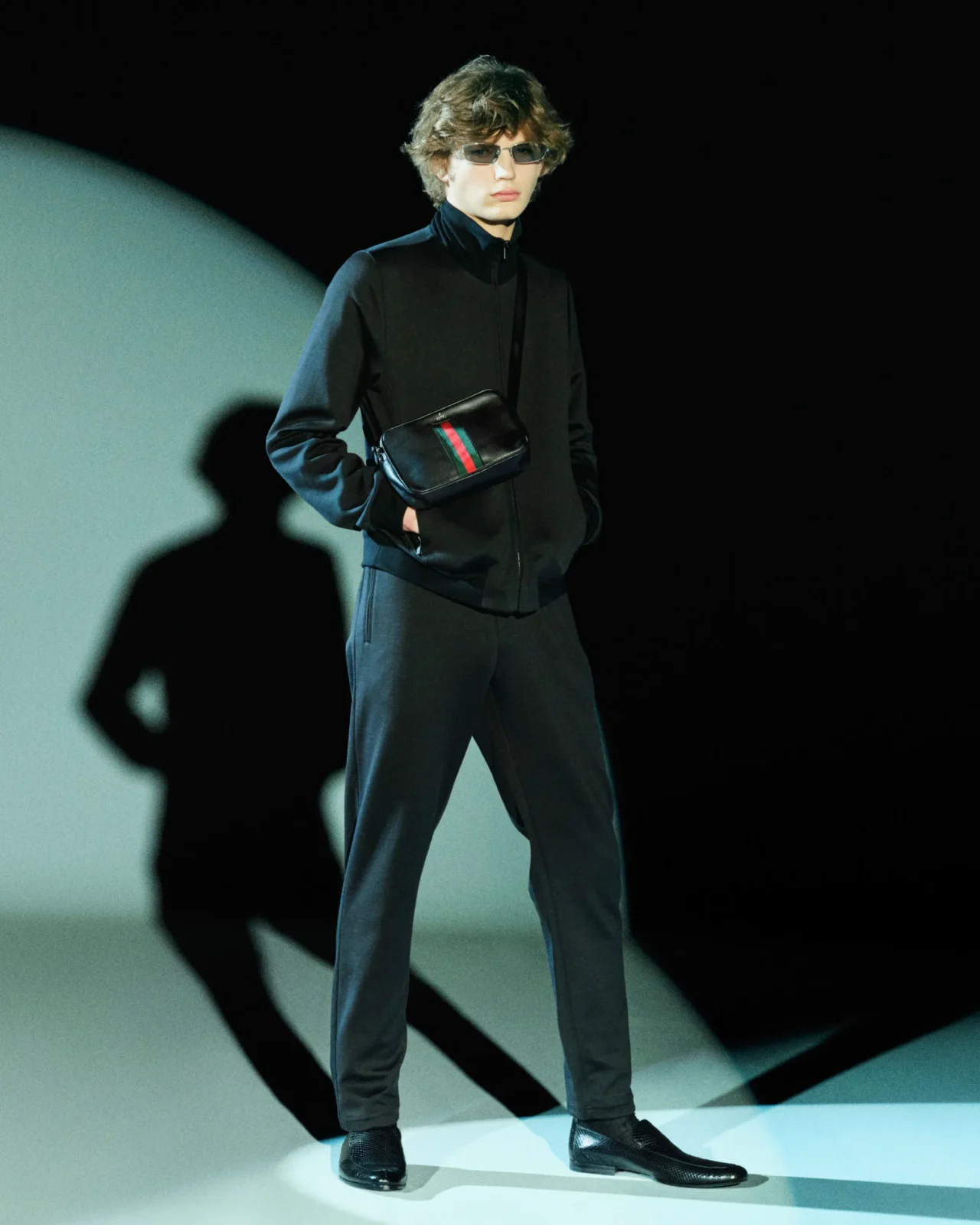
The direction Gucci is taking is increasingly apparent. The brand aims to gather its diverse identities under one vision. StreetwearStreetwearCasual fashion rooted in skate, hip-hop, and urban youth culture, characterized by graphic tees, hoodies, sneakers, and limited-edition releases. Streetwear has grown into a major global influence on luxury menswear,Go to Streetwear Glossary, eveningwear, tailoring, and sportswear are positioned as parts of a single narrative. The challenge is balance. Demna approaches that challenge with an instinctive understanding of how coolness can be communicated without repetition.
Past as prologue
The collection moves between two modes. One is youthful and grounded in the street. The other is polished, with silks, florals, furs, and leopard prints. Demna brings these sides together without forcing uniformity, relying on proportion, fabric, and styling to carry the coherence.
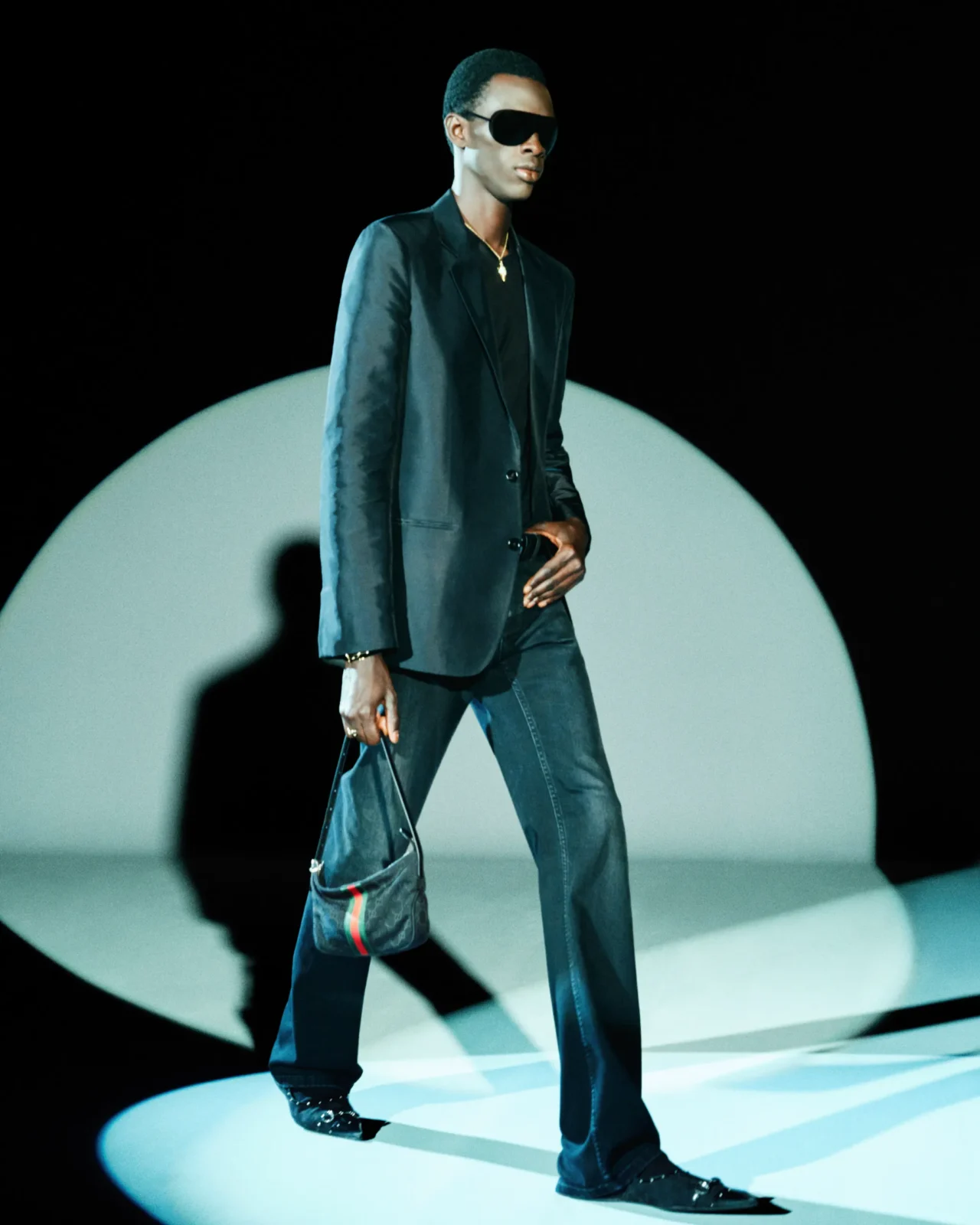
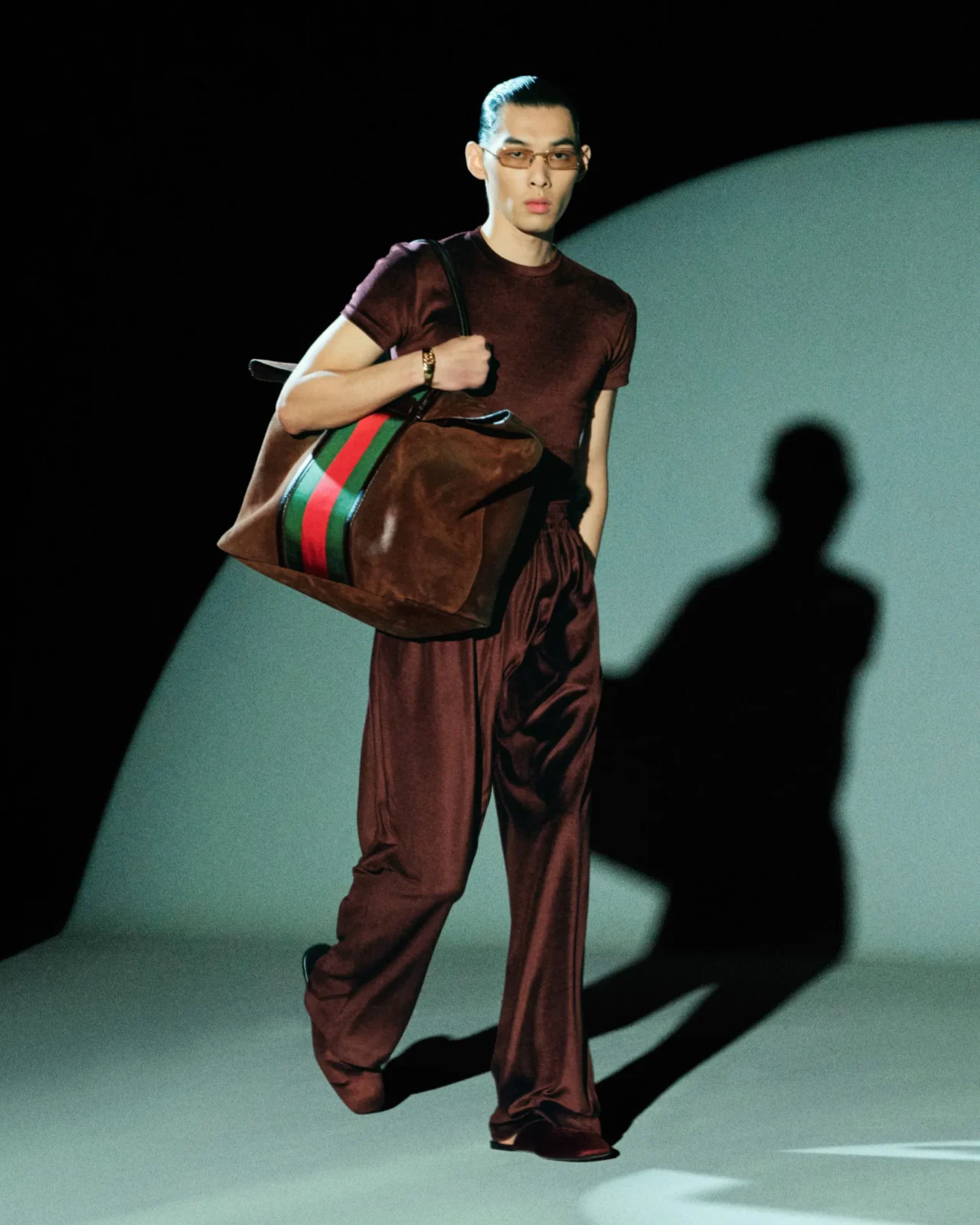
With “Generation Gucci,” the brand’s evolving identity is already visible. It uses the past as a frame rather than a blueprint. The result is a collection that looks backward only long enough to show how firmly it is moving forward.
Courtesy Gucci
Special thanks Andee D. Que
Frequently Asked Questions
Demna’s Pre-Fall 2026 collection, titled “Generation Gucci,” channels 1990s nostalgia through deconstruction and reduction — stripping garments down internally to create a sense of controlled fluidity rather than structured power.
Where Tom Ford built tailoring around strong shoulders, defined waists, and high-impact materials, Demna’s Gucci tailoring holds almost no internal structure — favoring lightweight, worn-in fabrics and an aged texture that prioritizes ease over dominance.
It refers to Demna’s design philosophy of removing material and construction detail without diminishing a garment’s presence — coats shaped like bathrobes, loafers pared down, and travel suits that perform like sleepwear.
The collection draws from the Tom Ford–era Gucci vocabulary — fur, silk robes, micro Python jackets, lace trousers — while layering in early 2000s athleticism through tracksuits, fitted tees, and the red-green Web stripe.
Demna is positioning Gucci’s diverse identities — streetwear, tailoring, eveningwear, and sportswear — as parts of a single, fluid narrative, using the past as a frame rather than a blueprint to move the house firmly forward.
Recommended Video