The Unique Philippine Sports You Might Not Know
Exploring the ancestral games and martial traditions that embody the resilient Filipino spirit




Though basketball courts are ubiquitous across the Philippines, the country’s deeper athletic heritage lies in a wide range of indigenous sports. These traditions, from martial arts to pole climbing, showcase the bayanihan spirit and the ingenuity of communities that transformed everyday tools and communal activities into disciplined physical practices
These sports offer a window into Filipino culture, revealing an identity shaped through centuries of resilience and community life. They are not merely physical contests but living traditions that bridge the Philippines’ storied past with its rapid modernization.
Arnis
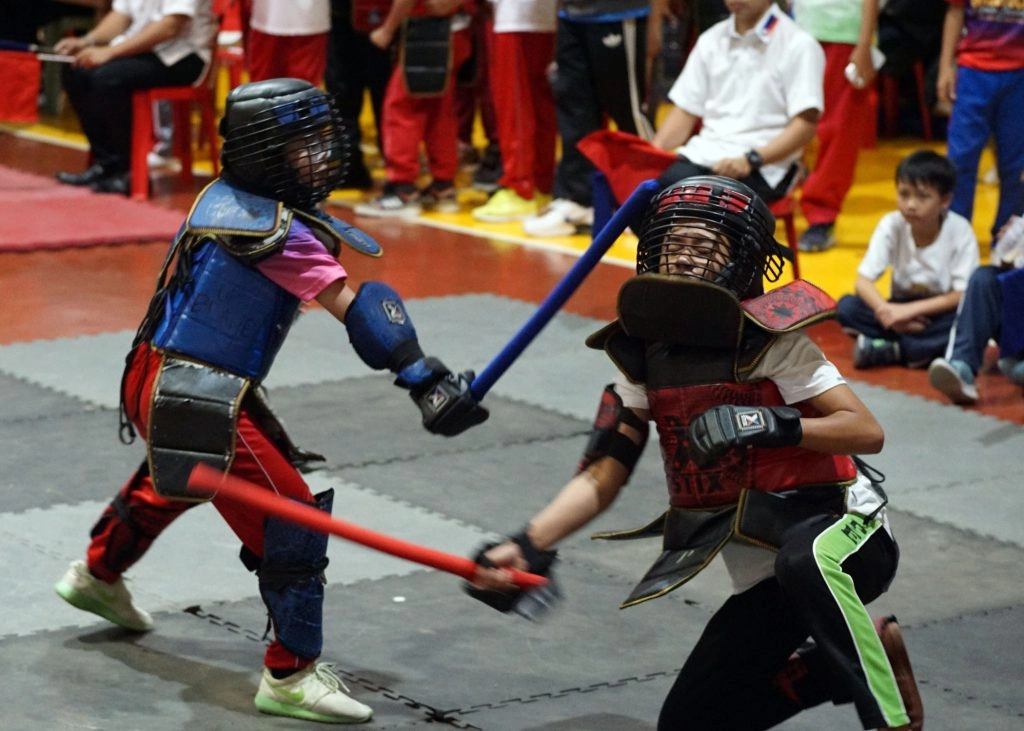
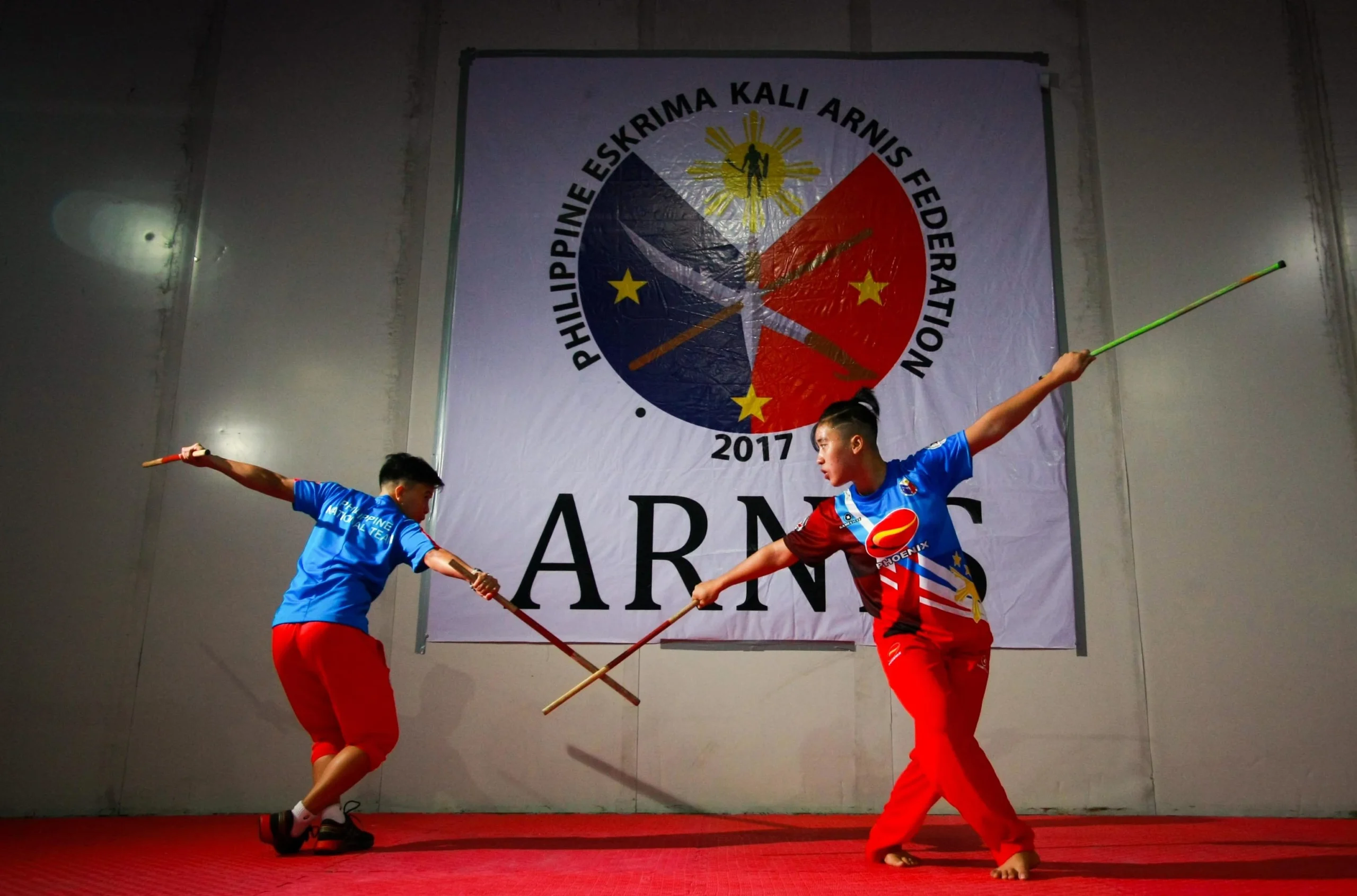
Arnis (also known as Eskrima or Kali), the Philippines’ national martial art, begins training with weapons, most commonly rattan sticks known as baston. Historical accounts often link its techniques to the warriors of Datu Lapu-Lapu during the Battle of Mactan in 1521. During Spanish rule, practitioners reportedly disguised their training as ritual dances to preserve the art.
The system emphasizes fluid movement through strikes, blocks, and Sinawali (weaving) patterns. Today, Arnis is recognized as a practical self-defense discipline built on the idea that nearly any object, from a cane to a pen, can become a tool for protection.
Patintero
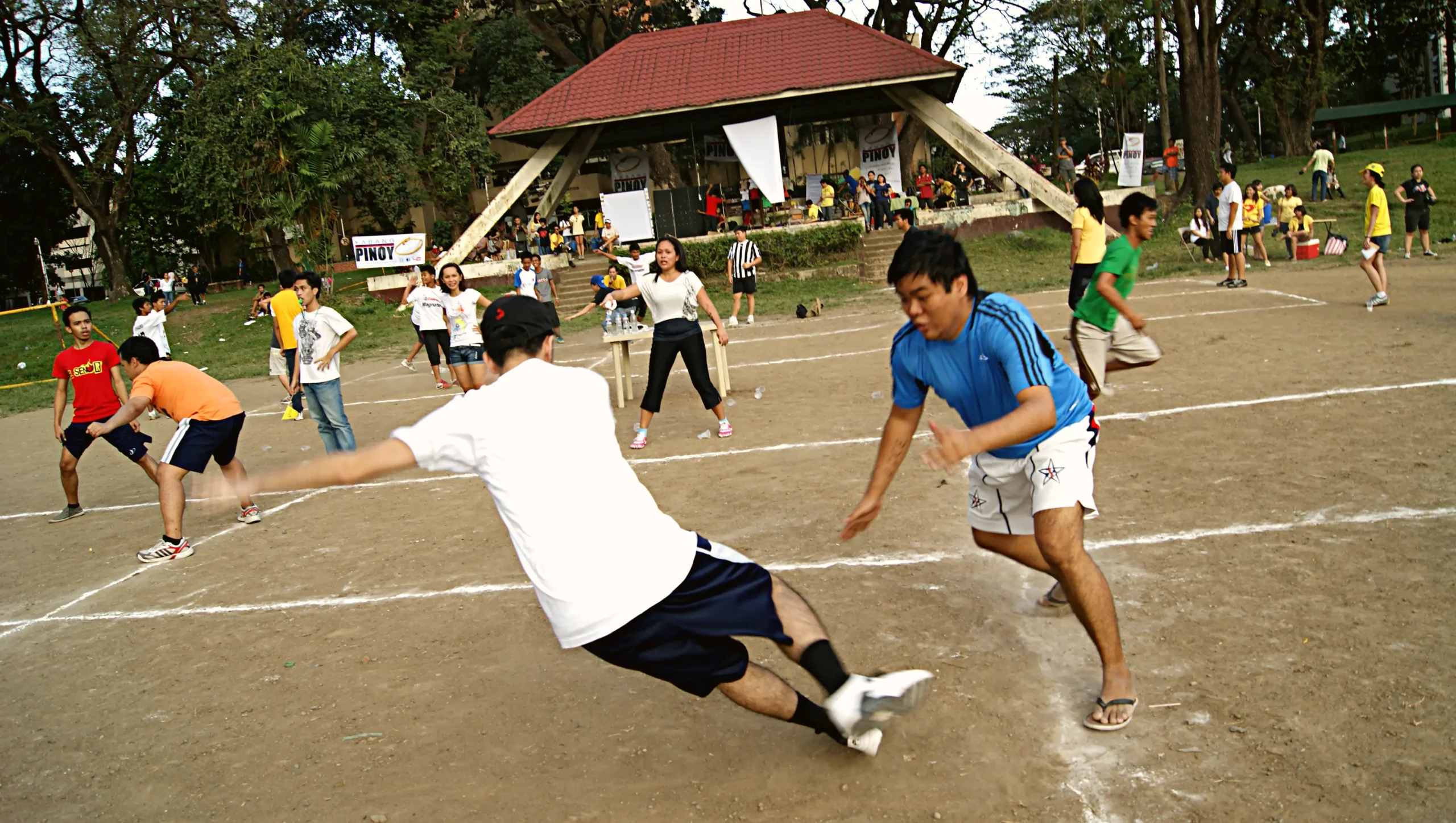
A beloved traditional Filipino street game that merges tactical agility with the high-energy spirit of team competition. Unlike many structured sports, it requires no equipment—only a rectangular grid drawn on the ground and a sharp sense of timing.
Historically played across the Philippines by children and adults alike, Patintero is often held under the glow of a full moon or during local festivals (fiestas). It functions as both a test of speed and a lesson in teamwork, with the “passers” aiming to cross all lines without being touched, while the “guards” move along the lines to block their path.
Palo-Sebo
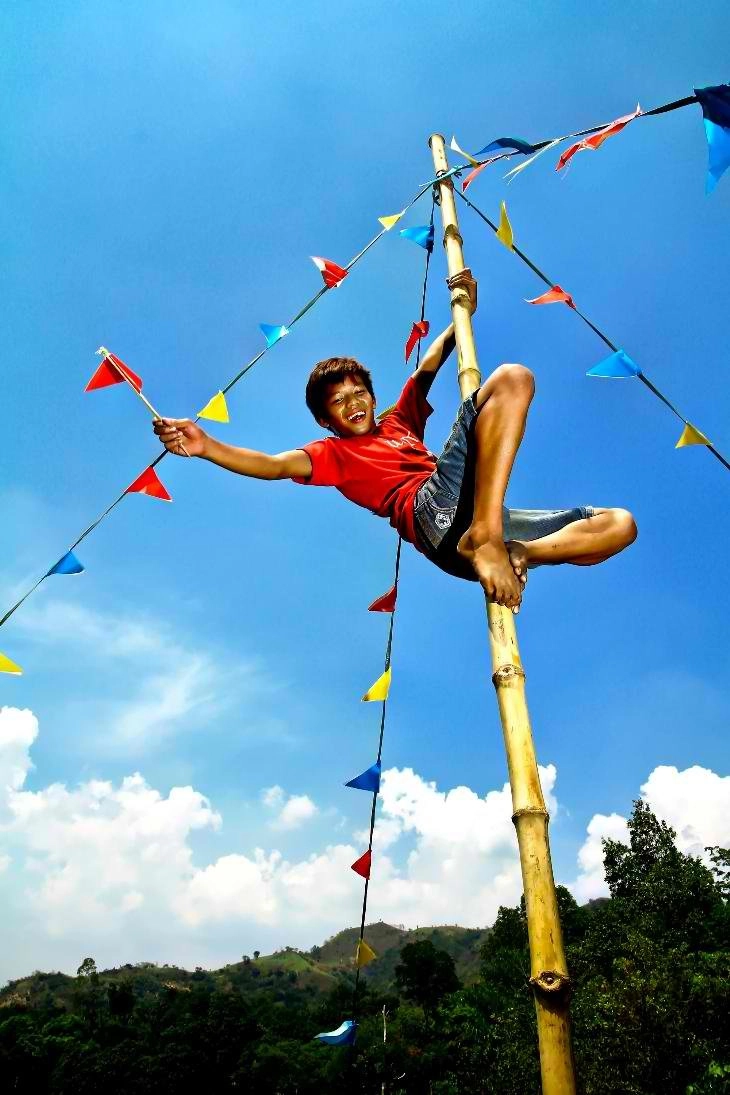
Palo-sebo, a staple of Philippine town fiestas, is a test of grip and persistence. Participants attempt to climb a tall bamboo pole coated in grease, known as sebo, to reach a prize bag tied at the top.
The challenge is deceptively simple. Climbers may gain a few feet only to slide back down moments later. Success often comes after repeated attempts, once earlier climbers have worn away the grease. The game highlights the value of tiyaga, or perseverance.
Dumog
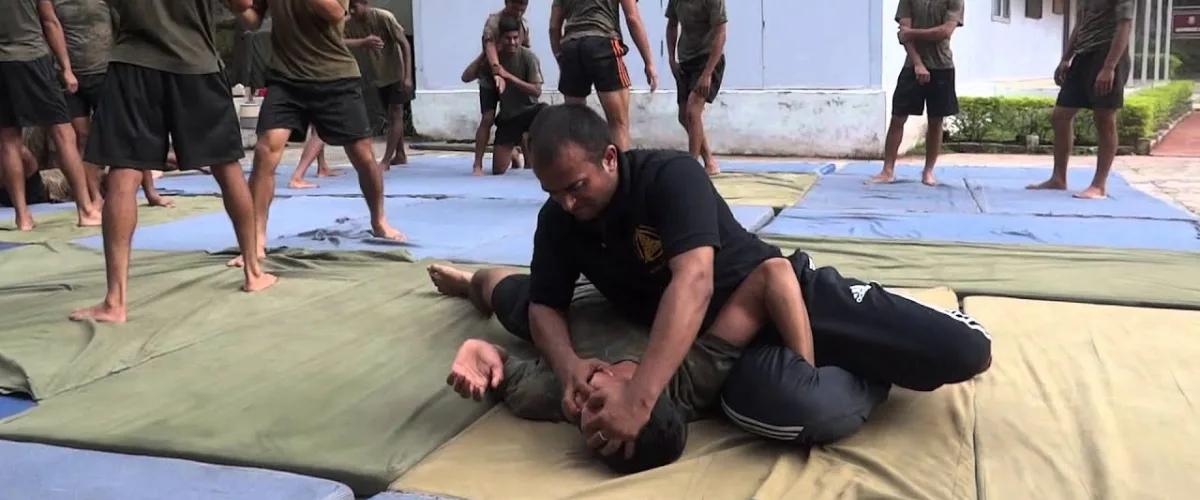
Dumog is a centuries-old grappling system practiced in the Visayas, particularly in Panay, with variations also found in parts of Mindanao. Often considered a precursor to modern grappling styles, It focuses on off-balancing an opponent through control of the neck, elbows, and hips.
Dumog is a centuries-old grappling system practiced in the Visayas, particularly in Panay, with variations also found in parts of Mindanao. Often considered a precursor to modern grappling styles, it focuses on off-balancing an opponent through control of the neck, elbows, wrists, and hips.
Integrated into Filipino martial arts systems, Dumog emphasizes leverage and body positioning rather than brute strength. In traditional matches, competitors stand within a simple circular boundary and attempt to force their opponent out or pin them through controlled grappling.
Sikaran
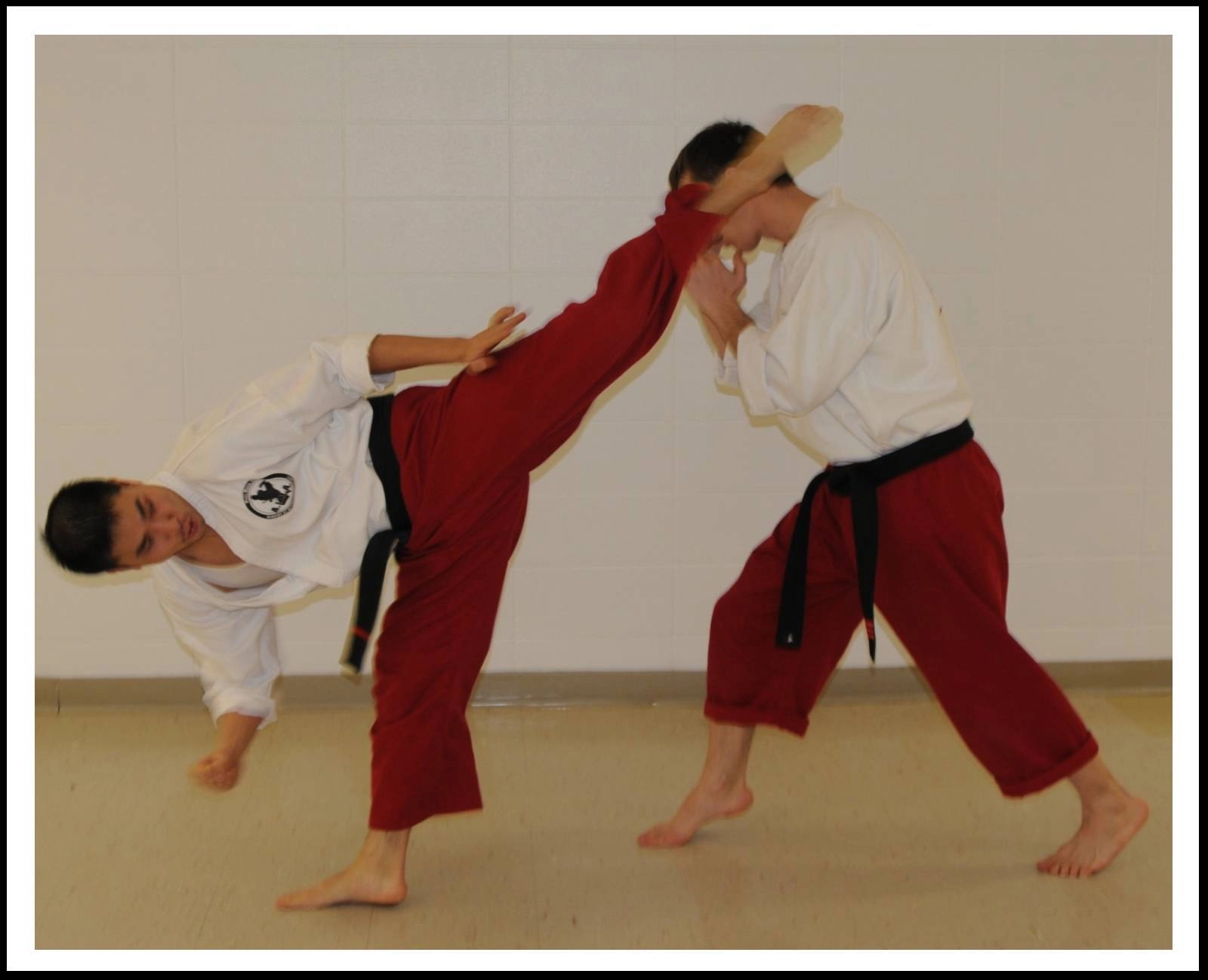
Originating from the rice-farming town of Baras, Rizal, Sikaran is a unique martial art that relies primarily on leg techniques. According to local legends, farmers developed the style by observing the kicks of animals such as cows and horses.
Sikaran emphasizes defensive hand movements to parry or block attacks while delivering powerful kicks. Its signature move is the Biakid, a spinning heel kick aimed at the head. Traditional matches restrict the use of hand strikes, placing full emphasis on lower-body strength, balance, and agrarian strength.