Beyond the Pitch: Discovering Vietnam’s Traditional Sports
A journey into the ancestral games that define the Vietnamese spirit




Vietnam often brings to mind phở and motorbikes. Look more closely at morning parks or Lunar New Year festivals, however, and you will find a vibrant traditional sports culture that existed long before modern football.
From foot badminton to ancient wrestling, Vietnam’s traditional sports reflect the nation’s resilient and community-focused spirit. These activities serve as living artifacts that connect Vietnam’s history with its ongoing modernization.
Đá Cầu (Shuttlecock Kicking)
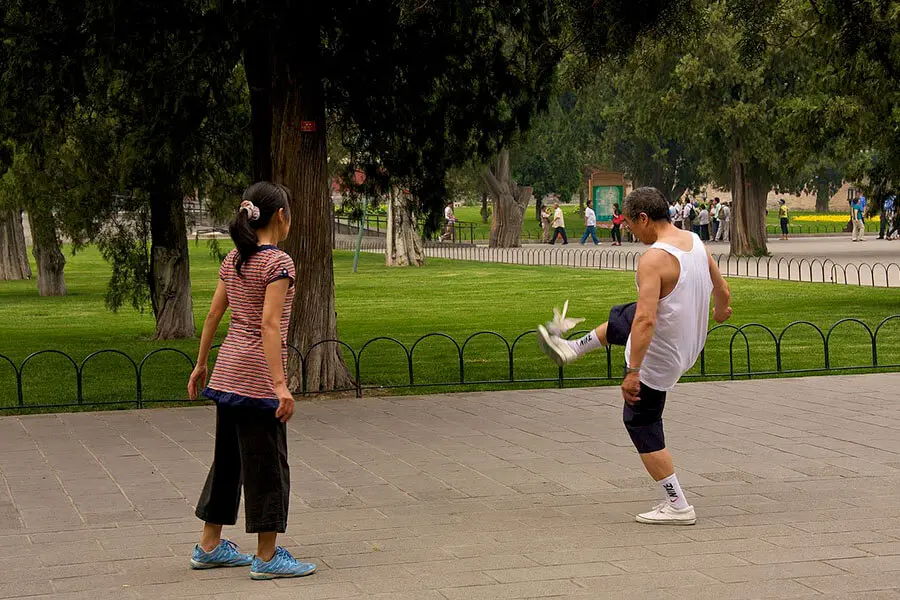
Walk through any public square in Hanoi or Ho Chi Minh City and you will likely see circles of people intensely focused on a small feathered object flying through the air. This is Đá cầu, often described as “foot badminton.”
Unlike Western badminton, there are no rackets. Players use their feet, knees, and chests to keep a weighted shuttlecock, known as the cầu, aloft. While it remains a casual pastime for many, it is also a serious competitive sport played over a net on a court.
Vovinam (Vietnamese Martial Arts)
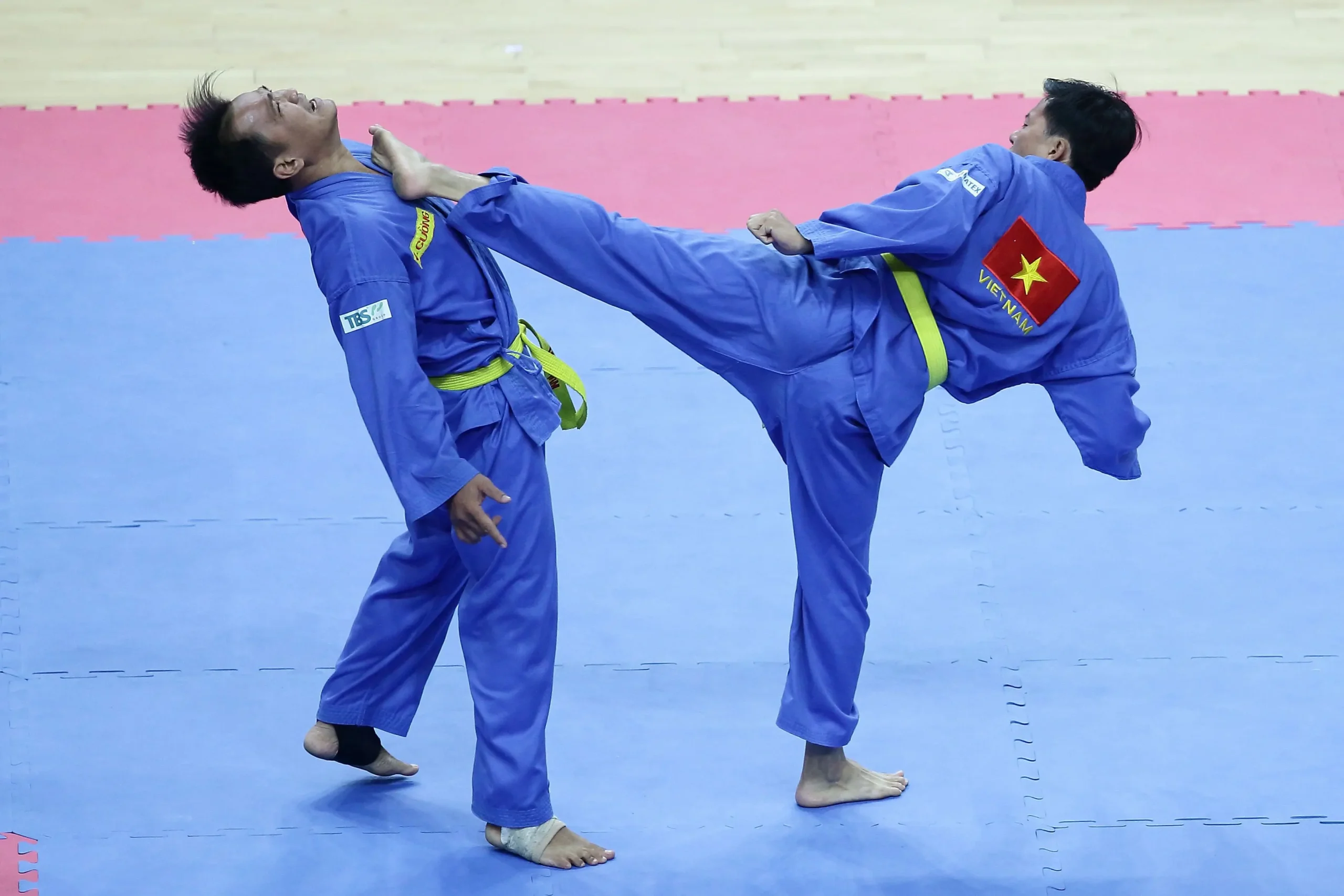
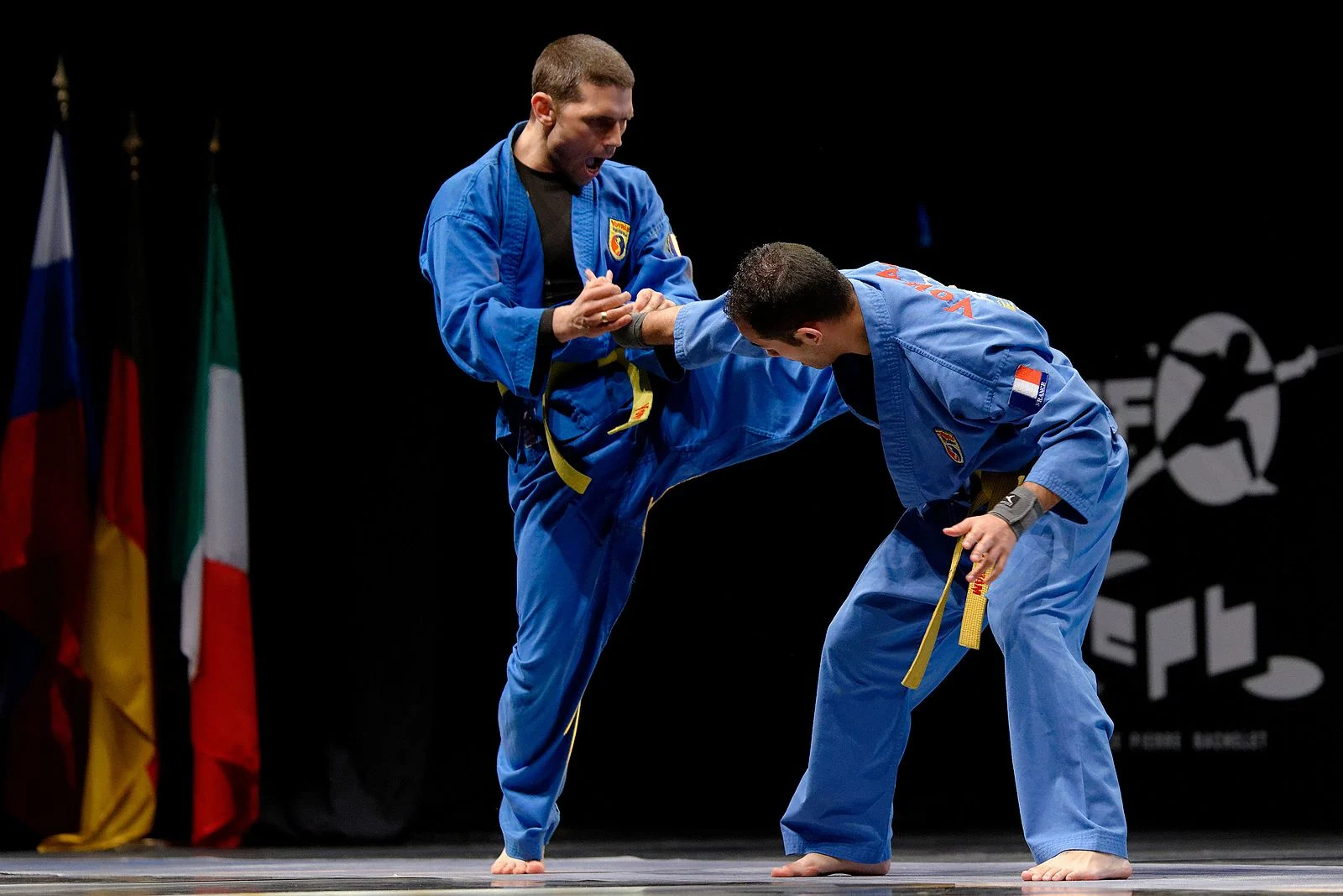
While the world knows karate and taekwondo, Vietnam has its own homegrown martial art: Vovinam, short for Võ Việt Nam. Founded in 1938, the discipline was designed as a “soft yet hard” system, flexible enough to adapt to any opponent while remaining powerful enough for self-defense.
Vovinam practitioners are recognizable by their bright blue uniforms, and the art is famous for its spectacular flying scissor kicks (Đòn chân tấn công), a takedown move that targets an opponent’s neck or torso. Its philosophy, “Iron Will in a Benevolent Heart”, stresses both moral and physical development.
Đấu Vật (Traditional Wrestling)
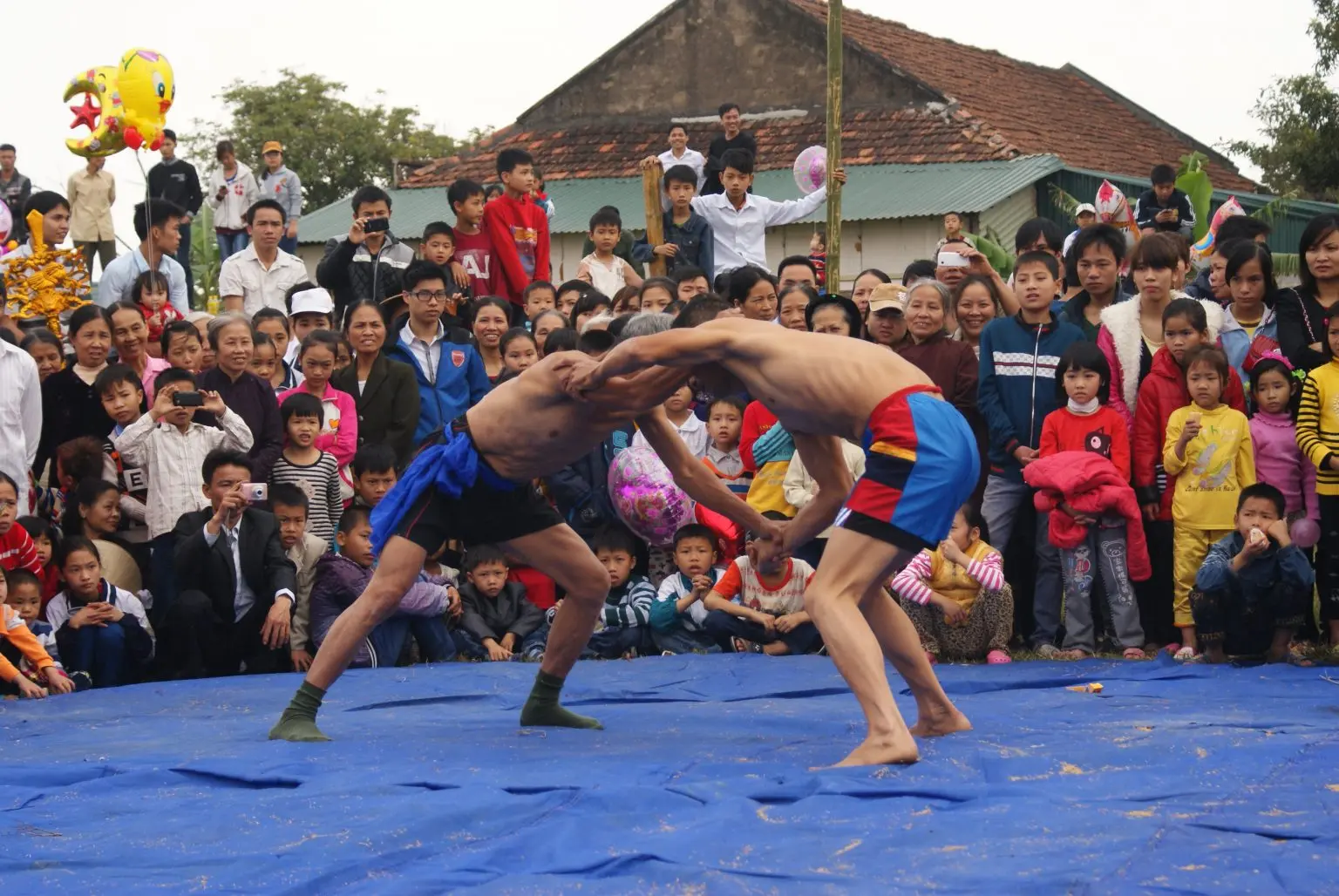
Deeply rooted in Vietnam’s agricultural history, Đấu vật takes center stage during rural spring festivals. Unlike Olympic wrestling, this ancient rite also carries symbolic meaning, with matches historically linked to prayers for prosperity, health, and a successful harvest.
Victory comes when a wrestler forces their opponent’s back to the ground or lifts both of their feet off the earth. A ceremonial drum dictates the rhythm of the match, with the drummer acting as referee and intensifying the tempo during moments of fierce action.
Before the bouts begin, elder masters perform a ritual dance to honor ancestors and demonstrate classic techniques, ensuring that the sport’s heritage continues to be passed down.
Đua Thuyền (Traditional Boat Racing)
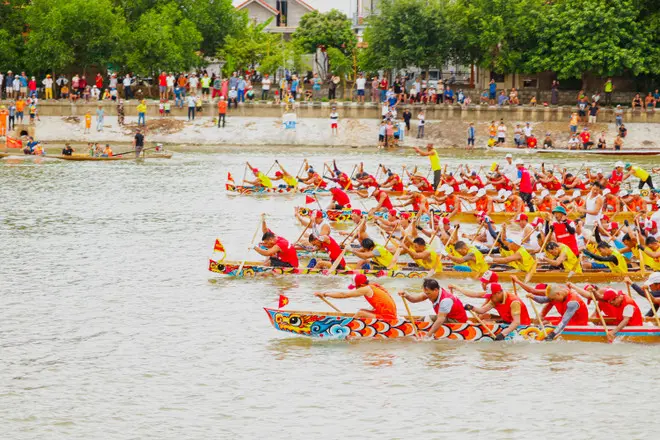
In a country defined by the Mekong Delta and a long coastline, Đua thuyền serves as a cornerstone of cultural life. These races feature long, narrow dragon boats that are often vibrantly painted and manned by crews of 10 to 22 rowers.
Winning depends on synchronized strength. A beater sets the rhythm while a designated water scooper keeps the boat from filling with spray. Historically held to honor the Water God, this festival remains a regional highlight.
Cờ Người (Human Chess)
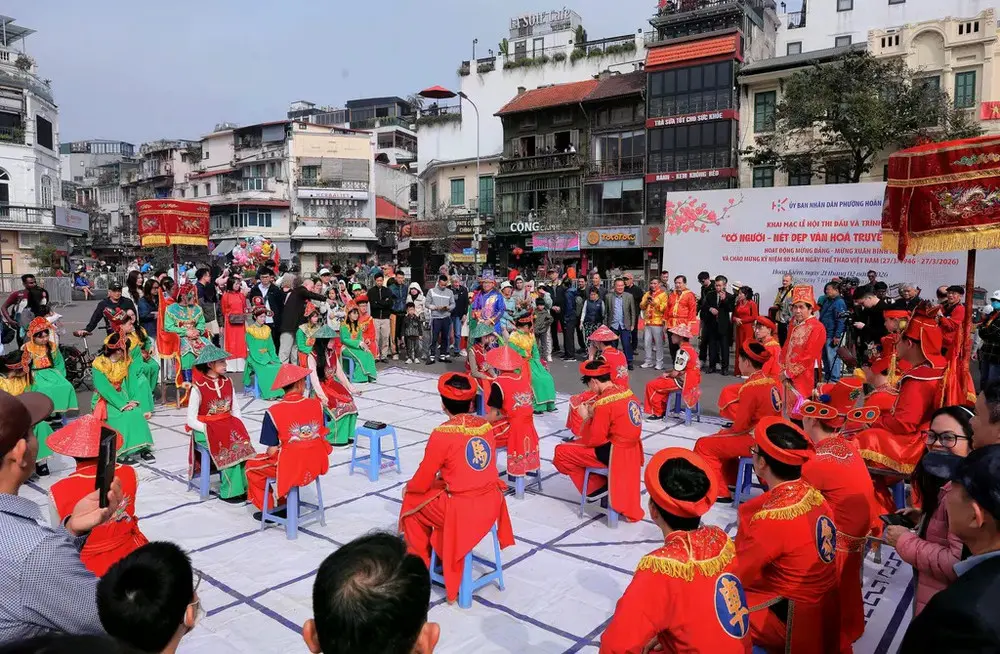
During spring festivals, the traditional strategy game of Chinese Chess is transformed into a theatrical spectacle known as Cờ người, or “human chess.”
In this version, the pieces are people dressed in traditional costumes who stand on a giant chessboard marked across a temple courtyard. When a player makes a move, the human piece marches across the board to its new position.
When a piece is captured, the two participants often perform a brief choreographed martial arts sequence or symbolic dance, turning a game of strategy into a captivating public performance.
Frequently Asked Questions
Vietnam’s traditional sports include Đá Cầu (shuttlecock kicking), Vovinam (Vietnamese martial arts), Đấu Vật (traditional wrestling), Đua Thuyền (dragon boat racing), and Cờ Người (human chess). Each is rooted in agricultural festivals, community ritual, or spiritual tradition and remains practiced across the country today.
Vovinam, short for Võ Việt Nam, is Vietnam’s homegrown martial art, founded in 1938. It is built on a “soft yet hard” philosophy — adaptable and fluid, but powerful in application. Its practitioners are known for spectacular flying scissor kicks and a guiding principle that balances physical discipline with moral development.
Đá Cầu is a Vietnamese sport often described as foot badminton. Players use their feet, knees, and chest to keep a weighted feathered shuttlecock — called a cầu — airborne without using their hands. It is played both as a casual pastime in public parks and as a competitive sport over a net on a marked court.
Cờ Người, or human chess, is a theatrical version of Chinese Chess performed during Vietnamese spring festivals. Human players dressed in traditional costumes stand on a giant chessboard in a temple courtyard, moving across the board at their player’s command. Captured pieces often perform a brief martial arts sequence before leaving the board.
Many of Vietnam’s traditional sports are most visible during Lunar New Year and spring festivals, particularly in rural and agricultural communities. Đấu Vật wrestling matches are tied to harvest prayers, Đua Thuyền boat races historically honor the Water God, and Đá Cầu is a year-round fixture in public parks across Hanoi and Ho Chi Minh City.
Recommended Video