Sacred Shields and Soaring Rattan: The Traditional Pulse of Thai Athletics
An immersion into the ritualized combat and high-altitude rigor that define Thailand’s storied sporting heritage




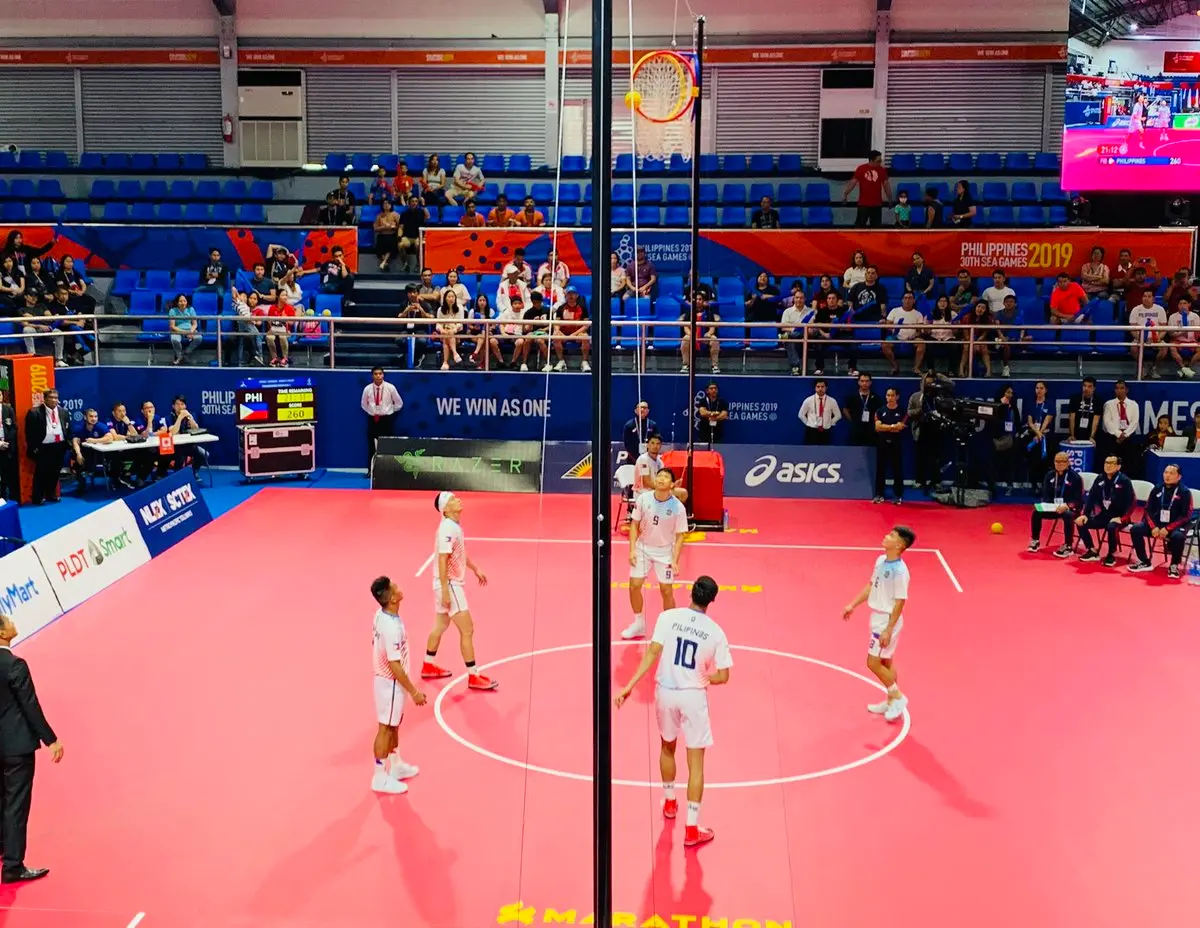
Thailand’s sporting heritage, beyond modern kickboxing and sun-drenched beaches, is rooted in spiritual devotion and physical mastery. These traditional games, alive in temple courtyards and rural festivals, reflect the Thai soul: a cultural identity forged through resilience and communal harmony.
More than mere sports, they are living links between history and modernity. Every movement embodies national values: collective grace, unyielding warrior heart, and respect for the past.
Hoop Takraw
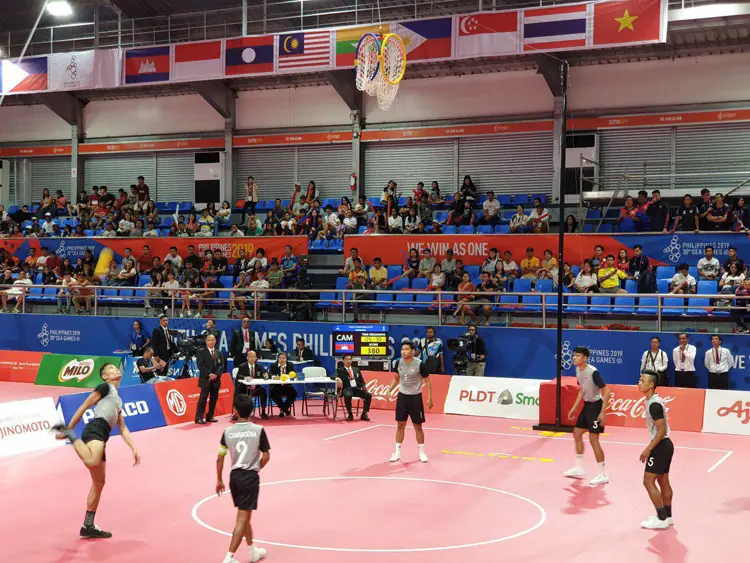
While the competitive net version of Sepak Takraw is well-known, Hoop Takraw (Takraw Lod Huang) is a mesmerizing variation. Here, the team’s goal is to cooperatively kick a woven rattan ball into a three-hooped basket suspended nearly five meters high.
Players rely solely on their feet, knees, and shoulders to launch the ball skyward. Points are awarded based on the difficulty of each maneuver. A simple header earns less than a spectacular blind back-kick. Success is pure, collective flow: individual skill transforming a kick into airborne art.
Muay Boran
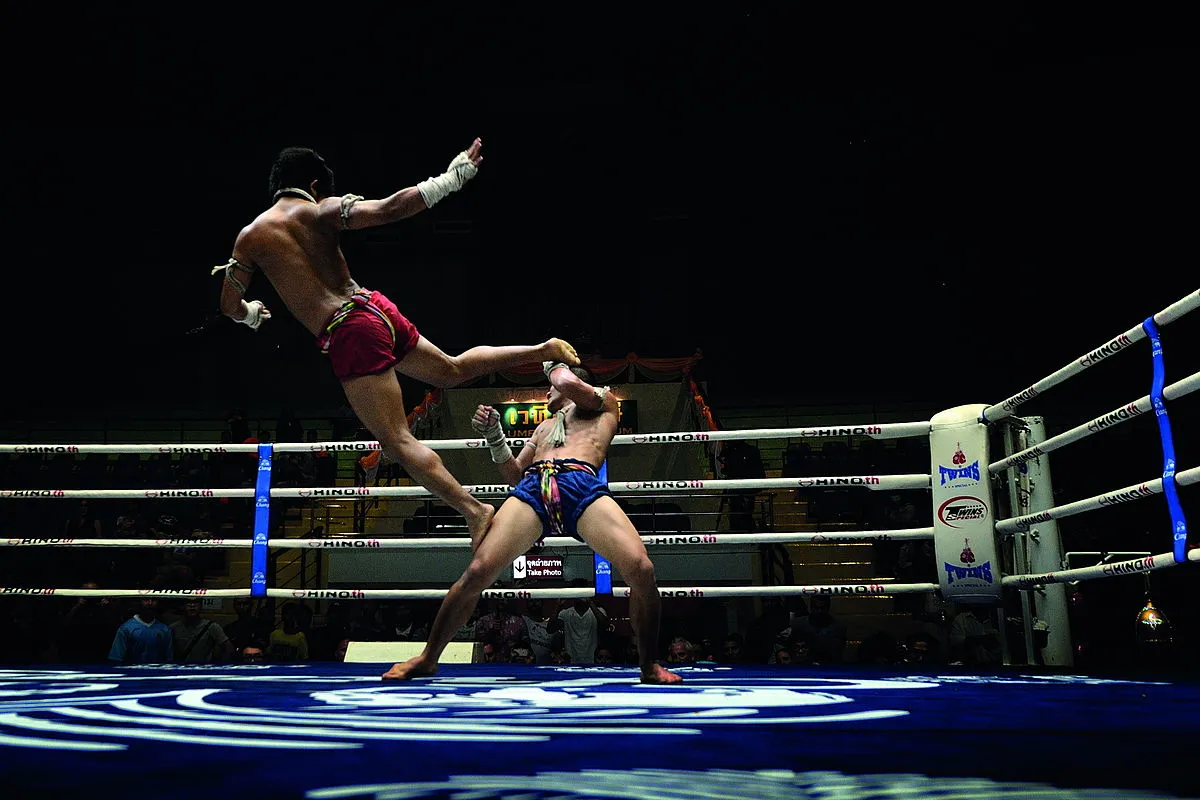
Muay Thai’s precursor was Muay Boran, was the battlefield martial art of Siamese infantry, designed for unarmed survival. Known as the “Art of Eight Limbs,” it includes grappling, ground fighting, headbutts, and a broader array of stances and strikes than its modern descendant.
Fighters wrap hardened hemp ropes, or Kaad Chuek, around their hands instead of gloves. Beyond combat, Muay Boran is inseparable from the Wai Kru, a pre-fight ritual honoring teachers and spirits with a humble dance.
Krabi Krabong
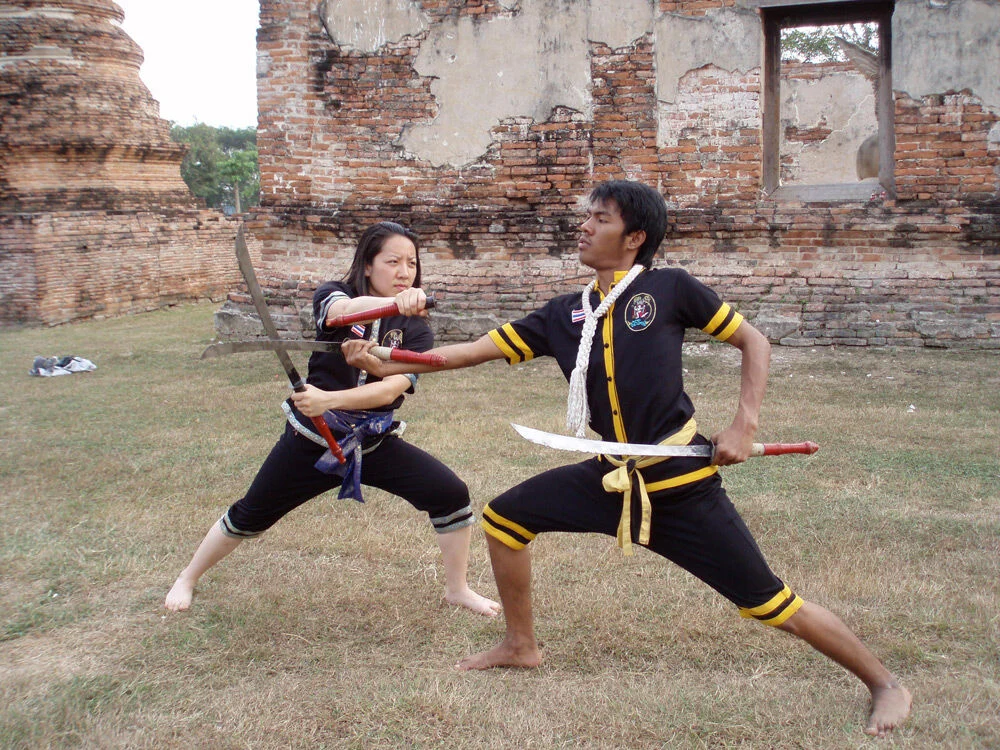
Often called the art of the blade, Krabi Krabong was the primary martial training for Thai royal guards and military officers. Its name comes from its signature weapons: the Krabi (curved sword) and the Krabong (long staff).
Using Mae Sow shields and Daab double swords, Krabi Krabong employs fluid movements and deceptive footwork to face multiple opponents. Today, it survives largely as a cultural demonstration, its rhythmic clash of steel a vivid symbol of Thailand’s martial heritage.
Makruk
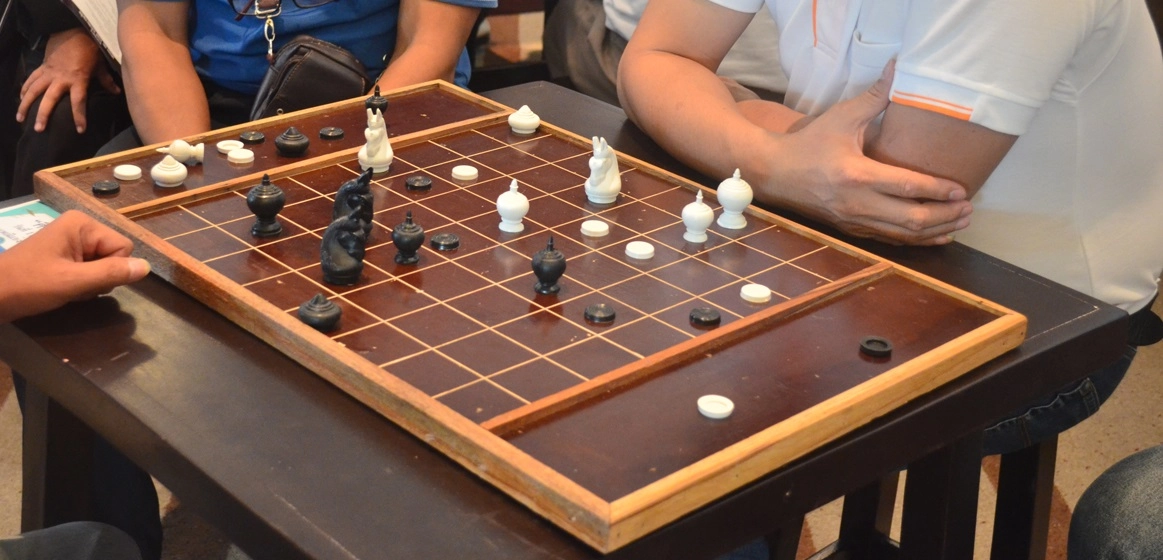
A strategic game akin to chess, Makruk is closer to the original Indian Chaturanga. In Thailand, it thrives in markets and street corners, where players gather to test wits and patience.
Makruk pieces, often carved from wood or fashioned from plastic, resemble stupa tiers or cowrie shells. Slower and more methodical than Western chess, the game rewards careful positioning over aggression, standing as a testament to the local mind’s strategic depth.
Wing Kwai
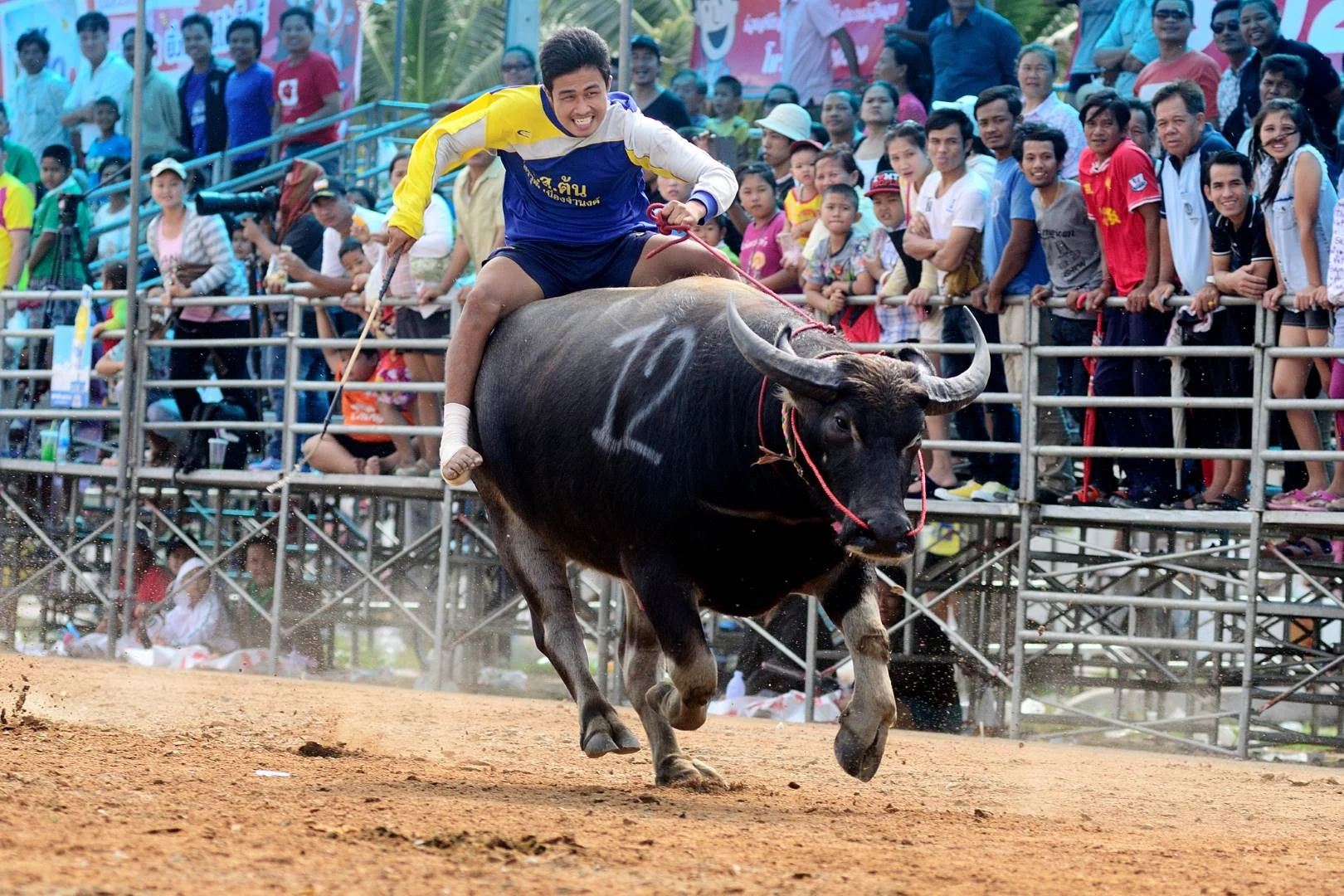
Originating in Chonburi, Wing Kwai is a high-adrenaline water buffalo race celebrating the end of Buddhist Lent and the start of the rice harvest. It honors the bond between Thai farmers and their indispensable companions.
Jockeys race massive buffaloes down a 100-meter dirt track in a whirlwind of dust and speed. The festival also features buffalo beauty pageants, with animals adorned in flowers and colorful fabrics, combining raw power with ceremonial grace.