5 Must-See Films from the 2025 New York Asian Film Festival
This year’s New York Asian Film Festival showcased over 100 titles, with five films standing out for their bold storytelling and distinct perspectives across genre and region




The New York Asian Film Festival (NYAFF) has always been a haven for the unclassifiable. These are films that resist easy genre labels, stories that dart between the comic, the tragic, and the grotesque without warning. This year, the festival returns with over 100 films from East, South, and Southeast Asia, reaffirming its commitment to spotlighting boundary-pushing storytelling and under-seen talent.
RELATED: The Verdict Is In. Here’s What People Are Saying About Cannes’ Most Anticipated Films
Backed by Film at Lincoln Center and various Asian cultural institutions, NYAFF has become a critical platform for both established auteurs and emerging filmmakers, many of whom present work that defies conventional distribution models.
The 2025 slate ranged from intimate character studies to experimental horror, from politically charged dramas to absurdist crime tales. Below are five standout films that defined this year’s edition:
Deep in the Mountains (China, dir. Li Yongyi)
In his feature debut, Zhang Yimou’s longtime editor Li Yongyi constructs a noir-tinged rural fable in the guise of a procedural thriller. Set in 1990s China, the film opens with a seemingly innocuous act: a checkpoint officer cancels a traffic fine. What follows is a narrative spiral involving a missing truck driver, his fugitive daughter, and a roadside restaurant that may or may not be a front for serial murder.
Positioned somewhere between Coen brothers absurdity and the slow-burning dread of Sixth Generation Chinese cinema, Deep in the Mountains combines grim satire with social critique. Yongyi’s direction is methodical, favoring slow zooms and off-kilter framing, allowing the story’s moral and institutional rot to seep through gradually.
The Way We Talk (Hong Kong, dir. Adam Wong)
Adam Wong’s latest is a resonant study of communication and identity within Hong Kong’s deaf and hearing-impaired communities. It follows three young adults: Sophie, Wolf, and Alan, whose lives intersect around sign language. The film centers not on disability but on the complexities of inclusion and the politics of language.
Adam employs inventive sound design and a largely silent script to immerse viewers in the perspective of his characters. His interest in youth culture and marginal spaces, apparent in earlier work like The Way We Keep Dancing, finds a more subdued, introspective expression here. The result is a coming-of-age film that avoids sentimentality, focusing instead on the fragile negotiations of friendship, identity, and understanding.
How Dare You? (Japan, dir. Mipo O)
Japanese director Mipo O returns with a sharply observed elementary school satire that captures the urgency and confusion of childhood idealism. The story centers on Yuishi, a fourth-grader infatuated with classmate Kokoa after her fiery speech on environmental justice. Their shared mission to “save the planet” quickly escalates into a series of misguided acts, spiraling into a chaotic morality tale.
The film is anchored by naturalistic performances from its young cast and a screenplay that deftly balances humor with social commentary. Mipo uses the classroom as a microcosm for political discourse and ideological rigidity, drawing out the contradictions of early moral education with precision and wit.
Hear Me: Our Summer (South Korea, dir. Jo Seon-ho)
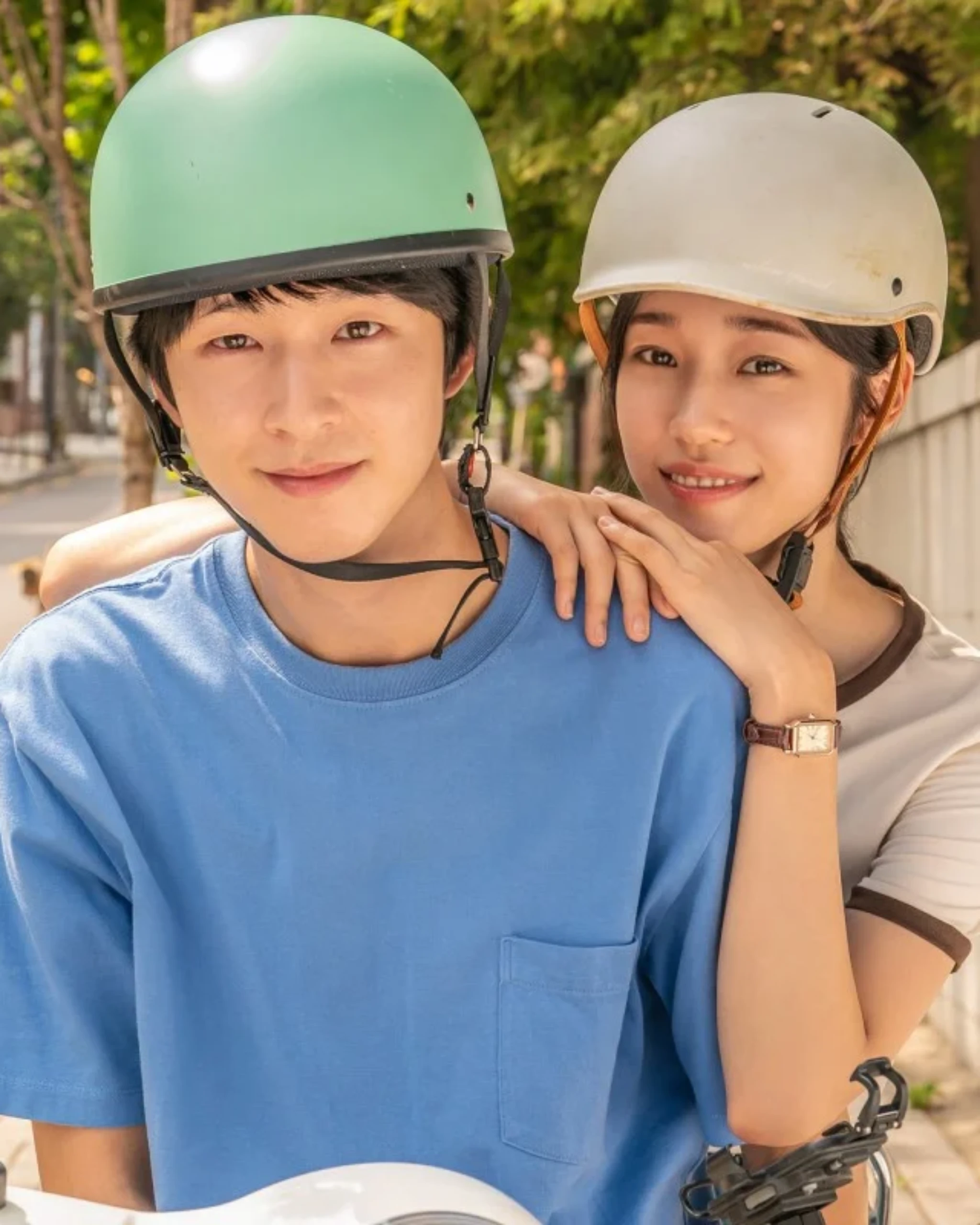
A Korean adaptation of the 2009 Taiwanese romance Hear Me, Jo Seon-ho’s version retains the core premise, an unlikely romance mediated through sign language, but situates it in a distinctly Korean cultural context. The film follows Yong-jun, a recent graduate working as a deliveryman, who falls for the sister of a deaf swimmer he regularly visits. As he learns to communicate through sign language, he’s drawn deeper into their world, only to find himself unprepared for the emotional complexities that follow.
Shot with a subdued color palette and edited with restraint, Hear Me: Our Summer favors interiority over melodrama. Seon-ho’s careful direction brings new texture to the original story, highlighting the nuances of silence and the tension between accessibility and intimacy.
Panor (Thailand, dir. Putipong Saisikaew)
A prequel to the cult Thai horror franchise Art of the Devil, Panor reimagines the series’ mythos through the lens of character study and folk horror. The film follows Panor, a young woman ostracized by her village under suspicion of supernatural malice. As misfortune begins to afflict her tormentors, Panor’s transformation into an object of fear and possible vengeance takes shape with chilling inevitability.
Putipong Saisikaew’s direction leans heavily on atmosphere, practical effects, and psychological tension. The film is anchored by a commanding performance from Cherprang Areekul, who balances vulnerability and menace with precision. Panor also stands as a testament to Southeast Asia’s continued strength in genre cinema, especially in its ability to merge folklore with modern anxieties in ways that are both unsettling and commercially viable.
Together, these five films illustrate the diversity and creative urgency at the core of this year’s NYAFF. Whether through innovative form, underrepresented narratives, or bold genre experimentation, they affirm the festival’s reputation as a key site for discovering the next wave of global cinema.
Photos courtesy New York Asian Film Festival 2025