The Biggest Trends from Milan Fashion Week FW26
See the trends that dominated Milan Fashion Week this year, from off-kilter collars and lean tailoring to flashes of yellow




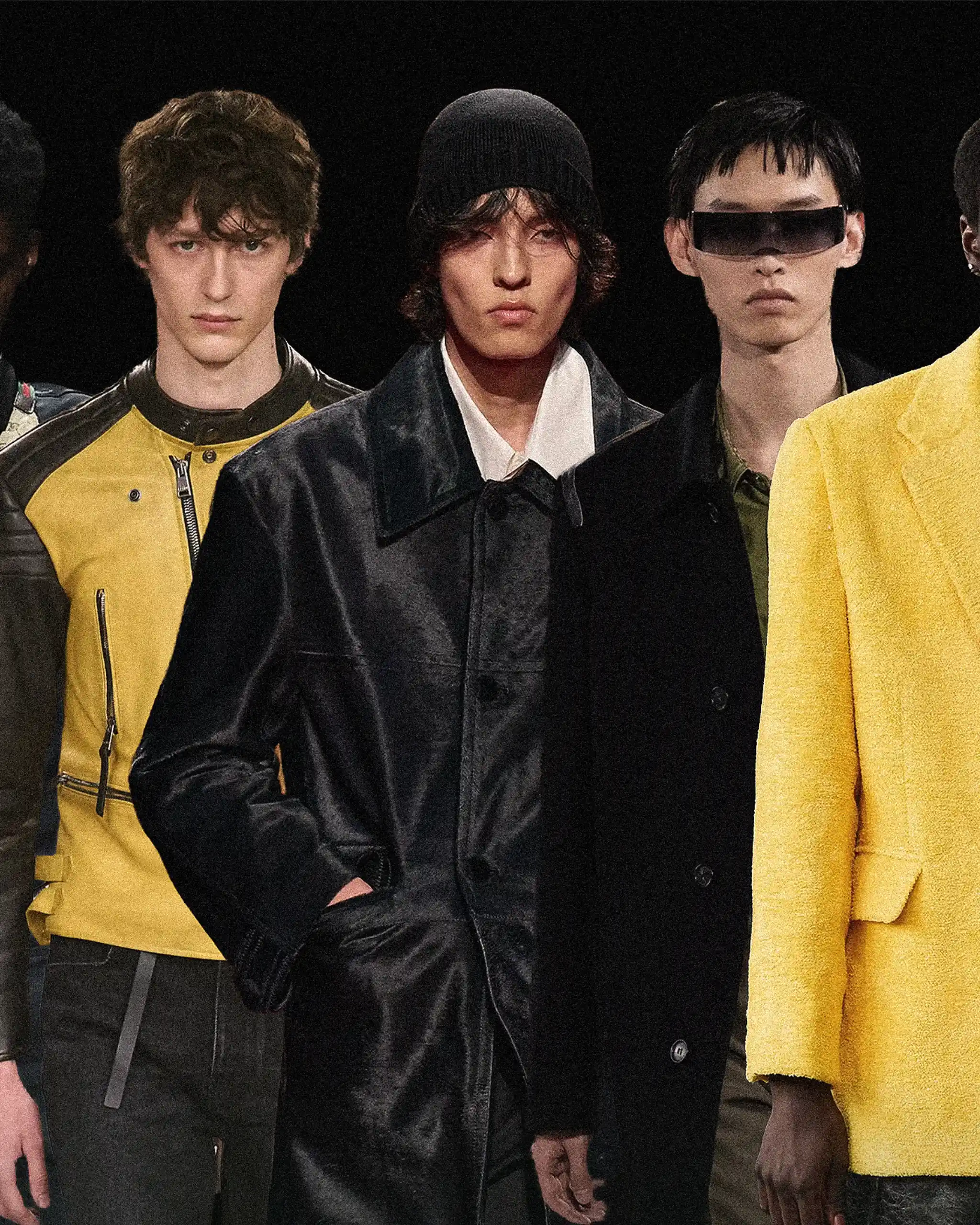
From asymmetrically popped collars to skinny silhouettes and strategic hints of yellow, Milan Fashion WeekFashion WeekA multi-day event held in major cities such as Milan, Paris, London, and New York, where designers present upcoming collections to buyers, press, and celebrities. Menswear fashion weeks set trendsGo to Fashion Week Glossary’s Fall/Winter 2026 season offered a tightly edited study of where fashion is heading.
There was not a single dominant look but a series of considered shifts: collars tipped off center, trousers cut closer to the leg, leather rendered sleek rather than brash, and deployed pops of color.
READ ALSO: The Top Fashion News You Might Have Missed This February
Asymmetrically popped collars
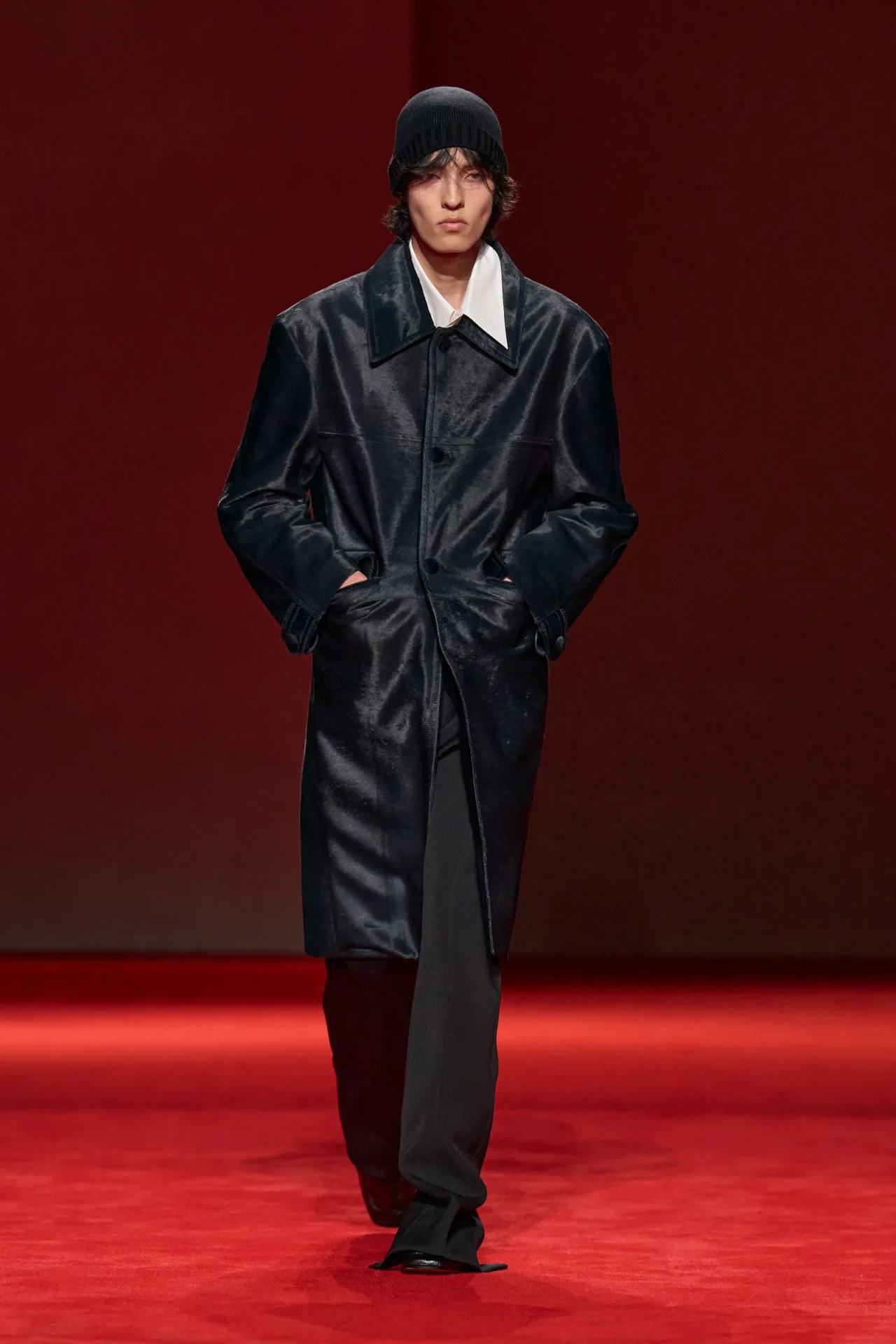
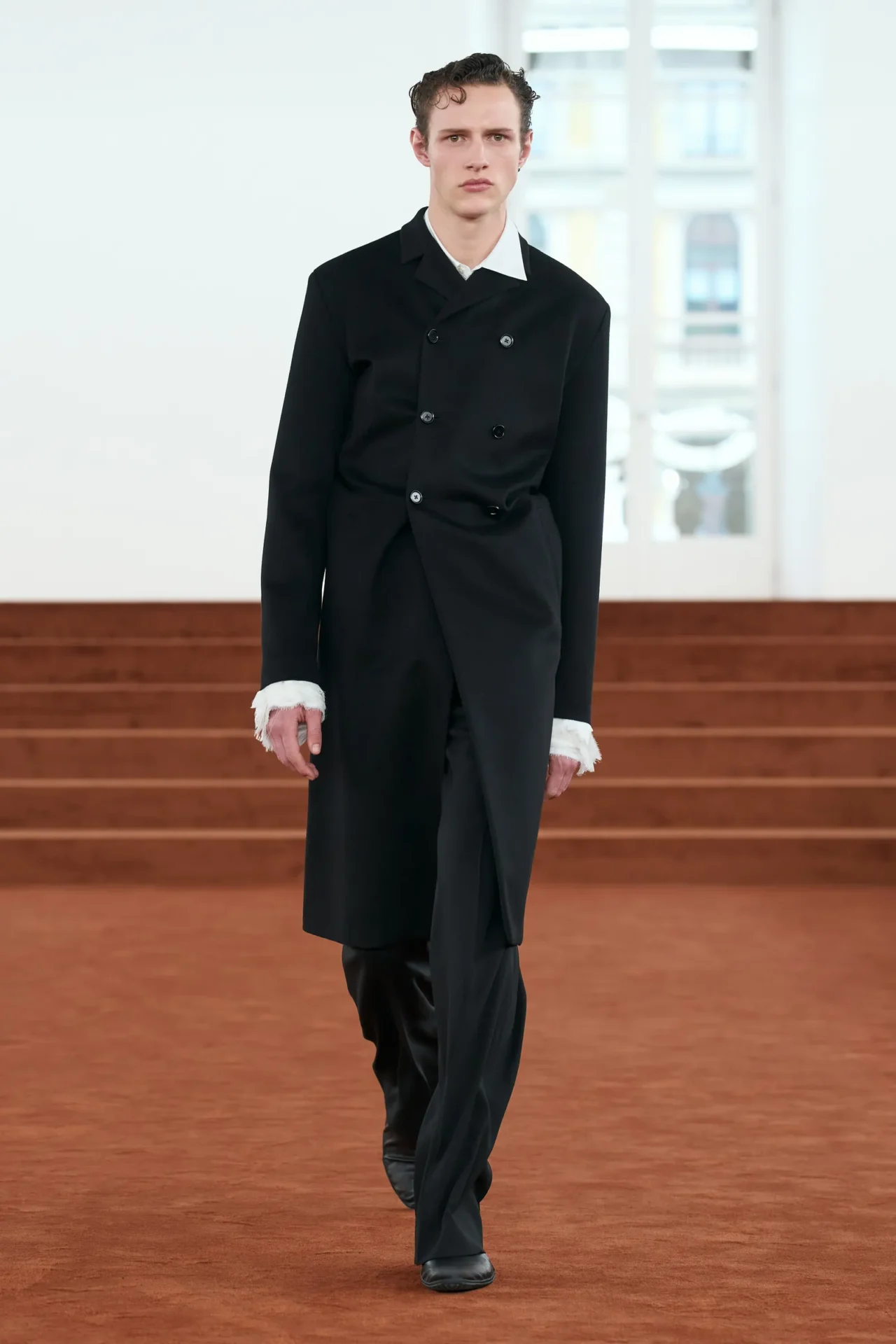
At Bottega Veneta, Louise Trotter sharpened the house vocabulary in her sophomore outing, expanding the Intrecciato beyond accessories so it animated ready-to-wearReady-to-WearClothing produced in standard sizes and sold in stores, as opposed to made-to-measure or couture garments, also known as prêt-à-porter. Ready-to-wear makes up most of the fashion industry's activity, andGo to Ready-to-Wear Glossary. Collars were subtly skewed or popped off-center, introducing tension into otherwise exact tailoring.
At Jil Sander, Simone Bellotti framed his collection around the concept of home, drawing on fabrics associated with interiors and referencing his upholsterer father. The tailoring moved beyond the graphic purity of his debut.
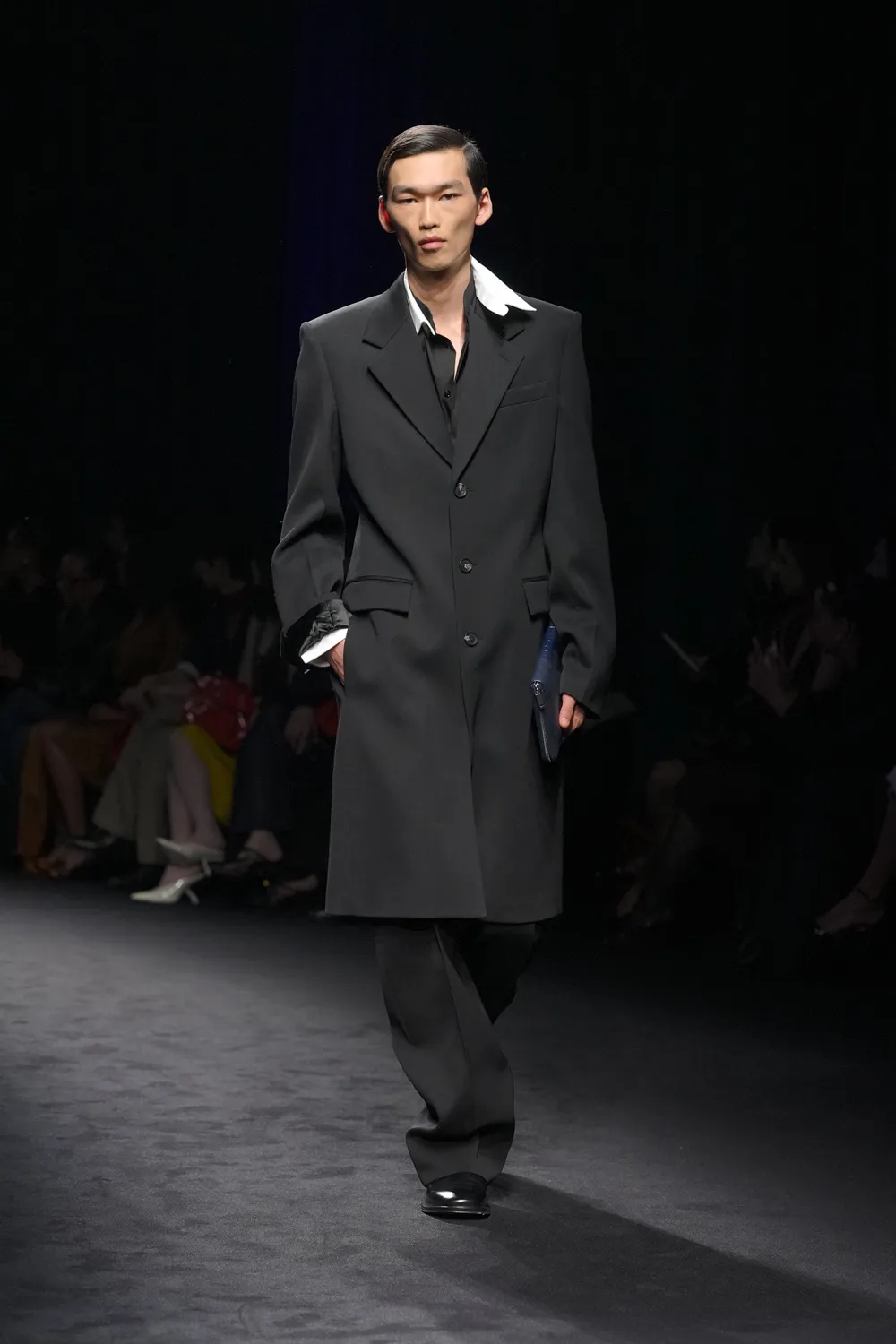
Ferragamo’s Maximilian Davis delivered one of the week’s most cohesive statements on fall dressing. Exceptional outerwear anchored the show, from sharply cut coats to fluid trench silhouettes. Jackets, cuffs, and collars were layered and considered down to the last fold.
Leather pants
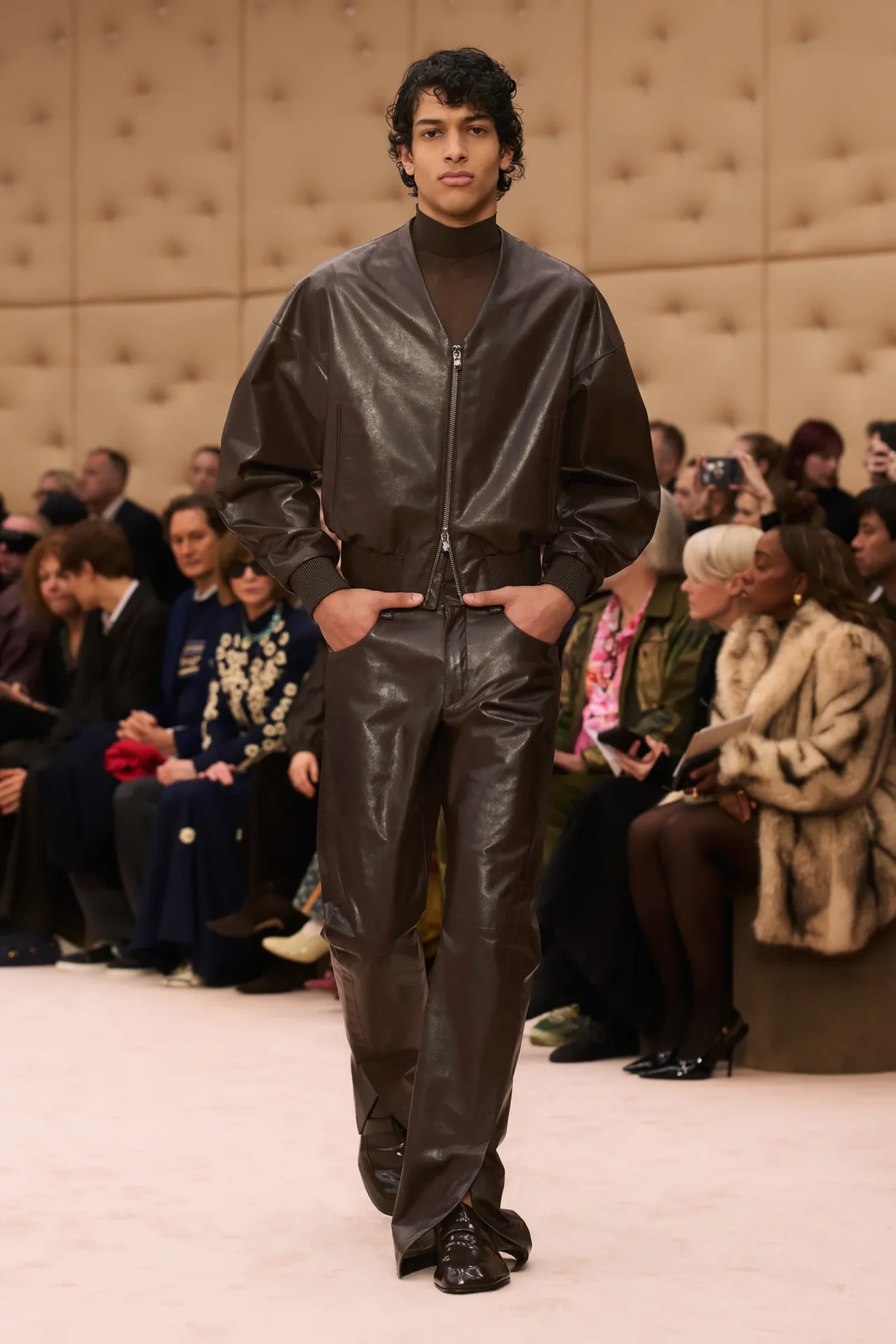
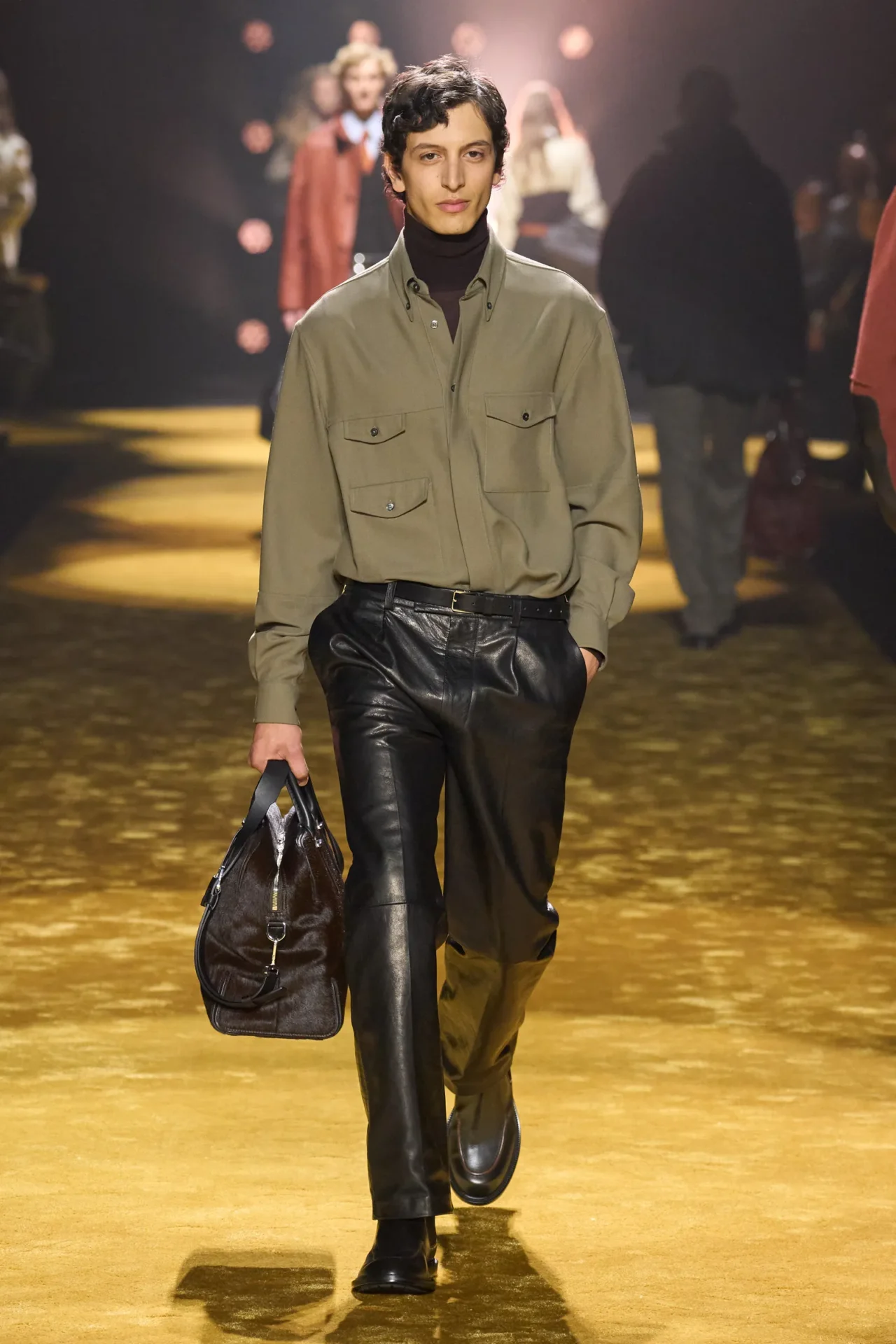
Ferrari translated its high-performance ethos into khaki and layered earth tones, pairing leather pants with sharp tailoring and lustrous outerwear. The silhouettes aligned with the brand’s automotive identity.
At BOSS, leather was integrated into streamlined looks that balanced structure and ease, reinforcing the season’s broader emphasis on disciplined dressing.
Skinny silhouettes
After several seasons dominated by volume, Milan made a case for a narrower line.
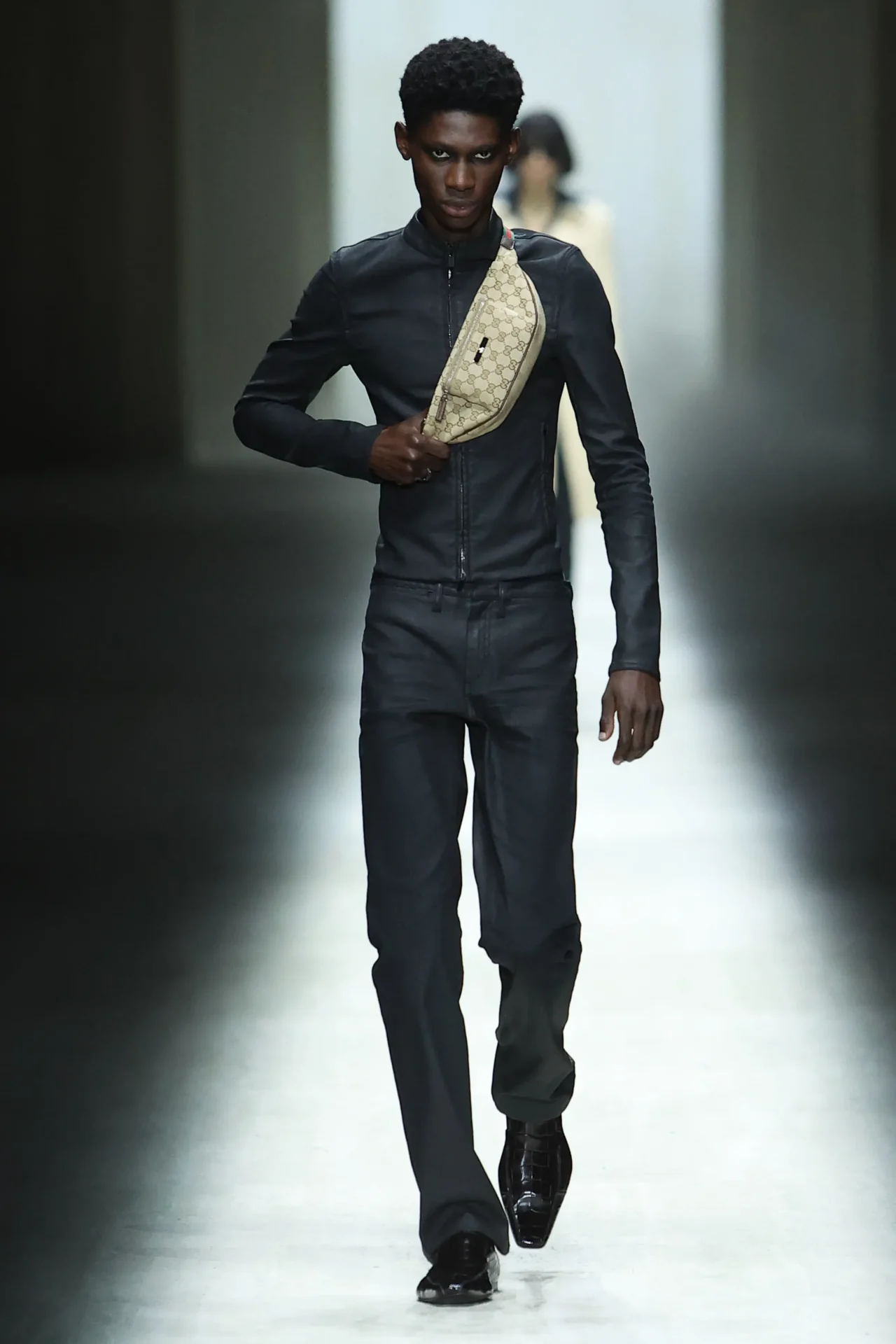
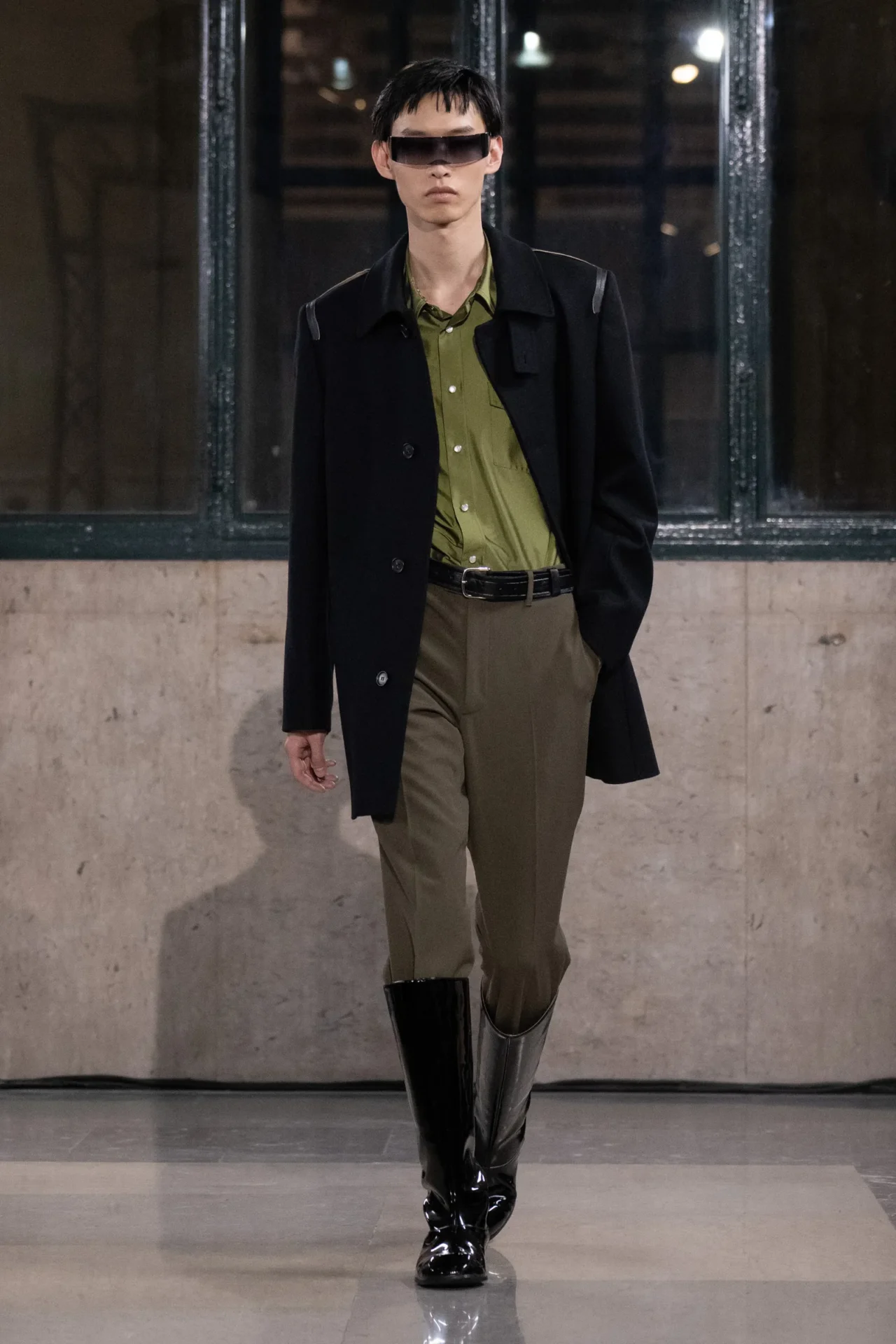
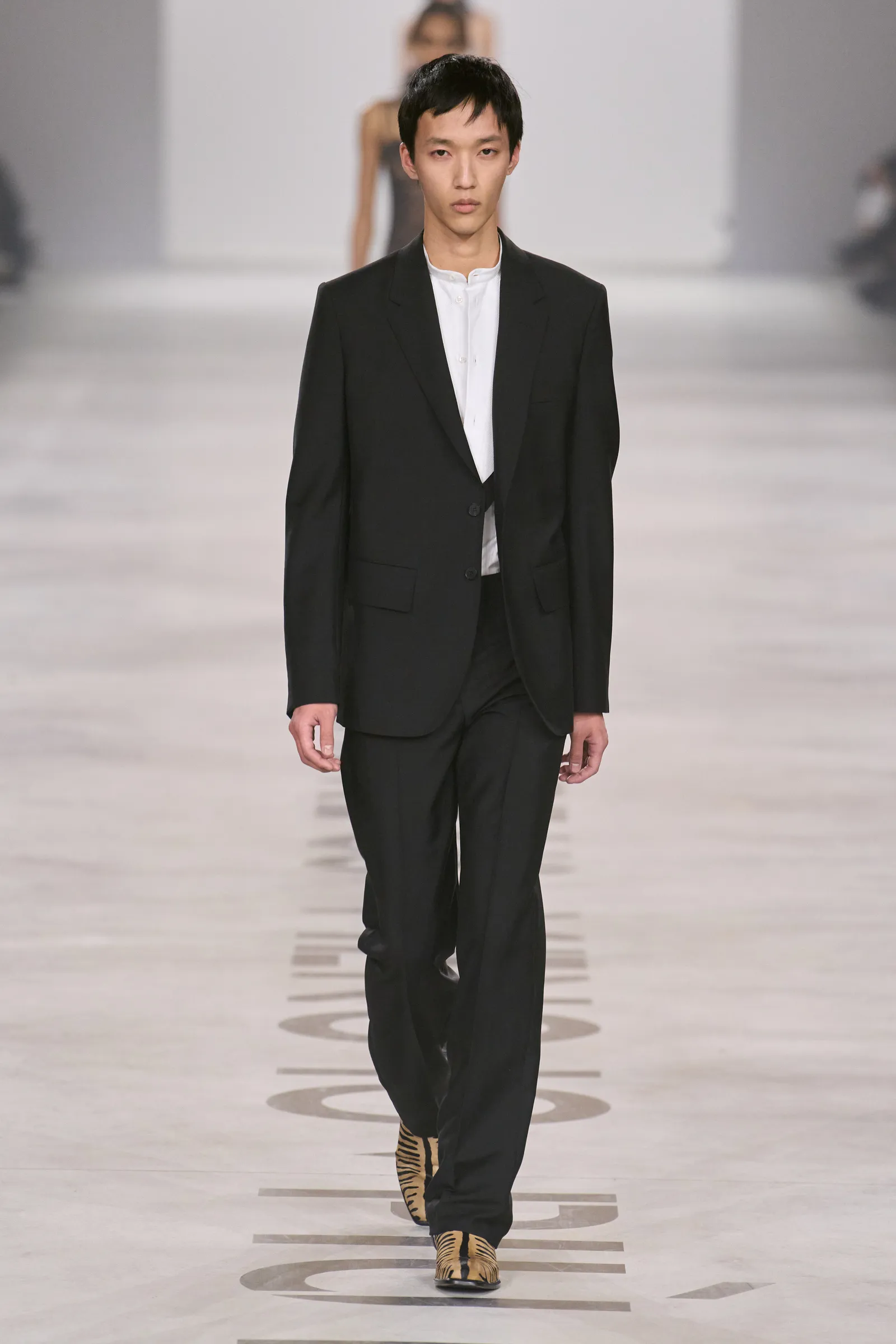
Gucci embraced slim tailoring with elongated jackets and trousers cut close to the leg. MM6 Maison Margiela presented a study of urban dressing. Even with occasional extra high pumps, the collection maintained practicality, grounding experimentation in wearable shapes.
At Fendi, tailoring skimmed the body, coats neatly tapered and trousers narrowed without constricting movement, sharpening the renewed focus on the male form.
Hints of yellow
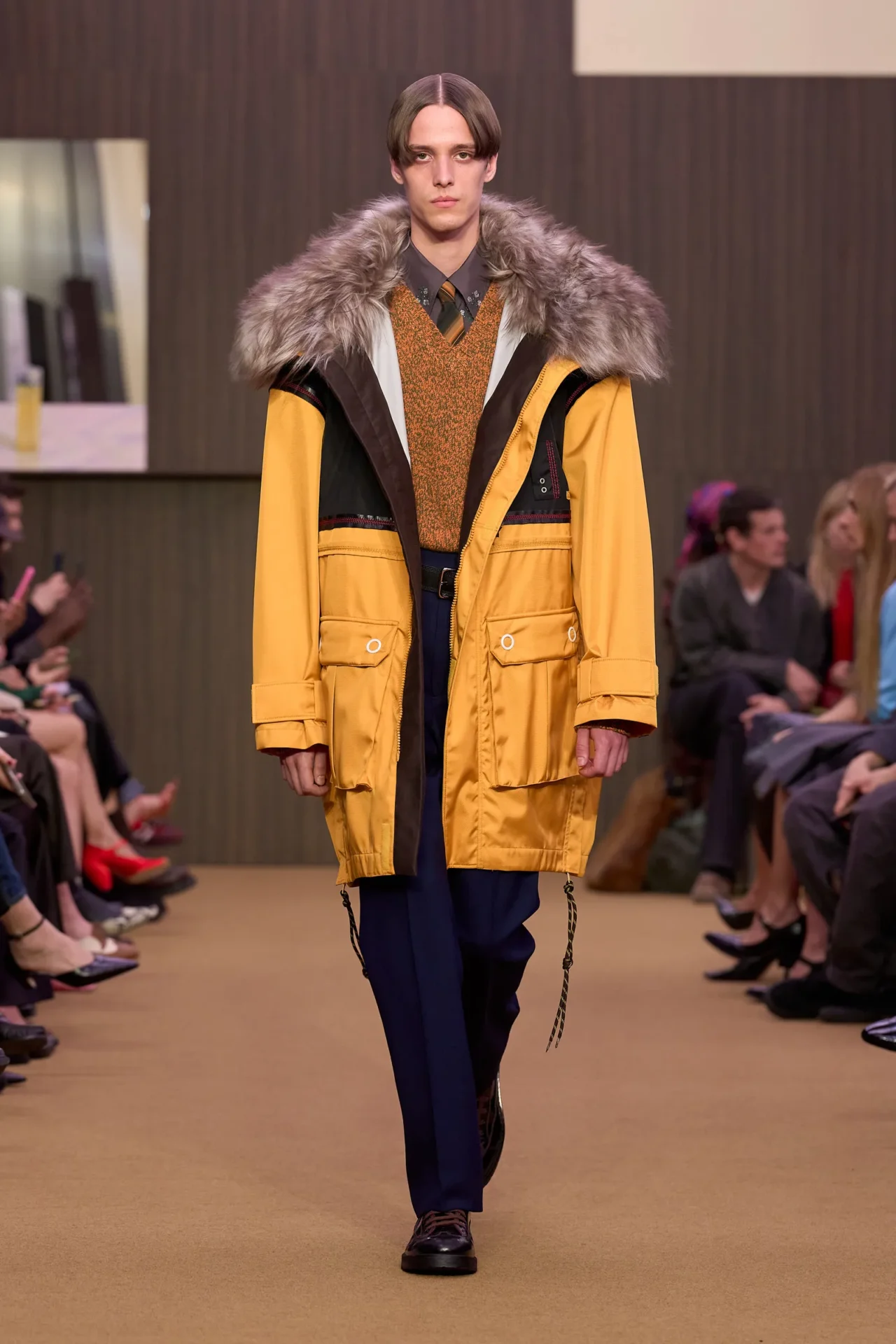
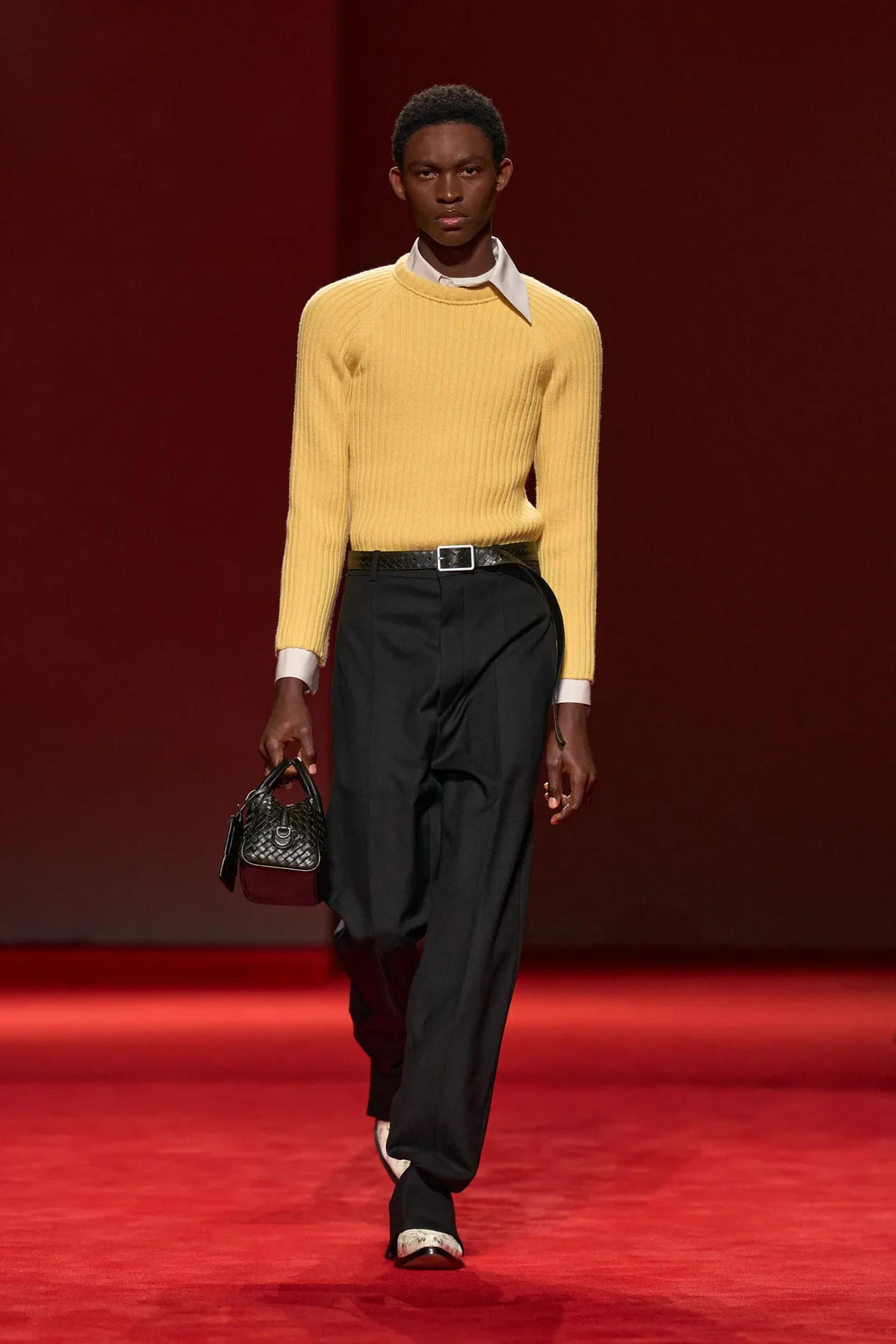
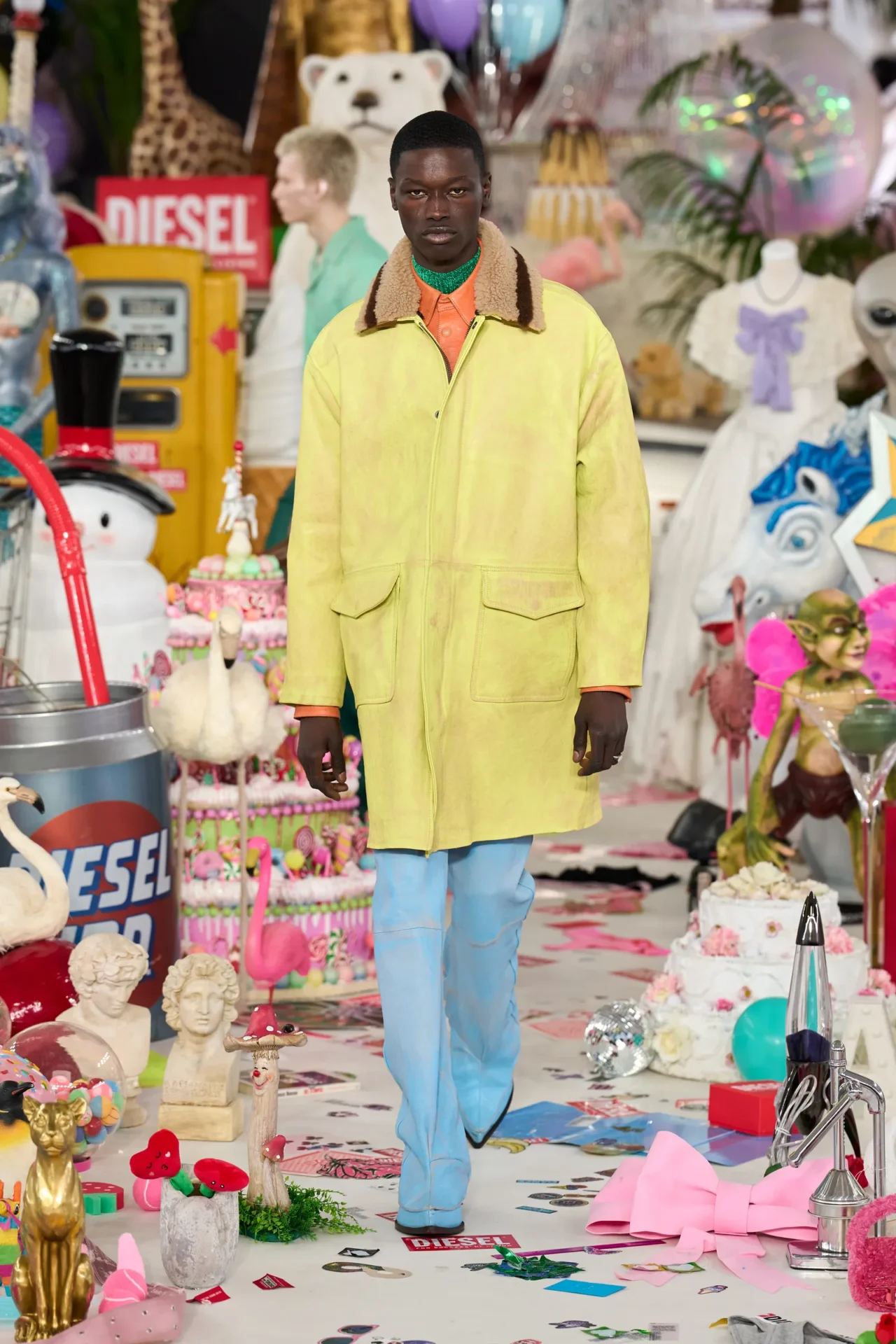
While palettes leaned neutral, controlled flashes of yellow appeared across several runways. Marni introduced the shade in measured doses, while Bottega Veneta used it sparingly to punctuate muted tones, and Diesel injected brighter accents into otherwise grounded looks.
Frequently Asked Questions
Milan FW26 centered on asymmetric collars, slim silhouettes, leather tailoring, and restrained pops of yellow — a season defined by precision over volume across houses including Gucci, Fendi, and Bottega Veneta.
Gucci, Fendi, and MM6 Maison Margiela each presented narrower tailoring at Milan FW26, with elongated jackets and body-skimming trousers marking a deliberate departure from the oversized volumes of recent seasons.
Under Louise Trotter, Bottega Veneta FW26 introduced off-center, asymmetrically popped collars and expanded the house’s Intrecciato weave into ready-to-wear — adding tension to otherwise precise tailored construction.
Leather at Milan FW26 was rendered sleek and structural rather than statement-heavy — Ferrari paired leather trousers with sharp tailoring, while BOSS integrated the material into streamlined, disciplined looks.
Yellow appeared as a controlled accent rather than a dominant tone — Marni, Bottega Veneta, and Diesel each deployed the shade sparingly against neutral or muted palettes, treating it as punctuation rather than a statement.

Recommended Video