The 5 Accessories That Make or Break a Suit
Even the best suit can fall flat without the right accessories. Here’s a closer look at the details that pull everything together




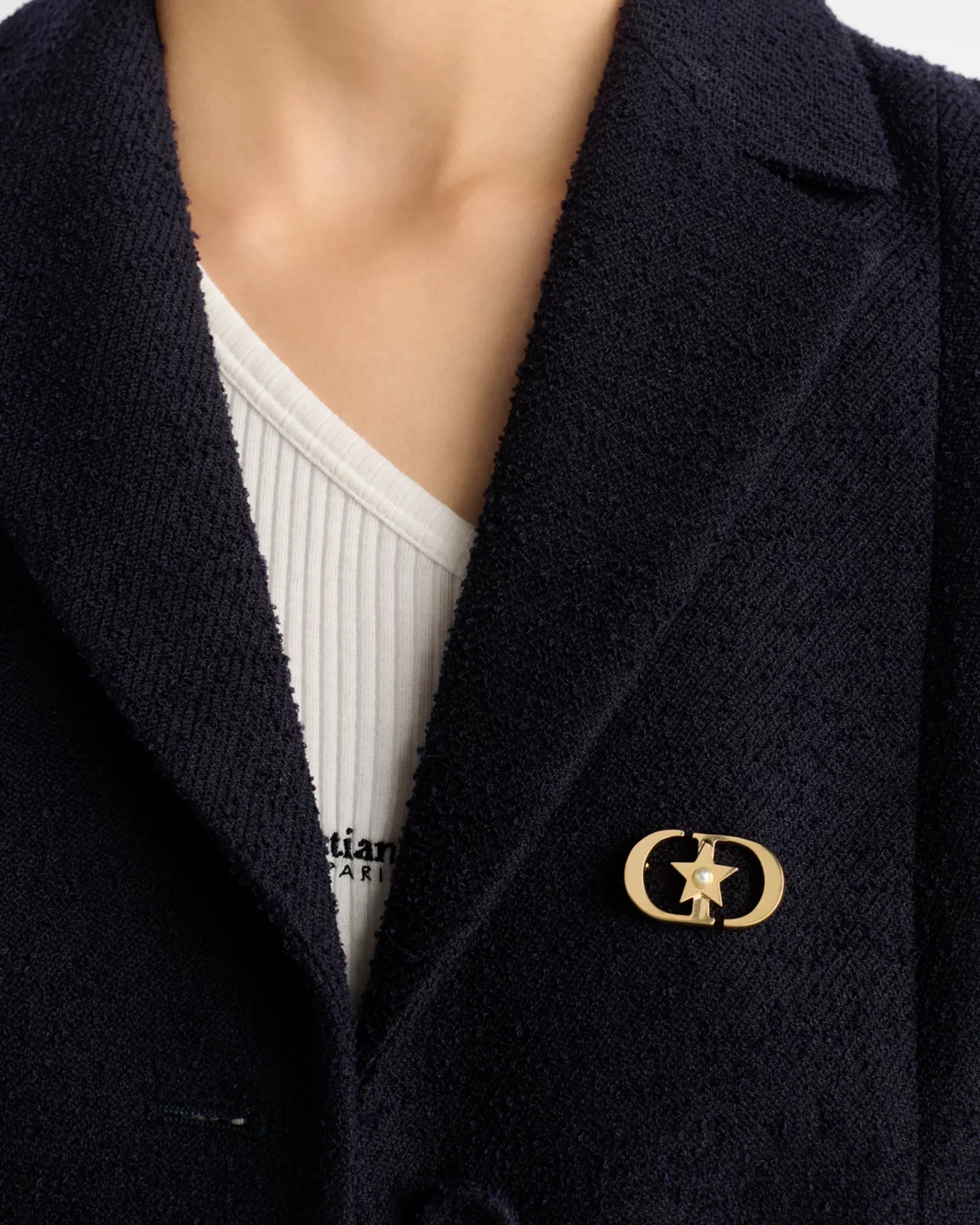
The suit is only the overture in the ceremony of dressing well. The main act, the part people remember, often unfolds in the margins: the glint of a lapel pin, the flourish of a pocket square, or the satisfying symmetry of a cummerbund clasped tightly around the waist. Accessories, often treated as afterthoughts, are where the real story of personal style is told.
Below is a breakdown of five essential accessories to consider when wearing a suit today, along with how each one contributes to a sharper and more intentional impression.
RELATED: 7 Classic Suiting Rules for Men (and the Right Way to Break Them)
1. Pocket squares
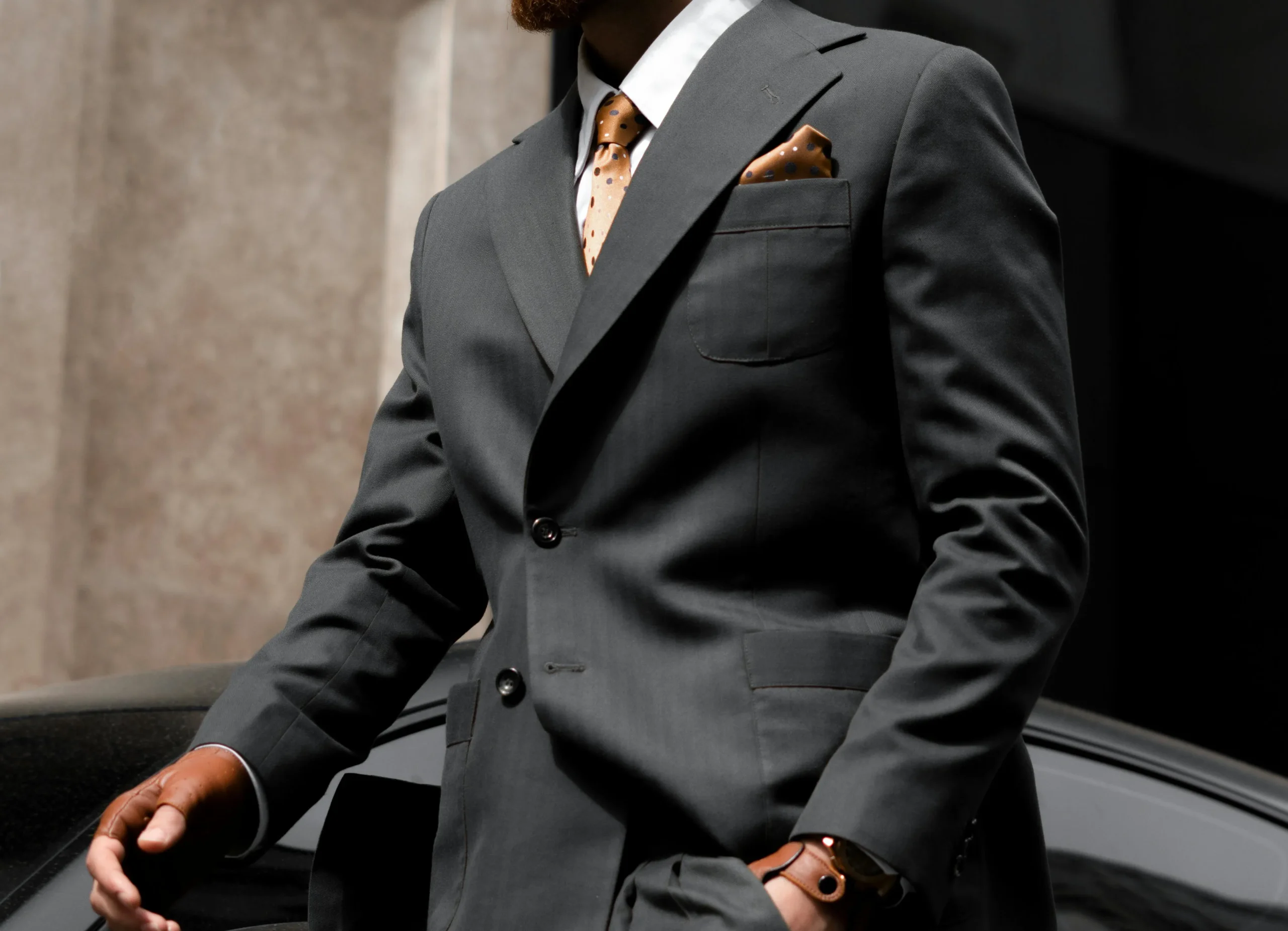
The pocket square remains one of the easiest ways to add depth to a suit. The default choice, a crisp white square folded flat, is still widely accepted. However, color and pattern, when used with restraint, are becoming increasingly common. The key is coordination, not matching.
A patterned square should echo, not duplicate, the tones of a tie or shirt. As more men return to tailoring post-pandemic, pocket squares have reemerged as a regular fixture in formal wardrobes, especially for occasions that call for visual distinction without excess.
2. Belts

There is ongoing debate about the role of belts in formalwear. Some stylists argue that if trousers have belt loops, they should be used. Others believe that a belt disrupts the clean line of tailoring. In recent seasons, both approaches have coexisted.
When worn, belts should either blend seamlessly with the suit or stand out intentionally as a design choice. Suede and matte finishes are gaining popularity, especially in neutral tones, offering a modern alternative to polished leather.
3. Cummerbunds
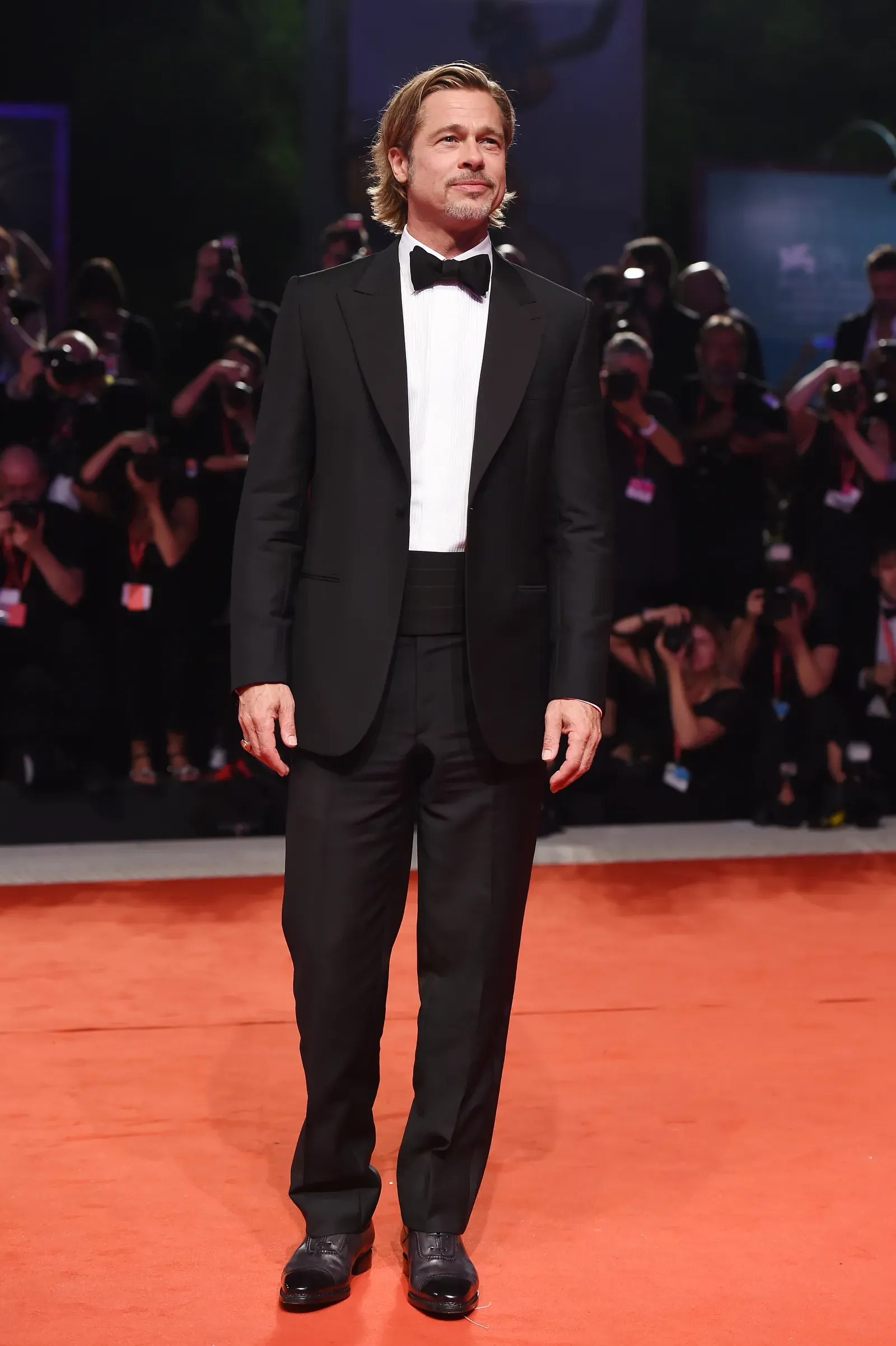
Originally adopted from South Asian dress by British officers, the cummerbund was once reserved for high-formality occasions. Today, it is being reinterpreted in bolder colors and lighter fabrics, particularly in eveningwear.
Designers are increasingly pairing bright cummerbunds with coordinated bow ties, moving away from traditional black or midnight blue. Its appeal lies not only in aesthetics but also in the way it enhances proportion, especially when worn with a tuxedo.
4. Lapel adornments
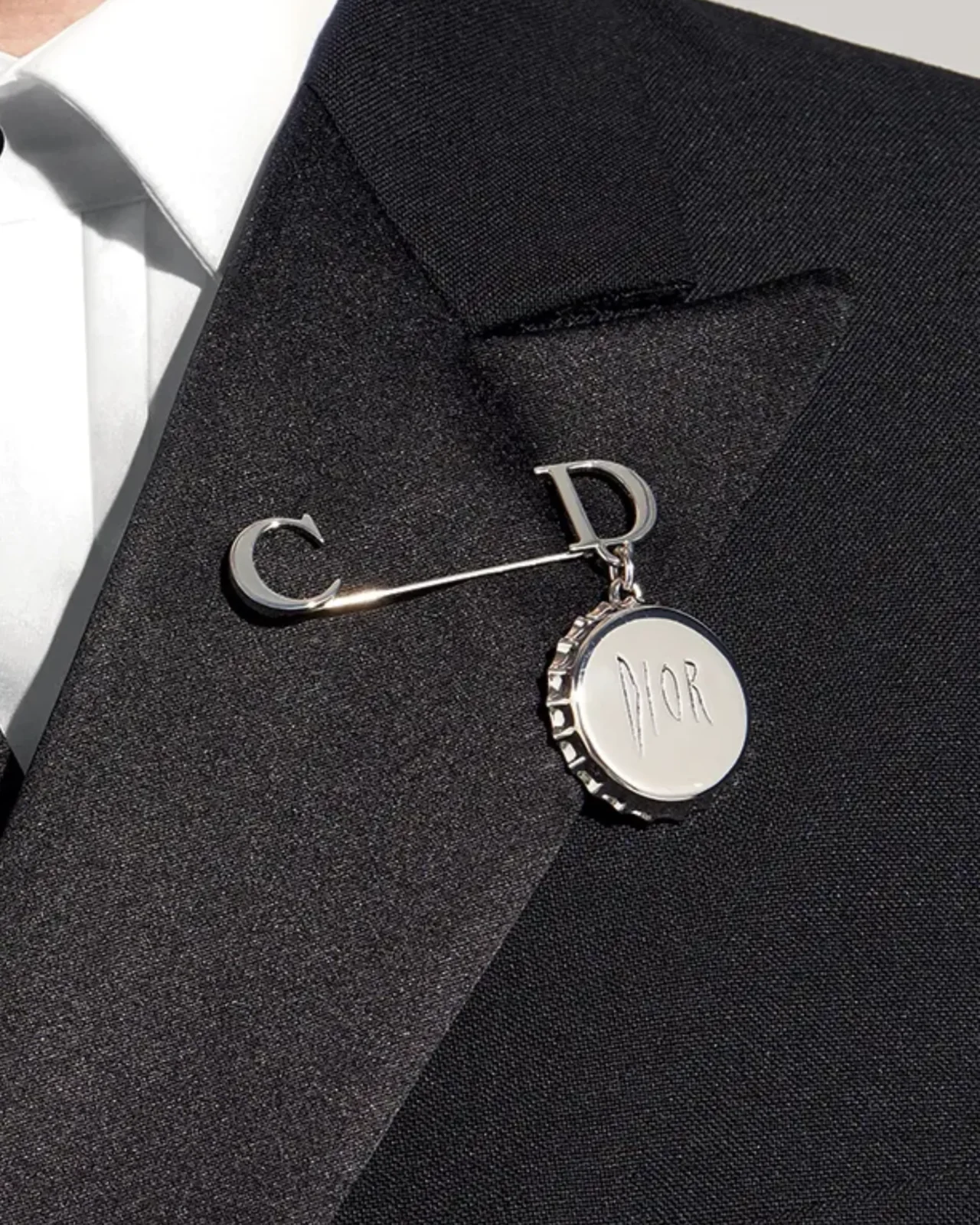
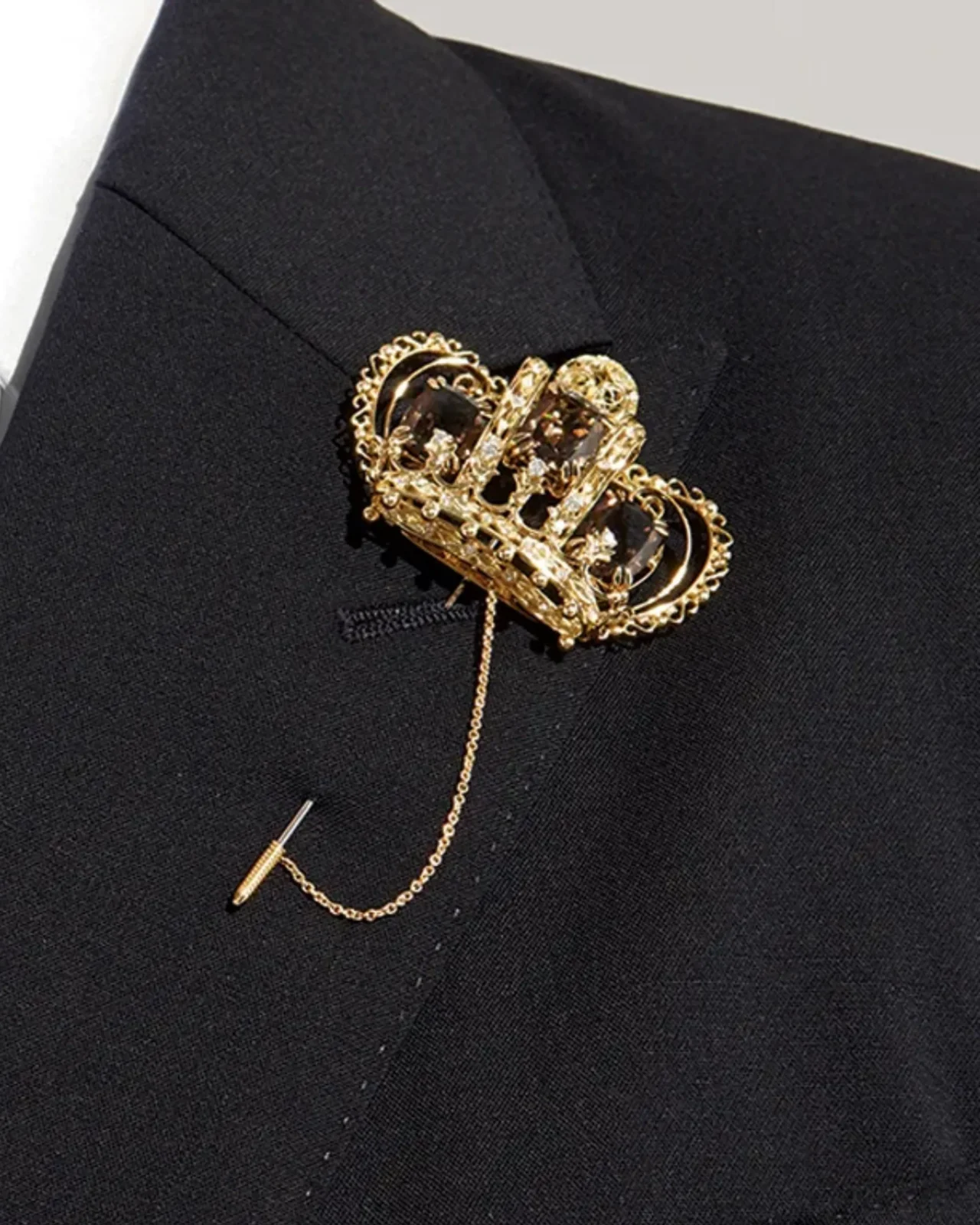
Lapel pins and boutonnières are no longer reserved for weddings. Brands like Alexander McQueen have revived the idea with sculptural pins and floral motifs that add texture to otherwise restrained looks. Real flowers, especially orchids and calla lilies, are still seen at formal events. However, enamel pins and metal accents are emerging as versatile alternatives that work well beyond ceremonial settings.
5. The right bag
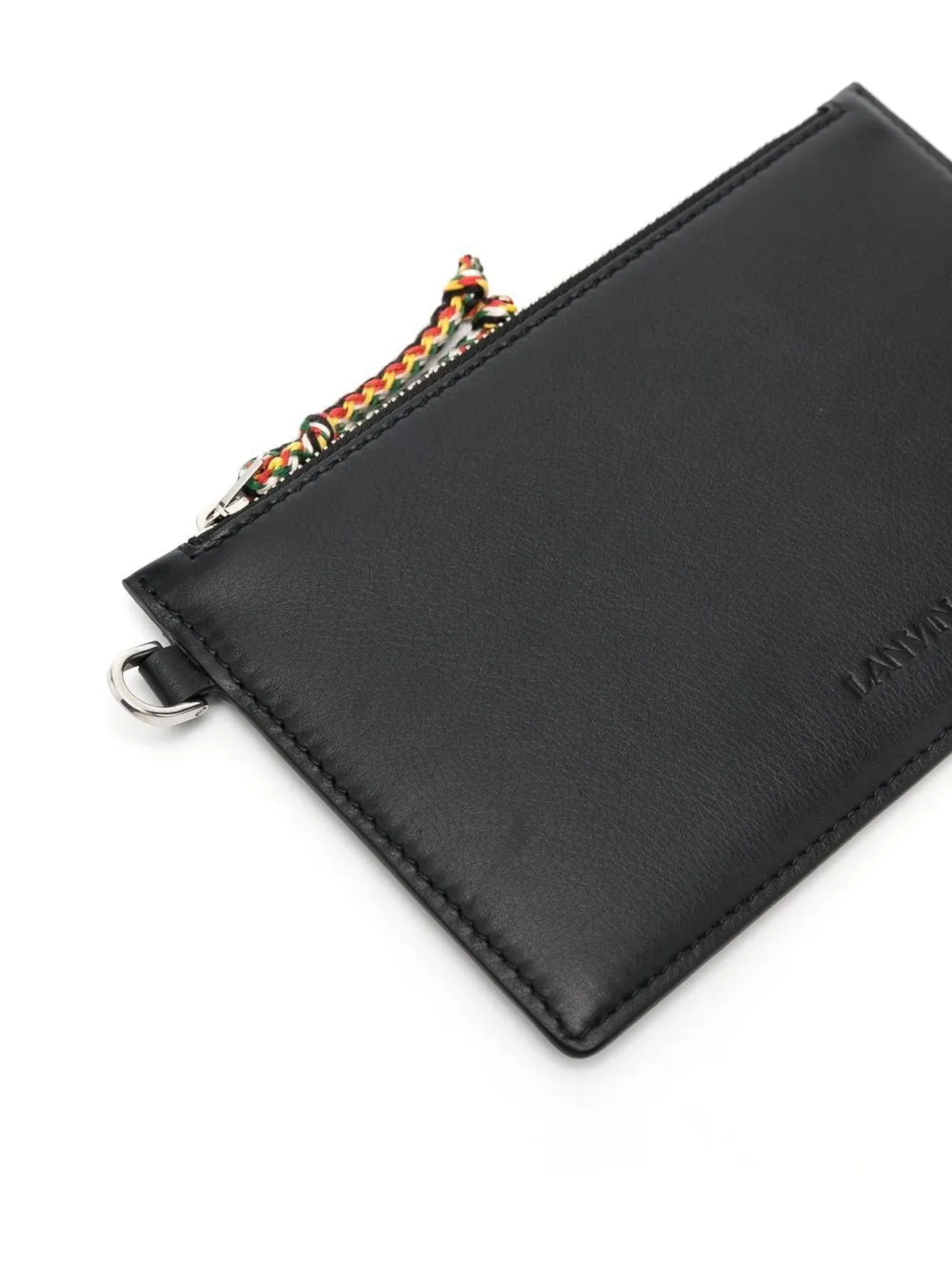
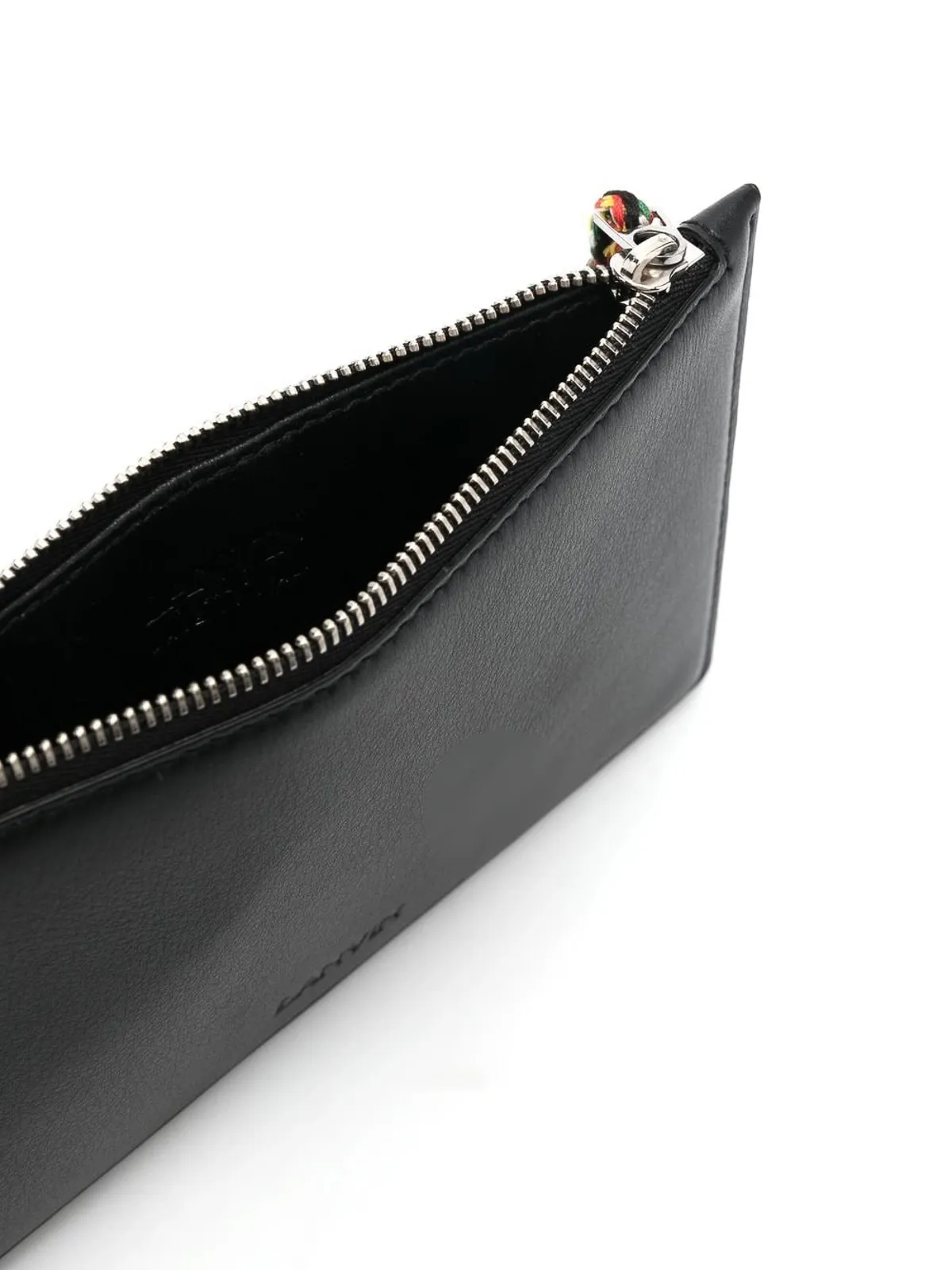
Carrying a phone, wallet, and other essentials while wearing a suit presents a challenge: how to maintain the clean silhouette of tailoring without bulky pockets. The answer lies in the evening pouch, a small and structured accessory without handles. Labels like Lanvin have introduced sleek leather versions designed specifically for formal occasions, offering a balance between functionality and formality. It is a subtle solution to a modern problem.
In all of this, the message is clear: the best-dressed men are those who understand that both the devil and the delight are in the details. A suit might get you in the door, but it is the accessories that will keep you in the memory.
Photos courtesy Dior, Dolce&Gabbana, Lanvin