What Are the Chinese New Year Customs of Singapore?
Amid the noise and spectacle of Chinese New Year in Singapore, it’s the quiet rituals and shared moments that feel the most alive




Chinese New Year in Singapore is an experience—a subtle thing that wraps around you slowly as you move through it, without you ever quite realizing how deeply it’s seeped into your bones.
There’s a certain rhythm to the days leading up to the festival, a rhythm that feels both ancient and modern, as the city prepares for something that, on the surface, might seem like a simple celebration, but, in truth, is something much more personal, much more rooted in memory and meaning.
Xiaoguonian and the start of it all
It begins, almost imperceptibly, a month before the actual New Year. The 24th day of the 12th month of the Chinese lunar calendar arrives, and with it, Xiaoguonian—the “Little New Year.”
It’s a quiet day, one you might not even notice if you didn’t know to look for it, yet everything begins here. You prepare offerings for the Kitchen God, those little gifts of sweet cakes and fruits, with the simple hope that he will speak kindly to the Jade Emperor on your behalf.
And then, there’s the spring cleaning. It’s not just about sweeping dust from the corners of the house. It’s about the careful clearing away of things—physical and emotional—that might have lingered too long. It’s almost like setting an intention.
You clean, but not on the first day of the new year, because you don’t want to accidentally sweep away all your good fortune.
It’s funny how a broom can feel like a symbol of something much bigger, isn’t it?
More than just food
But it’s really the evening of New Year’s Eve that everyone anticipates. In Singapore, like in so many places, the reunion dinner is the centerpiece.
It’s about the gathering—the reunion of the family, the stillness and the comfort of being in the same room again after all that time apart.
The dinner is an elaborate one. Fish, symbolizing abundance, is a must. Dumplings, shaped like gold ingots, represent wealth. But there’s also a moment, a pause before the meal begins, when families sit in silence and offer thanks to their ancestors.
The food, fruit, and tea are laid out in reverence. It’s a small, almost unspoken gesture, but you feel it—this quiet invitation for those who came before to join the celebration.
The ritual of vigil
There’s a tradition for children to stay awake on New Year’s Eve, an act that, in the eyes of many, will bring them longer lives—or perhaps, in some interpretations, longer lives for their parents.
It’s all about the symbolism, of course, but there’s something tender about it. The way children sit on the couch, eyes wide, trying so hard to make it past midnight, their small bodies weighed down by the promise of another year.
And then, when the clock strikes 12, there’s the handing out of hongbao—red packets filled with money. It’s a ritual, yes, but it also feels like a quiet passing of something between generations, an unspoken acknowledgment of all the years that have come before.
The lion dance
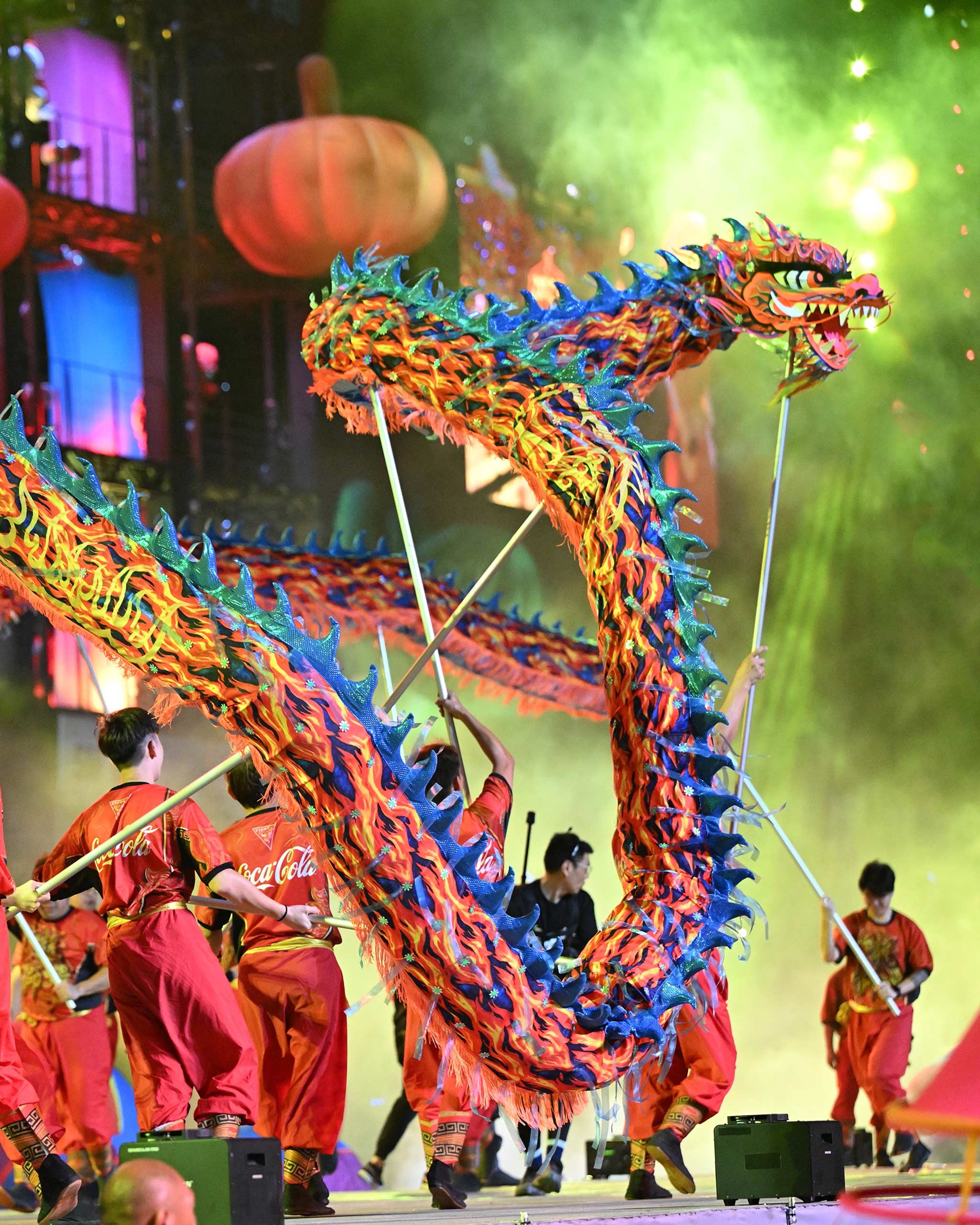
The streets of Singapore begin to pulse with life when the lion dancers take to the pavement. The thrum of the drums reverberates in the chest as the lions perform their ritual, and there’s an almost unsettling energy about it.
It’s easy to get lost in the spectacle, in the way the dancers leap and spin, the costumes rippling like something alive.
It’s a little like watching an old story being told over and over again—Nian, the monster, being chased away, the lion’s movements a dance of triumph and resilience.
Singapore’s lion dancers have their own style, their own identity. The Singapore drum, softer than its counterparts elsewhere, creates a sound that feels distinctly local, almost as if the island itself is calling out to you.
Tossing for luck, tossing for life
Then there’s Lo Hei—a tradition that seems almost made for the modern world. There’s something playful about it, something that feels as if it were designed for Instagram, with its bright colors and the ritualistic tossing of ingredients into the air.
You gather around a table, everyone in a rush to toss the ingredients of yusheng—raw fish, vegetables, condiments—higher and higher, as if the higher it goes, the more fortune you’ll have.
The act of throwing the ingredients up into the air, with everyone laughing, calling out auspicious wishes, and hoping that this simple gesture will bring prosperity. There’s a kind of innocence to it.
What makes Chinese New Year in Singapore feel so special, so distinctly Singaporean, is the way it mixes the old with the new.
There’s a rawness to it—this very human desire to honor the past while pushing forward into the future.
There are the ancient customs, like ancestor worship and the reunion dinner, but there are also the modern rituals, like the cash deposits made at the bank on the first day of spring, a practice that feels like it belongs to a different kind of world.
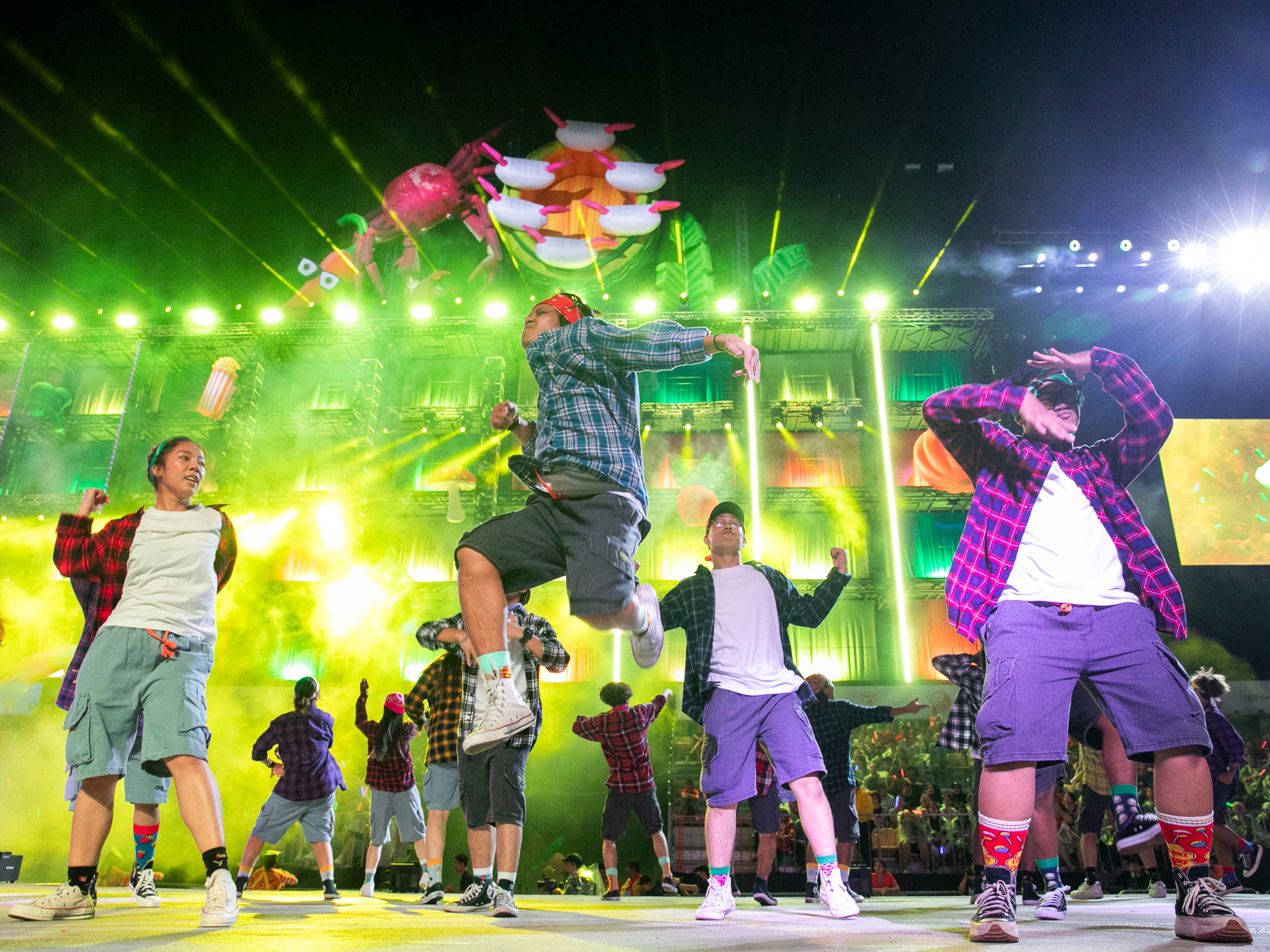
And this fusion of tradition and innovation is part of what makes Singapore such a unique place to celebrate. Beyond the traditional festivities, the island also embraces a multiculturalism that is always evolving.
A perfect example of this is the annual Chingay Parade—a dazzling display of Singapore’s diverse cultures, including the culinary culture that binds people of all backgrounds together.
Set to return in February 2025, this year’s Chingay Parade will feature over 4,000 performers, food-inspired floats, vibrant costumes, and dynamic choreography.
It’s a celebration that transcends ethnicity, age, and language, and reminds us of how food, much like the communal spirit of Chinese New Year, brings people together.
In the end, maybe that’s what Chinese New Year in Singapore is all about.
Not the decorations, not the lion dances, not even the food, but the way it invites you to reflect, to remember, and to look forward with hope. To share in something that transcends time and place.
And perhaps that’s why, despite the crowds and the noise, Chinese New Year in Singapore always feels like home.
Special thanks Wei Lun Tok
Photos courtesy People’s Association