Kristian Somera Makes Art Out of the Things Words Can’t Quite Explain
He’s spent years making a living with words, but it’s through abstract painting that the Filipino artist is learning when to stop explaining himself



- Self-taught Filipino artist Kristian Somera turns to abstract expressionism to explore memory and emotions that words cannot fully capture.
- Drawing from Western abstract expressionism and his lived experience in the Philippines, he challenges narrow ideas of Filipino art and advocates for greater recognition of Southeast Asian artists on the global stage.
Less explanation makes for better art
Kristian Somera has made a career out of telling stories. A nationally published writer, creative director, and self-taught Filipino artist based in Metro Manila, he’s spent years working with words and images, finding different ways to communicate the things that make us human.
Painting, however, has given him a useful alternative to explaining himself. Working with watered-down acrylics and mixed media, he creates emotionally charged abstractions shaped by spirituality, memory, human consciousness, and the imperfect beauty of nature.
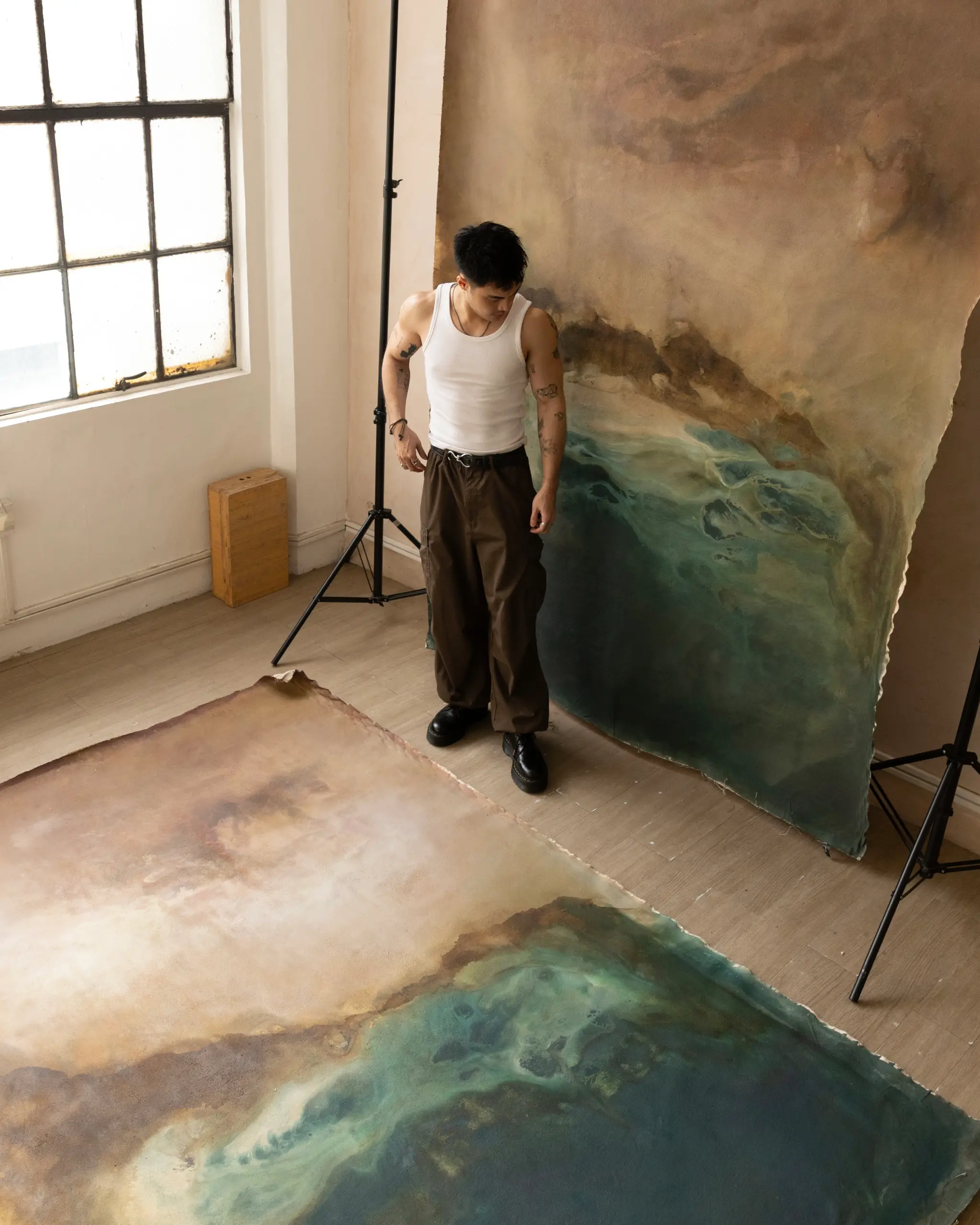
His influences include Mark Rothko, Helen Frankenthaler, Robert Motherwell, and Willem de Kooning, though his canvases focus on capturing how it feels to live in the world rather than depicting it as it looks.
There was no grand artistic awakening when Kristian put down a pen and picked up a paintbrush with the conviction of a man who’d finally found his calling. The transition happened gradually.
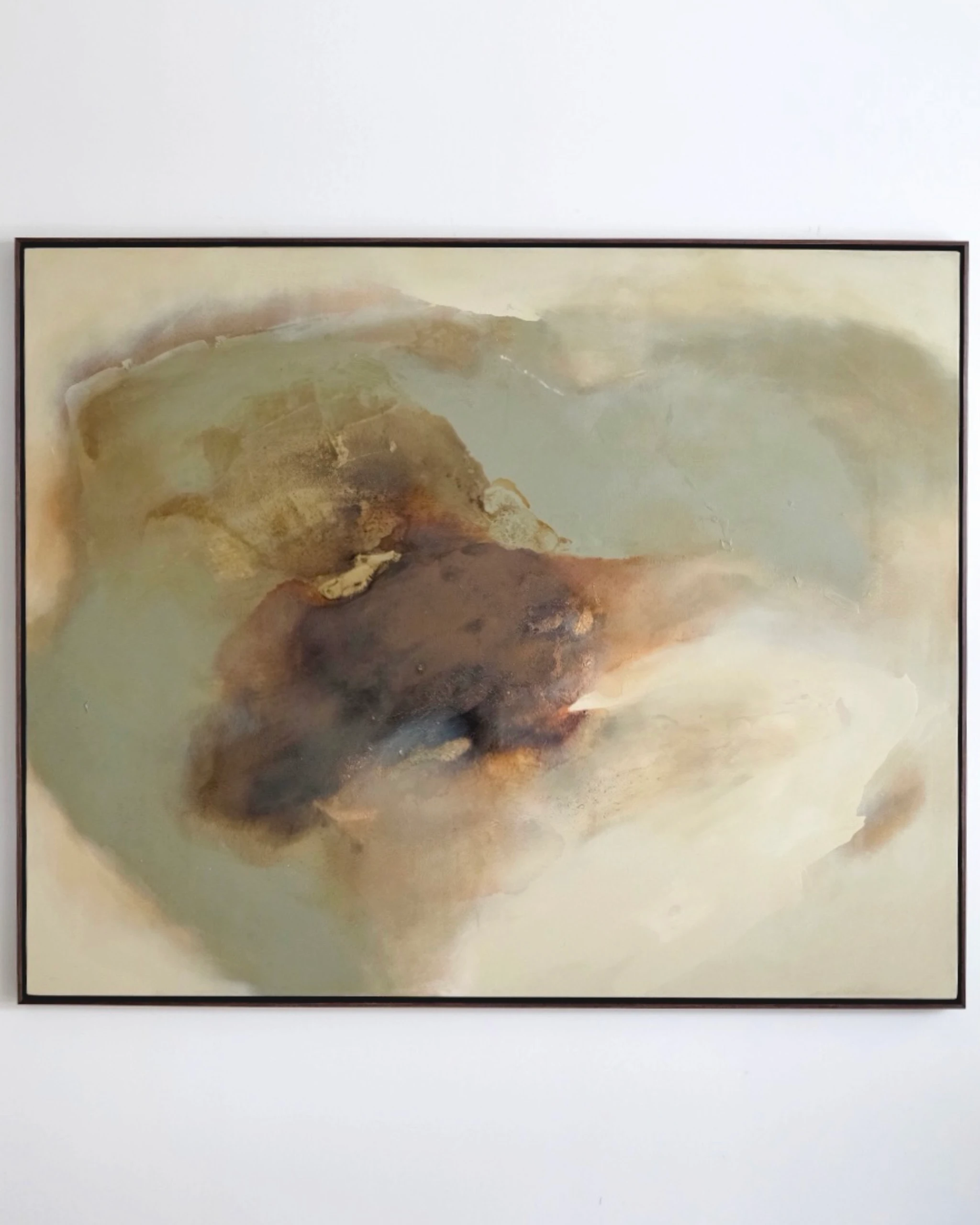
After years of working with language, he began to feel that certain experiences resisted being put into words. Some feelings were too elusive to explain; others were too vivid to be adequately described. Painting offered a way around the problem.
“I was using it to understand myself and the world around me,” he says. What began as private experimentation eventually became a language of its own, one that didn’t require every thought to be neatly arranged before it could be expressed.
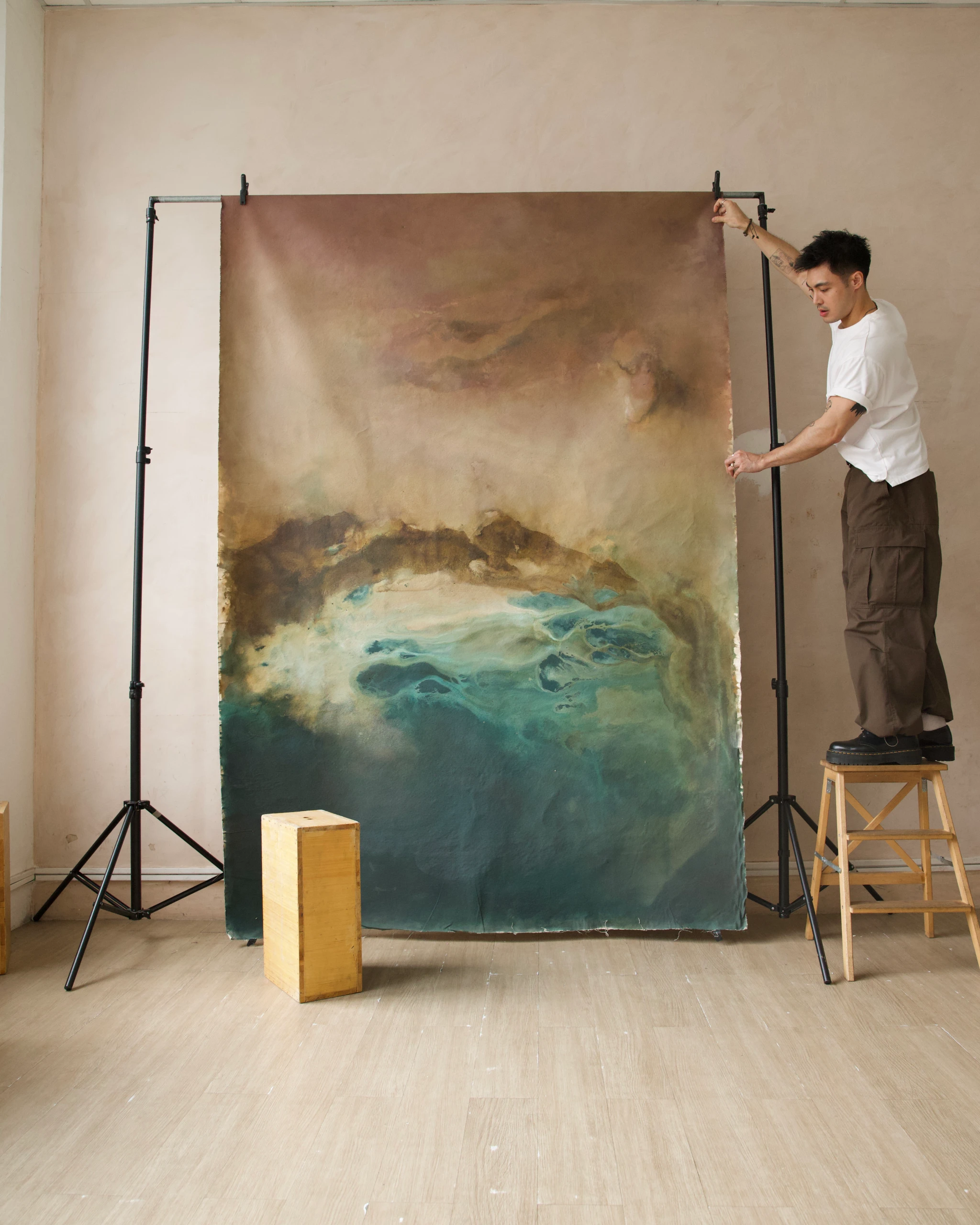
This is where Kristian’s work gets interesting. His paintings aren’t illustrations of emotions, nor are they abstract puzzles waiting for someone to crack the code. Built through meditation and successive layers of paint, they explore the territory between what we feel and what we can actually explain.
“Abstraction gives me permission to stay in that ambiguity. I can create an atmosphere or a feeling and allow them to encounter it through their own memories and associations.”
A little less control, please
Kristian’s process begins with meditation, followed by an intuitive exchange with the canvas. He works by responding to what is already there: the movement of a mark and the balance between revealing something and obscuring it again.
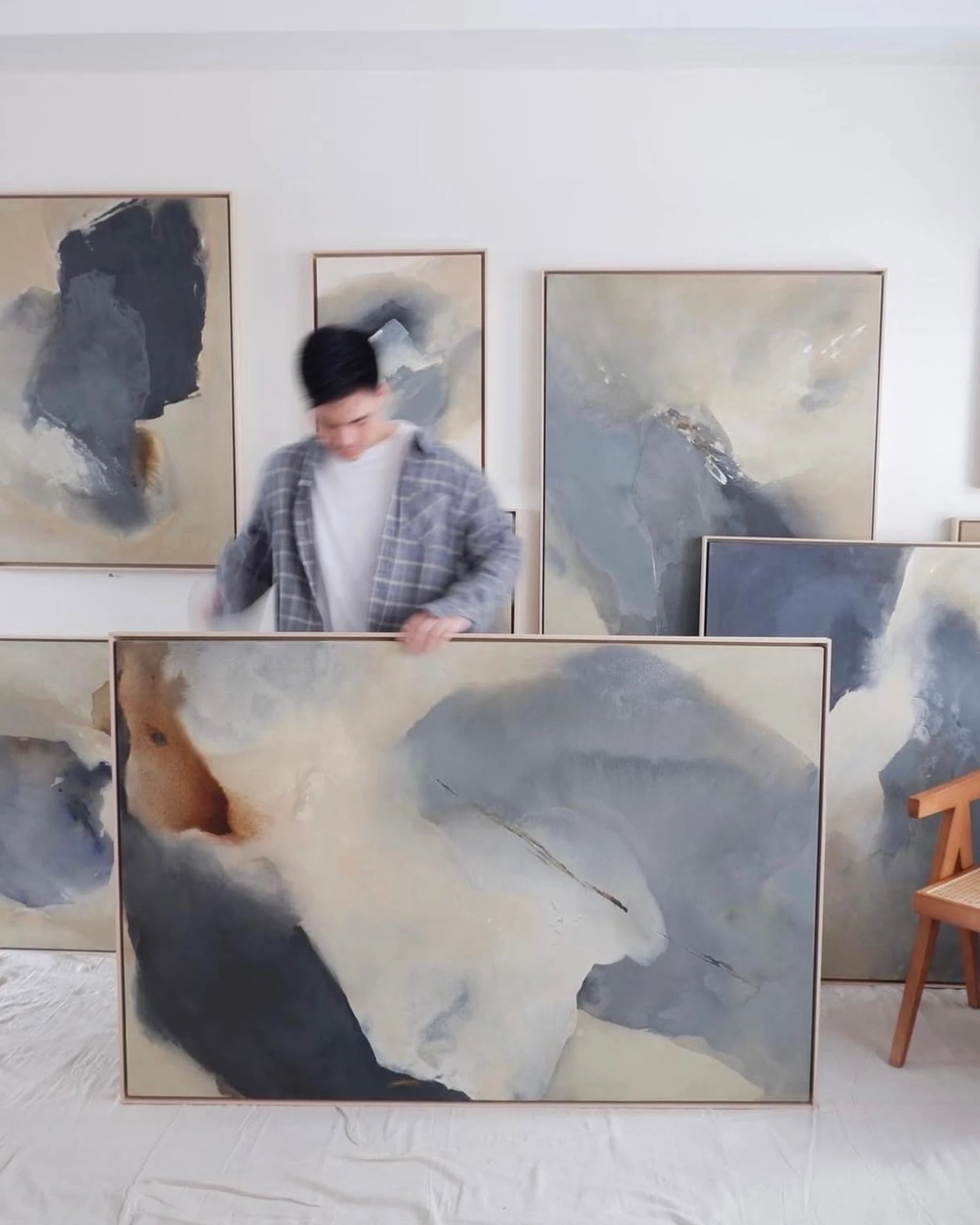
Knowing when to stop’s the tricky part. There’s always another opportunity to improve upon what’s already in front of you. Artists, much like the rest of us, aren’t necessarily famous for knowing when enough is enough.
Kristian has learned to recognize when an additional gesture creates a new possibility and when it merely adds noise. The difference isn’t always obvious, and his intuitive approach leaves little room for a convenient formula. Eventually, though, the urge to intervene begins to fade.
“I think I know a painting is finished when I stop feeling the need to control it.”
It’s a lesson he has taken beyond the studio. He admits that he once wanted to understand things immediately, to find an explanation or conclusion for every experience. Painting has made him more comfortable with uncertainty, teaching him that something doesn’t need to be resolved to be meaningful.
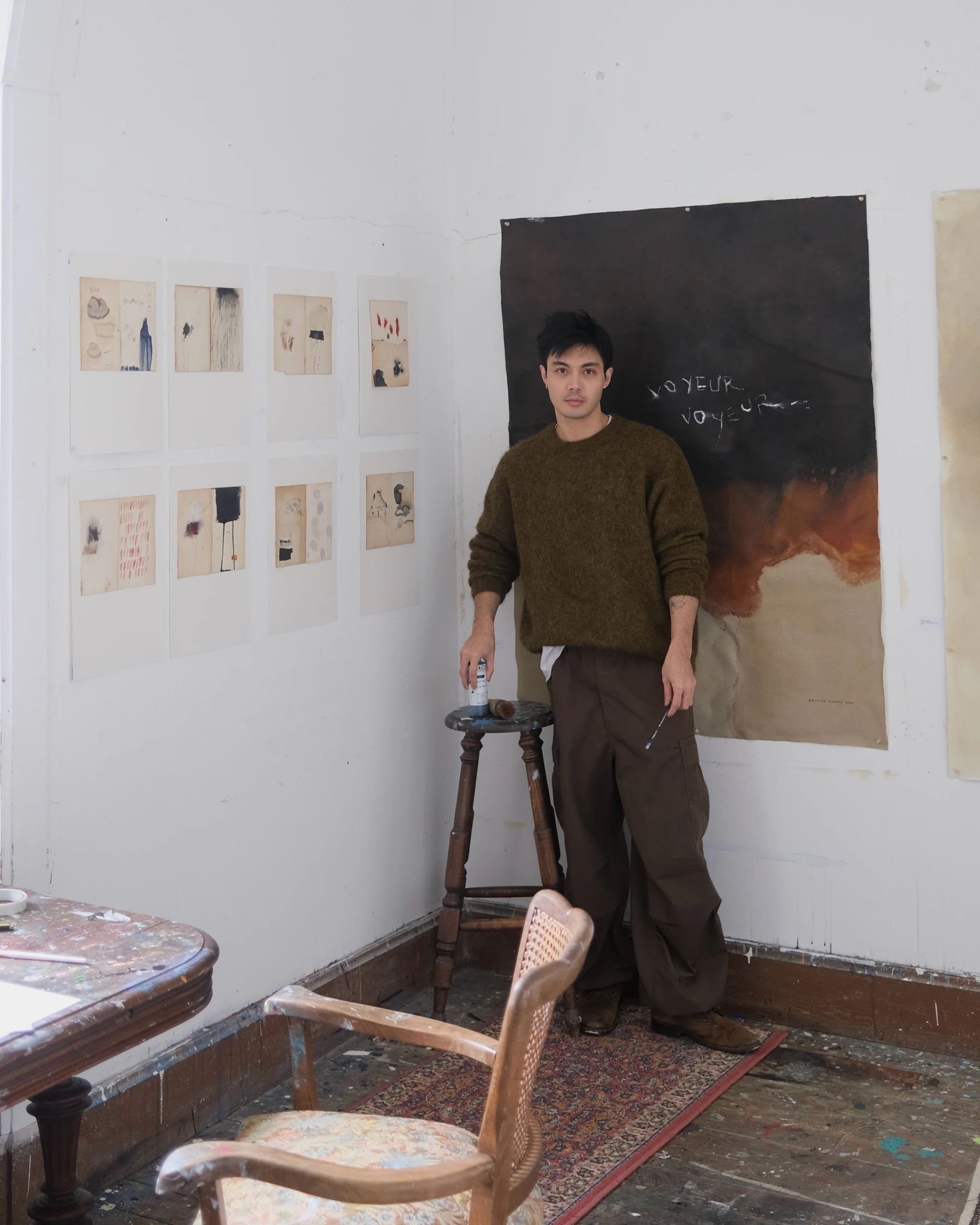
Filipino art doesn’t need to spell it out
Kristian’s interest in what lies beyond language extends to a question about how Filipino artists are understood internationally.
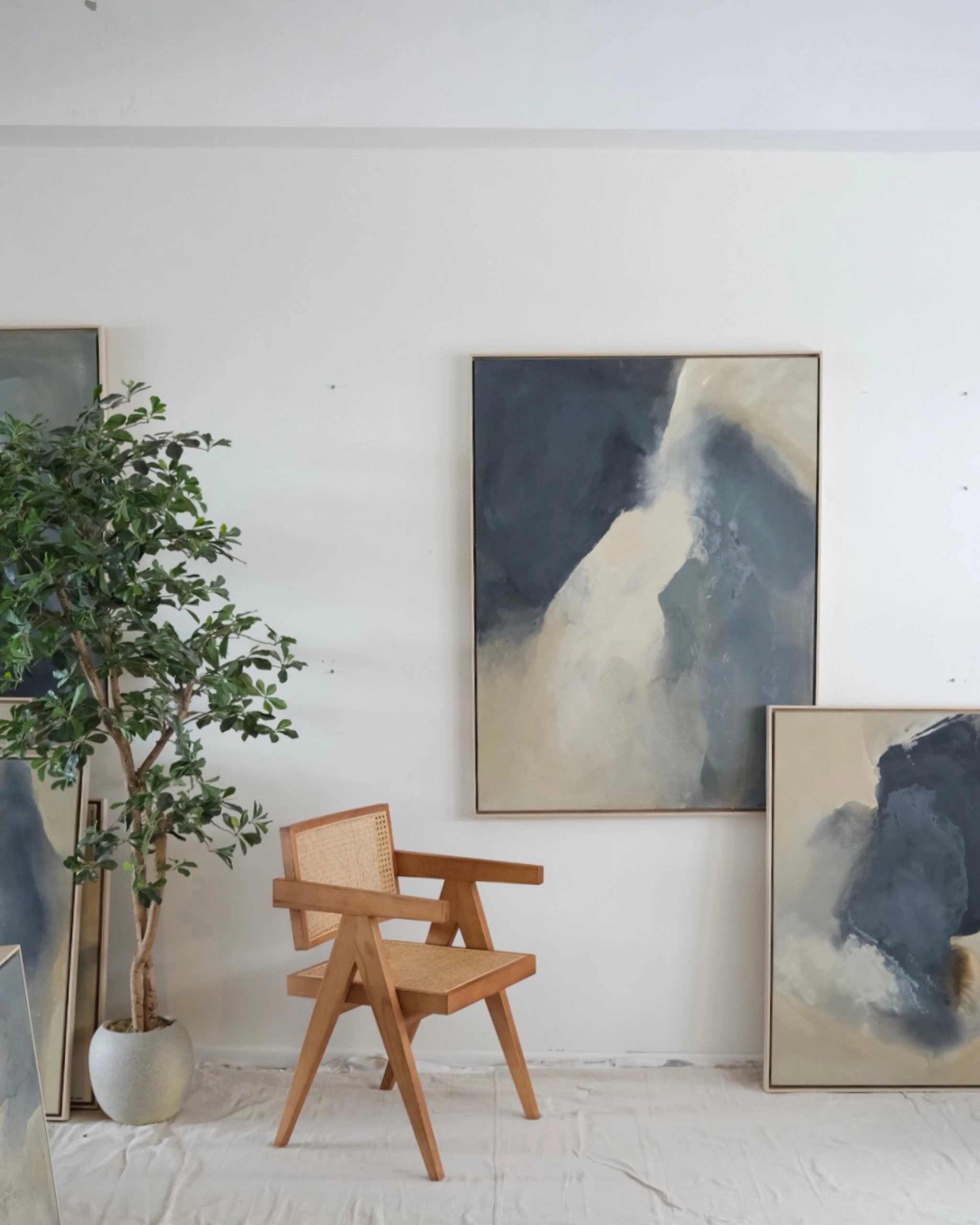
He’s wary of the tendency to approach their work through a narrow set of cultural expectations, looking for immediately recognizable symbols of Filipino identity before engaging with the art itself.
“I don’t think Filipino artists need to prove their identity by constantly illustrating it. Sometimes the most Filipino thing about a work is simply the consciousness from which it was made.”
He has little interest in turning his paintings into visual declarations of nationality. His influences include Western abstract expressionists, but these references are filtered through his own experience of living in the Philippines.
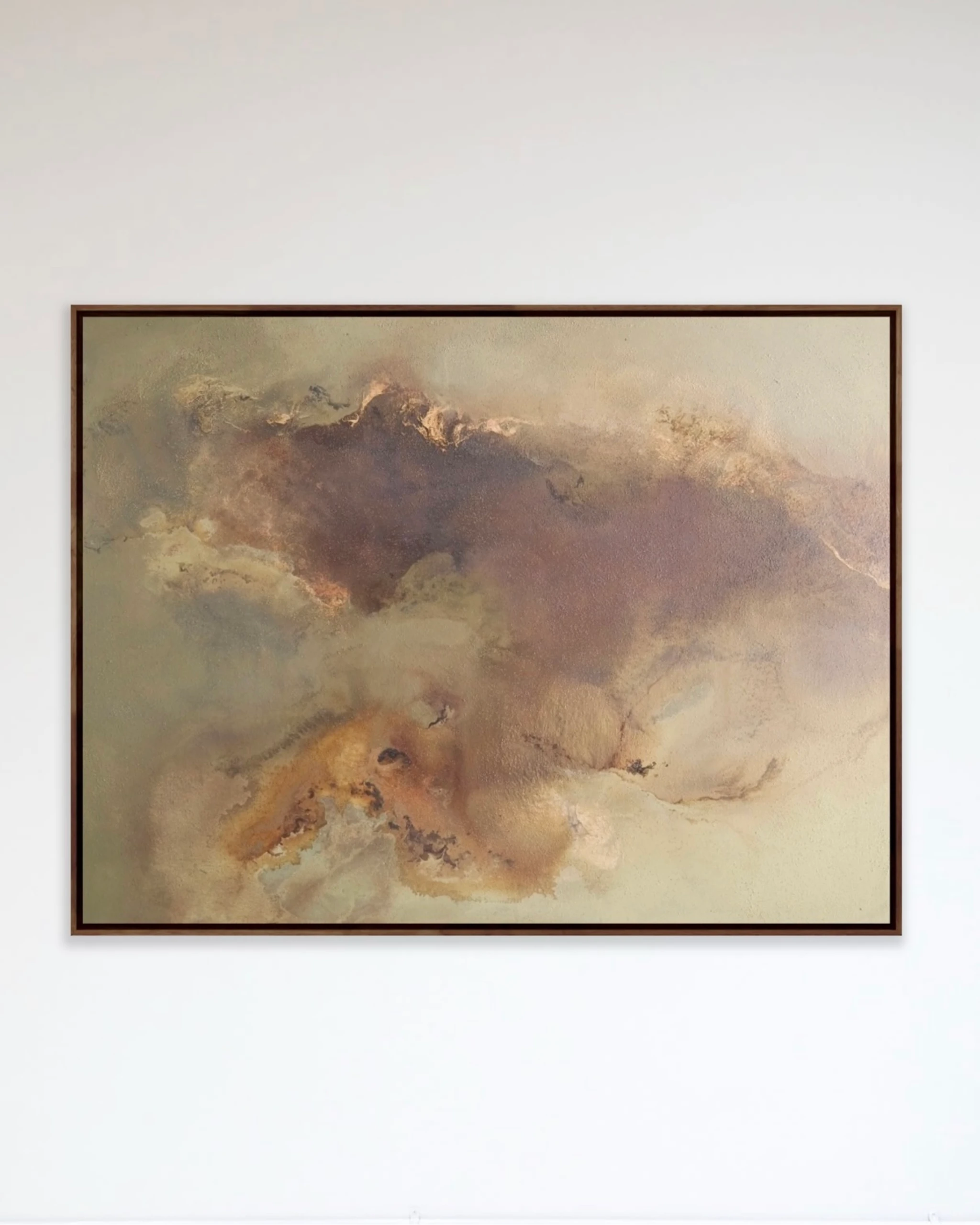
Tropical light, heavy rain, soil, vegetation, and the rapid cycles of growth and decay in the natural world all find their way into his sensibility. They needn’t appear as literal landscapes to leave their mark.
The art of doing absolutely nothing
Where does Kristian go from here? Rather than placing a feeling on the canvas and asking viewers to recognise it, he wants to create the conditions for them to discover something within themselves.
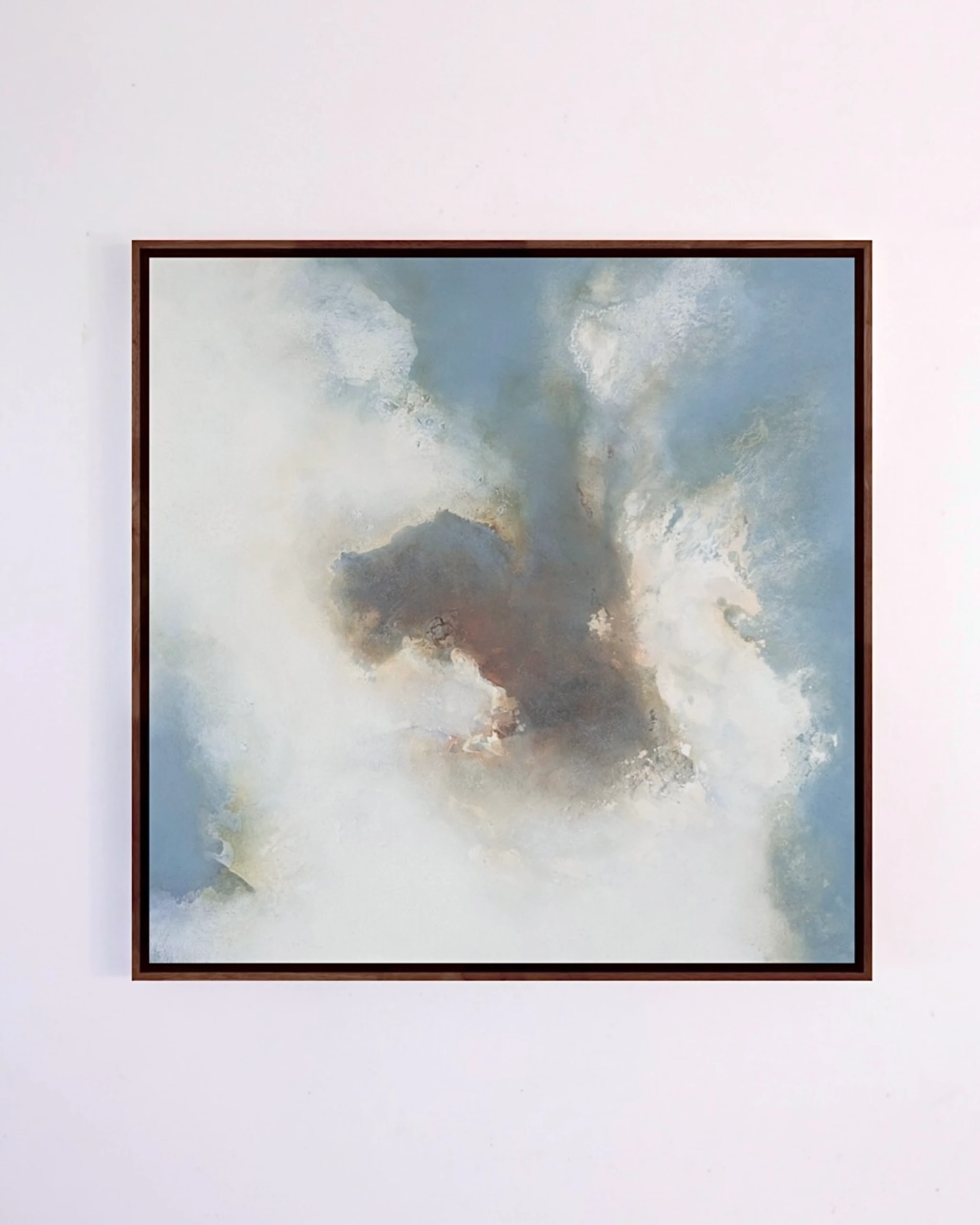
We live in an age that expects us to consume, react, produce, and move on, preferably before we have had the chance to think too hard about any of it. Attention is constantly being redirected, and even a moment can feel like an inconvenience waiting to be filled.
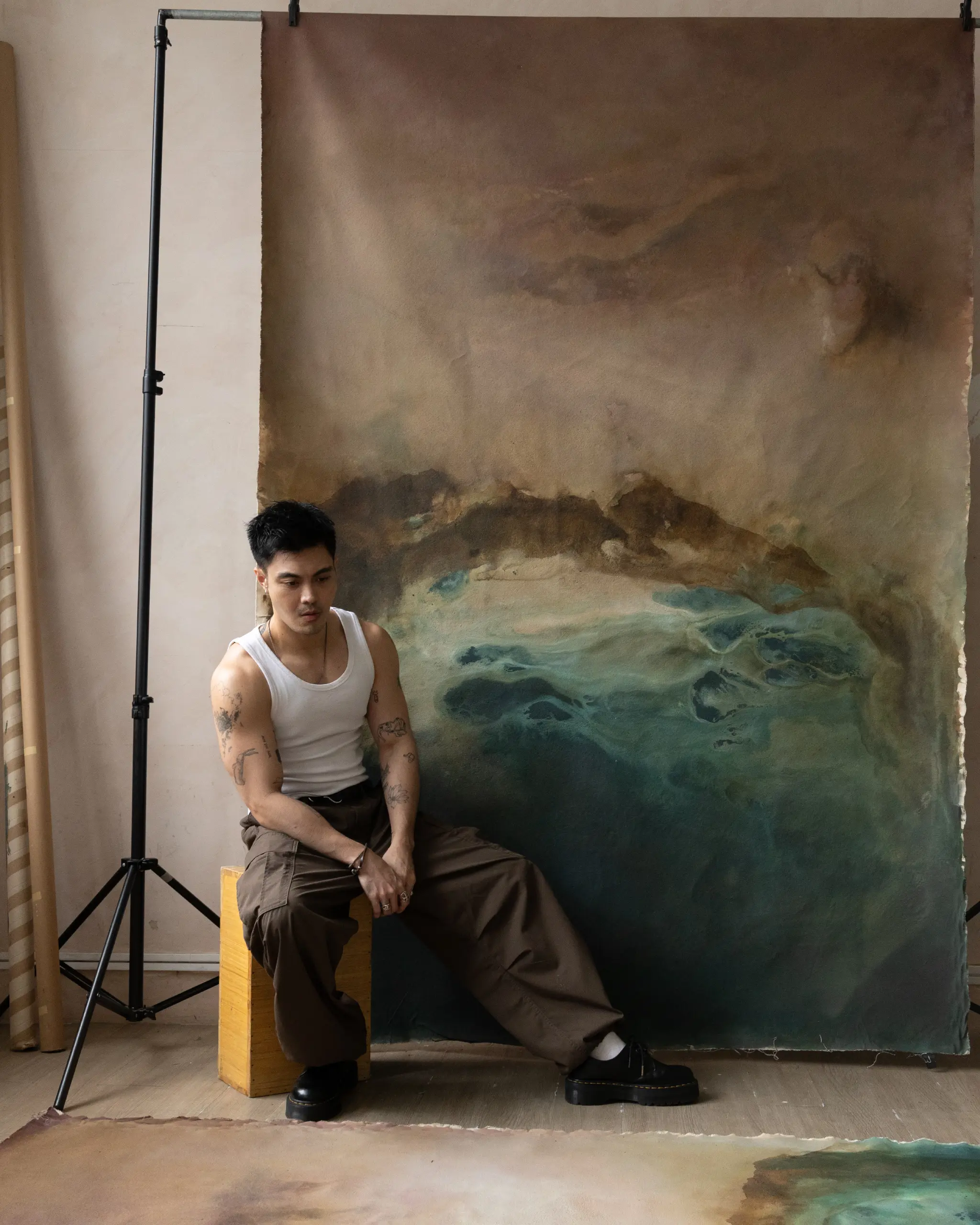
Painting offers Kristian an opportunity to resist that impulse. His work asks for time. You can stand in front of his paintings, notice something, change your mind, and notice something else. There’s no quiz at the end.
“I want the work to create a space where nothing is demanding anything from you for a few minutes. Where you can look, breathe, remember something, or perhaps feel something you don’t have a name for yet.”
For an artist who began painting because words couldn’t do everything he wanted them to, the next step isn’t to find a better explanation. The ambition is to create images that don’t dictate what a viewer should feel, but give them enough room to feel something for themselves.
Photography Belg Belgica
Frequently Asked Questions
Kristian Somera is a self-taught Filipino artist based in Metro Manila, as well as a nationally published writer and creative director. His abstract paintings explore spirituality, memory, human consciousness, and emotions that are difficult to express through language.
Kristian Somera works primarily in abstract expressionism, using watered-down acrylics and mixed media to create emotionally driven paintings. His practice is influenced by artists such as Mark Rothko, Helen Frankenthaler, Robert Motherwell, and Willem de Kooning.
Kristian draws inspiration from meditation, personal memories, spirituality, and the natural environment in the Philippines. Tropical light, rain, vegetation, and the cycles of growth and decay influence his work, often in subtle ways.
Kristian believes Filipino identity is already embedded in an artist’s perspective, without requiring obvious cultural symbols.
Kristian Somera aims to create paintings that encourage viewers to slow down and connect with their own emotions. Rather than prescribing a specific interpretation, he leaves space for personal discovery and embraces the uncertainty that comes with abstract art.
Recommended Video