
Simone Bellotti Softens Jil Sander’s Minimalism for FW26
The designer tempered the house’s signature minimalism, proposing a version of purity that feels lived in rather than pristine




A shift in atmosphere
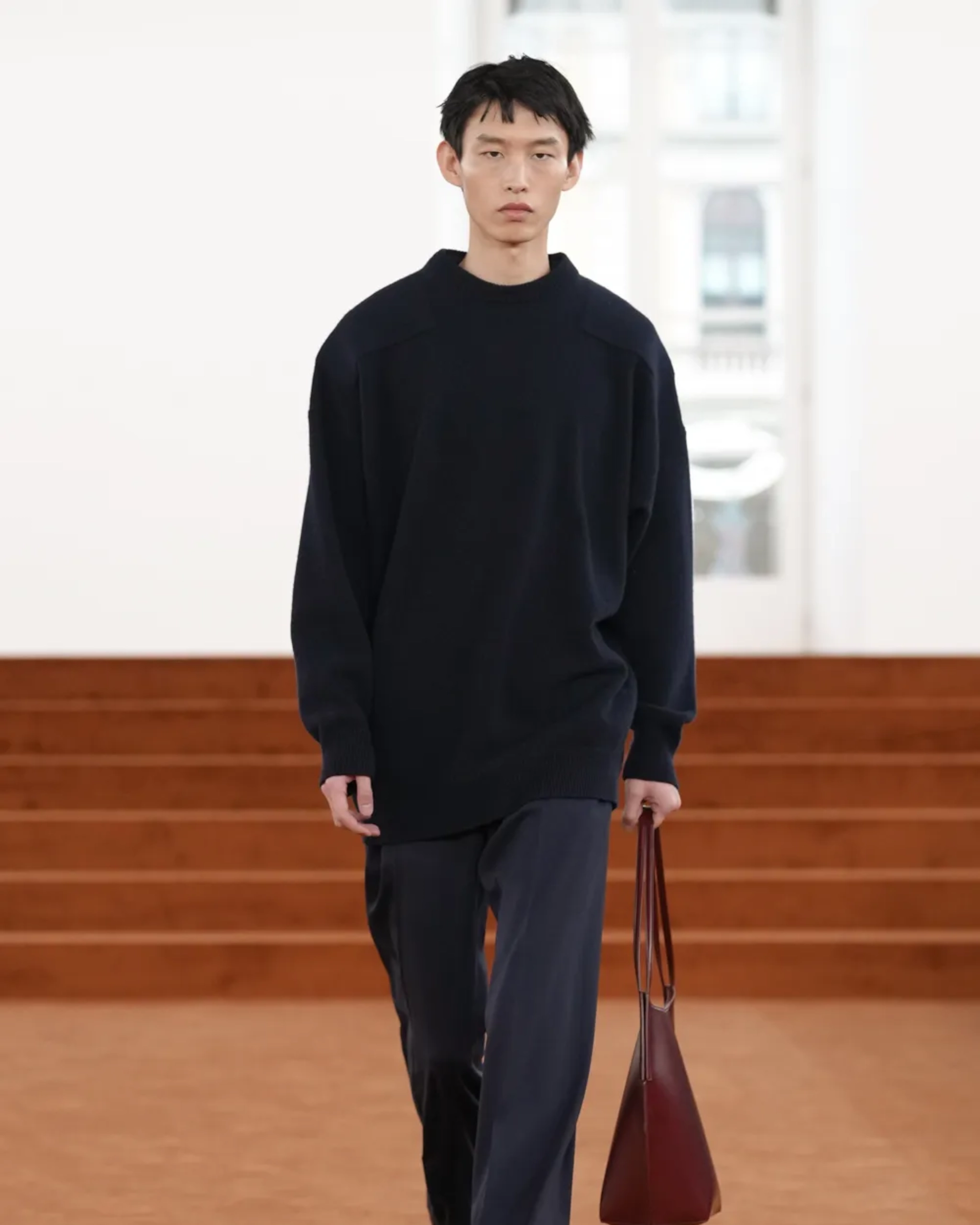
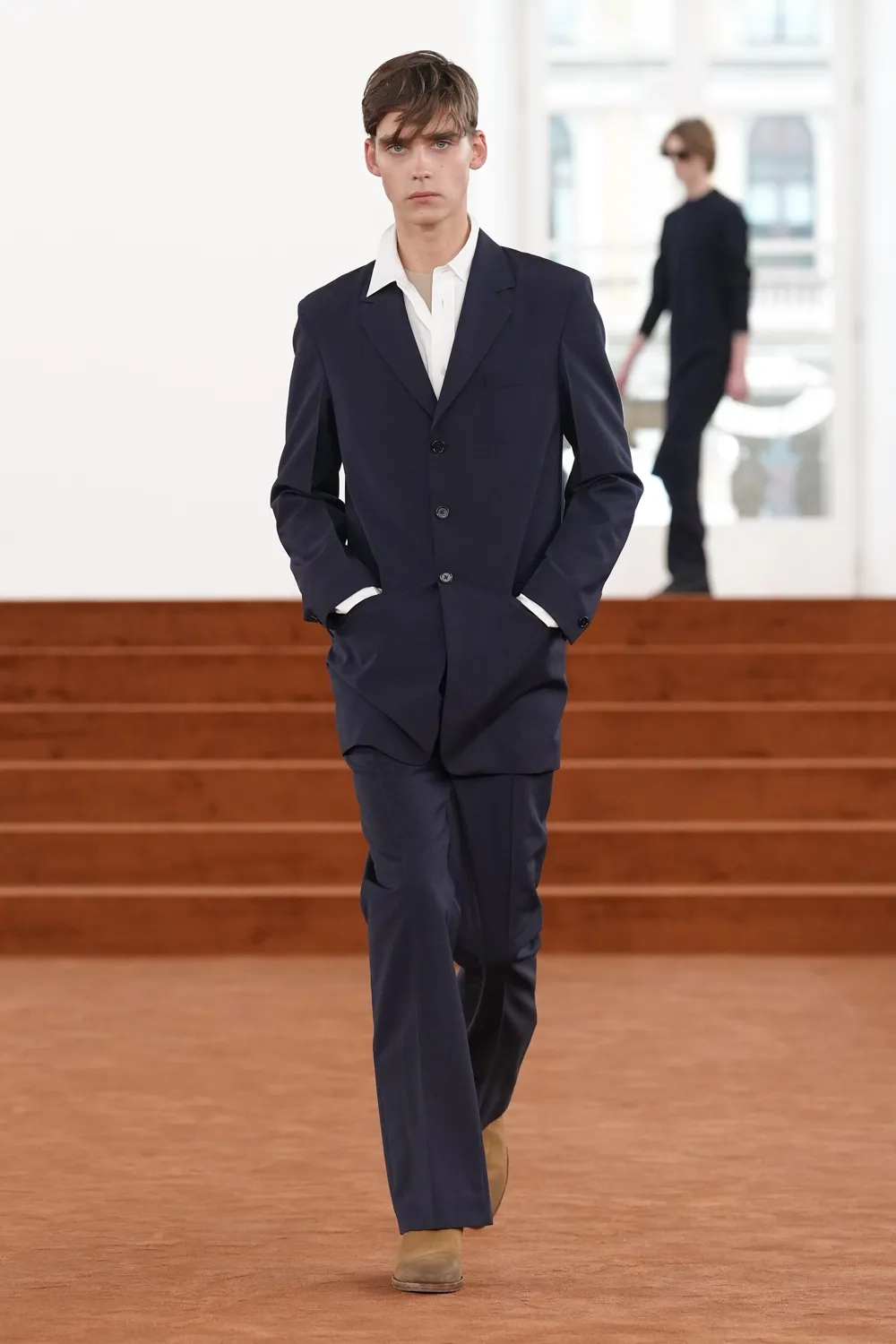
For FW 2026, Simone Bellotti shifted Jil Sander away from the strict purism of his debut and toward something rougher. The change was visible before a single look appeared. The runway was covered in a vast rust-brown carpet and lit with harsh fluorescent tubes, evoking a 1970s rec room or a dive bar rather than the pristine spaces typically associated with the house.
Backstage, Simone pointed to his reference: Café Lehmitz, the 1978 book by Swedish photographer Anders Petersen documenting the regulars of a Hamburg bar in the 1960s.
Homelier minimalism
The collection translated that idea into what could be described as a homelier minimalism. The house codes remained intact, but they were unsettled. Tailoring, long a pillar of the brand, was treated with a freer hand.
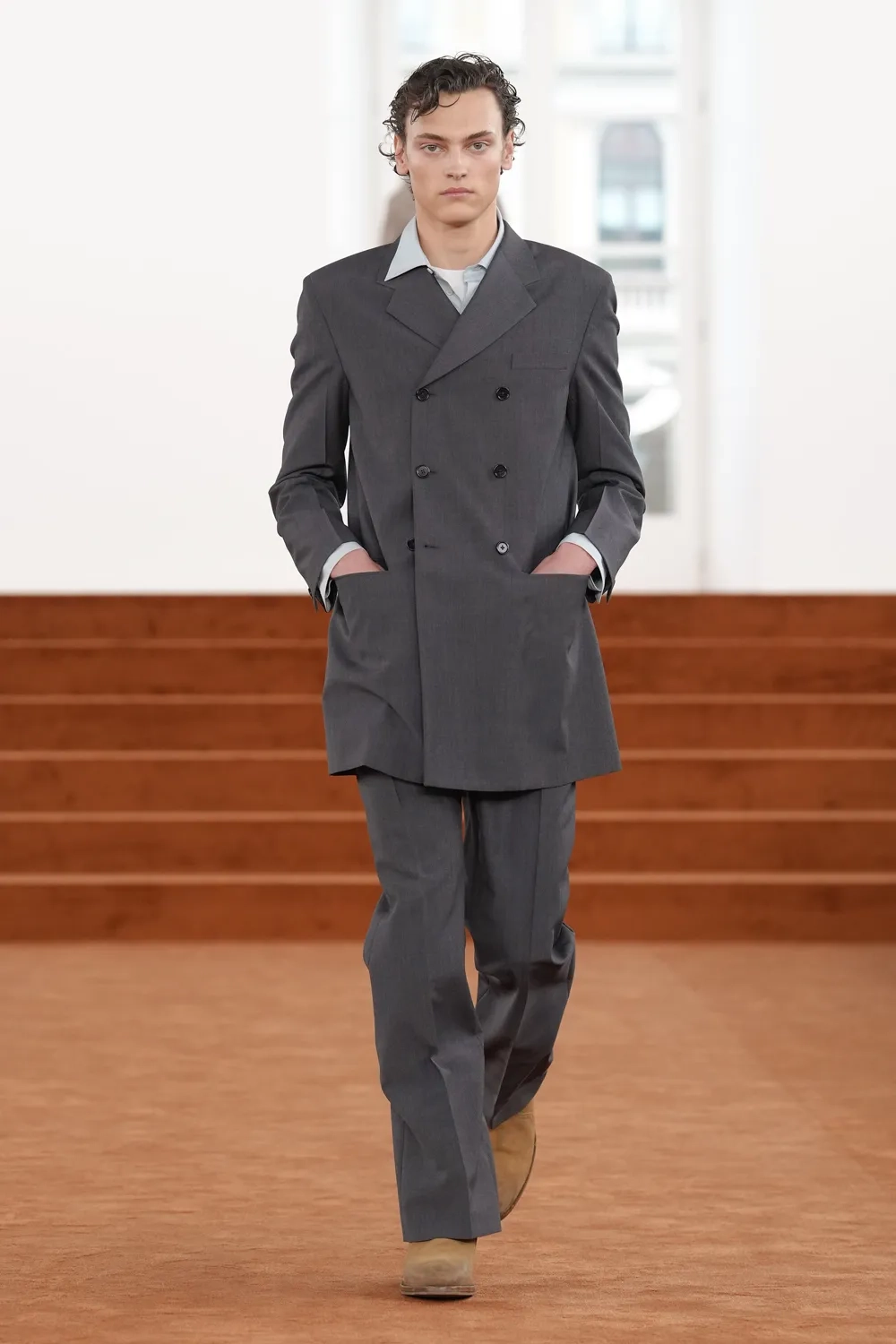
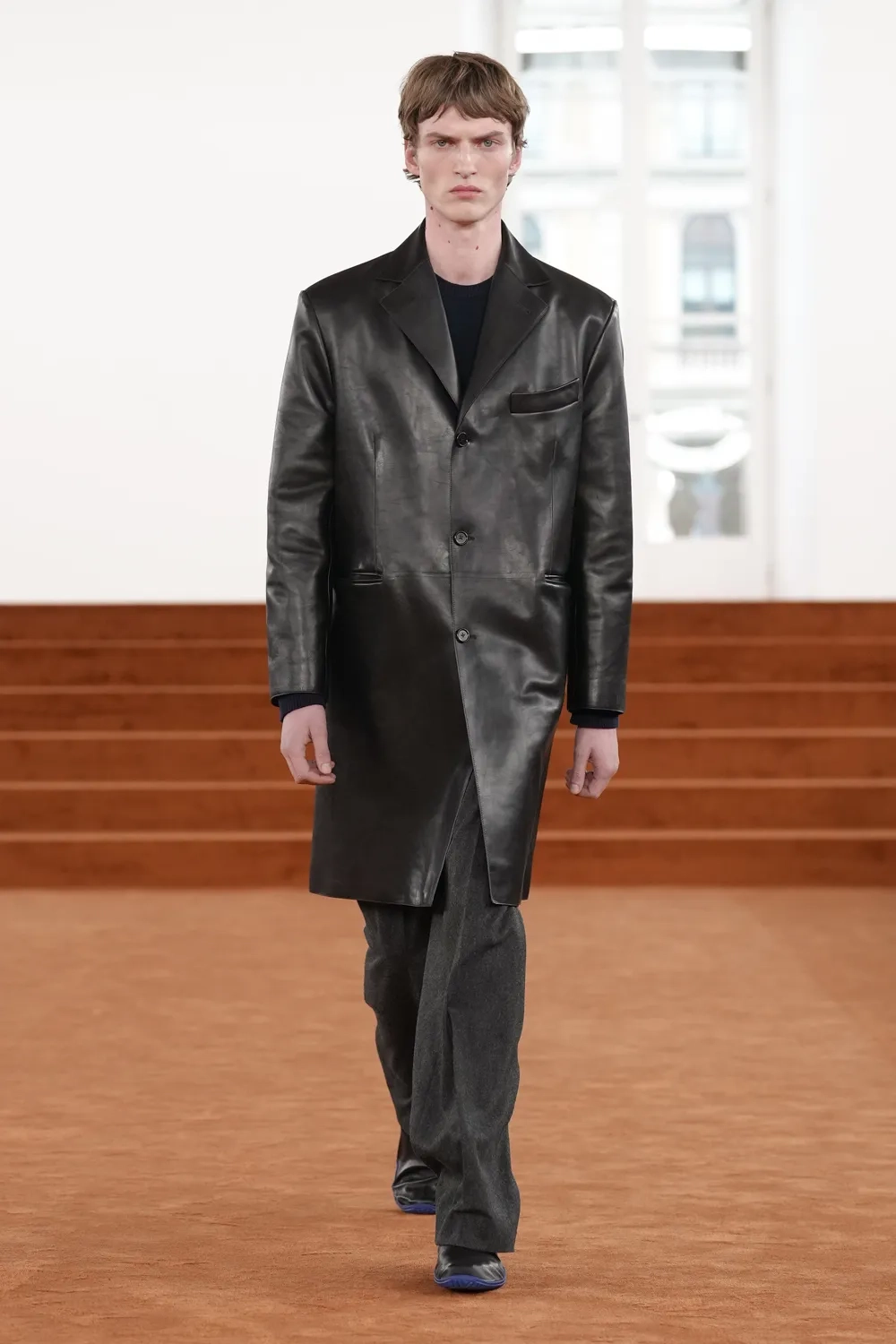
Suit jackets were cut overly long or shrunken at the back so they pushed outward at odd angles. Shoulders were narrowed and slightly hunched. Some coats appeared to have a lack of fabric, creating a sunken chest or wrinkled midriff effect.
In contrast, other outerwear leaned toward volume. Wool coats featured generous collars that framed the face, while seam allowances at the back extended dramatically, almost like abbreviated trains. The push and pull between austerity and excess gave the lineup a restless energy.
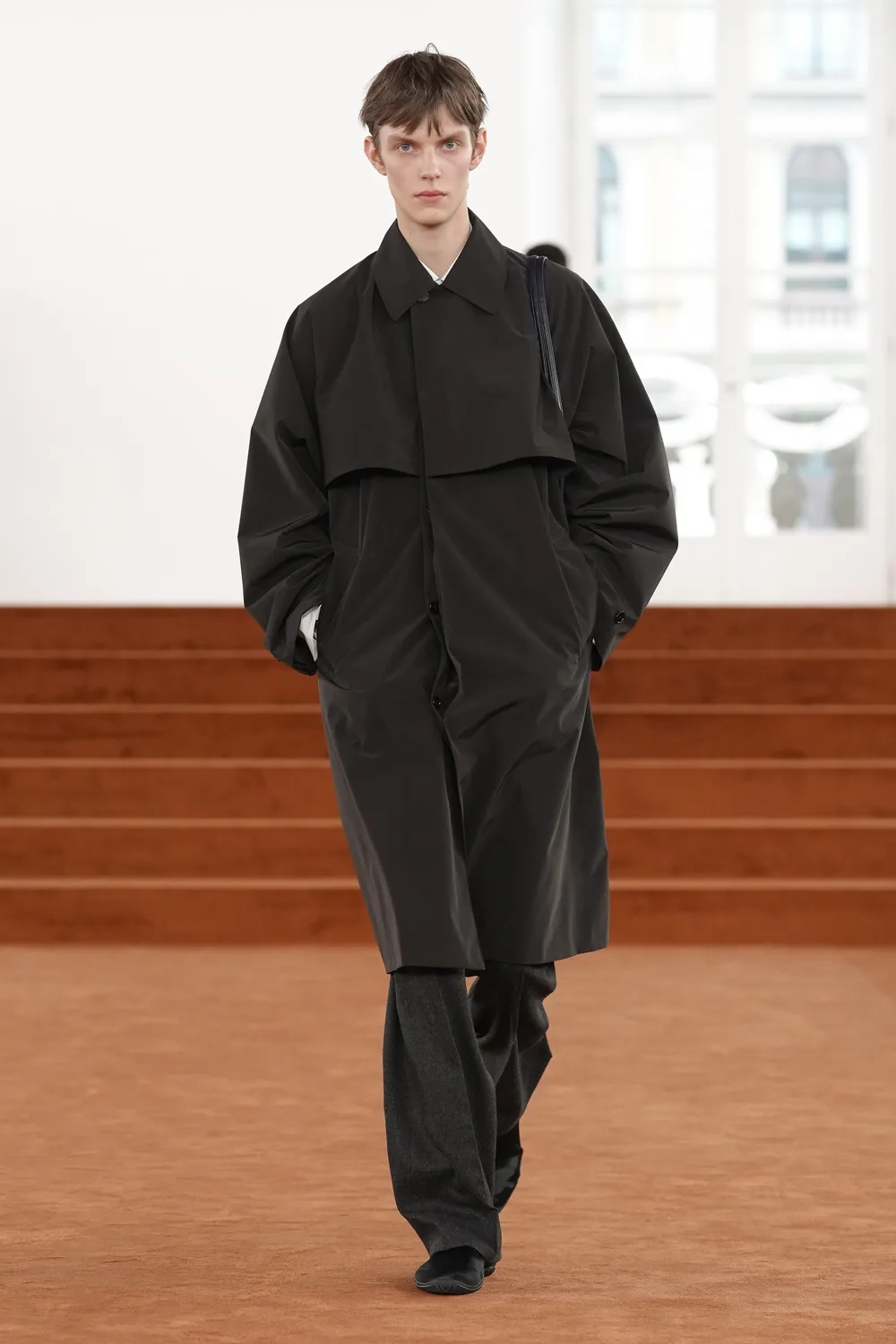

The brand’s reputation for sleekness was not abandoned. Sleek black leather coats and blazers reaffirmed Jil Sander’s authority in that category. But Simone complicated the formula through styling.
Imperfection as evolution
If his debut reaffirmed Jil Sander’s purity, Fall/Winter 2026 proposed an evolution. By introducing grit, imbalance, and tactile references to domestic life, Simone suggested that minimalism need not be immaculate to be modern.
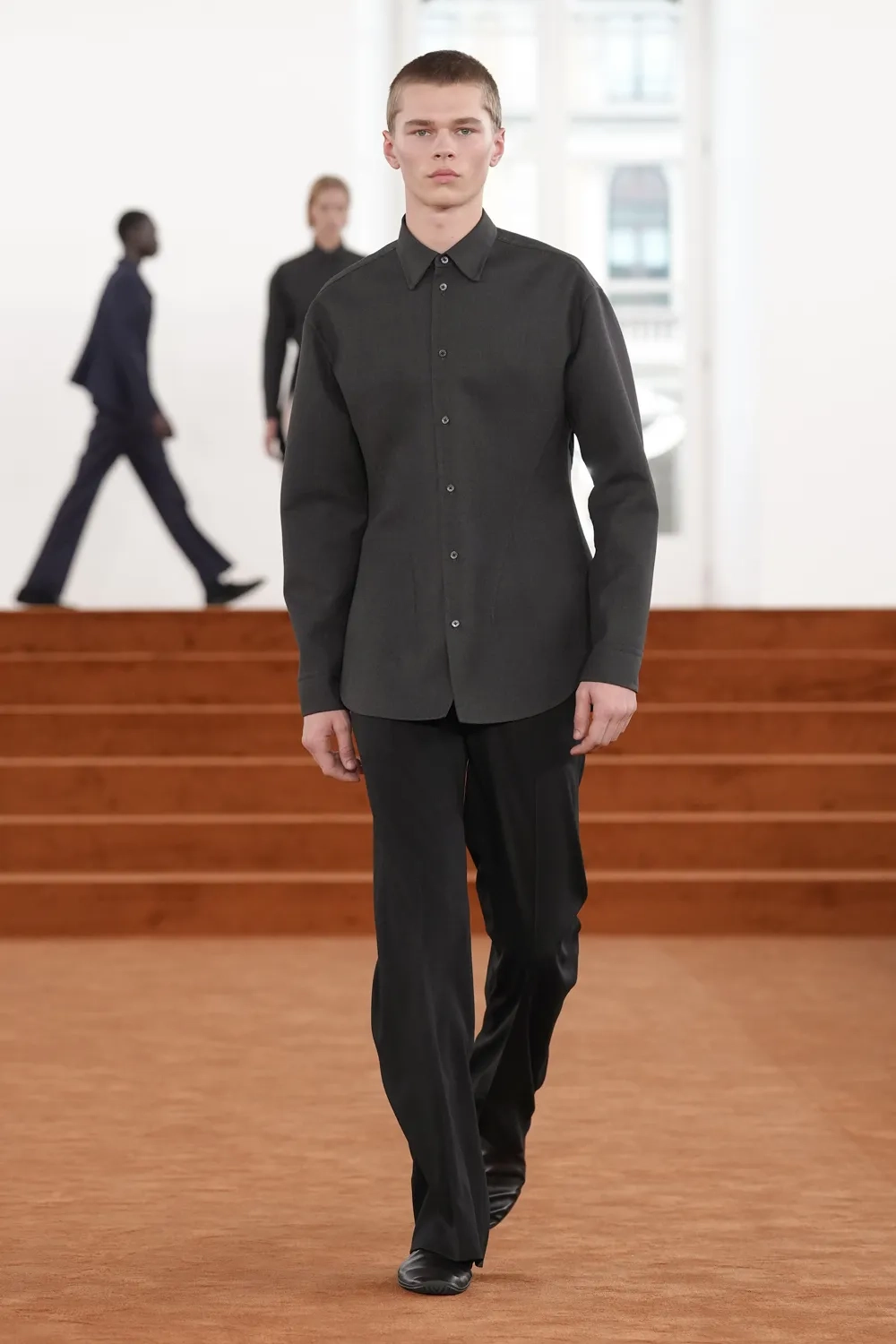
In the unforgiving light of the set, the clothes appeared less remote and more inhabited. The result was a collection that respected the house’s discipline while allowing for imperfection, and in doing so, made its minimalism feel newly alive.
Frequently Asked Questions
Jil Sander FW26, designed by Simone Bellotti, explores a “homelier” minimalism by introducing grit, imperfection, and domestic textures into the brand’s typically clean aesthetic.
Simone Bellotti is the creative director of Jil Sander. For FW26, he experimented with tailoring, combining unusual proportions, uneven fits, and layered textures to make the brand’s minimalism feel more lived in.
The collection balances sleek staples like black leather coats and precise blazers with textured fabrics, scuffed boots, and slightly ragged details, creating a contrast between perfection and imperfection.
The runway, covered in a rust-brown carpet and lit with fluorescent tubes, along with references to Anders Petersen’s book Café Lehmitz, created a gritty atmosphere that reflects Simone Bellotti’s focus on imperfection and character.

Recommended Video