In This Watch Movement, Horology Meets the Art of Travel
These new timepieces are refined expressions of an innovative movement that spins time—literally




A convergence of time
Back in 2007, veteran watchmakers Michel Navas and Enrico Barbasini, founders of timepiece workshop La Fabrique du Temps, were thinking of new ways to tell time. Having spent decades under Switzerland’s most prestigious artisans, the pair sought to create more innovative movements.
Their efforts led to the Spin Time, inspired by the overhead flap displays that show timetables in airports and railway stations. It was a three-dimensional take on the jumping hours complication, where an hour hand or disc snaps to the next number once the minute hand completes a cycle.
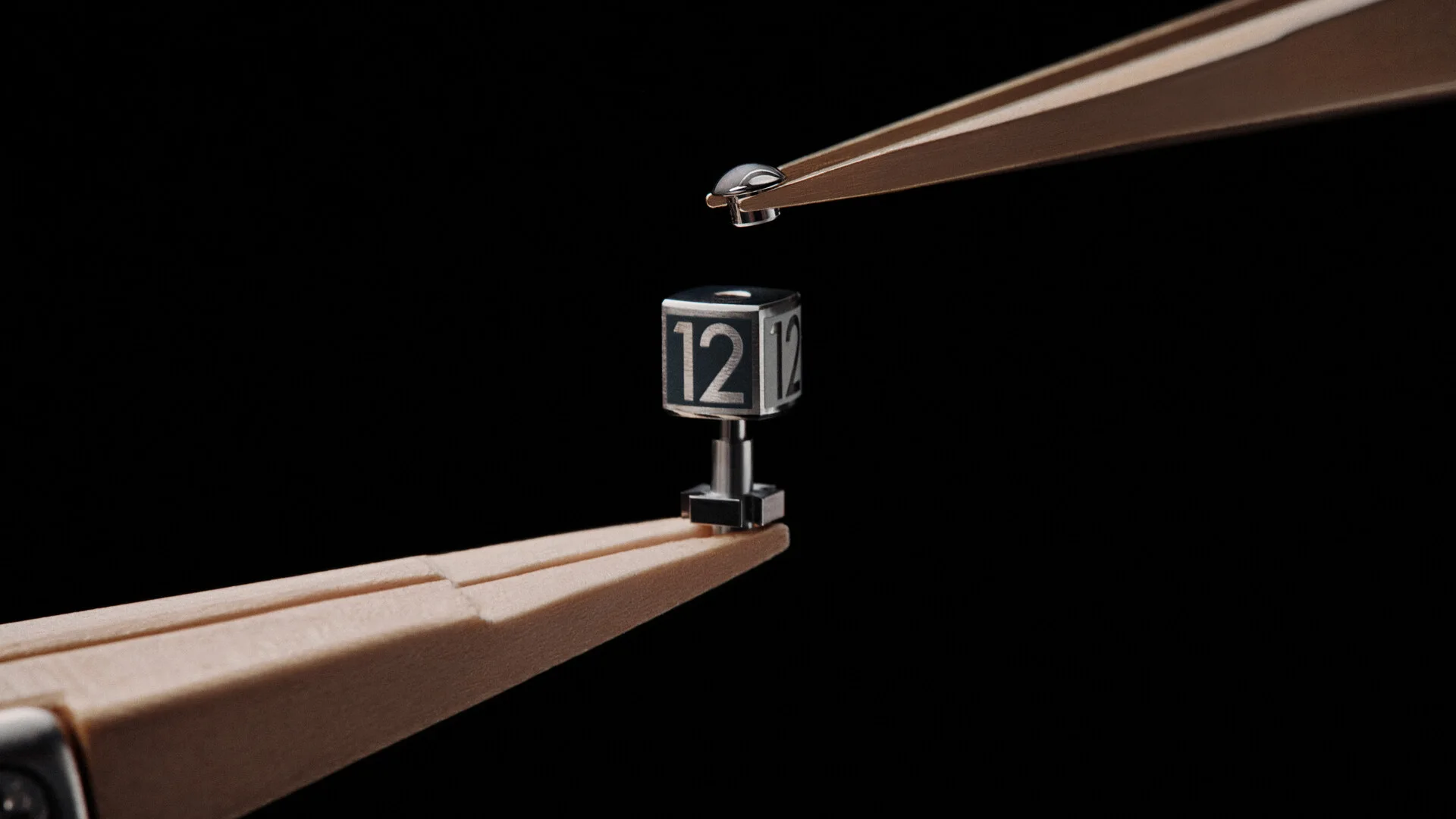
With the Spin Time, rotating cubes tell time by a difference in color—all other numbers except the current hour bear the same hue. Once sixty minutes elapses, the cube telling the previous hour spins to blend with the others, while the other one representing the current time rotates to show the new hour.
It was also around this time that Louis Vuitton had been searching for a new watch complication that could define and expand its high watchmaking line, or Haute Horlogerie. The Spin Time proved to be a seamless match, as its travel-inspired origins ran in line with the French maison’s ‘Art of Travel’ philosophy, expressed through practical yet elegant luggage, bags, and accessories.
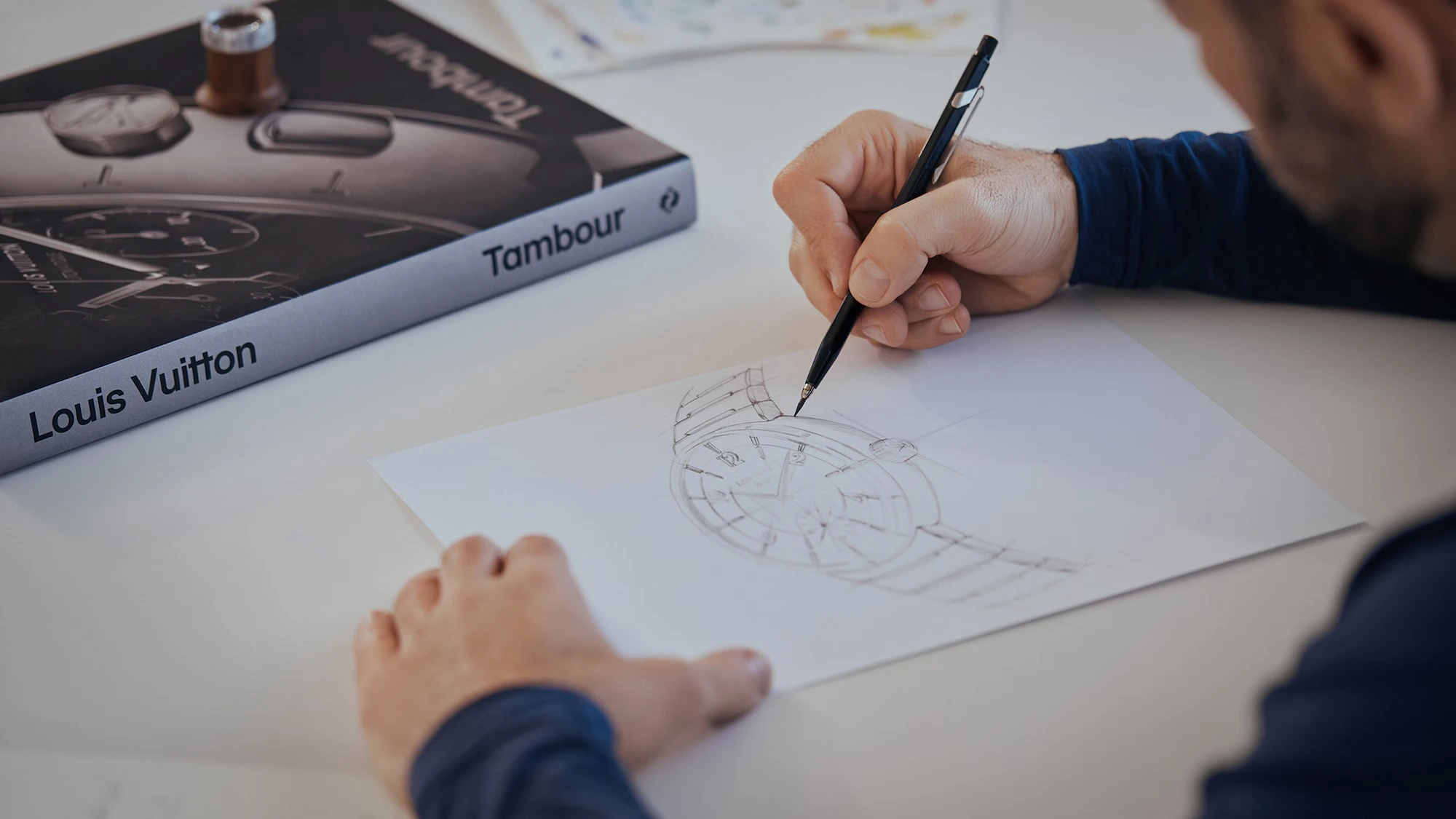
Michel and Enrico presented their complication to Louis Vuitton, and the Spin Time debuted in 2009 under the Tambour line, a collection characterized by its unique, drum-shaped case. This further led to the integration of La Fabrique du Temps into Louis Vuitton in 2011, marking the beginnings of the brand’s watchmaking in Geneva.
The Spin Time, reimagined
This year, the story of the complication is reinterpreted in the Tambour Taiko Spin Time, a new collection of limited-edition watches, developed entirely from the ground up.
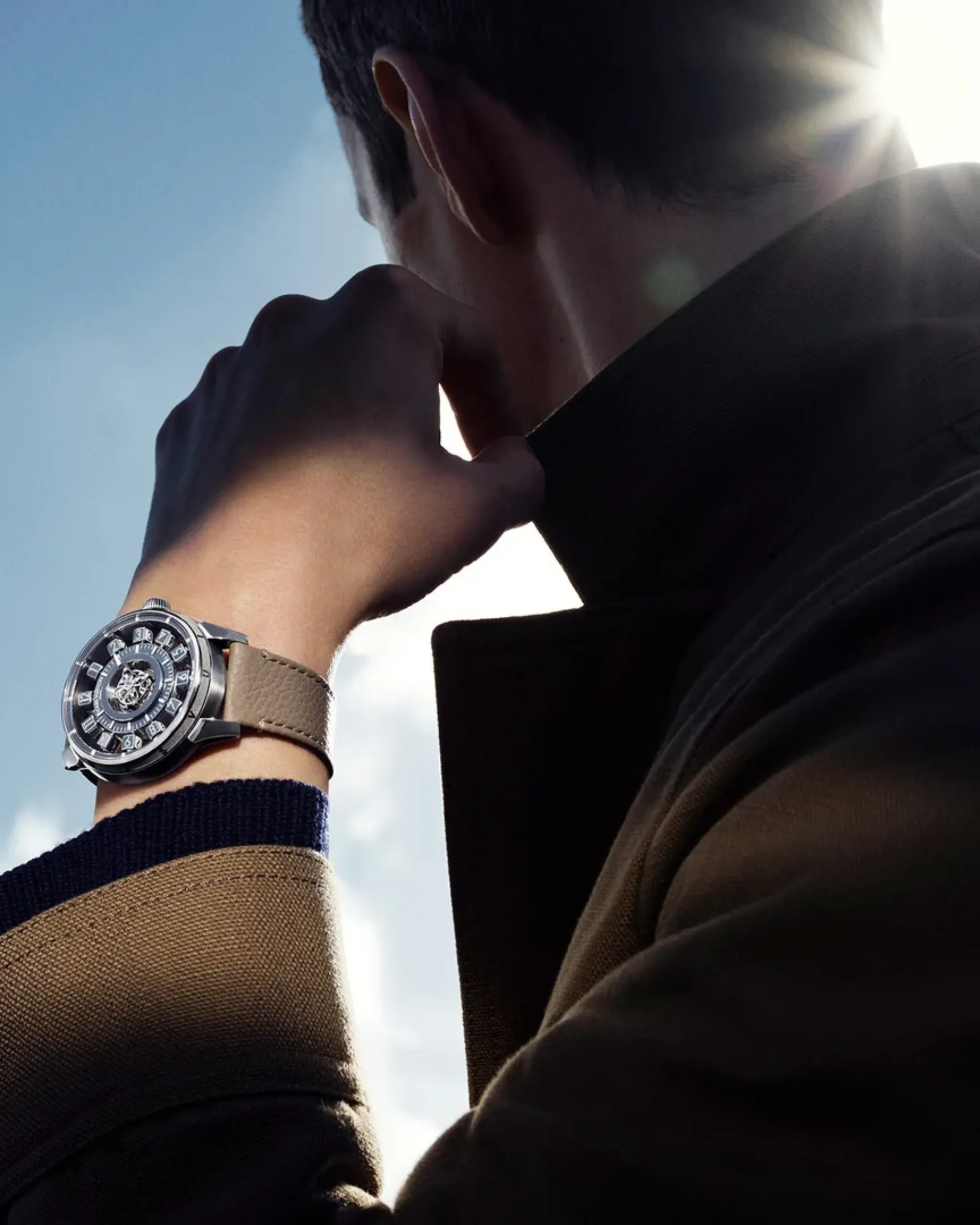
Still centered on the three-dimensional rotating cubes display, the collection debuts in 39.5 mm and 42.5 mm sizes, both sharing the same Tambour Taiko case. The smaller version has a solid case back, while the bigger one has a display back that reveals the watch’s interiors.
All models are presented in 18-karat white gold cases, with dials dressed in a dolphin gray hue. The cube faces are also finished in the same gray color, except for the face that indicates the current hour, which is finished in a light gray.
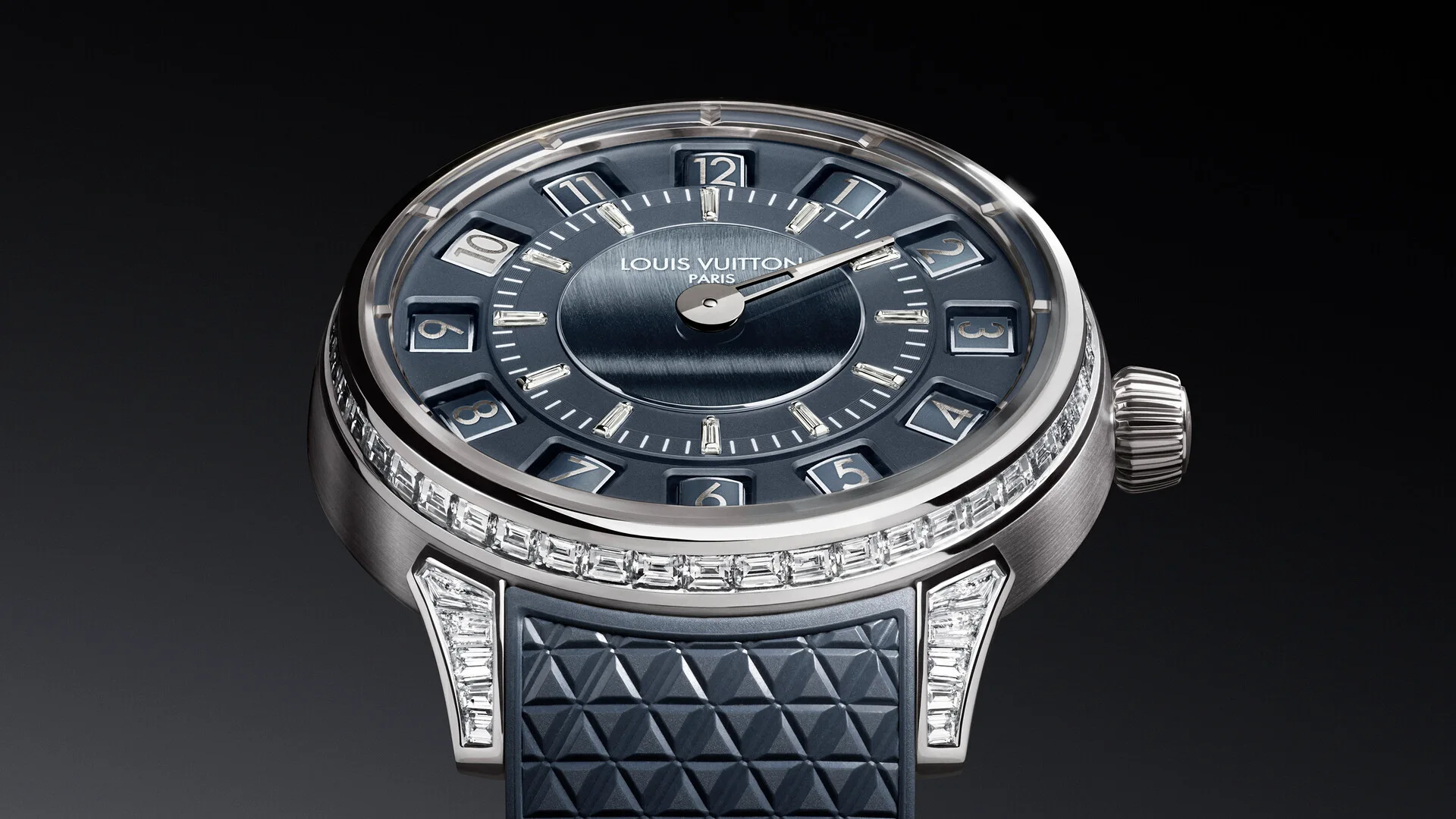
Named after taiko, the drums used for ceremonial occasions in Japan, the new case is a more sculpted, refined, and sleek version of the Tambour case launched in 2023. The stylistic elements of its predecessor remain: the indices, hands, typography, and even the historically-inspired “Fab. En Suisse” label.
And while past generations of the Spin Time utilized cubes with straight edges, the Tambour Taiko Spin Time employs gently curved faces, giving each one a cushion-shaped profile.
The Spin Time collection
Tambour Taiko Spin Time 39.5 mm
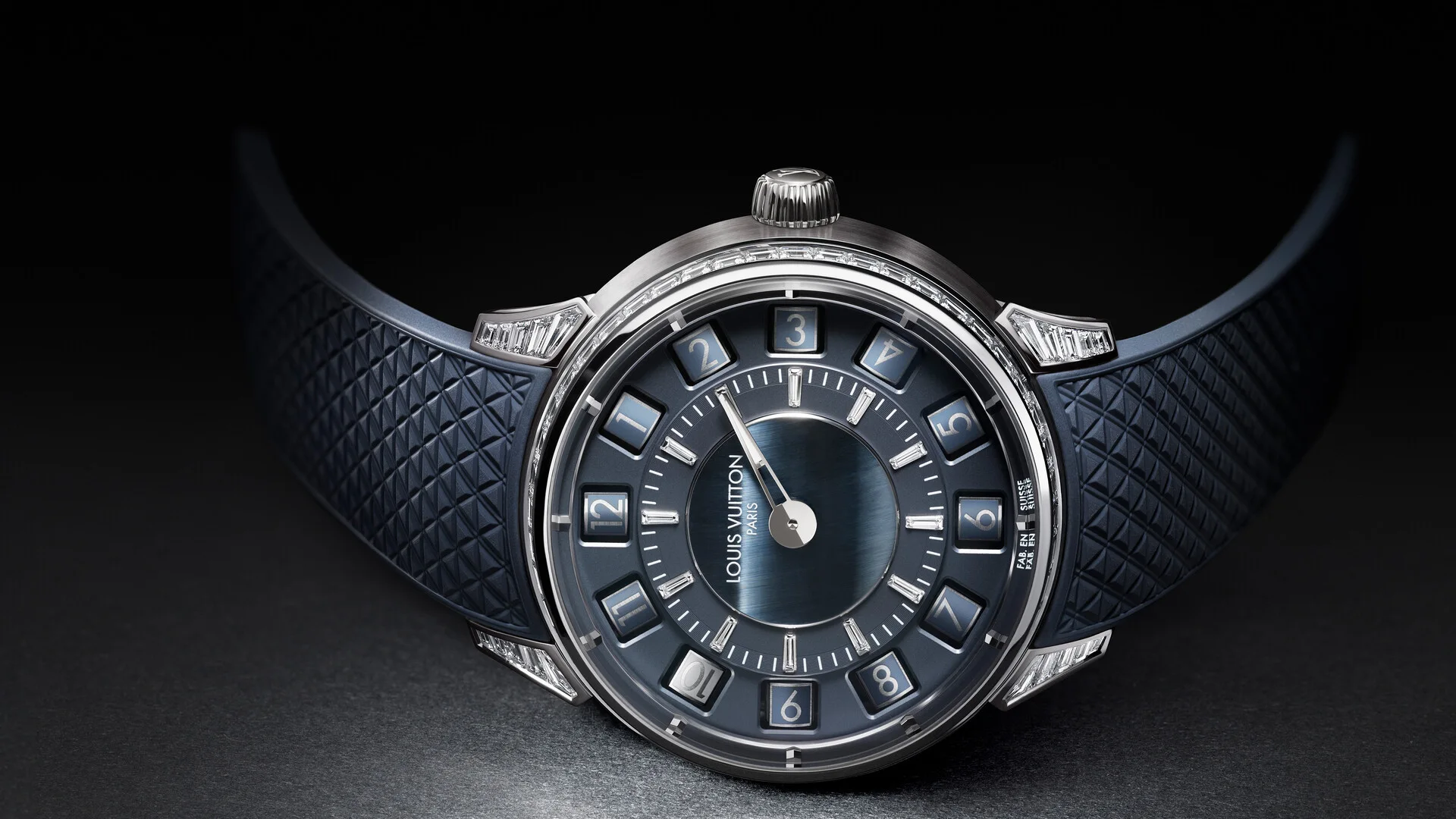
The purest embodiment of the complication is the Tambour Taiko Spin Time 39.5 mm, conceived as the most versatile piece from the collection. With its 18k white gold case water-resistant up to 100m, the watch is complemented by an integrated waterproof rubber strap, giving it a sporty chic style.
Tambour Taiko Spin Time Air 42.5mm
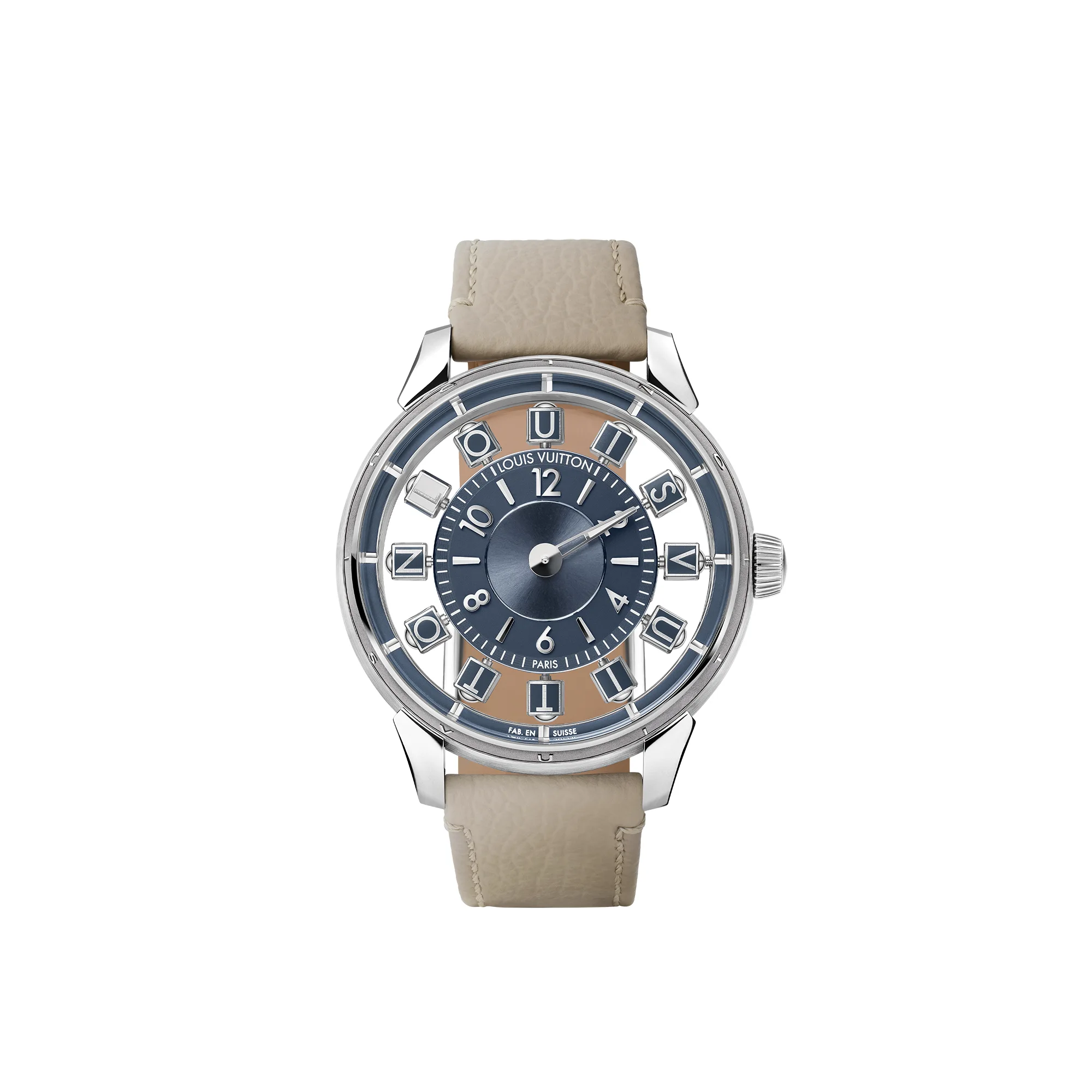
With a more spacious case at 42.5 mm, the Tambour Taiko Spin Time Air has a “floating” display with each of its cubes seemingly levitating within the case, while the movement is suspended right in the middle.
Tambour Taiko Spin Time Air Antipode
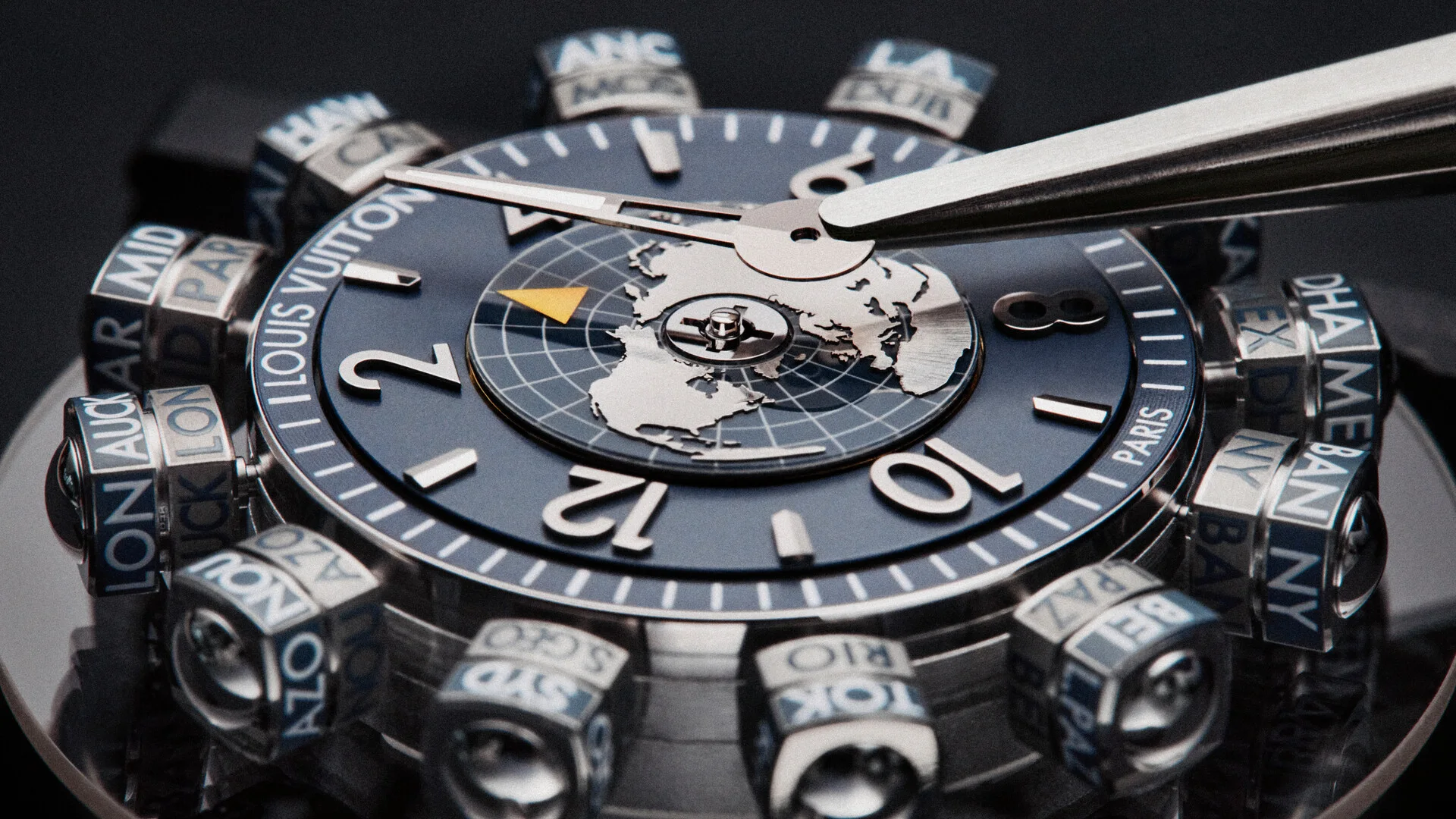
The Tambour Taiko Spin Time Air Antipode combines the ‘levitating’ jumping hours mechanism with a world time complication, accommodating 24 time zones with a day-night indication.
Local time is shown via the minute hand and the yellow pointer for the hours, while world time is told by the 12 cubes of the Spin Time mechanism that encircle the map disc. The hour numeral adjacent to each cube indicates the time in two places, while the background color of each city signifies whether it’s day or night in the area.
The pairings are exactly 12 time zones away from each other. For instance, Los Angeles and Dubai are 12 hours apart. As a result, the two cities occupy the same cube, reflecting the fact that midnight in Los Angeles is midday in Dubai.
The Tambour Taiko Spin Time Air Tourbillon
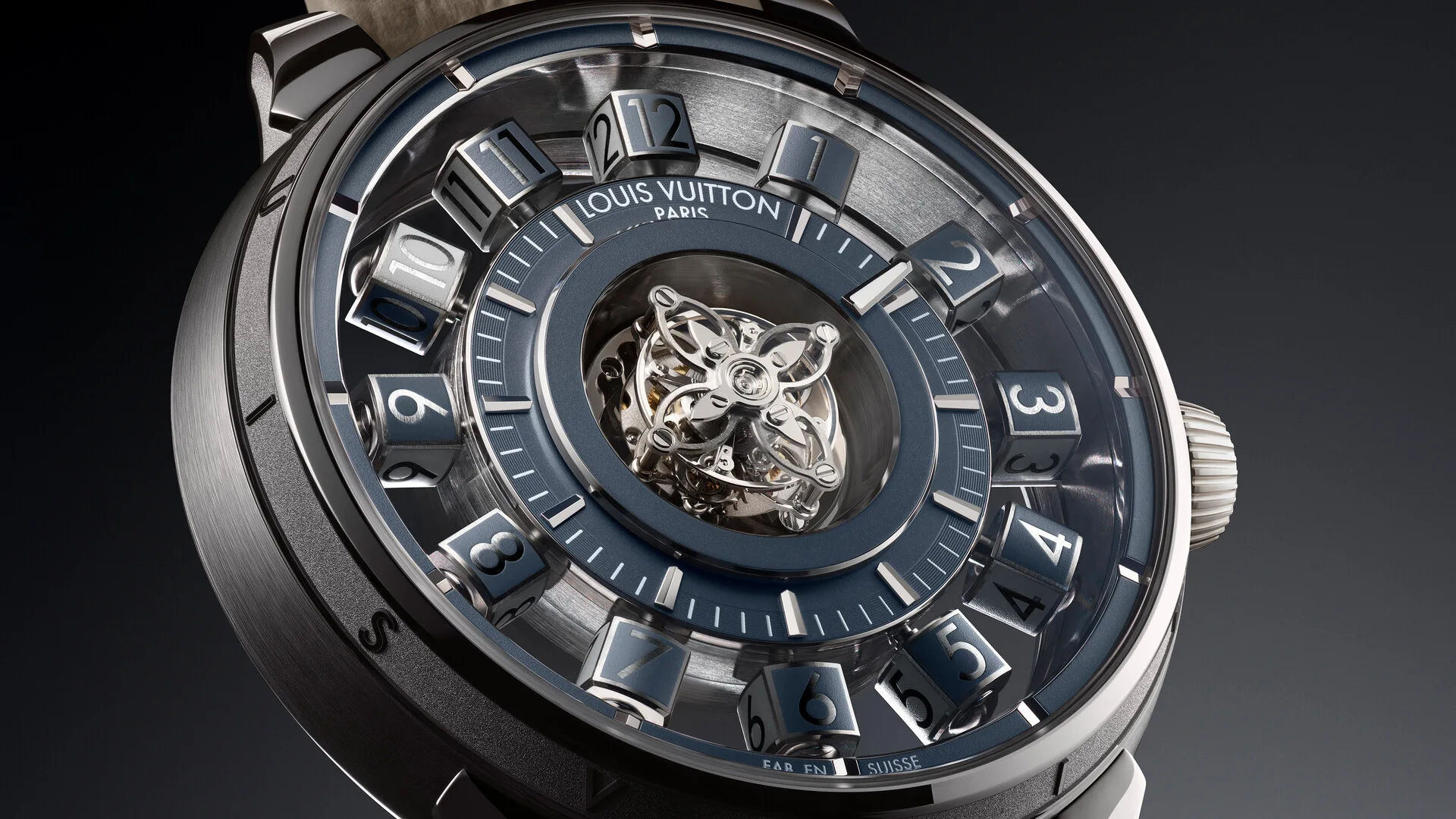
The Tambour Taiko Spin Time Air Tourbillon was a significant challenge for the movement development workshop of La Fabrique du Temps, as they had to accommodate both the Tambour Taiko Spin Time Air and Air Tourbillon mechanisms within the tight constraints of the case.
In the center of the dial is a flying tourbillon performing one revolution per minute. Made of steel and finished entirely by hand on all surfaces, the tourbillon cage takes the form of a Monogram flower.
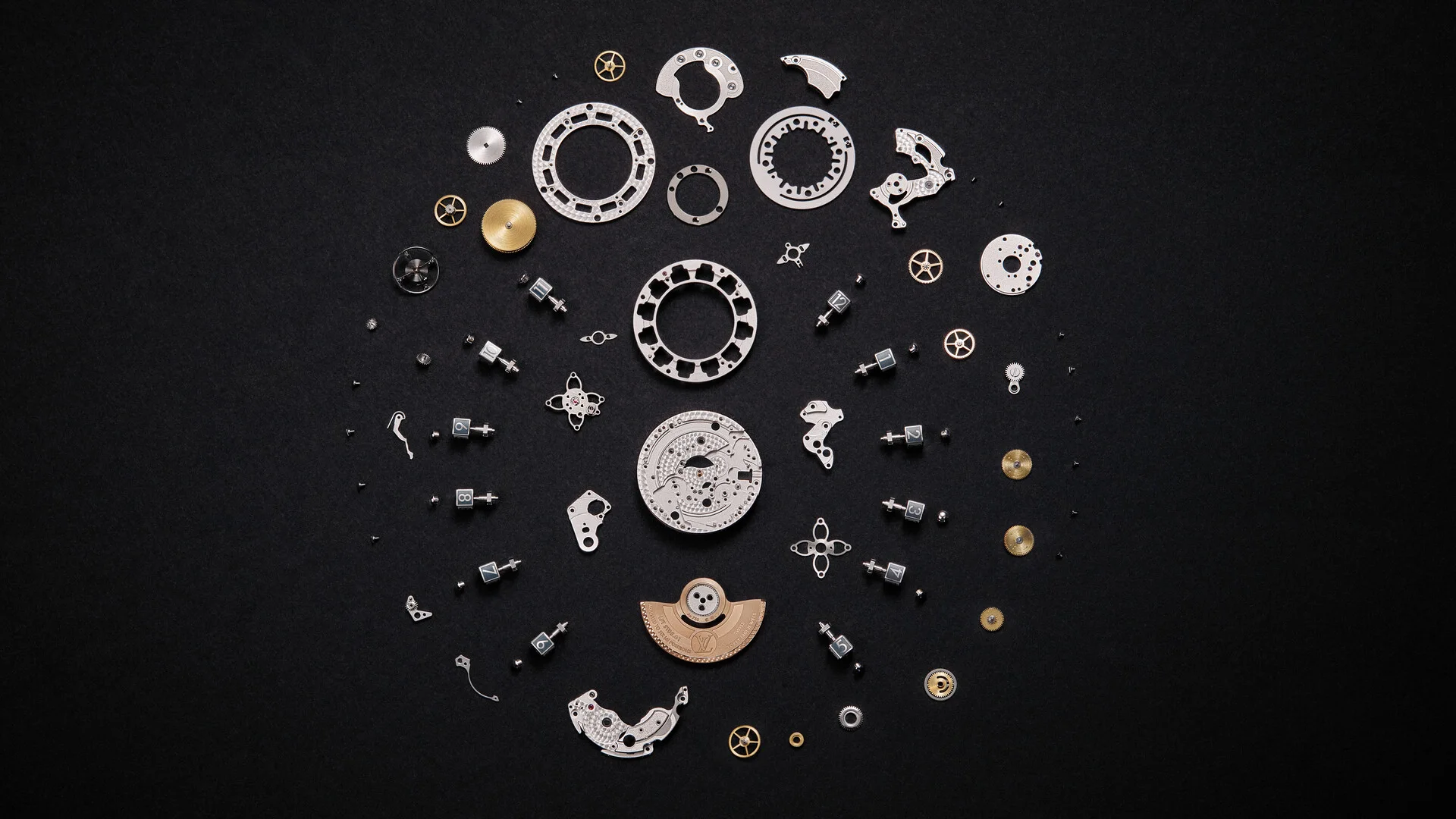
The Tambour Taiko Spin Time represents a milestone for Louis Vuitton and La Fabrique du Temps—an expression of their desire to not only grow the Maison’s watchmaking division, but also to exceed the limits of time with more intricate complications.
Photos courtesy Louis Vuitton