Wolves of Wall Street
A new era on nine-to-five style is unfolding. Today’s finance bros are rewriting the dress code, reviving retro suiting that speaks more to confidence than conformity.
It’s a rebellion in tailoring, where the once-rigid lines of corporate fashion give way to the expressive, the nostalgic, and the unapologetically bold




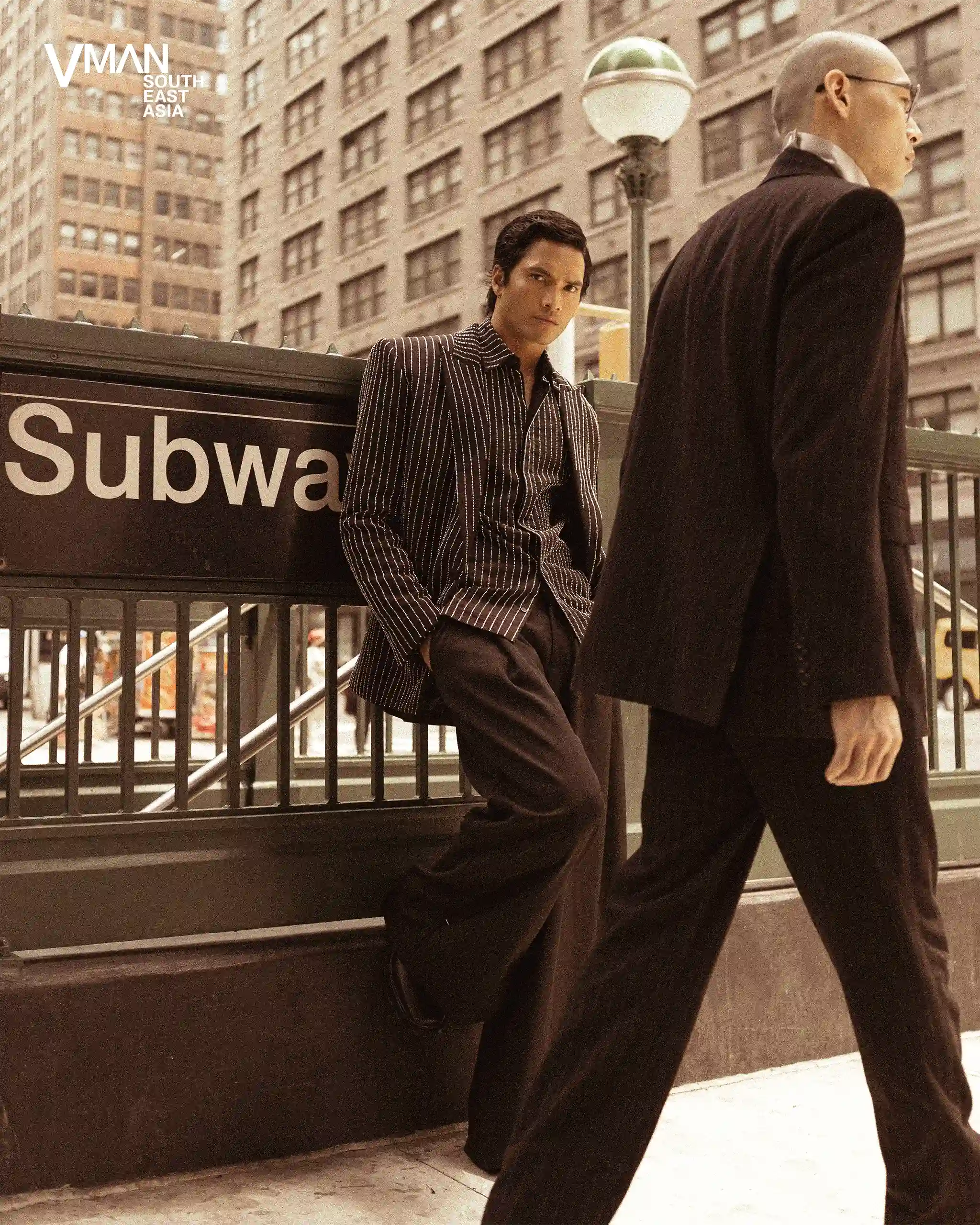
Retro-inspired suits are redefining Wall Street style
Once limited to the monotony of navy suits and understated striped ties, the corporate wardrobe is undergoing a transformation. Today’s finance bros refuse to disappear into the gray sameness of cubicles and trading floors. In their place comes a revival of retro suiting that favors confidence over conformity.
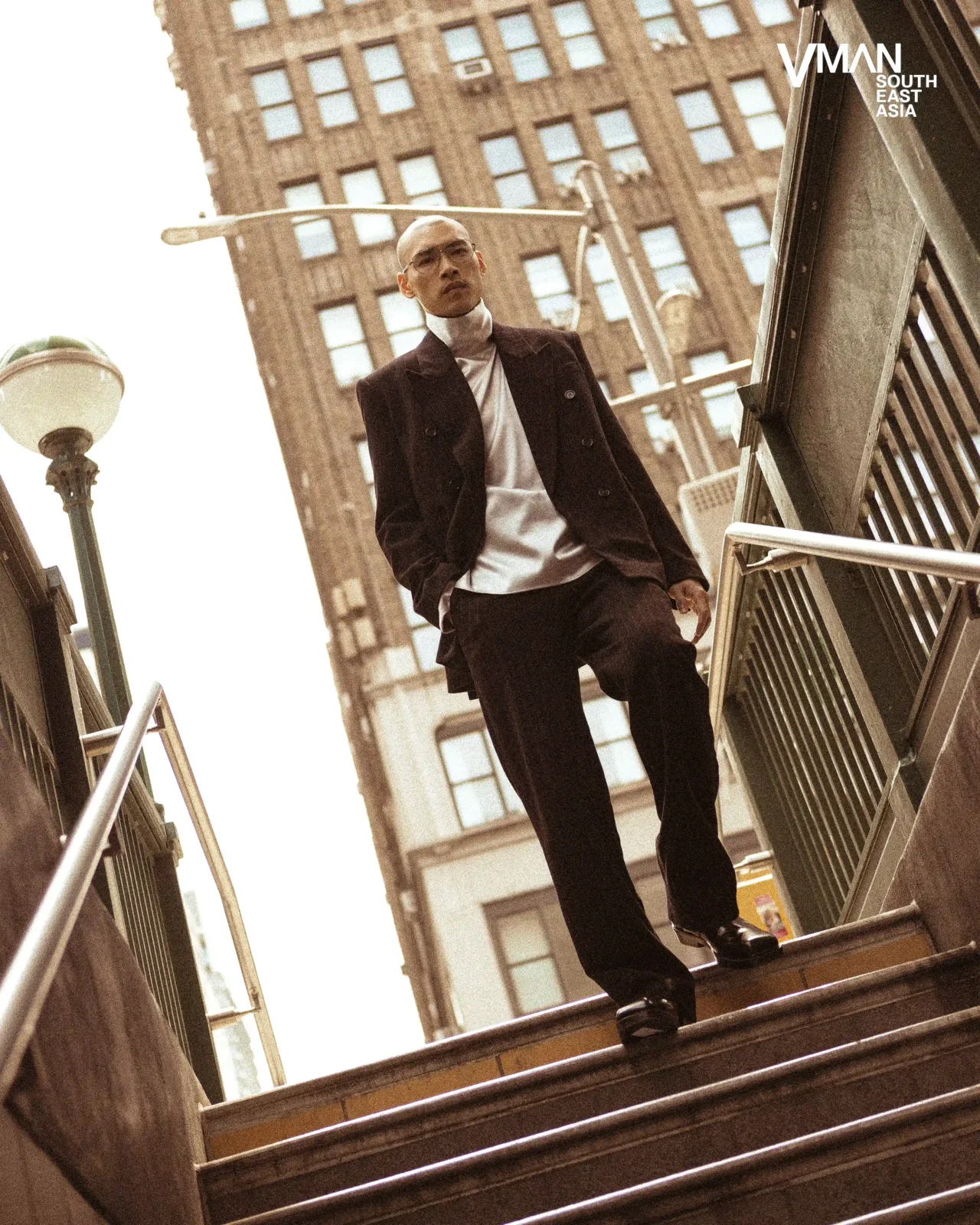
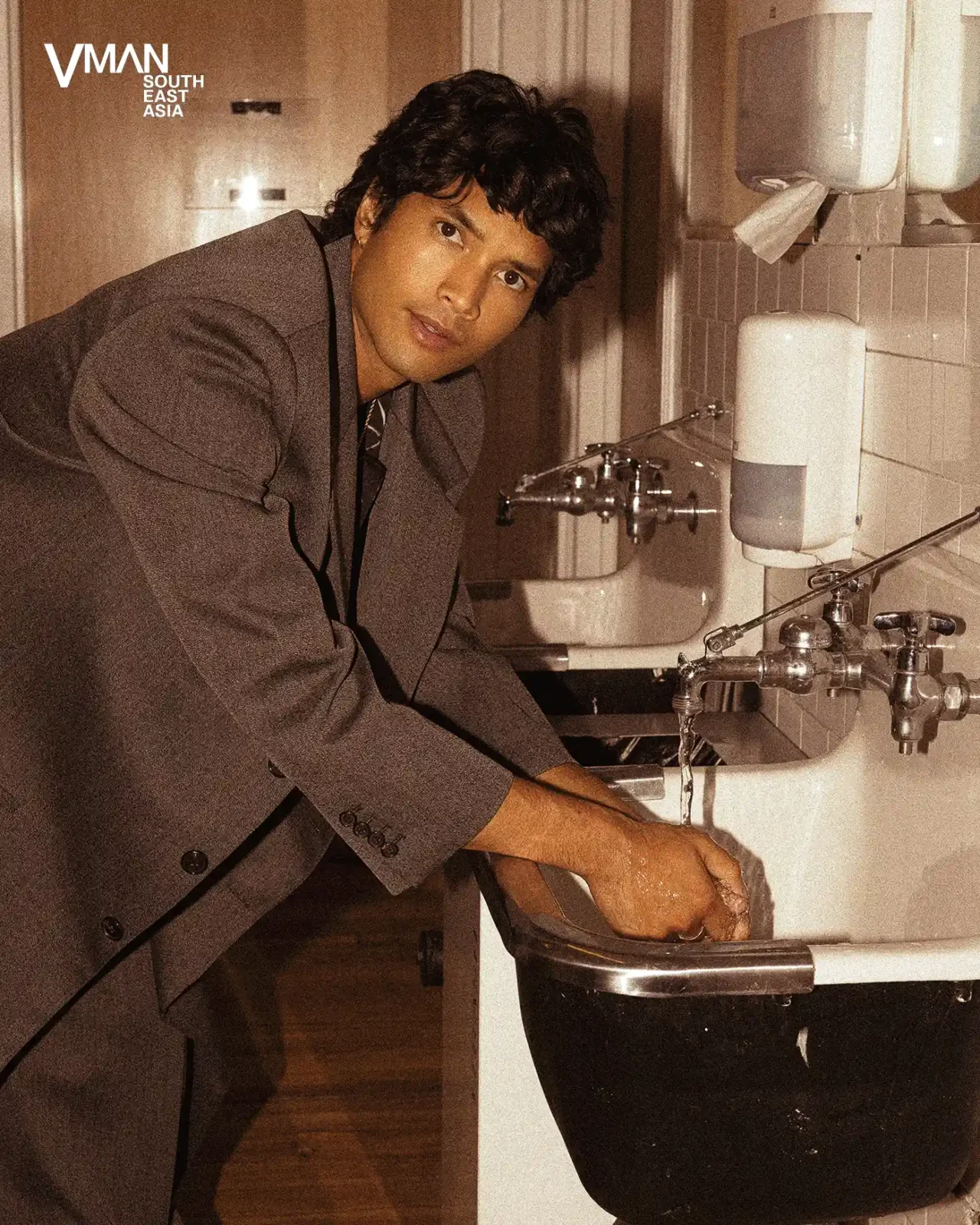
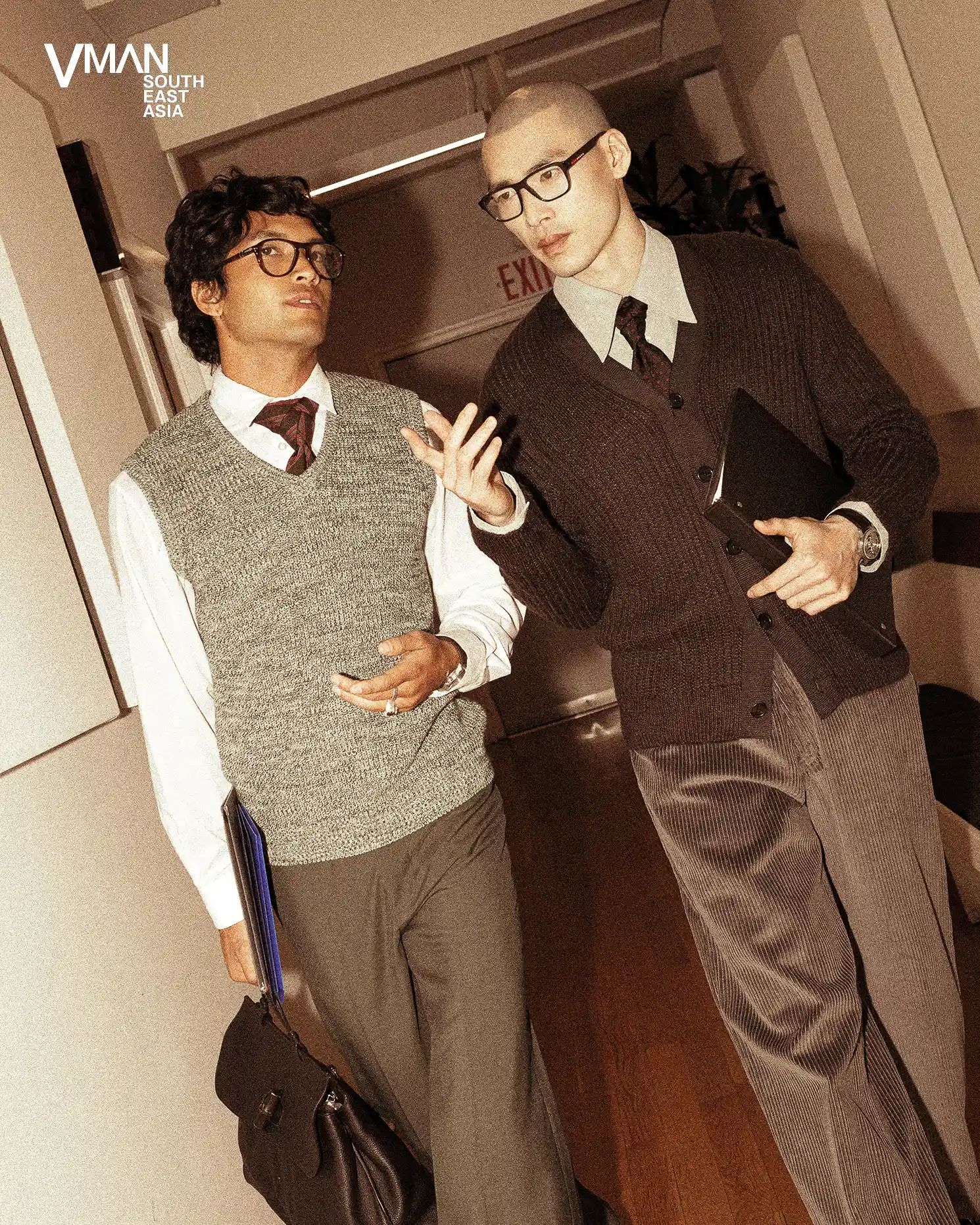
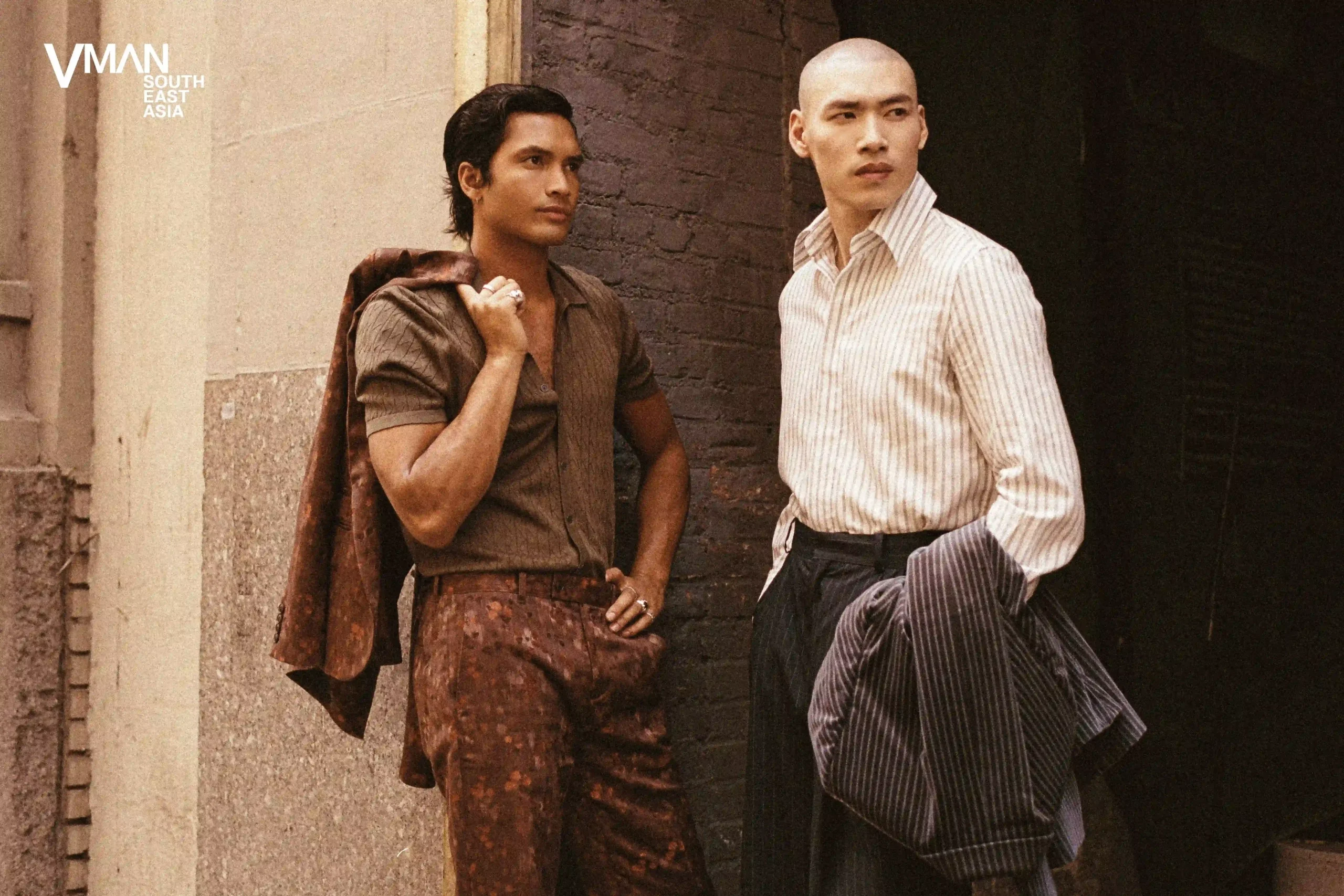
The change carries a cinematic flair. Picture Gordon Gekko’s commanding suits in Wall Street or the double-breasted swagger of 1980s banking, reimagined for a generation shaped by social media mood boards and thrift-store discoveries. Oversized blazers fall with intentional looseness, bold patterns break the monotony of trading floors, and wide-legged trousers convey both authority and irreverence. The look moves beyond rigid professionalism, reclaiming style as a tool of expression even within one of the most traditional arenas.
Beyond fashion
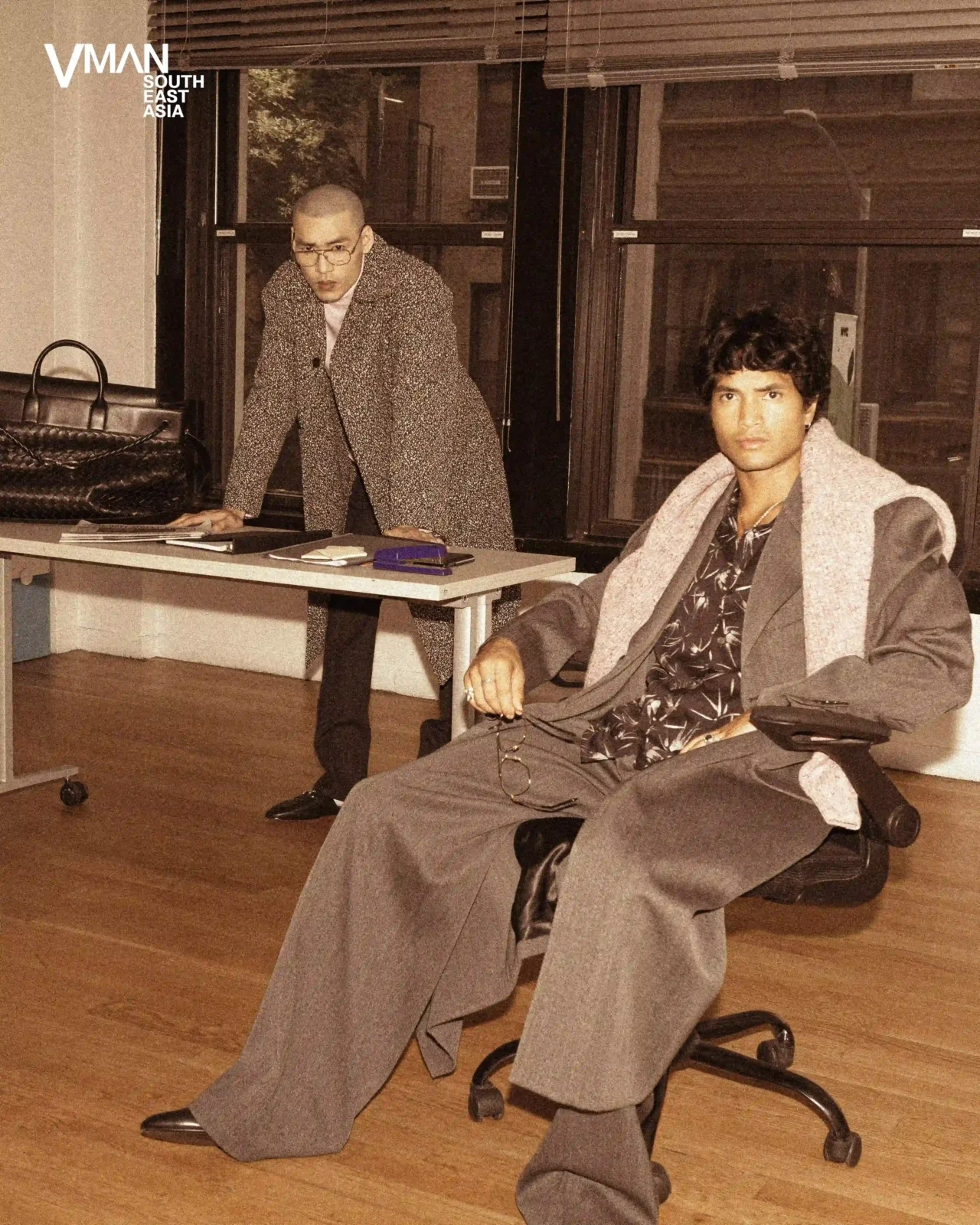
christian wears shirt john varvatos / suit michael kors / sweater noah / shoes celine / eyewear versace
—
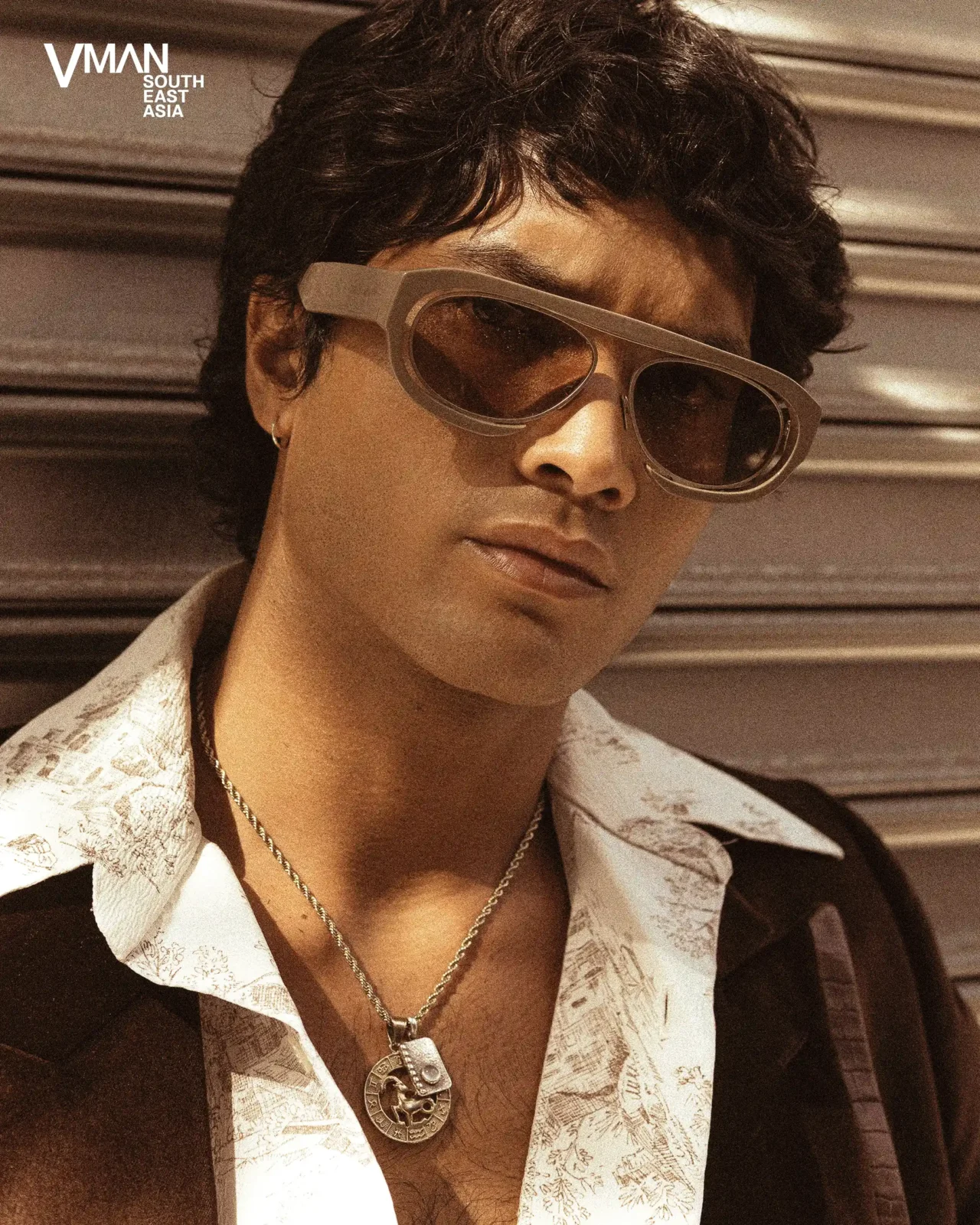
christian wears jacket amiri / pants michael kors / eyewear giorgio armani
This shift in tailoring goes beyond a nod to the past. It mirrors a wider cultural moment that urges men to take risks, to view clothing as an expression of identity rather than a dress codeDress CodeA set of guidelines specifying expected attire for an event or place, such as cocktail, black tie, or business casual. Understanding dress codes helps men dress appropriately, and modern invitationsGo to Dress Code Glossary to follow. What was once a pinstripe or silk tie signaling membership in a corporate tribe is now repurposed as a statement of individuality. In today’s offices, confidence has become the true measure of style, replacing conformity as the standard of success.
—
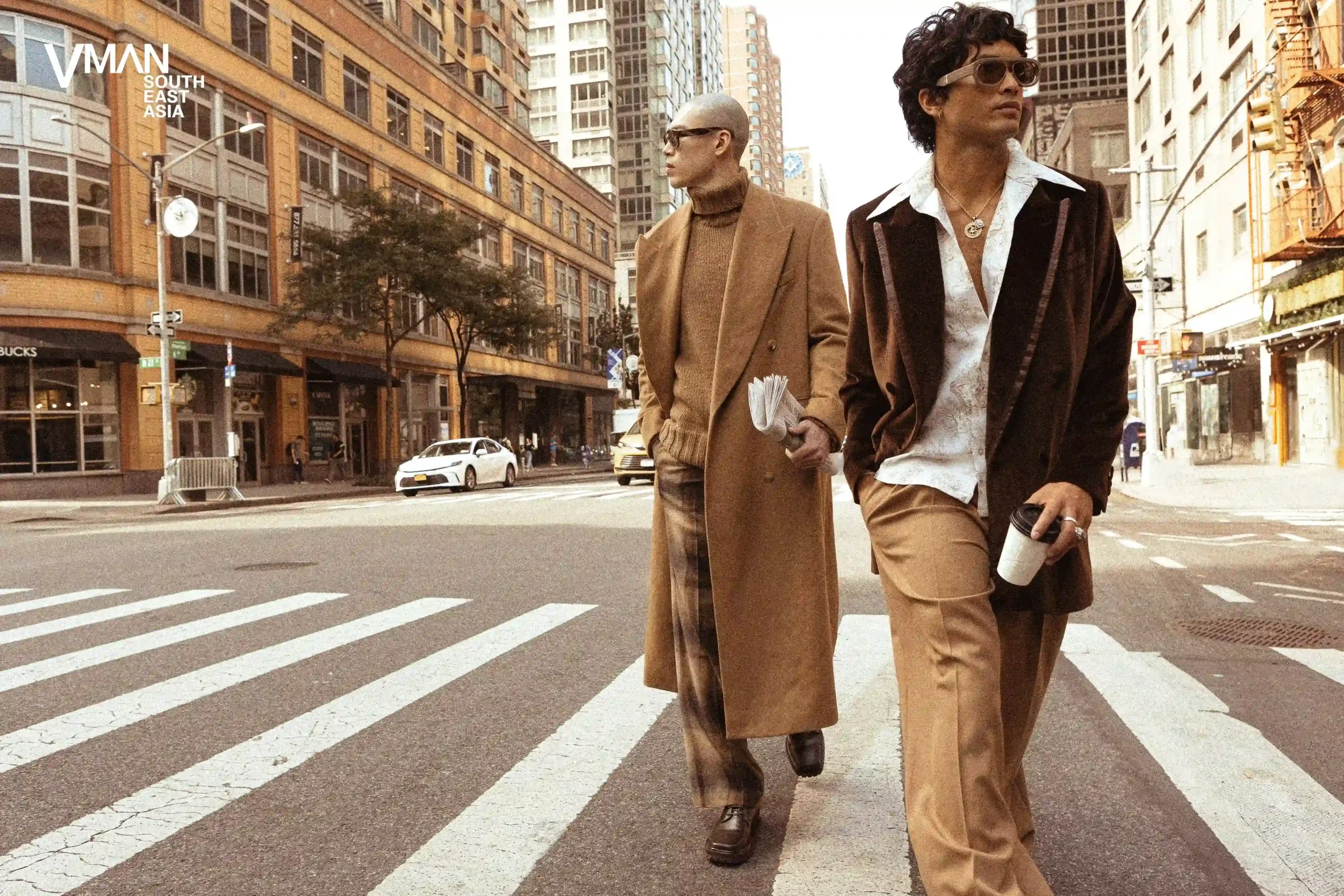
kenny wears shirt saint laurent / pants balmain / jacket amiri
The wolves of Wall Street are no longer content to blend into the pack. They stride into view dressed not to disappear in the boardroom but to command it. Their suits speak of boldness and ambition, sharpened by individuality, a reminder that in both finance and fashion, true power rests with those willing to stand apart.
See the full fashion editorial in the pages of VMAN SEA 04, available in print and by e-subscription.
Photography Aldrin del Carmen
Creative direction Lorenz Namalata (Fatbrain Collective)
FashionFashionThe art and industry of designing, producing, and styling clothing, footwear, accessories, and beauty trends. It reflects cultural influences, personal expression, and evolving styles across seasons and markets.Go to Fashion Glossary Nico Sese
Grooming Sara Jade
Hair Jacksonlee Leo
Retouching Niko Laraza
Models Christian Salibo (Muse Models) and Kenny Yu (New York Models)
Fashion assistant Leo Kim
Shoot assistants Raine Panes and Adrian Ballesteros
Frequently Asked Questions
Retro suiting is a revival of 1980s-inspired tailoring — oversized blazers, bold patterns, and wide-legged trousers — replacing the conventional navy suit as finance professionals favor individuality over conformity in corporate dress.
The trend draws cinematic inspiration from 1980s banking style, evoking Gordon Gekko’s commanding suits in the film Wall Street, reimagined for a generation shaped by social media mood boards and thrift-store fashion discoveries.
Retro suiting replaces the uniformity of navy suits and striped ties with intentional looseness, bold patterns, and a wide-legged silhouette, treating tailoring as a tool of self-expression rather than a rigid professional dress code.
The retro suiting trend reflects a broader cultural shift urging men to view clothing as identity rather than conformity, with confidence replacing adherence to convention as the new measure of style and professional success.
The full Wolves of Wall Street fashion editorial appears in the pages of VMAN SEA Issue 04, available for purchase in print or through e-subscription via the publication’s official channels.

Recommended Video