Dickson Lim Is Taking Malaysian Menswear Global
He’s taking the suit apart, rebuilding it, and giving Malaysian menswear a new silhouette




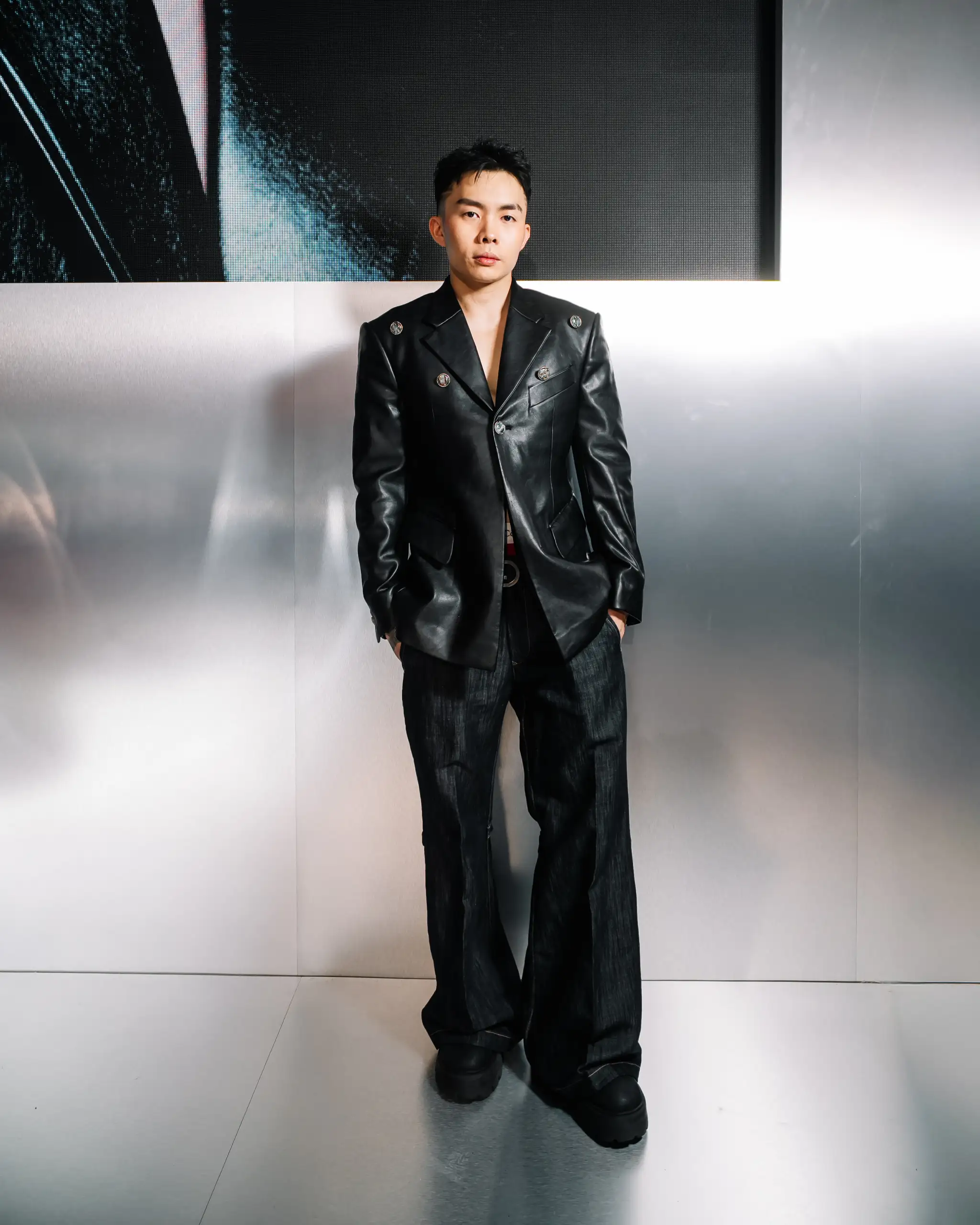
- Self-taught designer Dickson Lim turned his family’s tailoring roots into a boundary-pushing Malaysian fashion house.
- From dressing Bretman Rock at the Oscars to Ty Hunter at the Met Gala, he is putting Malaysian menswear on the global stage.
Putting Malaysian menswear on the global map
Before Dickson Lim was dressing celebrities for the Oscars and the Met Gala, he was a four-year-old kid in Kuching, Sarawak, watching his parents make suits by hand.
He would follow them to their tailoring shop, Formula One Tailor, fascinated by the finished clothes and what happened before anyone wore them: the measuring, cutting, fitting, and endless adjustments that turn fabric into a garment. Years later, that early education would become the foundation of one of Malaysia’s most exciting young fashion labels.
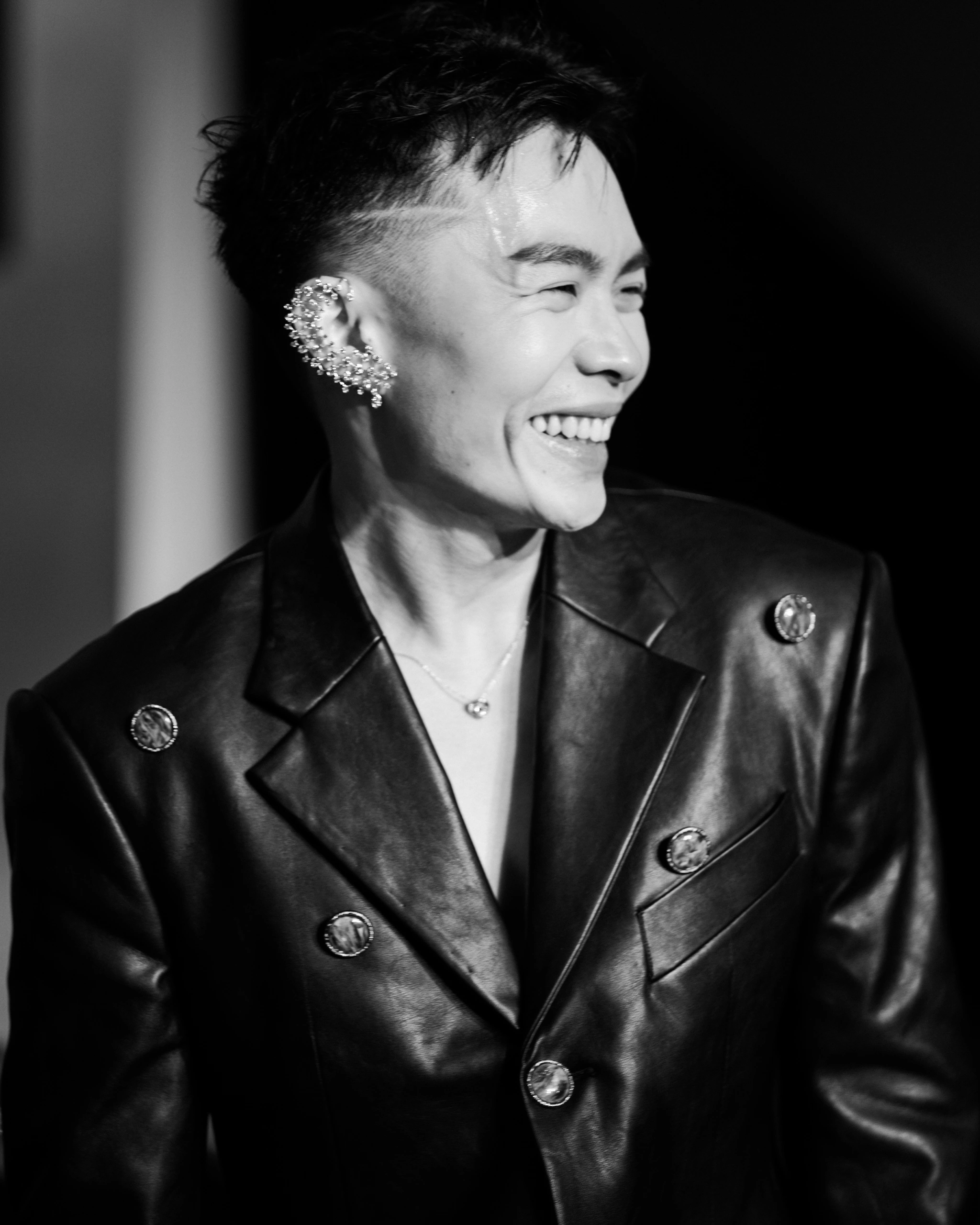
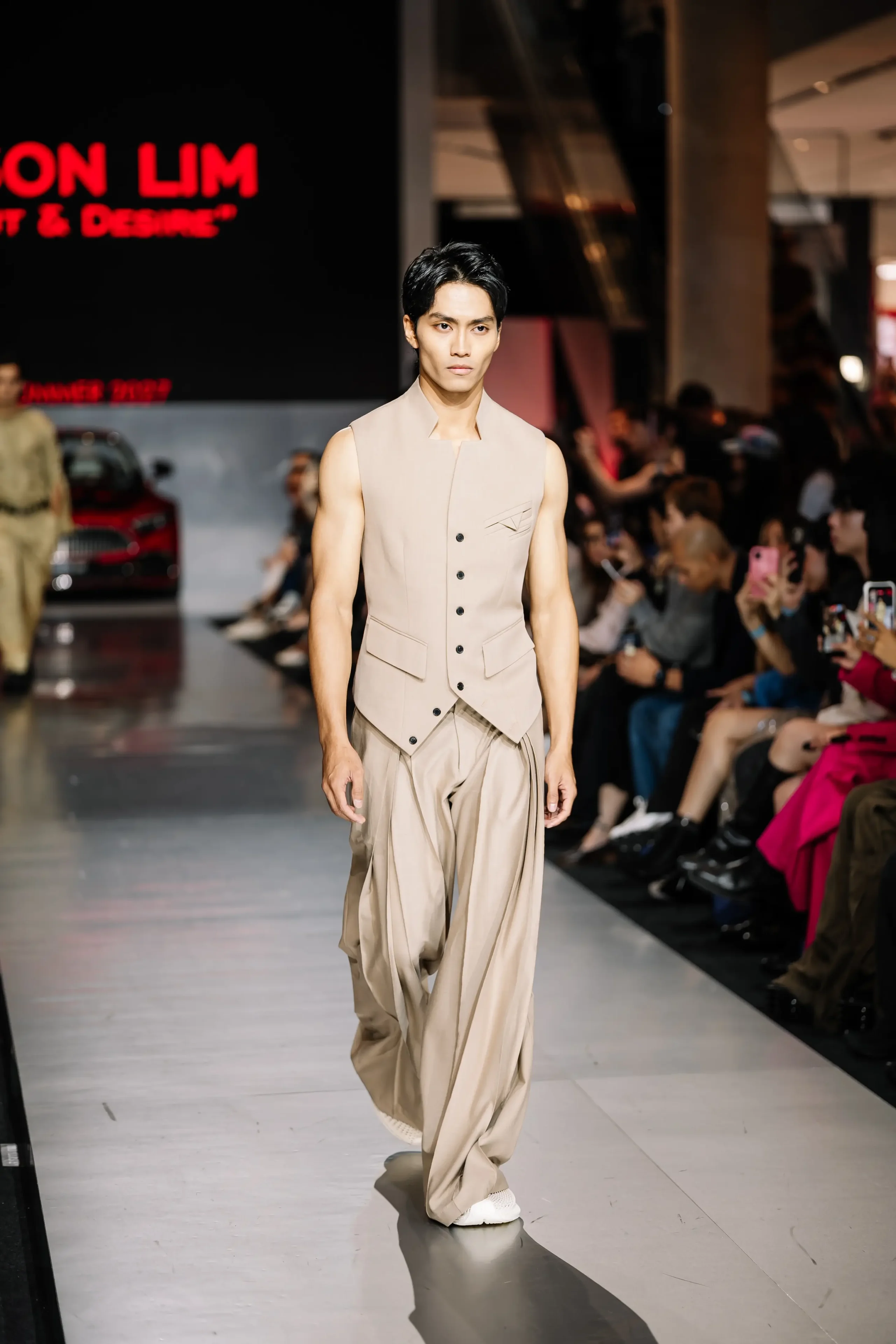
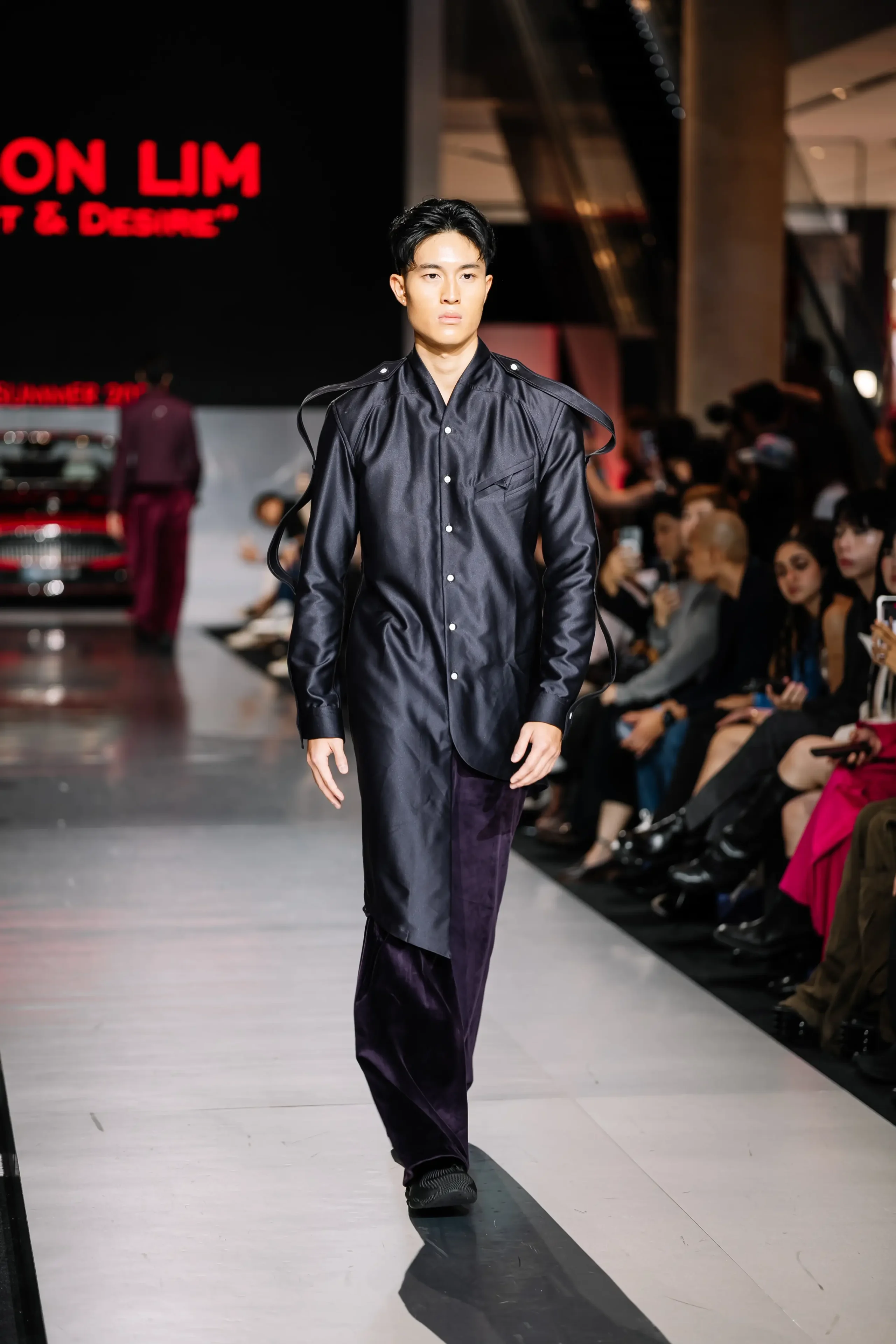
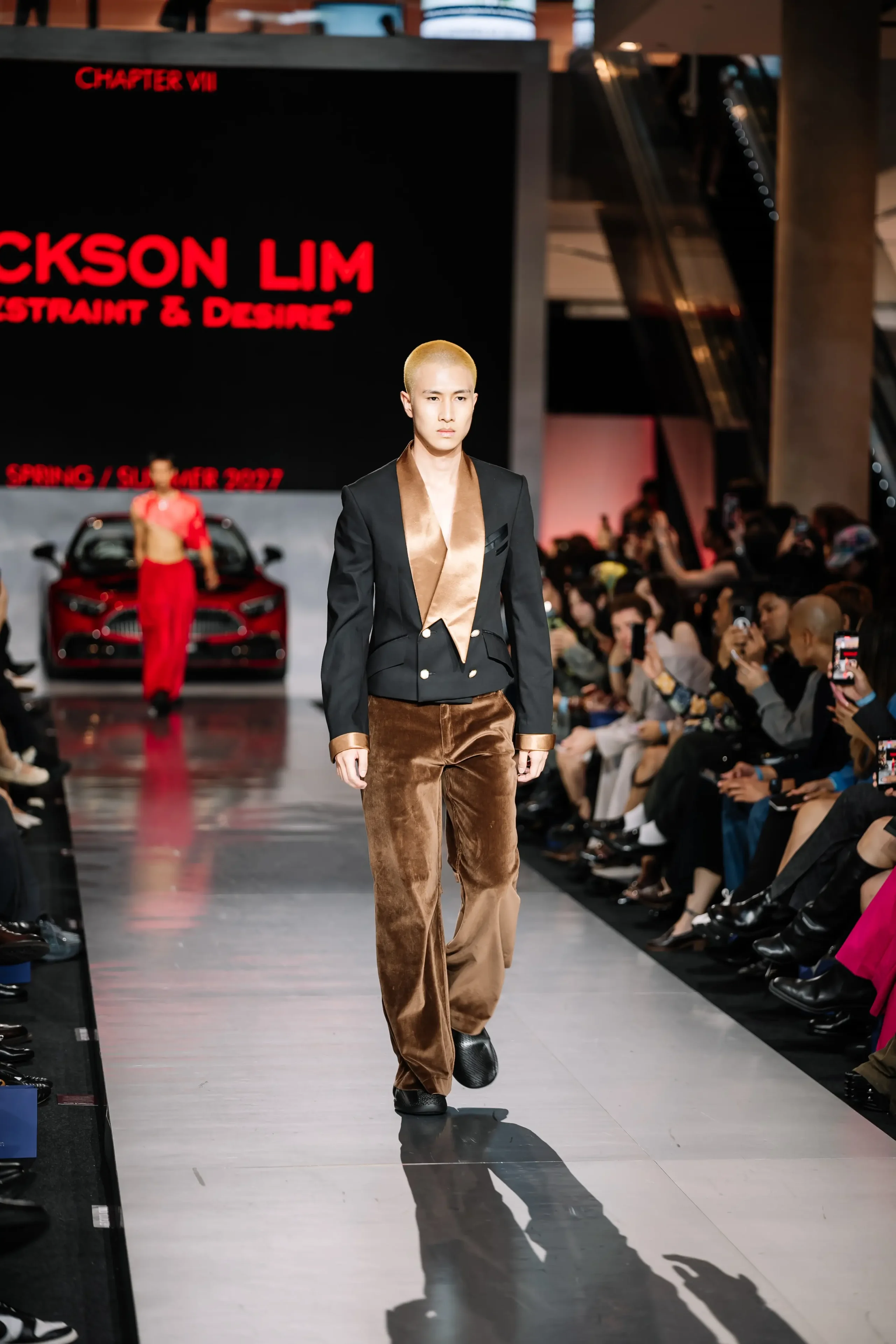
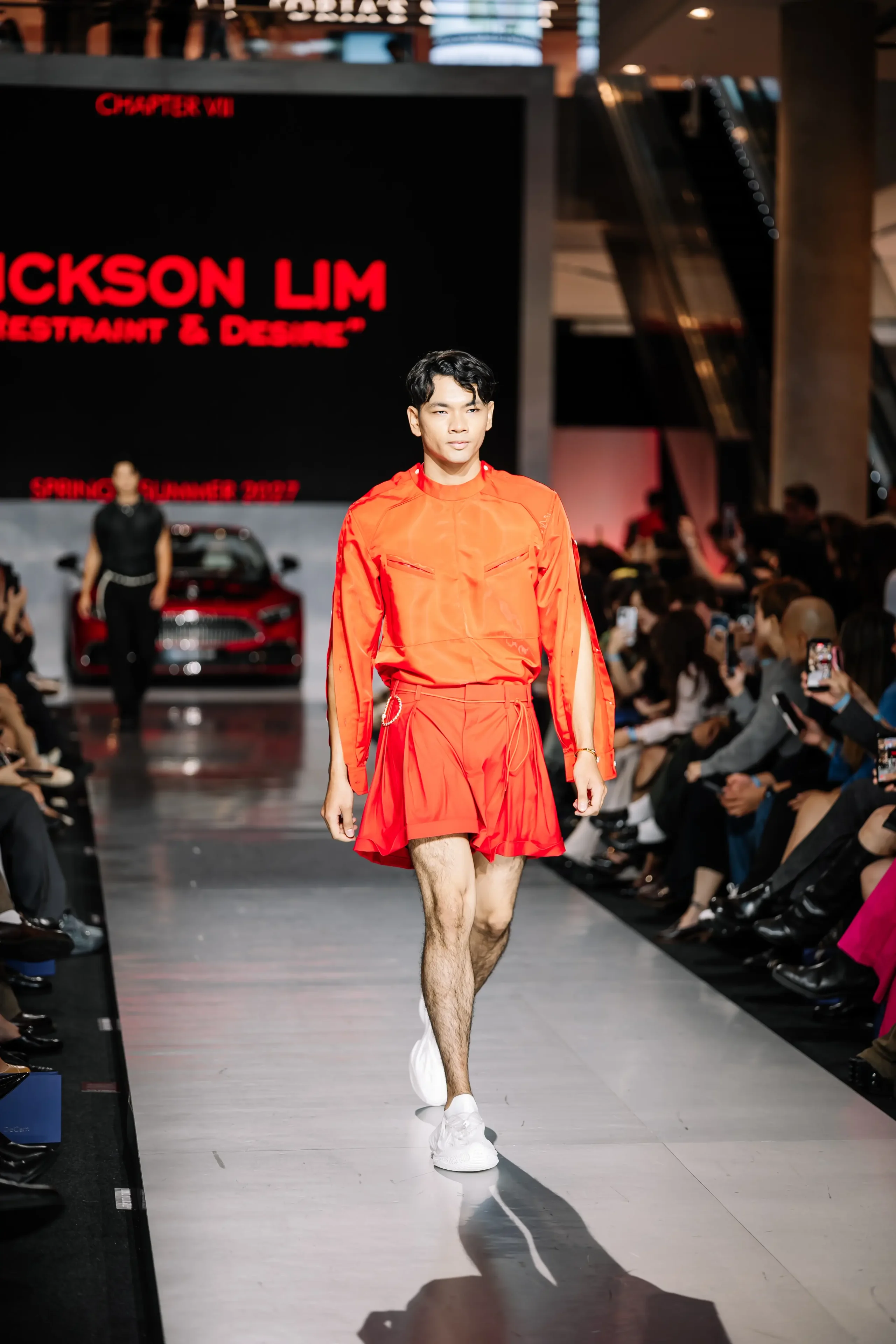
Dickson founded his namesake brand, also known as DL, in 2020 at just 19. Entirely self-taught, he quickly developed a signature that is difficult to mistake for anyone else’s: classic menswear pushed into stranger territory through asymmetrical cuts, deconstructed tailoring, exaggerated proportions, sculptural construction, and futuristic silhouettes.
And the fashionFashionThe art and industry of designing, producing, and styling clothing, footwear, accessories, and beauty trends. It reflects cultural influences, personal expression, and evolving styles across seasons and markets.Go to Fashion Glossary world has started taking notice. In 2022, only two years after launching his label, he dressed Bretman Rock for the Academy Awards, becoming the first Malaysian-born designer to dress a celebrity for the Oscars.
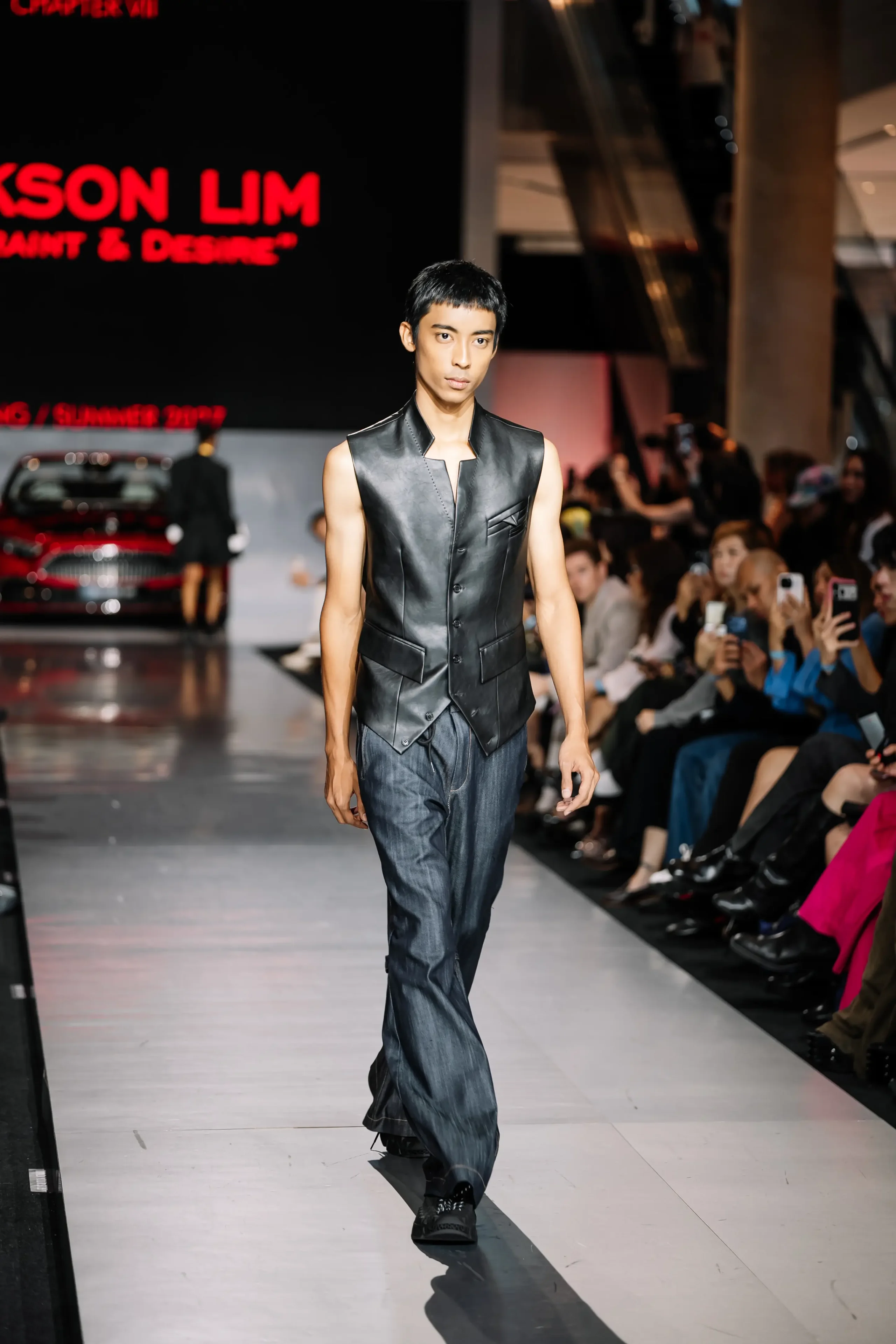
He later became the youngest designer to debut a collection at Kuala Lumpur Fashion WeekFashion WeekA multi-day event held in major cities such as Milan, Paris, London, and New York, where designers present upcoming collections to buyers, press, and celebrities. Menswear fashion weeks set trendsGo to Fashion Week Glossary. In 2026, he reached another career-defining stage when his custom Shuriken Blazer was worn by Beyoncé’s longtime stylist Ty Hunter to the Met Gala, making Dickson the first Malaysian menswear designer represented at the event.
From Kuching to the cutting table
For someone whose work now appears on some of the biggest stages in fashionFashionThe art and industry of designing, producing, and styling clothing, footwear, accessories, and beauty trends. It reflects cultural influences, personal expression, and evolving styles across seasons and markets.Go to Fashion Glossary, his creative education began somewhere much smaller.
“Ever since I was about four years old, I would follow my parents to work. Instead of just seeing the finished garment, I was fascinated by the entire process, how it was measured, cut, fitted, and made.”
He did not always love tailoring. In fact, Dickson admits he initially disliked the trade. But growing up around it gave him something that cannot easily be taught in a classroom: an instinct for construction.
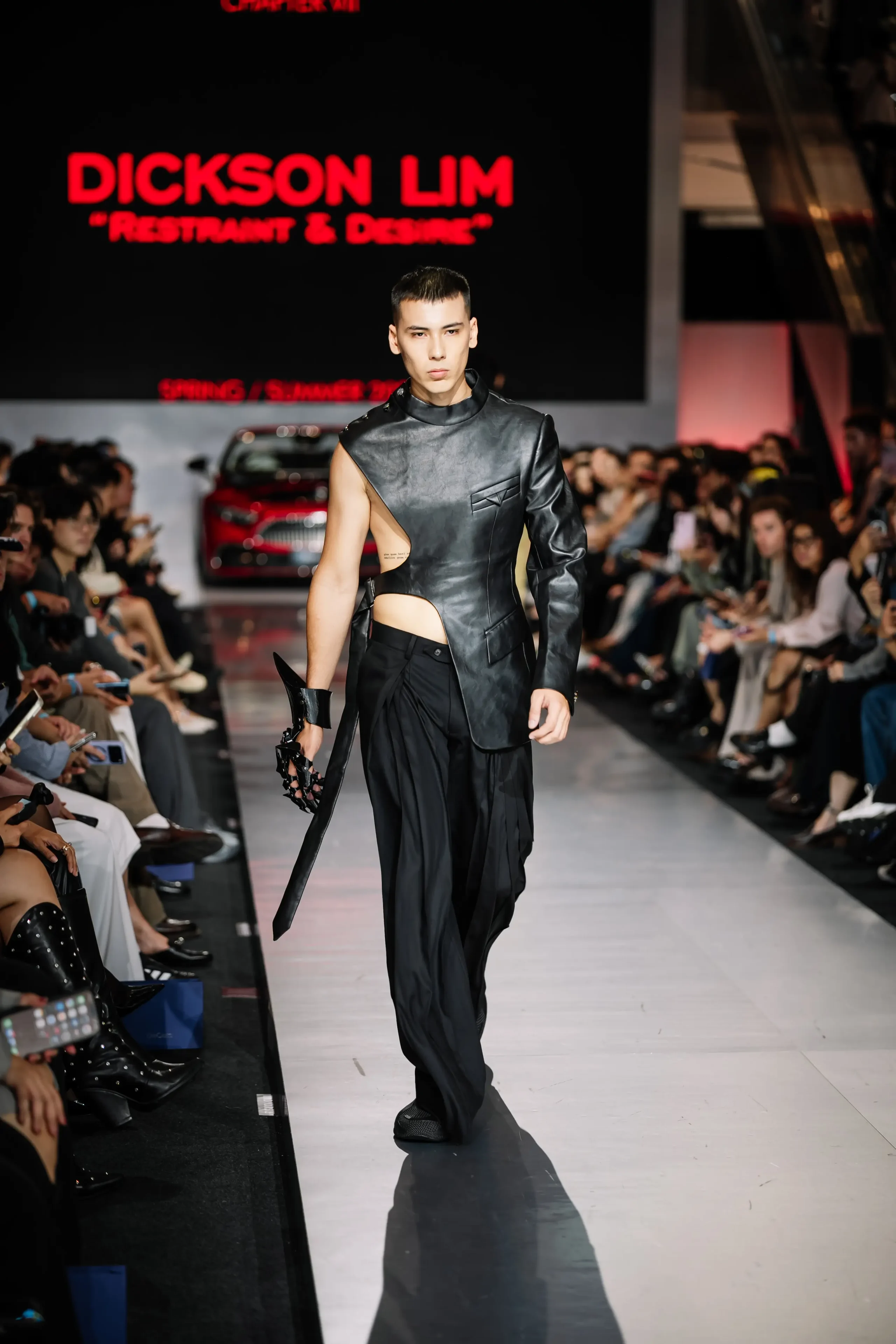
He learned to understand clothing from the inside out, developing an appreciation for fit, proportion, balance, and craftsmanship long before he began turning those principles into his own designs.
“When you understand how a garment is built from the inside out, you don’t just become a better tailor, you become a better designer.”
It also explains why deconstruction has become such a defining part of his work. Dickson is not interested in destroying classic menswear simply for the sake of making something unconventional. He wants to understand why a garment works in the first place, then figure out how far he can push it.
The designer as problem-solver
This impulse has been there since childhood. He recalls taking toys apart to understand how they worked. Fashion eventually became another machine to investigate. “I wouldn’t say I dedicated my life to fashion,” he says.
“I dedicated my life to creativity, to constantly learning, improving, and finding solutions. Fashion just happens to be my medium.”
Dickson approaches each design with a question. Sometimes it is practical: how can a familiar piece become distinctly DL? Other times, it is more conceptual: how can something look simple at first and become more interesting the longer you look at it?
“I believe great design begins with asking the right questions,” he says. “The better the question, the more interesting the outcome.”
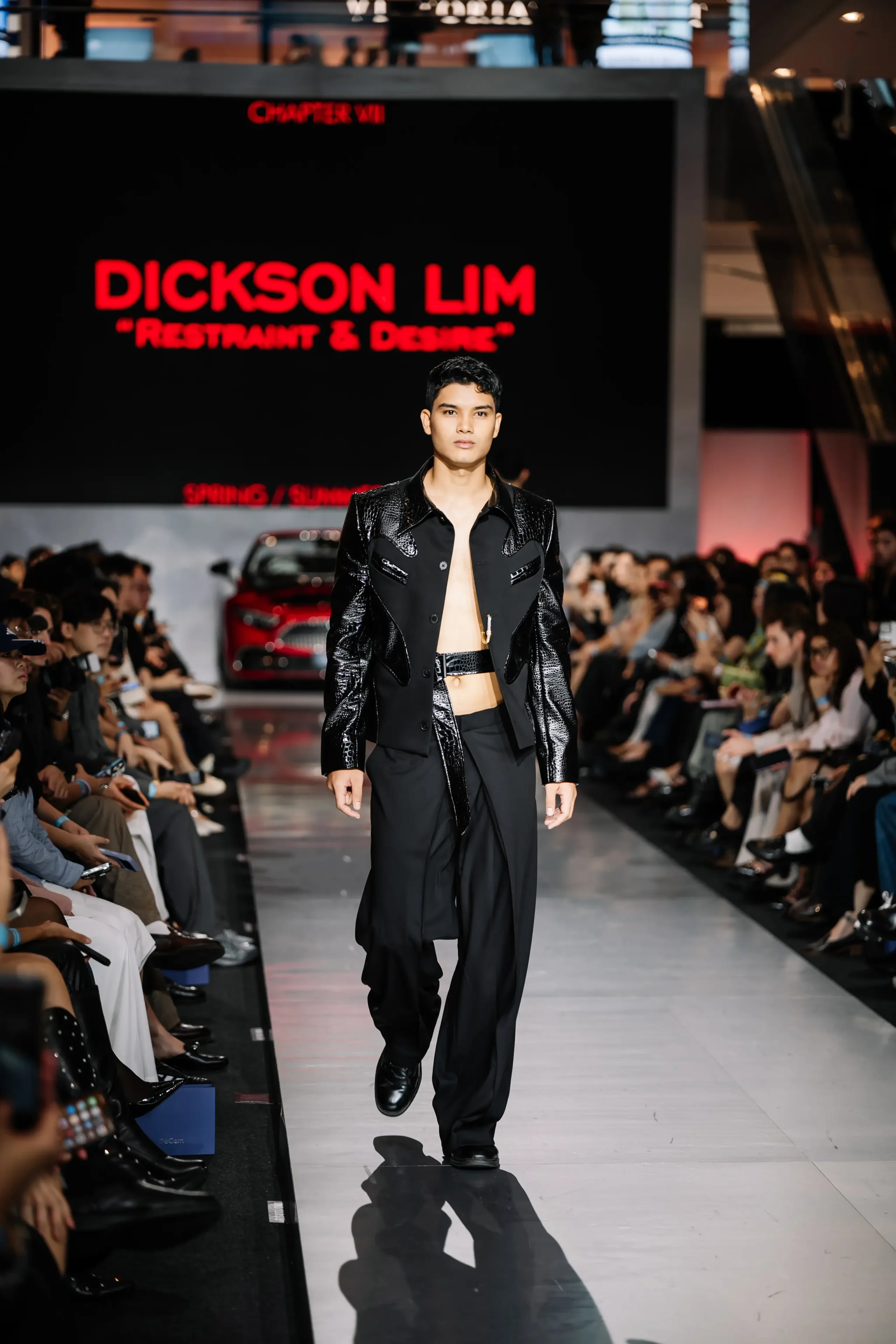
It is a useful philosophy for a designer working in a category as codified as menswear. The suit has existed in roughly recognisable forms for generations, leaving designers with the familiar challenge of making something new without losing what made it work.
Dickson’s answer is to alter the architecture. His tailoring breaks symmetry and turns familiar details into sculptural elements. It is menswear with one foot in tradition and the other somewhere considerably further ahead.
Proving them wrong
His approach has also allowed him to challenge an assumption that has followed him throughout his career, namely that a designer from Malaysia, particularly one from Kuching, must first prove he belongs in the international conversation.
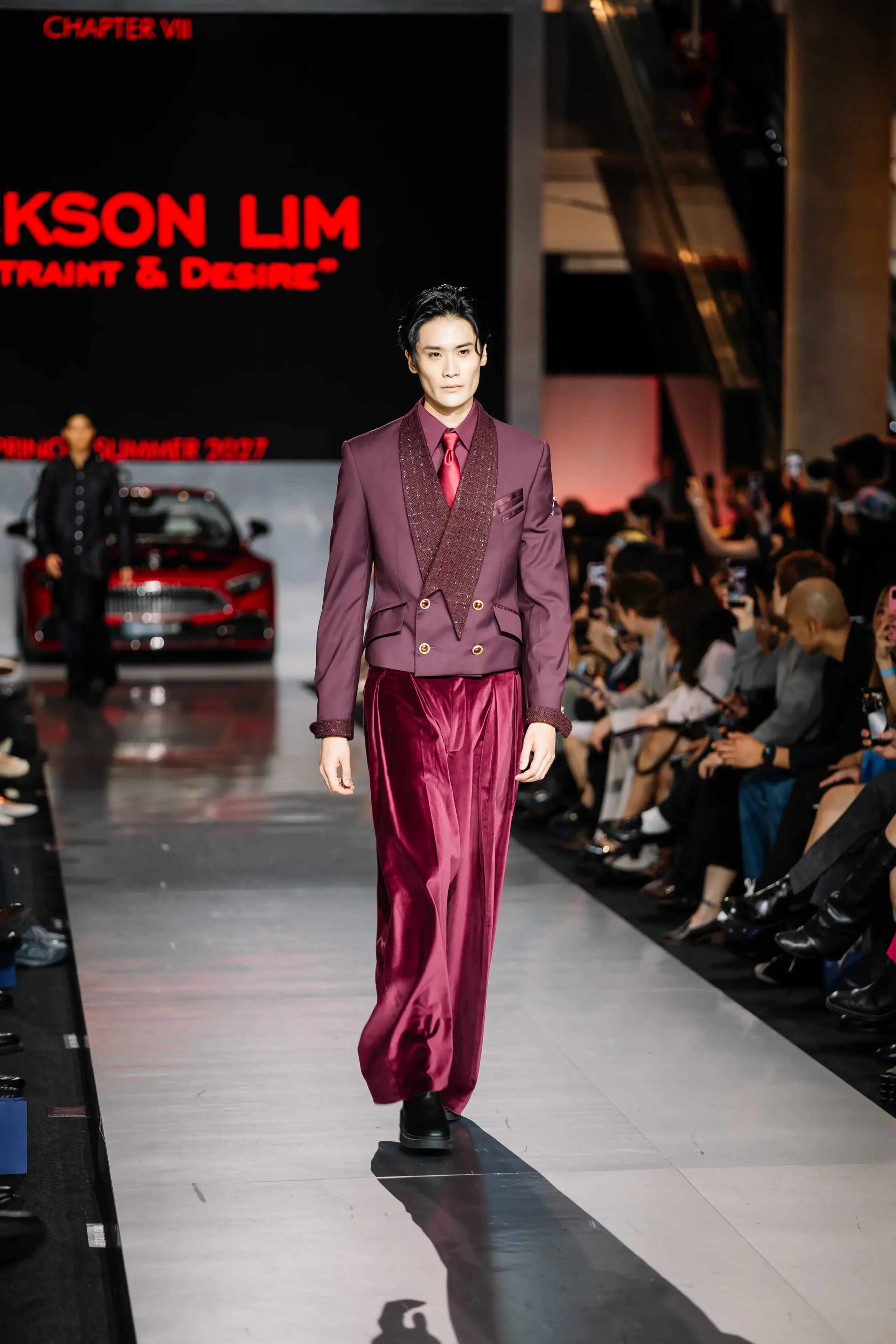
“I think, if I’m being honest, there was a part of me that wanted to prove people wrong,” he says.
Growing up in Sarawak, Dickson encountered people who questioned whether someone from a smaller Malaysian city could make it onto the global stage. His response was not to make excuses for where he came from, but to hold his work against the highest standards he could find.
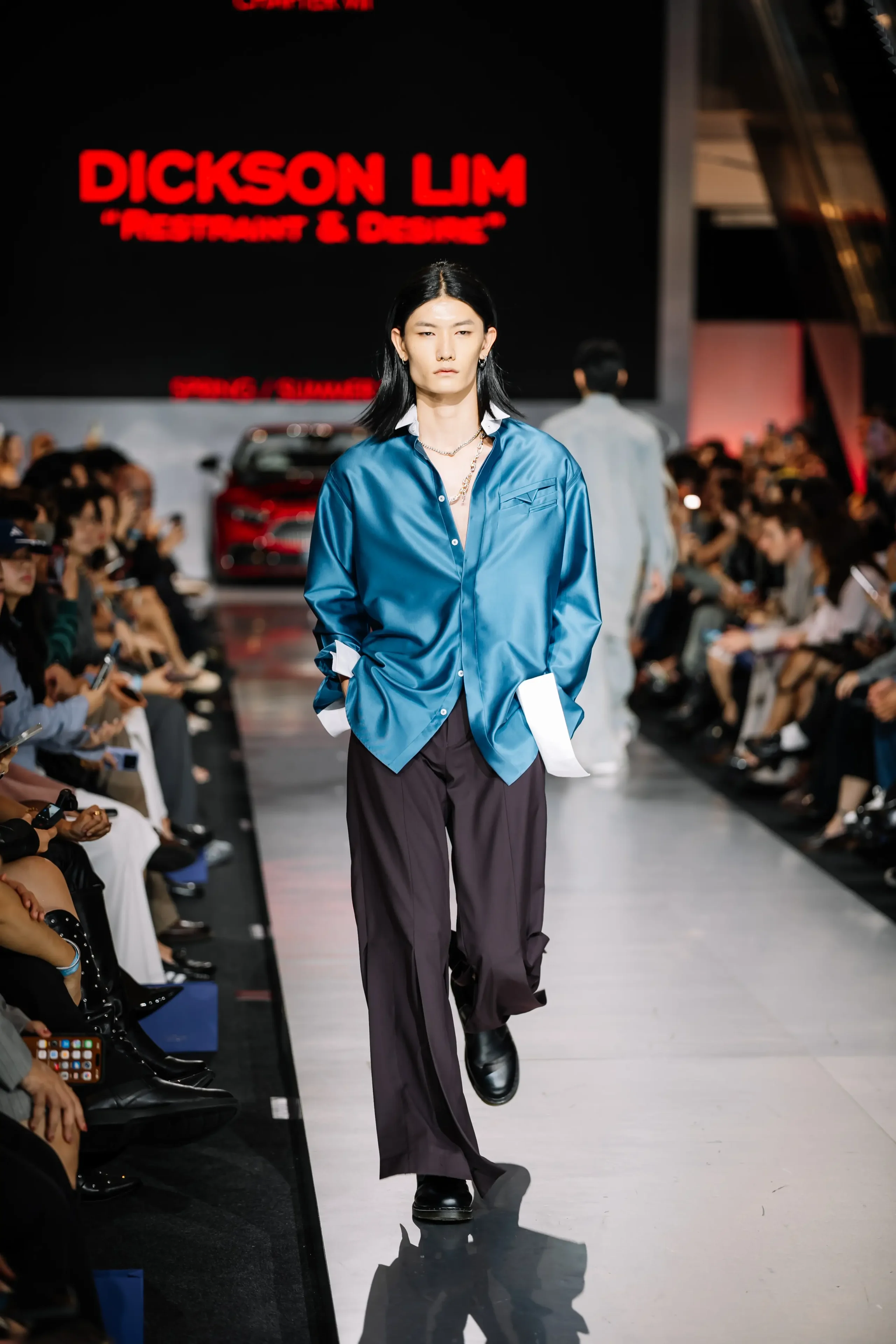
“When I was designing my first collection, I kept asking myself, ‘If this piece was hanging next to Louis Vuitton or Prada, would it belong there?’” he says. “If I was on the same fashion week calendar as these luxury houses, would my work stand on its own?”
“I just want to create the best work I’m capable of, regardless of where I come from. Because I believe great design isn’t defined by geography, it’s defined by the work itself.”
What Malaysian design means now
Still, being Malaysian remains embedded in the clothes. Just not necessarily in the way one might expect.
Dickson believes Malaysian design can speak for itself without relying on traditional patterns or obvious cultural references. His work carries forward the values he learned in his parents’ workshop.
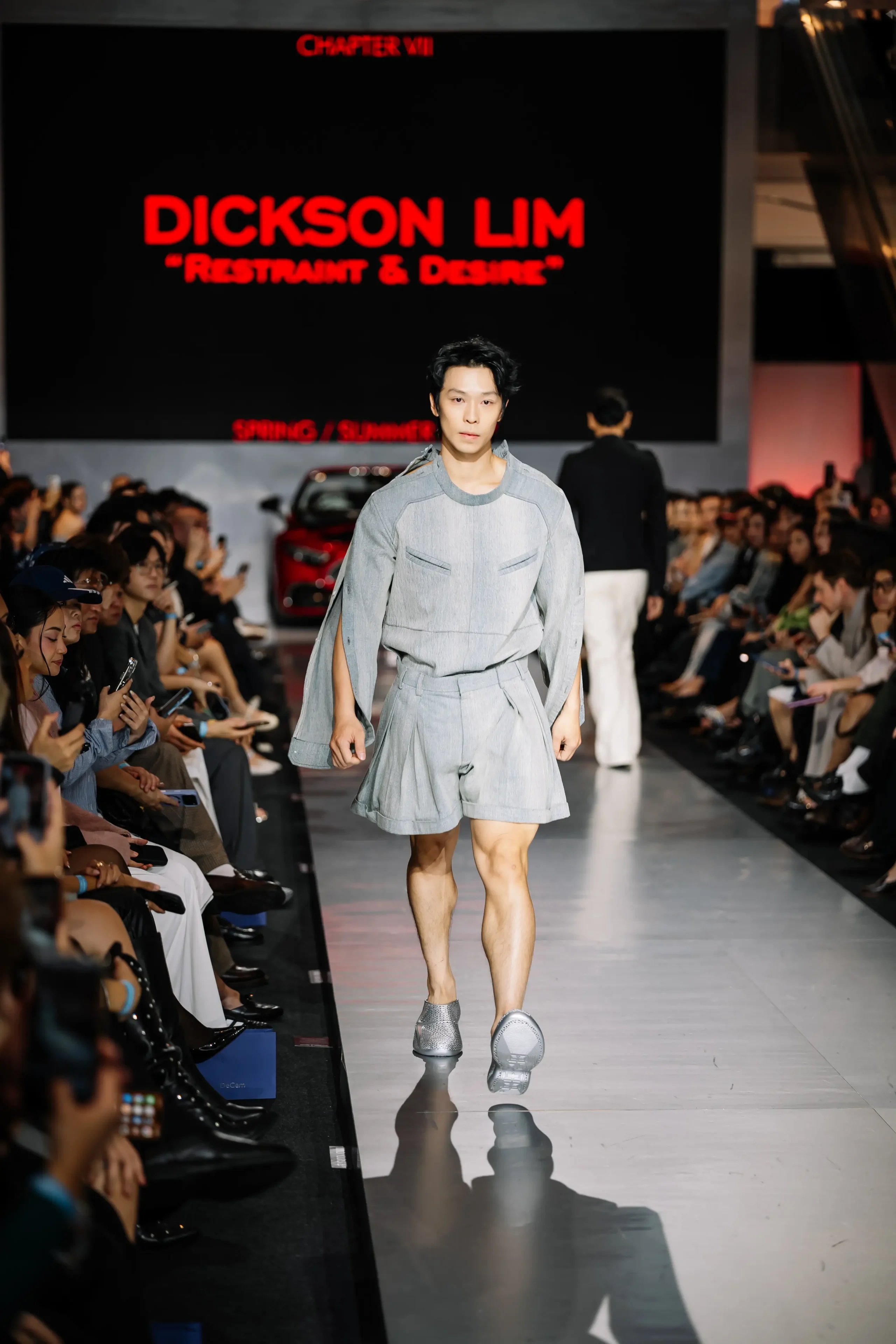
“I don’t think being Malaysian always has to mean putting a traditional pattern on a garment,” he says. “For me, it’s more about the values I grew up with.”
Those values extend to the way DL produces its clothes. The label operates on a strict made-to-order model and repurposes fabric scraps into new creations, an approach that places sustainability directly into the mechanics of the brand.
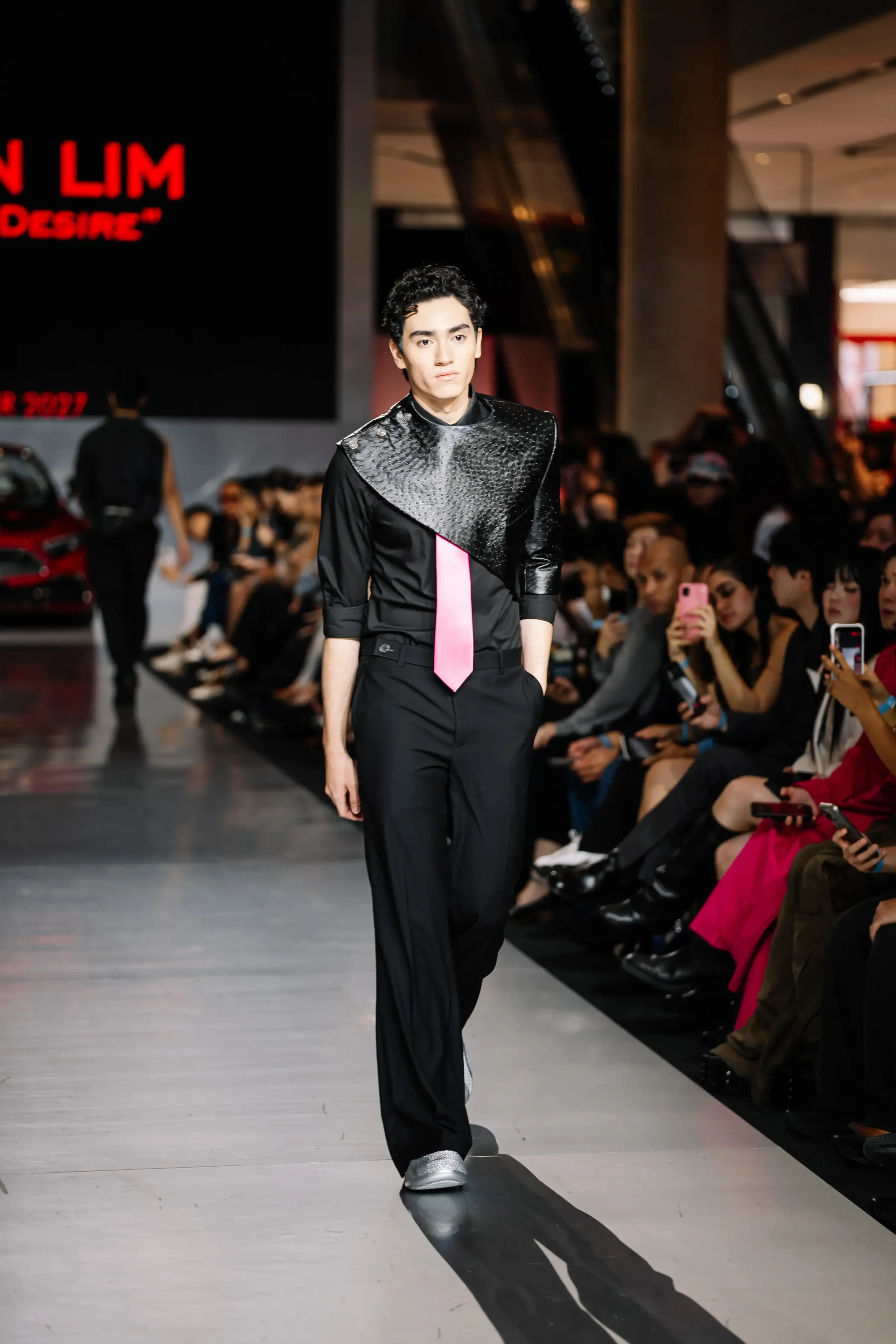
For Dickson, a suit does not need to make a man look traditionally masculine. It needs to make him feel like himself. His bolder silhouettes are designed to demand confidence, not prescribe an identity.
“I think confidence is incredibly attractive. There’s nothing more powerful than someone who’s unapologetically themselves.”
Beyond the red carpet
It is an ethos that makes sense for a designer who has spent his career refusing to let geography or age determine what he can do.
But if there is one thing Dickson wants people to understand about his rapid rise, it is that the glamour is only part of the story.
Red carpets are exciting. Celebrity clients are exciting. Seeing your name attached to the Met Gala is, understandably, very exciting. But none of it can replace the actual work.
“There’s a big difference between loving fashionFashionThe art and industry of designing, producing, and styling clothing, footwear, accessories, and beauty trends. It reflects cultural influences, personal expression, and evolving styles across seasons and markets.Go to Fashion Glossary and loving what fashion can give you,” Dickson says.
The distinction is important. Because underneath the futuristic silhouettes and global red carpets, he remains obsessed with the fundamentals he learned as a child.
“Every mistake teaches you something. Every failure brings you one step closer to success, and every ‘no’ brings you closer to a ‘yes.’”
For a designer who started a label at 19 and has already taken Malaysian menswear from a tailoring shop in Kuching to the Oscars and the Met Gala, the next move could be almost anywhere. But if Dickson’s career so far is any indication, he is not waiting for permission to find out.
Photos courtesy Dickson Lim SS27 ‘Restraint & Desire’

Recommended Video