Meet the Guy Behind That Cool Art Installation at Wanderland
Nearest Neighbor is more than just a centerpiece—it’s art that fosters a spirit of community




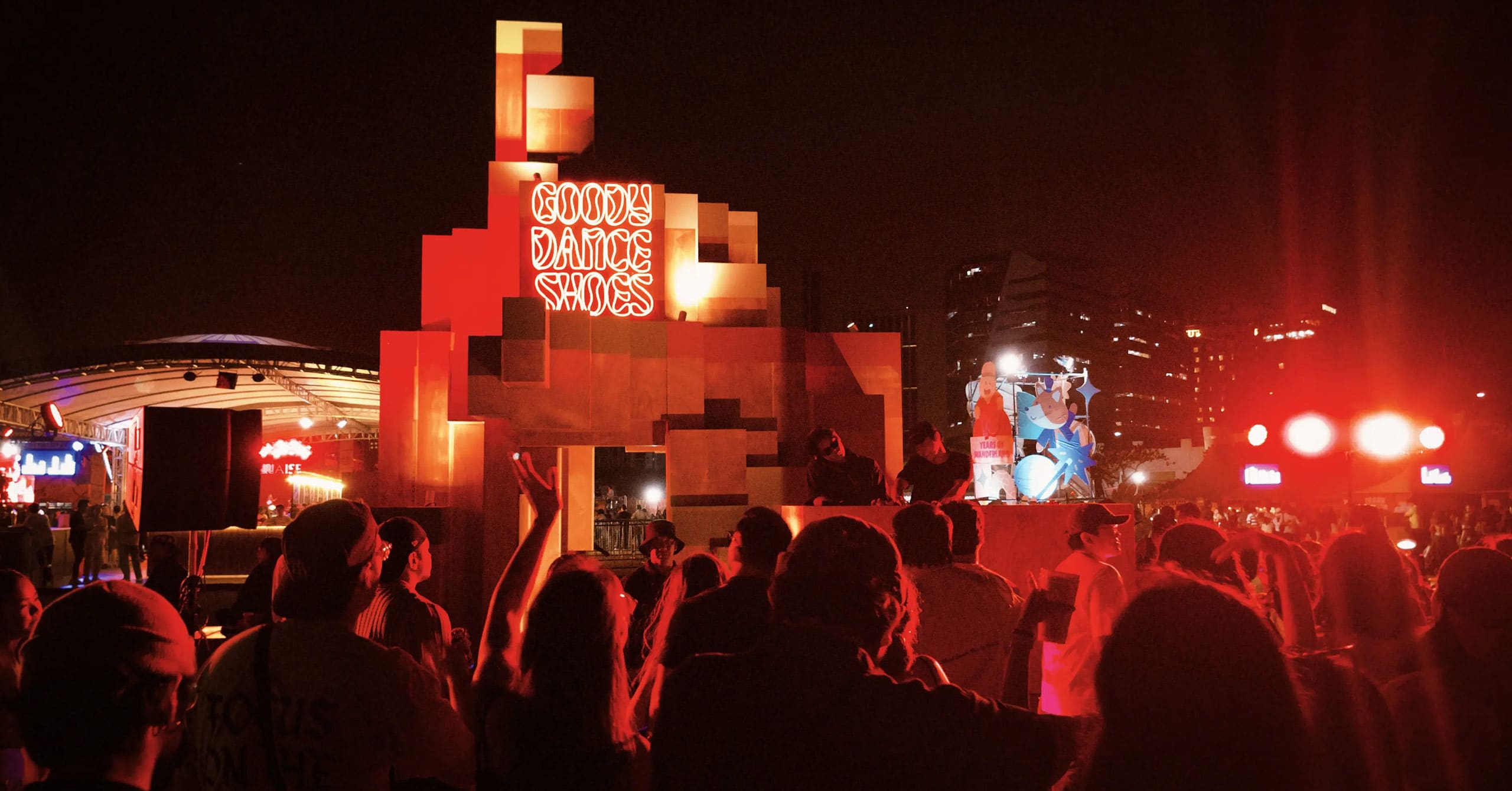
Hello neighbor
The spaces we occupy, whether physical or emotional, shape how we see the world. In Wanderland’s 10th year, this idea took form through Nearest Neighbor, an immersive installation by Architect Arts Serrano and his design studio, one/zero.
More than a festival centerpiece, the structure invited people to engage, gather, and reflect on the fluid relationship between space and community. Drawing from principles of movement, proximity, and shared experience, Nearest Neighbor transformed an open area into a living, breathing entity—one that pulsed with the energy of Wanderland while hinting at the role of design in shaping public spaces beyond the festival grounds.
Long before bringing Nearest Neighbor to life, Serrano had been exploring the intersections of design, history, and community. More than just building structures, his work at one/zero also reimagines how people interact with spaces, using materials and cultural identity as key building blocks.
“We are passionate about making places, and with every space that we are given the opportunity to design, there’s always this aspiration to understand and define what Filipino identity could be,” he explains. From heritage conservation to urban placemaking, his creative path has been shaped by a drive to foster connection. This philosophy is evident in community-driven projects like the Escolta Block Parties and, more recently, hola, Escolta!
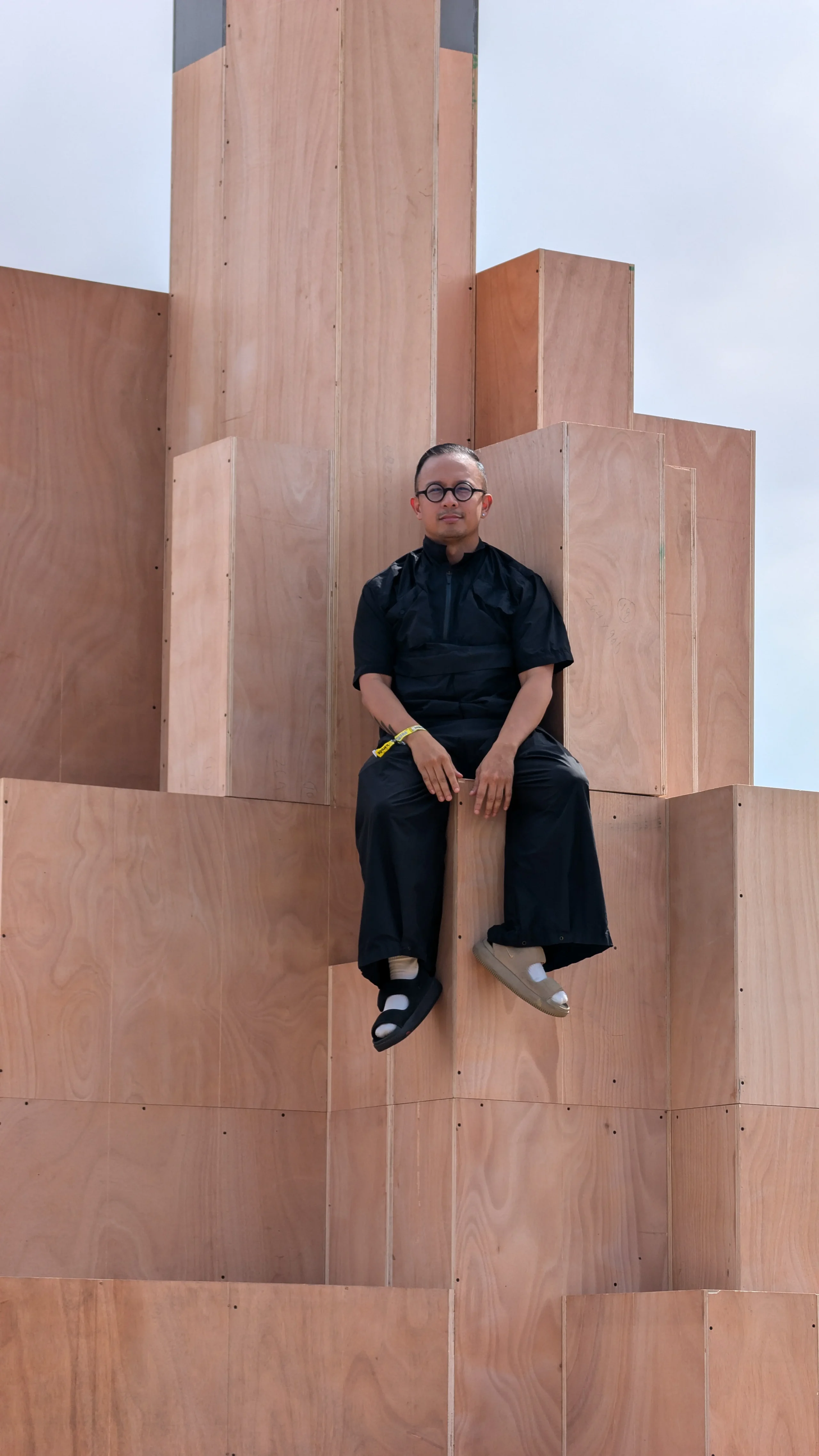
Serrano has also been a longtime Wanderland fan, first experiencing the festival in 2013 with Neon Trees and again in 2018 with Daniel Caesar. What started as a spontaneous idea has now come full circle for him. “We shot up an unsolicited proposal to the Wanderland team and are grateful for the trust that was given to us to bring our imagination to life with our installation,” he shares.
At the core of their design philosophy is the belief that design can be a catalyst for movement and lasting change in our cities. They have always sought ways to show that we deserve better streets and public spaces.
Where art comes alive
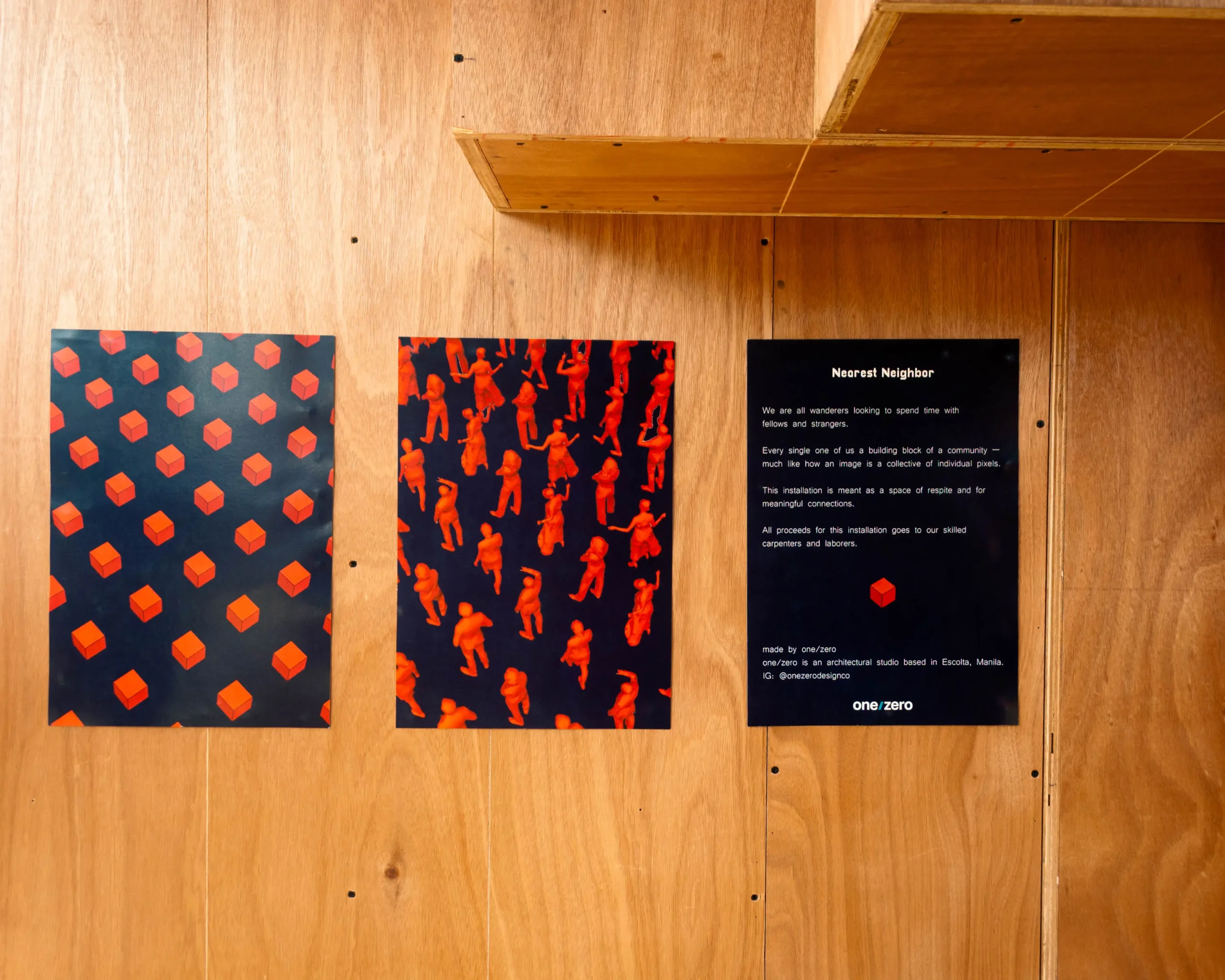
This commitment to reimagining public spaces shaped the vision for Nearest Neighbor. More than just a festival installation, the piece draws from mathematical and natural patterns to explore movement and the ways people interact within a space. In mathematics, Nearest Neighbor is a methodology that approximates movement by analyzing the trajectories of surrounding points.
“Imagine a crowd dancing—your body moves to the beat of whoever’s playing music, and the people beside you all somehow follow the same rhythm or flow as the people around you,” he says. This idea extends into nature through a concept known as Emergence, seen in the synchronized flight of birds or the collective movement of schools of fish.
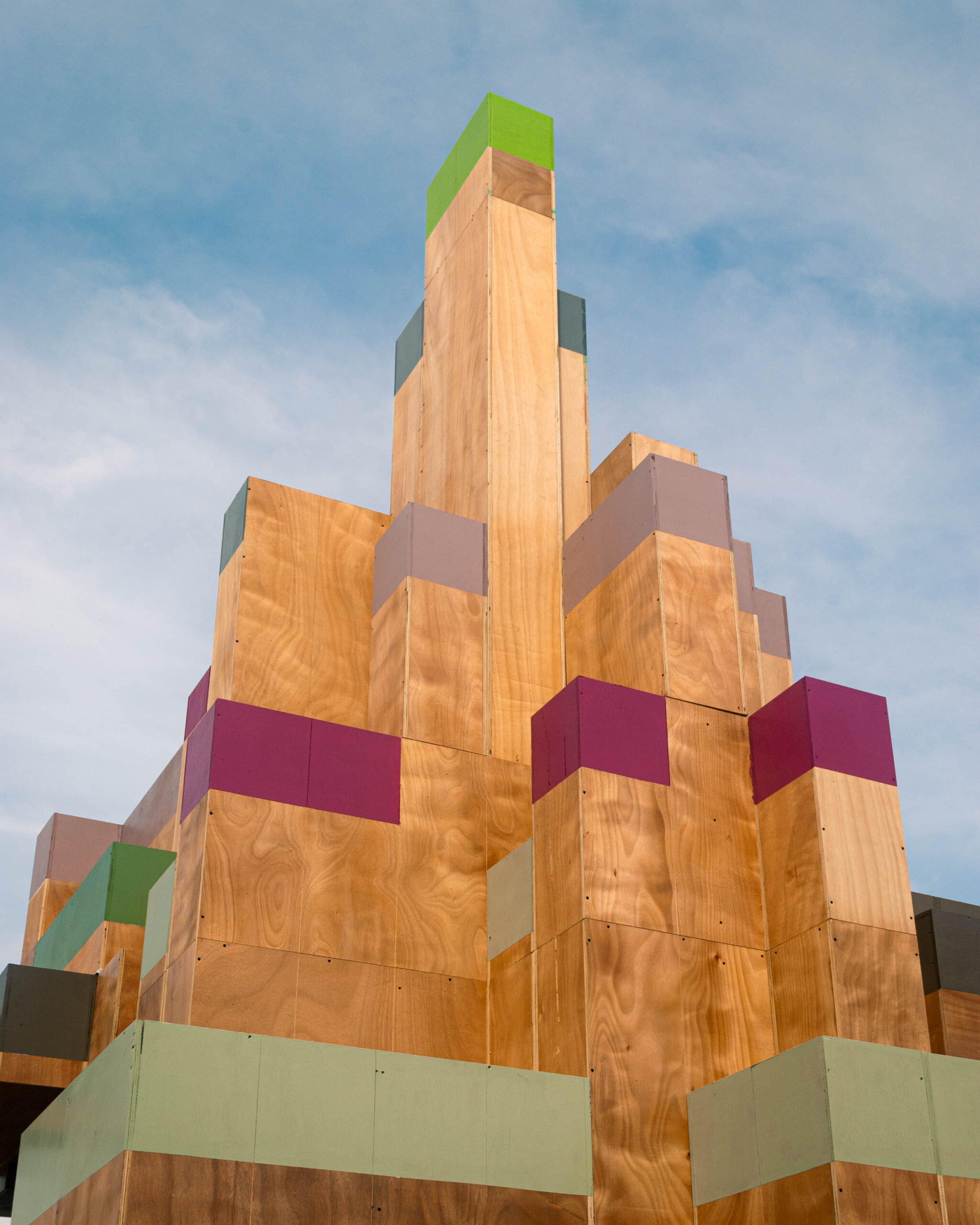
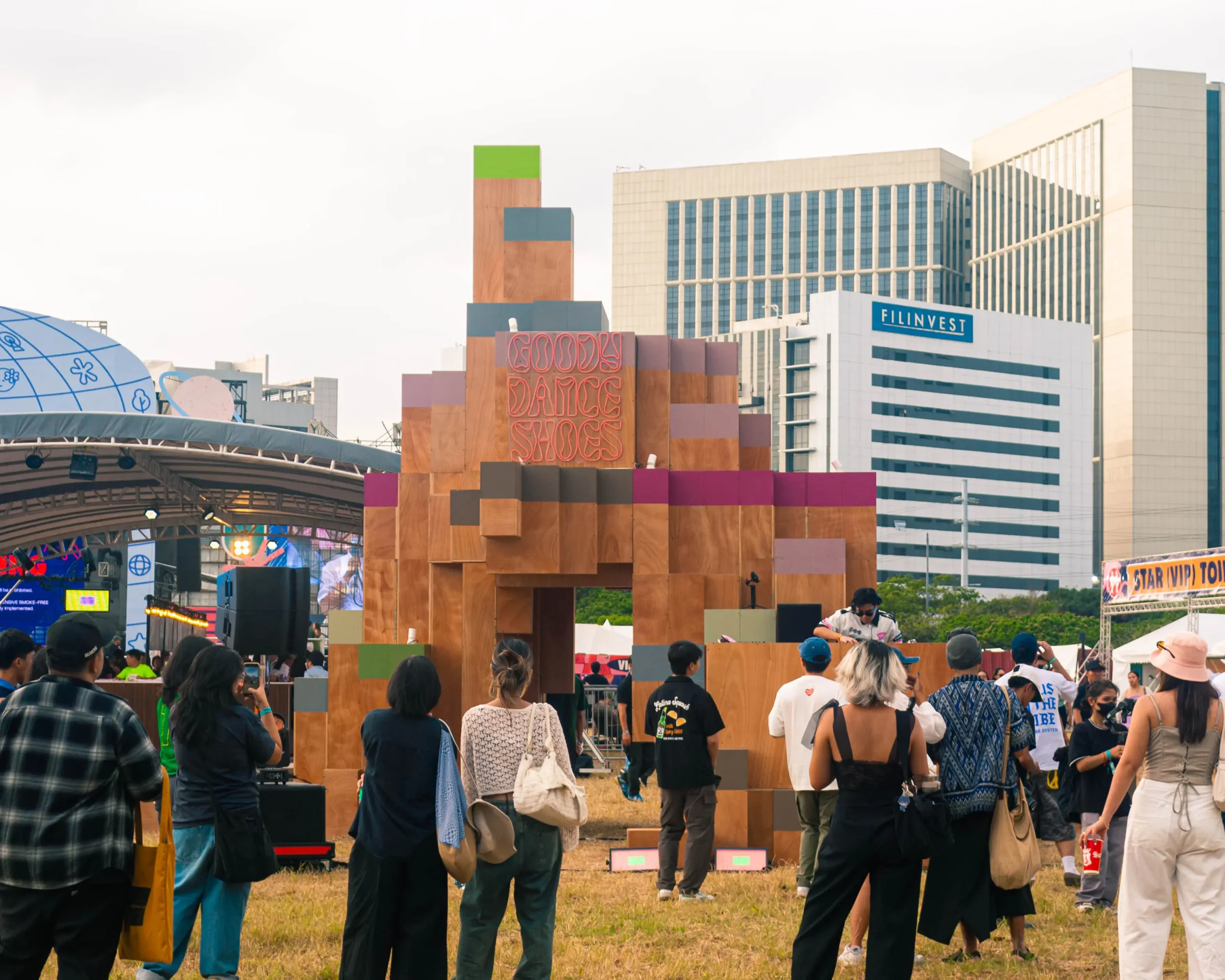
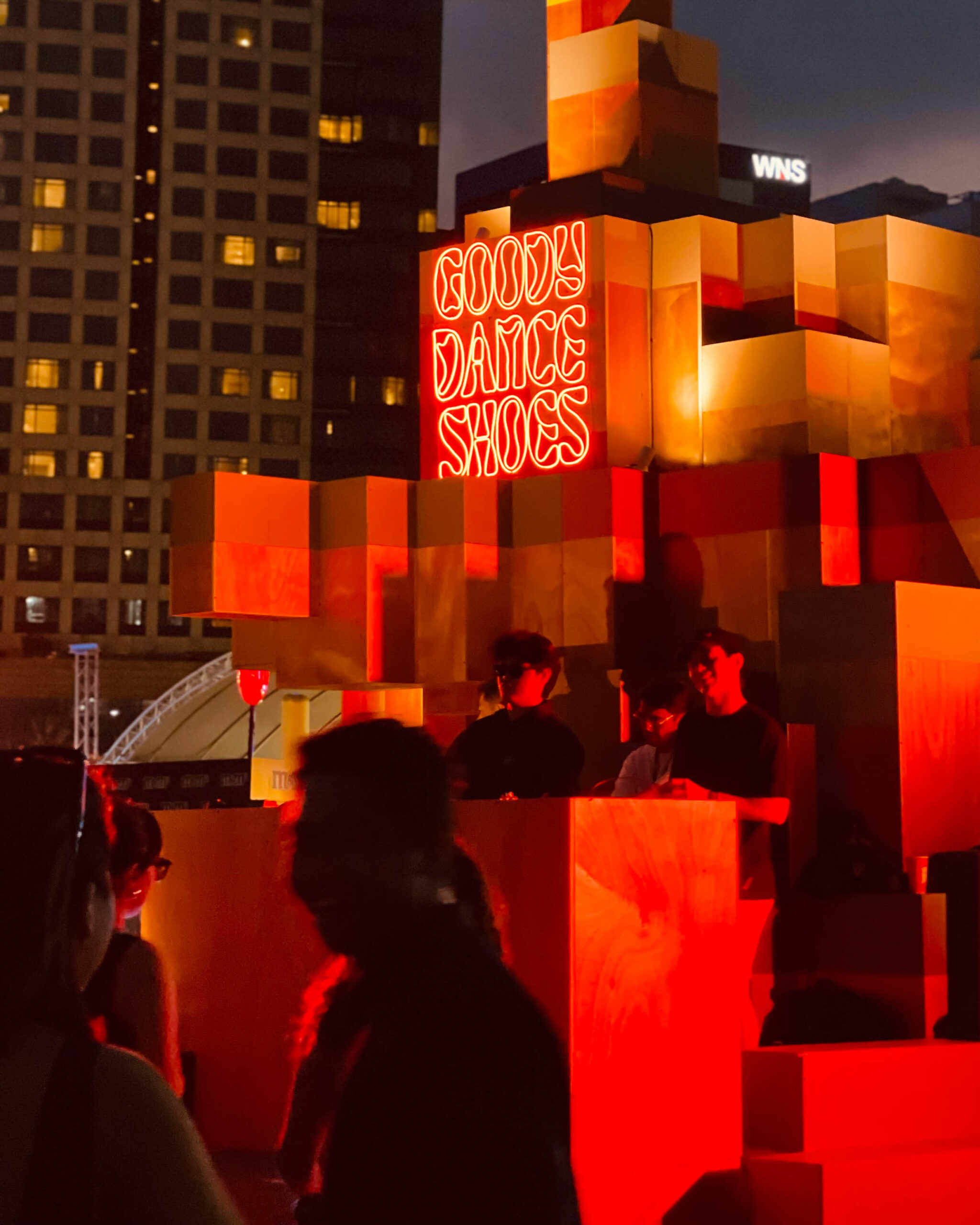
Translating this concept into physical form, the installation was crafted using modular plywood “pixels,” each distinct yet inherently connected. These elements emerge from the ground, forming benches and nooks before expanding into walls and a striking spire. At its heart, a tunnel-like passage draws festival-goers into a communal space—the Goody Dance Shoes Stage—where movement, music, and social interaction seamlessly converge.
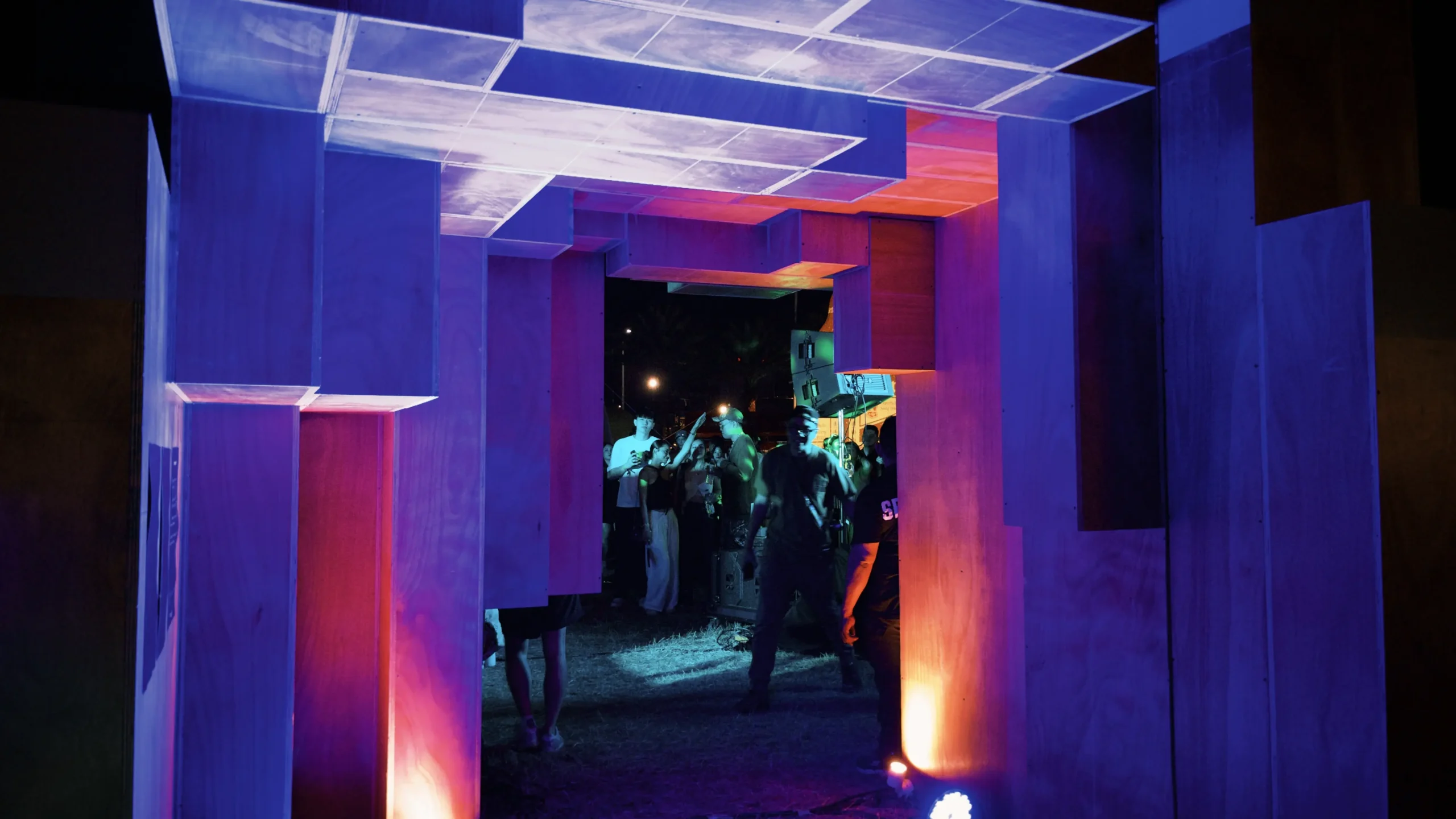
More than just a visual centerpiece, Nearest Neighbor became an interactive part of the experience. As festival-goers explored the space, they engaged with it: some found a place to rest, others gathered with friends, and a few even climbed its structures, turning the installation into a living, evolving part of Wanderland. “We hoped to see curiosity. We wanted people to not just look at the structure, but interact with it.”
Where to, next?
This active engagement reinforced the installation’s potential beyond the festival. Seeing how people naturally connected with the space sparked conversations about its future—how it could continue fostering community in everyday settings. With ongoing discussions about relocating Nearest Neighbor to public spaces, its future holds possibilities far beyond its original setting.
“We are in talks with a few public spaces outside of the festival grounds to host the installation for the larger community. Can we turn it into an open-air library? Or a shed in a public park where anyone can have a picnic or plain shade from the sun? There are no concrete plans yet, but this will definitely not be the last that we’d see our Nearest Neighbor.”
The potential of Nearest Neighbor beyond Wanderland reflects a broader movement where design, art, and community-driven initiatives are transforming public spaces. Across Southeast Asia, creatives are reimagining how cities and shared environments can foster connection, sustainability, and cultural identity.
The boundaries of what artists and creatives can do are becoming increasingly fluid, opening up new possibilities to drive genuine change from the ground up. “From creative hubs in Taiwan retrofitting old factories into playgrounds for art communities to thrive in, to festivals in Thailand integrating sustainable materials, architectural and parametric design methodologies, and community-building, the region is seeing a surge of innovation that blurs the lines between art, design, and activism,” Arts observes.
As Nearest Neighbor finds a new purpose beyond the festival, it becomes part of this larger conversation—one that asks how design can be a catalyst for change, not just in grand projects but in everyday spaces. Whether through installations, urban interventions, or community-driven efforts, the future of Southeast Asian creativity lies in its ability to transform shared spaces into meaningful experiences.
Photography Ervin Guillarte and Row Ibañez