
Why Male Body Standards Aren’t What They Used To Be: Explaining Physique Inflation





- The ideal physique has moved from lean, natural builds to hyper-muscular frames.
- What was considered exceptionally fit decades ago is now viewed as ordinary.
- Superhero and action franchises accelerate this trend by showcasing increasingly massive actors.
- Instagram and TikTok expose men to a constant stream of curated, peak perfection.
- This escalation drives rising rates of muscle dysmorphia and body dissatisfaction.
Why the concept of the “ideal” male body is shifting

In the 1950s, Hollywood icons like Marlon Brando had healthy, attainable physiques. Today’s aesthetic demands extreme muscle volume and very low body fat, distancing the ideal from typical human experience.
This “physique inflation” mirrors economic trends: yesterday’s elite builds are today’s average. Constant boundary-pushing has transformed former fitness pinnacles into mere baseline requirements for standing out.
This escalation resets public expectations, devaluing old benchmarks as new stars debut increasingly shredded physiques. Audiences grow desensitized to healthy bodies, misperceiving standard builds as out of shape compared to manufactured cinematic forms.
The cinematic engine of change and media influence

Superhero franchises drive this inflation. Actors undergo rapid, intense transformations to achieve massive muscle, shifting public perception to view these theatrical builds as the new standard.
Social media intensifies this by delivering hyper-optimized physiques to daily feeds. Influencers feature extreme genetics, further enhanced by lighting and editing. This blurs reality, making elite physical perfection appear common and everyday.
Algorithms compound the issue by serving users an endless loop of peak physical specimens once they show a slight interest in fitness. This creates a skewed digital environment where exceptional physiques appear to be the norm, masking real-world demographics and altering reality.
The psychological toll of moving goalposts
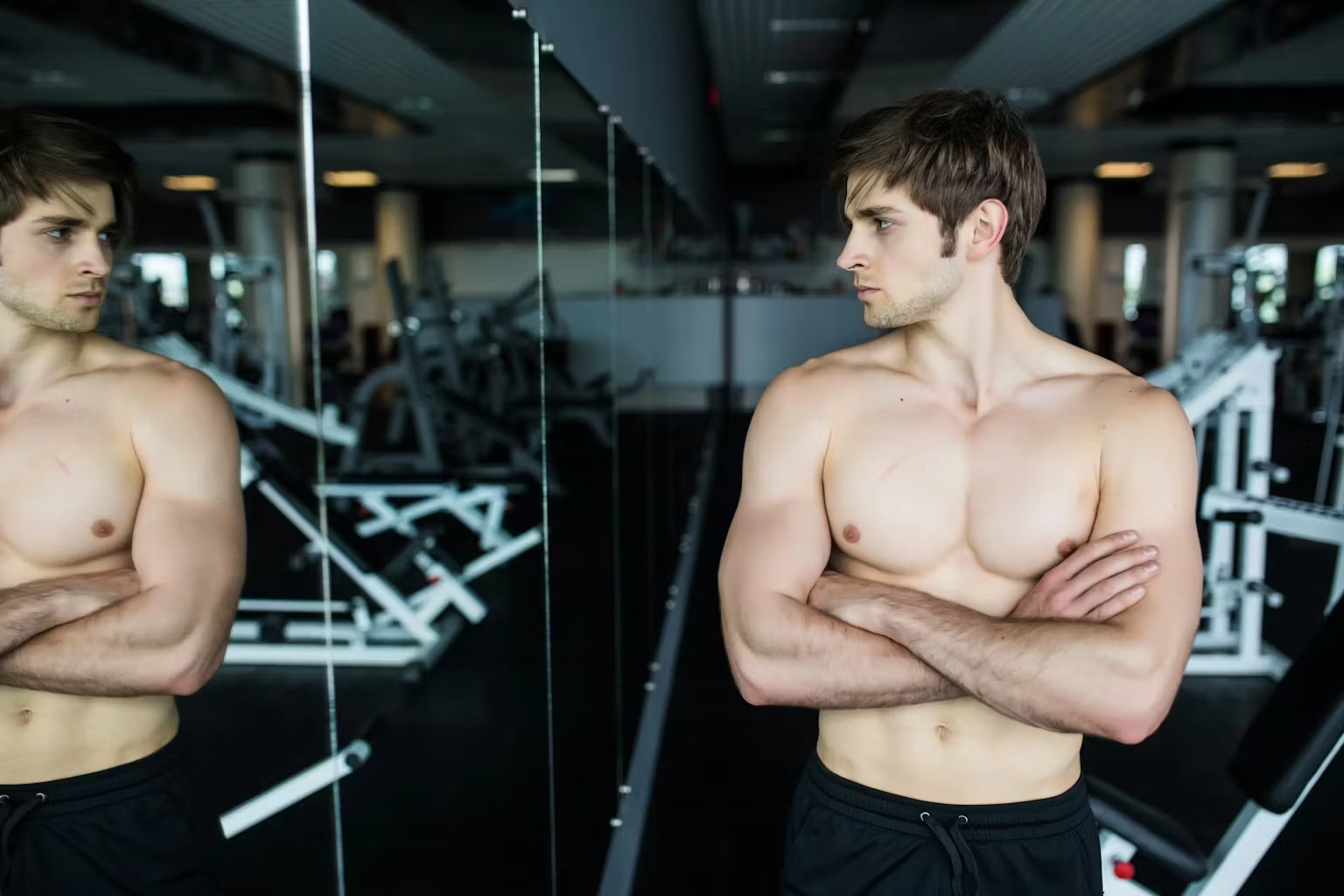
Physique inflation fuels body image disorders like muscle dysmorphia, or “bigorexia,” where fit men feel small or weak. As cultural standards become unsustainable, fitness shifts from health toward a cycle of inadequacy.
These obsessions drive men toward stressful dieting and overtraining routines. Consequently, fitness shifts from health to a burdensome effort to fix perceived flaws, replacing the enjoyment of exercise with constant, unattainable self-scrutiny.
Ultimately, breaking free requires a conscious reframing of fitness to focus on functionality, energy, and mental well-being. By recognizing physique inflation as a cultural moving target, men can begin to value their bodies for what they can do rather than how they look online.
Frequently Asked Questions
It is driven by Hollywood transformations and social media algorithms that continuously elevate the visual baseline of fitness.
It manifests as an obsessive preoccupation with muscle size and leanness, leading to compulsive exercise and anxiety over perceived flaws.
Most are unrealistic without elite genetics, full-time coaching, extreme temporary dehydration protocols, or chemical assistance.
The ideal was a natural, lean, and athletic build with moderate muscle definition, emphasizing classic proportions over extreme mass.
Focus on personal, functional fitness goals like strength and endurance while limiting exposure to unrealistic, highly edited digital media.
Recommended Video